


Executive Overview
As the global imperative to transition toward a low-carbon economy intensifies, the sheer magnitude of the financing required can often appear daunting. Traditional avenues of capital allocation—dominated by massive institutional investors, multinational energy conglomerates, and federal treasuries—frequently struggle to scale quickly enough to meet urgent municipal and regional emission-reduction targets. Yet, a quiet financial and ecological revolution is taking root across Canada, proving that the answers to our clean energy future may be far more local than we think.
Across the country, citizens are bypassing traditional bureaucratic and corporate bottlenecks by pooling their resources to fund renewable power projects, net-zero housing, and sustainable urban infrastructure. Through the innovative deployment of community bonds, renewable-energy cooperatives, and localized equity models, everyday Canadians are transforming from passive utility consumers into active energy producers and stakeholders.
From solar arrays powering rural homesteads outside Kingston, Ontario, to community-owned electric vehicle (EV) charging networks spanning Quebec and New Brunswick, grassroots financing is redefining the landscape of Canadian clean tech. This article explores eight pioneering initiatives demonstrating how local capital is driving real-world decarbonization. While these projects showcase the immense potential of community-led funding, they also reveal the nuanced financial realities, regulatory challenges, and structural evolutions required to sustain decentralized energy systems in the decades ahead.
Detailed Chronology: The Evolution of Canadian Community Power
The journey of grassroots clean energy financing in Canada did not happen overnight. It represents a steady, decades-long evolution of legal frameworks, cooperative business models, and public-private partnerships that have gradually empowered local investors to take control of their energy futures.
The Foundation: Urban Wind Pioneers (Early 2000s)
The modern era of Canadian community-owned green energy traces its roots back to the turn of the millennium. For decades, electricity generation was viewed strictly as the purview of large provincial crown corporations and private utilities. However, as public awareness of climate change grew, communities began demanding a direct stake in renewable infrastructure.
This grassroots momentum culminated in the formation of WindShare in Toronto. Launched as a collaborative effort between 825 local residents and Toronto Hydro, WindShare successfully erected and operated a commercial wind turbine on the city’s waterfront. As Canada’s very first citizen-owned clean energy project, WindShare broke psychological and regulatory barriers, proving that urban residents without engineering backgrounds could effectively co-own and operate heavy industrial renewable assets.
The Cooperative and Bond Boom (2010s)
Building on the success of early pioneers like WindShare, the following decade saw a rapid diversification of cooperative models and financing instruments across Canada.
In 2010, the Ontario Renewable Energy Cooperative (OREC) was founded to broaden citizen participation in utility-scale wind generation. By securing fractional ownership in two major wind turbines along the shores of Lake Huron, OREC established a blueprint for rural-urban economic cooperation, generating millions of kilowatt-hours annually for regional grids.
Concurrently, organizations like SolarShare emerged to professionalize solar deployment. By leveraging province-wide cooperative structures, SolarShare began installing commercial-grade solar arrays—such as the Wintergreen project near Kingston—that enabled everyday citizens to invest modest sums in exchange for predictable, green returns.

This era also saw the expansion of community bonds beyond electricity generation into complex organic waste management (ZooShare) and multi-faith infrastructure retrofits (Faithfully Green Fund). Communities were no longer just generating green electrons; they were rethinking waste-to-energy loops and decarbonizing sacred spaces through revolving loan mechanisms.
Modern Diversification: Mobility and Housing (2020s–Present)
In recent years, the scope of community bonds has expanded far beyond traditional wind and solar farms. Recognizing that the green transition must encompass transportation and the built environment, innovators launched initiatives like EcoCharge—the nation’s first community bond campaign dedicated exclusively to establishing an inter-provincial electric vehicle charging network across Quebec and New Brunswick.
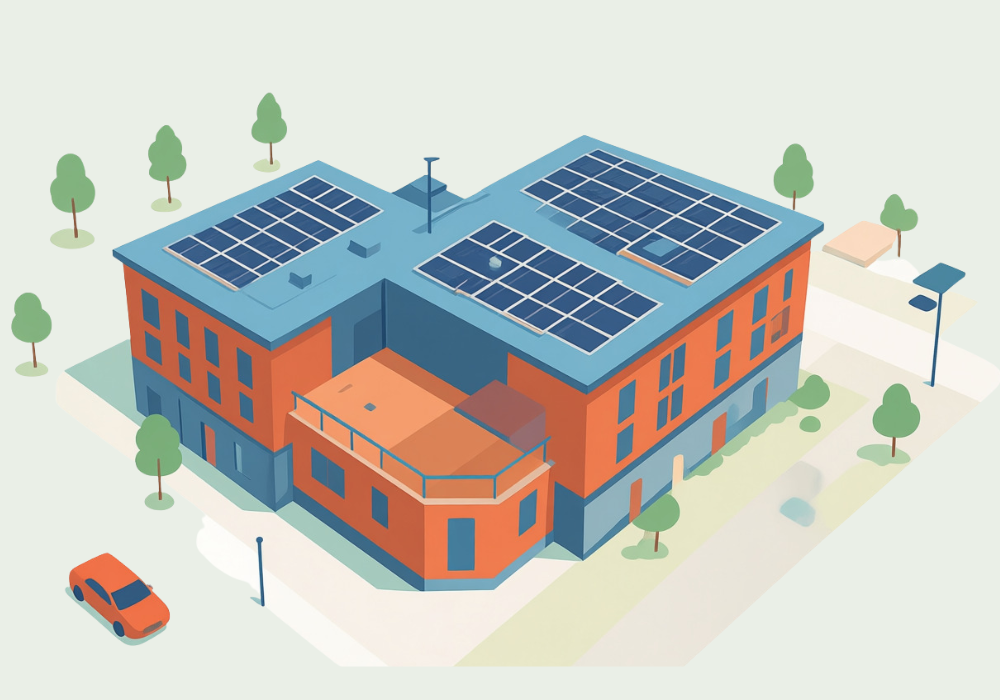
Similarly, western Canada began utilizing community capital to address the housing crisis through a green lens. In Kamloops, British Columbia, the Propolis housing cooperative raised $1 million via community bonds to construct a state-of-the-art, 53-unit affordable and net-zero apartment building. Meanwhile, urban cooperatives like Wascana in Regina, Saskatchewan, pioneered shared solar gardens specifically designed to give apartment-dwellers—historically locked out of the rooftop solar market—collective ownership over clean energy assets.

Supporting Context & Metrics: Eight Initiatives Leading the Charge
To truly understand the impact of grassroots financing, one must examine the specific mechanics, scale, and reach of the eight flagship projects driving Canada’s community power movement.
1. Wintergreen (Kingston, Ontario)
- The Project: A high-efficiency solar array situated just outside Kingston, capable of cleanly powering approximately 100 local homes.
- The Mechanism: Operated and managed by SolarShare, widely recognized as Canada’s leading renewable-energy cooperative.
- Impact: Wintergreen exemplifies how passive investors can aggregate capital to build utility-grade solar assets that feed directly into the provincial grid while building regional energy resilience.
2. ZooShare (Toronto, Ontario)
- The Project: A pioneering biogas facility that transforms organic animal waste (primarily from the Toronto Zoo) and commercial food waste into renewable electricity for Ontario’s grid.
- The Mechanism: Backed financially by roughly 800 cooperative members who purchased community bonds.
- Financial Evolution: ZooShare highlights the complex economic realities of early-stage clean tech innovation. Following a member vote in 2023, the cooperative temporarily suspended interest payments on bonds, pivoting to a model where principal will be repaid incrementally as operational cash flow permits.
3. EcoCharge (Quebec & New Brunswick)
- The Project: A regional network of roughly 100 electric vehicle (EV) charging stations strategically distributed across Quebec and New Brunswick.
- The Mechanism: Funded through the first-ever EV-charging community bond campaign of its kind.
- Impact: EcoCharge democratizes EV infrastructure ownership, ensuring that the economic upside of the transition away from internal combustion engines directly benefits local retail investors rather than solely massive charging networks.
4. Propolis (Kamloops, British Columbia)
- The Project: A 53-unit affordable, net-zero emissions apartment building designed to alleviate housing pressures while maintaining a zero-carbon operational footprint.
- The Mechanism: Successfully raised $1 million in community bonds from approximately 100 individual investors.
- Impact: Propolis bridges the critical intersection of social equity and environmental sustainability, proving that community bonds can successfully finance complex, multi-residential green architecture.
5. Faithfully Green Fund (Interfaith)
- The Project: A revolving loan fund dedicated to financing green energy retrofits (such as high-efficiency heat pumps, LED lighting, and solar installations) for religious buildings.
- The Mechanism: Operates by issuing community bonds to conscious investors and lending those funds out to temples, churches, and mosques. As loans are repaid, the capital revolves to fund the next wave of retrofits.
- Impact: Mobilizes historically underutilized community real estate portfolios to achieve deep municipal carbon reductions.
6. Wascana (Regina, Saskatchewan)
- The Project: A localized solar installation featuring 400 high-output solar panels mounted within the city of Regina.
- The Mechanism: Collectively owned by roughly 100 members.
- Impact: Specifically designed for urban renters and apartment-dwellers who are structurally excluded from installing rooftop solar on properties they do not own.
7. WindShare (Toronto, Ontario)
- The Project: A commercial wind turbine standing tall on Toronto’s waterfront, co-owned by local residents and municipal utility provider Toronto Hydro.
- The Mechanism: Equity co-ownership model involving 825 Toronto residents.
- Impact: Served as the historic proving ground for citizen-owned wind power in Canada, establishing a legal and operational precedent that inspired decades of subsequent clean energy co-ops.
8. OREC (Lake Huron, Ontario)
- The Project: Fractional ownership in two massive industrial wind turbines situated along the shores of Lake Huron.
- The Scale: Generates approximately 3.3 million kWh of clean electricity annually—enough to power more than 400 homes every single year.
- Impact: Demonstrates the viability of scaling community investments beyond micro-projects into heavy, utility-scale generation assets.
Official Statements and Expert Perspectives
The transition toward decentralized, community-funded green infrastructure has garnered significant commentary from financial experts, cooperative leaders, and municipal policymakers.
Industry analysts note that community bonds represent an untapped reservoir of domestic capital. As one sustainable finance researcher observed:

"When citizens invest directly in a wind turbine down the road or a solar array on their local community center, the relationship with energy changes entirely. NIMBYism—Not In My Back Yard—transforms into YIMBYism, because people possess a tangible financial and emotional stake in the project’s success."
However, leaders within the cooperative sector are also candid about the operational hurdles. Addressing the structural adjustments faced by projects like ZooShare, cooperative governance experts emphasize that retail green bonds carry inherent business risks that mirror traditional infrastructure investments.
A spokesperson for the Canadian cooperative network noted:

"Community bonds are not risk-free savings accounts; they are direct investments in the physical infrastructure of the green transition. When regulatory frameworks shift, supply chains fracture, or unexpected operational expenditures arise, community-owned projects must navigate those pressures with transparency and resilience. The 2023 restructuring at ZooShare was a testament to member democracy in action—prioritizing long-term solvency and project survival over rigid short-term debt servicing."
Municipal planners have similarly lauded initiatives like Propolis and Wascana for aligning local housing and transit strategies with carbon reduction targets without placing the entire fiscal burden on municipal tax bases.
Future Outlook: The Next Frontier for Grassroots Green Finance
As Canada looks toward its mid-century net-zero commitments, the role of community-scale renewable energy financing is poised for profound transformation. While multi-gigawatt utility projects managed by corporate giants will remain essential for heavy industrial decarbonization, localized micro-generation and infrastructure bonds offer unique advantages that centralized models cannot replicate.

1. Regulatory Modernization and Expansion
For community bonds and renewable co-ops to scale from niche alternatives to mainstream financial instruments, provincial securities regulators must streamline the prospectus exemption frameworks. Reducing administrative friction for retail investors looking to deploy capital into local green bonds will unlock billions of dollars in dormant household savings currently sitting in low-yield traditional accounts.
2. Integration with Smart Grids and Storage
Future iterations of community-owned energy projects will increasingly incorporate battery energy storage systems (BESS) and smart-grid technologies. By pairing local solar assets—such as those managed by SolarShare and Wascana—with neighborhood-scale storage, cooperatives can mitigate grid intermittency, provide localized backup power during extreme weather events, and participate in lucrative demand-response markets.
3. Social Equity and Indigenous Partnerships
A vital frontier for community power is the deepening of partnerships between renewable cooperatives and Indigenous communities. By structuring projects around shared equity models, First Nations and local municipalities can co-own revenue-generating green assets, ensuring that the economic reconciliation of the green transition walks hand-in-hand with environmental stewardship.

Conclusion
The narrative of Canada’s low-carbon transition is frequently framed through the lens of macroeconomics, geopolitical agreements, and industrial-scale engineering. Yet, the stories of Wintergreen, EcoCharge, Propolis, and WindShare remind us that the energy transition is ultimately a human endeavor. By localizing finance, democratizing ownership, and empowering everyday citizens to invest in their own backyards, community power is building a cleaner, more resilient Canada—one bond, one panel, and one turbine at a time.



