

Executive Overview
The Northern Hemisphere’s summer of 2026 will long be remembered by climatologists and policy experts alike as the watershed moment when theoretical projections of global heating crystallized into visceral, inescapable reality. Described by European Commission President Ursula von der Leyen as the "summer of truth," these blistering months laid bare the cascading vulnerabilities of modern human infrastructure, claiming an estimated 35,000 lives across Europe alone. From cracked asphalt and warped railways to scorched agricultural belts and bone-dry reservoirs, the planetary toll shattered historical benchmarks. The European Union alone estimated direct damages at approximately €180 billion—a fiscal footprint that excludes the long-term inflationary pressures of depleted harvests and the compounding costs of emergency infrastructure reconstruction.
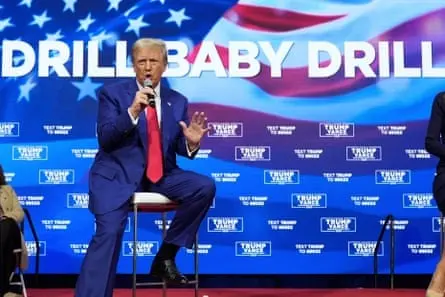
Yet, as this investigation reveals, the monumental scale of planetary distress has been met with a deeply fragmented, frequently paralyzed political response. While centrist and left-wing administrations have stumbled through timid, inconsistent policy rollouts, the ascendant far-right and populist movements have aggressively weaponized economic anxieties, pivoting from outright climate denialism to a dangerous new strategy: framing adaptation—such as calls for ubiquitous air conditioning—as a complete substitute for cutting greenhouse gas emissions. Meanwhile, developing nations trapped in punishing cycles of sovereign debt face an impossible ultimatum, forced to choose between servicing international lenders and building climate-resilient infrastructure.
Beneath this political gridlock, however, lies a profound disconnect. Comprehensive international polling demonstrates that the global electorate is far ahead of its leaders, recognizing extreme weather not as an isolated anomaly, but as an existential systemic crisis demanding urgent decarbonization.
Detailed Chronology of a Global Crisis
The climatic disruptions of 2026 did not unfold in a vacuum; they represented a synchronous escalation of systemic instability across multiple continents, shifting the climate crisis from a distant environmental concern to an immediate public safety emergency.

Europe’s Furnace
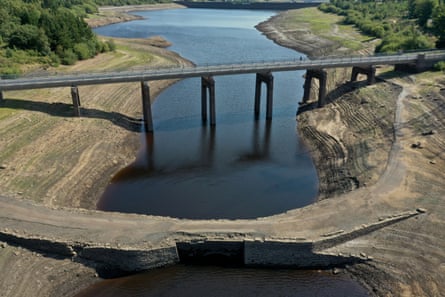
Europe found itself warming at roughly twice the global average—a concerning metric repeatedly highlighted by scientific bodies. Heat records tumbled with terrifying regularity, parching vital river systems, paralyzing inland shipping logistics, and drying up reservoirs essential for both municipal drinking water and hydroelectric power generation. In urban centers, asphalt melted and train tracks warped under unprecedented thermal stress, culminating in a death toll that disproportionately affected vulnerable urban populations and the elderly.
North American Parched Earth
Across the Atlantic, the United States endured a summer that eclipsed the historic ecological trauma of the 1930s "Dust Bowl." Beginning in the spring, severe drought conditions gripped up to 60% of the country—setting an ominous record for that time of year. These arid conditions fueled catastrophic wildfire seasons that devastated western forest ecosystems and choked metropolitan corridors with toxic haze. Rather than prompting legislative consolidation, this domestic crisis coincided with a concerted federal rollback of environmental protections, as the U.S. Environmental Protection Agency (EPA) systematically dismantled critical power plant emission standards.
Asian Floods and Monsoonal Chaos
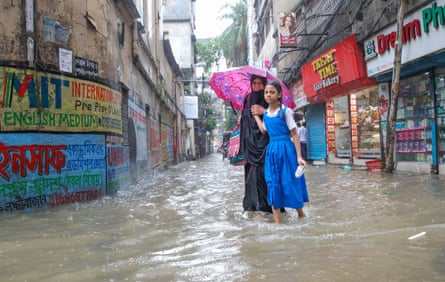
While the West battled searing heat and drought, extreme precipitation tore through Asia. Torrential monsoon rains triggered unprecedented flash floods and a devastating series of typhoons, particularly impacting regions like Bangladesh. Hundreds of thousands of residents were permanently displaced, while vast agricultural breadbaskets were washed away, exacerbating regional food insecurity and compounding global supply chain vulnerabilities.
Supporting Context & Metrics: The Economic and Policy Landscape
The financial and structural implications of the 2026 climate shocks extend far beyond immediate emergency response. Economists warn that the €180 billion price tag estimated by the EU is merely the opening installment of a much broader bill.
The Macroeconomic Toll
Agricultural shortfalls across Southern and Central Europe, combined with North American agricultural distress, guarantee sustained food price inflation. Infrastructure repairs—ranging from reinforced electrical grids capable of withstanding extreme thermal loads to sea-wall fortifications—will demand unprecedented public and private capital outlays.
Global Policy Divergences
The international policy response to these mounting pressures has been characterized by sharp geographical contradictions:
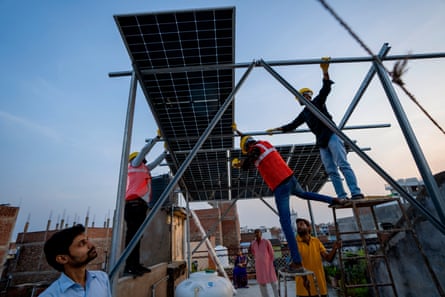
- Asia’s Green Pivot: Despite severe regional impacts, several Asian economies accelerated their structural transitions. Thailand moved to halt the construction of new gas-fired power plants, while Indonesia advanced a structured three-year roadmap to scale up solar energy and eliminate oil imports. India, having successfully met its 2030 target to source 50% of its electricity generation capacity from renewables ahead of schedule, dramatically raised its ambitions, vowing to achieve 500 gigawatts (GW) of renewable capacity by 2030, up from roughly 260 GW. China’s carbon dioxide emissions are projected to register a net decline this year, driven by the rapid market penetration of electric vehicles and massive infrastructural investments in wind and solar grids.
- Western Hesitation: Conversely, major Western economies displayed worrying policy ambivalence. The United Kingdom weighed the controversial authorization of new North Sea oil and gas fields; Germany pushed forward with new gas-fired generation capacity; and France struggled to meet its foundational greenhouse gas reduction targets.
- The COP31 Host Contradiction: Preparations for the upcoming UN climate summit (COP31)—scheduled for November, with Turkey hosting and Australia managing formal negotiations—have been marred by institutional hypocrisy. Australia recently approved the expansion of a major coal mine authorized to operate through 2055, a project directly linked to supplying Turkey, a nation that has consistently refused to commit to a formal timeline for phasing out coal.
Official Statements and Stakeholder Perspectives
The widening chasm between scientific urgency and political execution has drawn scathing rebukes from international policy directors, environmental advocates, and grassroots organizers.
+-----------------------------------------------------------------------------------+
                  KEY STAKEHOLDER PERSPECTIVES ON THE 2026 CRISIS
+-----------------------------+-----------------------------------------------------+
| Stakeholder                 | Core Position / Statement                           |
+-----------------------------+-----------------------------------------------------+
| Ursula von der Leyen        | "All of this is a mere preview... Europe is warming |
| (EU Commission President)   | at double the global rate. Europe can, must and     |
|                             | will stay the course on its climate targets."       |
+-----------------------------+-----------------------------------------------------+
| Magda Stoczkiewicz          | "It was the hottest of summers – it was the meekest |
| (Greenpeace EU Director)    | of responses... The EU Commission continues its     |
|                             | crusade to dismantle and defund environmental action."|
+-----------------------------+-----------------------------------------------------+
| Romain Ioualalen            | "Climate has become the central part of the far     |
| (Oil Change International)  | right's culture war... Their fallback strategy has  |
|                             | been to present adaptation as a substitute for      |
|                             | cutting emissions."                                 |
+-----------------------------+-----------------------------------------------------+
| Laurence Tubiana            | "We can’t ignore what has happened in Nepal, and we |
| (European Climate Foundation)| have forgotten what happened in Pakistan... There is|
|                             | a big silence around all this."                     |
+-----------------------------+-----------------------------------------------------+
| Mohamed Adow                | "Many [developing nations] are being forced to      |
| (Power Shift Africa)        | choose between servicing enormous debts and         |
|                             | investing in the infrastructure that could save lives."|
+-----------------------------+-----------------------------------------------------+
Environmental watchdogs were particularly critical of the European Commission’s domestic agenda. Magda Stoczkiewicz, EU programme director for Greenpeace, condemned von der Leyen’s rhetoric as hollow, pointing out that the Commission continues to scale back green budgetary allocations, support fossil gas infrastructure, and streamline permitting for environmentally destructive industrial projects.
From the political right, a calculated shift in narrative has emerged. Romain Ioualalen, global policy lead at Oil Change International, observed that as extreme weather renders outright climate denialism untenable, populist and far-right factions have weaponized public anxiety over inflation and living standards. Rather than supporting decarbonization, they advocate for carbon-intensive adaptation measures—such as massive, energy-draining expansions of air conditioning—while ignoring the root causes of climate-driven migration in favor of isolationist border enforcement.
Meanwhile, financial inequality continues to hobble the developing world’s capacity to respond. Mohamed Adow, director of the Power Shift Africa thinktank, emphasized that impoverished nations remain trapped in a destructive debt trap, forced to divert national revenues toward international creditors rather than funding the resilient infrastructure desperately needed to withstand the next meteorological shock.
Future Outlook: Public Will Versus Political Inertia
As the international community looks ahead, the central political question is no longer whether the public recognizes the reality of climate change, but whether political institutions possess the structural courage to act upon that recognition.
For years, mainstream political consultants—particularly among centrist factions in the United States and Europe—embraced a strategy of "climate hushing," operating under the assumption that voters prioritize immediate economic survival over long-term environmental sustainability. However, recent empirical polling challenges this premise entirely.
Data compiled by the Potential Energy Coalition in the United States and Climate Opinion polls across major European nations (including France, Germany, Italy, Spain, and the UK) reveal a striking consensus: approximately two-thirds to over 80% of citizens view extreme summer heatwaves as explicitly climate-related. Furthermore, clear majorities believe that politicians who downplay global heating are actively endangering public safety, and that societies cannot successfully adapt to extreme weather without openly addressing its root causes.
As Michael Jacobs, emeritus professor of political economy at the University of Sheffield, notes, public confusion is frequently exploited by opportunistic political actors:
"The far right are not wrong in one respect, which is that we do need to adapt to the heat. But what we need people to understand is that net zero is literally a description of scientific fact. If we don’t reach net zero emissions, we will see temperatures continue to rise."
Ultimately, the 2026 "summer of truth" has established an unyielding benchmark. If weather anomalies of this magnitude fail to trigger a lasting, coordinated political realignment, global society risks locking itself into an infinite feedback loop of preventable catastrophes—transforming existential warnings into an unalterable, catastrophic norm.



