

Executive Overview
As the global community accelerates its race toward a low-carbon future, an unprecedented demand for "transition minerals" has taken center stage. Among these, copper has emerged as the premier commodity of the twenty-first century—often dubbed "the next petroleum." Essential for the manufacturing of electric vehicles (EVs), wind turbines, solar panels, grid electrification, and power-hungry AI data centers, copper is heralded as the lifeblood of sustainable technology.
Yet, this green revolution carries a profound and often overlooked dark side. Across the globe, from the high, windswept peaks of the Andes to the dense canopies of the Amazon and the arid deserts of North America, an aggressive mining rush is unfolding. By 2040, global copper demand is projected to reach 50 million metric tons annually—double the consumption rate seen between 1900 and 2022. With a predicted supply deficit of 10 million metric tons, mining conglomerates are pushing deeper into remote, ecologically sensitive frontiers.

This rapid industrial expansion is colliding directly with biodiversity hotspots and ancestral Indigenous territories. According to a landmark 2025 study published in Nature, 54% of all planned and existing mineral extraction projects required for the energy transition sit on or immediately adjacent to Indigenous lands. As mining operations expand, they bring with them severe environmental degradation, intensive water depletion, toxic waste disasters, and profound cultural displacement. Paradoxically, the very metals intended to curb the global climate crisis are driving a localized biodiversity and human rights crisis.
Detailed Chronology: From Ancient Sanctuaries to Modern Extraction Pits
The trajectory of copper and its impact on the natural world is a history defined by exploitation, recovery, and renewed threat.

The Vicuña: A Symbol of Resilience on the Edge
In the high-altitude Andes of Peru, Bolivia, Chile, and Argentina, the vicuña (Vicugna vicugna)—a shy, elusive wild camelid revered by Indigenous peoples—serves as a barometer of ecological health. Prized for centuries for its exceptionally fine wool, the animal was hunted ruthlessly by European colonists. By the 1960s, flocks that once numbered two million during the Inca Empire were decimated down to a precarious 6,000 individuals.
Through decades of dedicated, community-based conservation, Indigenous-led protection efforts, and strict international trade bans, the vicuña population rebounded to approximately 350,000. However, this hard-won recovery is now under severe threat from a modern namesake: the proposed Vicuña mining district.

The Birth of the Vicuña Mining District and Global Expansion
Straddling the border of Argentina’s San Juan province and Chile’s Atacama region, the Vicuñas are the focus of a massive $18 billion metallurgical planning district. Representing one of the largest recent copper discoveries on Earth, the district includes major projects like the Josemaría deposit—a 50-50 joint venture between Canadian-based Lundin Mining and Australian mining giant BHP.
Simultaneously, the geopolitical and corporate rush for copper has intensified across the Americas:

- 1969–2025 (Brazil): In the Carajás Amazon region, a survey by Repórter Brasil in partnership with Mongabay identified 676 copper, manganese, and nickel projects. A staggering 25% of these initiatives were developed between 2021 and 2025, threatening regional land reform settlements.
- November 2025 (Colombia): Indigenous communities in the high Amazon forests of southwestern Colombia expressed deep alarm as international mining firms shifted focus from gold to copper. In Mocoa, a grassroots Indigenous children’s movement mobilized to protest Canadian transnational Copper Giant’s encroachment on ancestral lands sitting at the crucial confluence of the Andes and the Amazon.
- March 2026 (United States): The U.S. federal government cleared the way for the controversial Resolution Copper project at Oak Flat, Arizona—a site of profound spiritual and cultural significance to the Apache people, often described as their spiritual equivalent to Mount Sinai.
- April 2026 (United States): The U.S. Congress passed legislation overturning a long-standing ban on sulfide-mining in Superior National Forest, Minnesota, greenlighting Twin Metals’ underground copper project near the Boundary Waters despite fierce opposition from environmentalists and local tribes.
Supporting Context & Metrics: The Cost of the Copper Boom
The push to extract lower-grade ores to meet skyrocketing demand has rendered modern mining increasingly resource-intensive, toxic, and environmentally disruptive.
Water Scarcity and Glacier Vulnerability
Copper extraction is exceptionally water-intensive. Data from the Institute for Ecological Economics reveals that between 2015 and 2019, global copper mines withdrew 13.6 trillion liters of water, with consumption growing at a rate 50% faster than production itself.

In Argentina, the Bajo de La Alumbrera copper mine consumes upwards of 25 billion liters of water annually. The resulting water stress has directly impacted local agriculture, causing reduced crop yields and diminished soil quality. Furthermore, the proposed Vicuñas mining district is situated in a high-altitude region containing 2,100 glaciers. According to the Argentine Institute of Snow, Ice, and Environmental Sciences, these glaciers are projected to lose over 80% of their volume by 2100 due to climate change—jeopardizing the freshwater supply of more than seven million Argentinians living within glacier-fed watersheds.
Environmental Degradation and Toxic Disasters
The International Copper Association (ICA) acknowledges that the copper supply chain presents severe environmental hazards, including:

- Greenhouse Gas Emissions & Coal Dependency: High-energy consumption requirements often rely on fossil-fuel-generated electricity.
- Air Pollution: Massive spikes in sulfur dioxide ($SO_2$) and particulate matter laced with heavy metals (lead, cadmium, nickel, and arsenic) regularly plague communities near smelting operations. In Serbia, monitoring between 2019 and 2022 revealed local arsenic levels hundreds or thousands of times higher than national limits.
- Aquatic Ecotoxicity: Heavy metals from mining waste heavily impact freshwater ecosystems. A review in the International Journal of Fisheries and Aquatic Studies identified copper as one of the most harmful heavy metals to aquatic life.
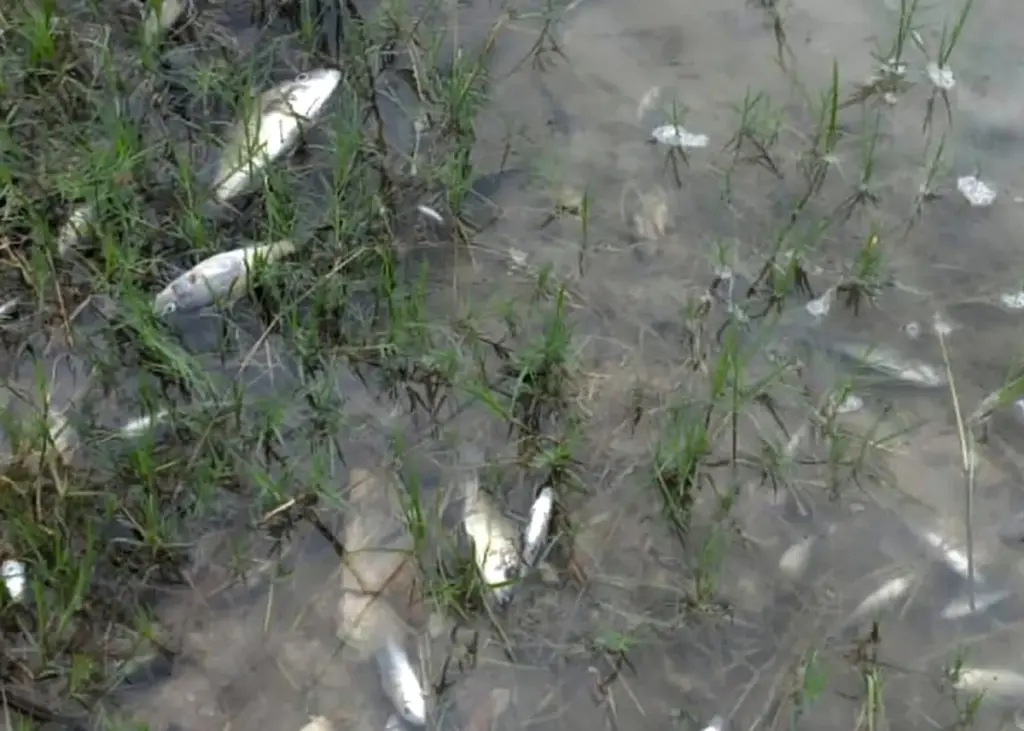
Catastrophic failures in mining infrastructure remain a persistent threat. In February 2025, the collapse of a tailings dam at the Chinese-owned Sino-Metals Leach Zambia copper mine released millions of liters of acidic wastewater—laden with manganese, copper, and cobalt—into the Kafue River. The disaster instantly devastated local fish populations, poisoned agricultural soils, and threatened the primary freshwater lifeline for 60% of Zambia’s 20 million citizens.
Official Statements and Stakeholder Perspectives
The clash between corporate green ambitions and environmental protection has ignited intense global debate.

Industry Justifications
Mining executives and industry associations maintain that their operations are essential for a sustainable future. Thyana Alvarez, vice president of Copper Giant, summarized the prevailing industry sentiment: "Copper, they say, is the next petroleum."
Similarly, the International Copper Association maintains that sustainability is central to its mission, asserting that member corporations are united in operating under strict environmental frameworks. Companies like Twin Metals insist they have designed their extraction plans "to do this right."

Environmental and Indigenous Resistance
Critics, however, argue that the industry’s green branding masks severe regulatory rollbacks and human rights violations. Leandro Gomez, a spokesperson for the Argentine environmental organization FARN, criticized the expansion of projects like Josemaría: "The expansion of copper projects… is part of a broader extractive expansion process that entails serious breaches of environmental regulations, significant environmental impacts, and escalating social conflicts."
The human toll on Indigenous communities is well-documented. Jan Morrill of Earthworks noted that extractive projects near Indigenous reservations correlate strongly with increased rates of gender-based violence, community harassment, and substance abuse. Between 2021 and 2023, the world’s top ten mineral-producing nations recorded 334 violent incidents or protests linked directly to transition minerals.

Indigenous leaders have continually challenged the narrative that sacred lands can be sacrificed for clean energy. Mona Polacca of the International Council of Thirteen Indigenous Grandmothers remarked: "Throughout this wearying fight we have simply sought to protect our religious freedom. Destroying our sacred land is sadly not new for Indigenous communities."
Wendsler Nosie Sr., a former San Carlos Apache tribal chairman fighting the Oak Flat mining project, offered a stark warning to corporate leaders: "They have to think this through because there’s not going to be copper here forever. And once it’s all gone, then the whole stuff is contaminated forever. We’re confronting that big dominant way, this corporate way of life. It’s two ways of thinking clashing. There is no room for both. One will be destroyed."

Future Outlook: Can Recycling and Regulation Bridge the Gap?
As the world looks toward 2040, the global demand for copper will continue to rise. While the industry points to recycling as a partial solution—noting that current copper products contain over 30% recycled content—recycling alone cannot close the massive supply gap. Furthermore, copper recycling is an expensive, energy-intensive, and hazardous process, frequently complicated by metallurgical contamination when copper is fused with other metals like steel.
Ultimately, the future of the energy transition hinges on whether global governance can enforce rigorous environmental safeguards, respect Indigenous sovereignty, and curb the creation of ecological sacrifice zones. Without transformative policy interventions and technological innovations that prioritize ecosystem preservation over raw extraction, the pursuit of a low-carbon future risks leaving a permanent scar on the planet’s most vulnerable landscapes and communities.



