

Executive Overview
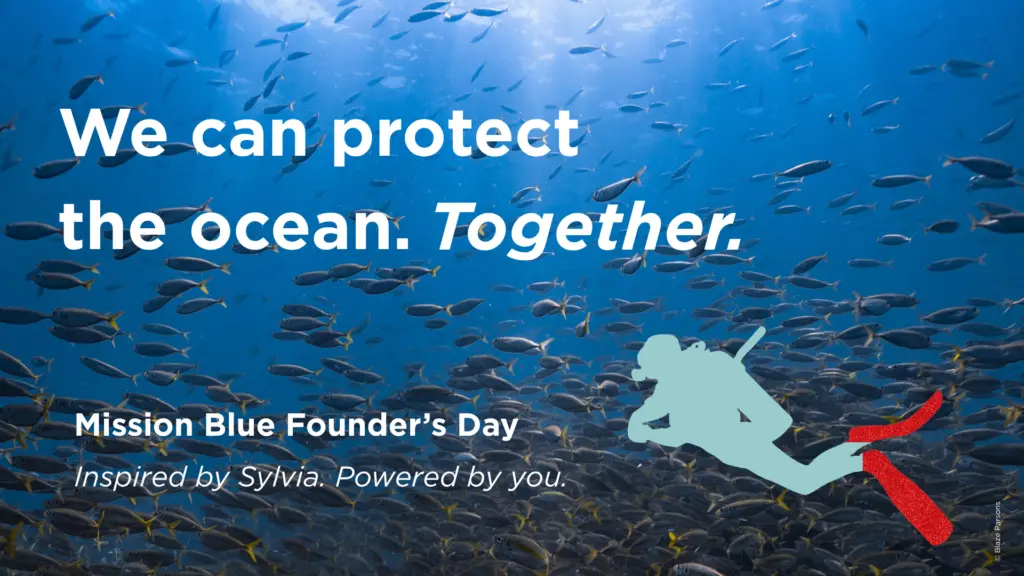
On August 30, international marine conservation organization Mission Blue will observe a historic milestone: the celebration of its inaugural Founder’s Day. Designed to coincide with the birthday of legendary oceanographer, explorer, and author Dr. Sylvia Earle, this new annual tradition transcends a standard birthday tribute. Instead, it serves as a global call to action, honoring not just Dr. Earle’s pioneering lifetime achievements, but the collective, decentralized spirit that has continually fueled the organization’s mission since its inception.
Mission Blue—founded by Dr. Earle under the auspices of the Sylvia Earle Alliance—has spent over a decade shifting humanity’s relationship with the sea. Through its flagship initiative, the Hope Spots program, the organization champions critical marine ecosystems across the globe, transforming localized passion into internationally recognized conservation victories. Yet, as leadership repeatedly emphasizes, Mission Blue has never been merely about one individual. Rather, it is a testament to the compounding power of inspiration: the teacher bringing marine biology into a grade-school classroom, the scientist monitoring coral bleaching events, the community champion rallying neighbors to defend a coastal shelf, and the donor fueling restoration projects from afar.
This inaugural Founder’s Day seeks to formalize and amplify that grassroots ethos. By encouraging individuals to activate their personal and professional networks—ranging from family members and coworkers to classmates and digital communities—Mission Blue aims to build an interconnected, global constituency for the ocean. As anthropogenic pressures on marine environments reach unprecedented levels—driven by overfishing, plastic pollution, ocean acidification, and climate change—the launch of Founder’s Day arrives as a timely, urgent intervention. It reinforces Dr. Earle’s foundational philosophy: that knowledge breeds care, and care inevitably spurs action.
Detailed Chronology: From the Deep Sea to a Global Movement
To understand the weight and cultural significance of Mission Blue’s first Founder’s Day, one must trace the extraordinary trajectory of Dr. Sylvia Earle and the institutional evolution of the organization that bears her vision.
The Genesis of a Legend
Dr. Sylvia Earle’s relationship with the ocean began along the shoreline of New Jersey and the west coast of Florida during her youth, blossoming into a lifelong scientific and exploratory career. Affectionately dubbed "Her Deepness" by The New Yorker and The New York Times, Dr. Earle has spent more than seven decades diving into the abyss, logging over 7,000 hours underwater. In 1970, she famously led the Tektite II project, serving as captain of an all-female team of aquanauts living in a habitat fifty feet beneath the surface of the U.S. Virgin Islands. A decade later, in 1979, she set a women’s depth record that remains unbroken, walking untethered on the seafloor off the coast of Oahu at a staggering depth of 1,250 feet in a JIM suit.
Beyond her exploits as a diver, Dr. Earle served as the Chief Scientist of the National Oceanic and Atmospheric Administration (NOAA) from 1990 to 1992—the first woman to hold the prestigious post. Throughout her career, she authored more than 200 publications, led over a hundred expeditions, and lectured in nearly ninety countries. Yet, as she bore witness to the rapid degradation of marine habitats—experiencing firsthand the dwindling coral reefs, disappearing fisheries, and choking plastic debris—she realized that scientific research alone was insufficient. The world needed a cultural shift regarding how humanity views the ocean: not as an infinite sink and resource provider, but as the life-support system of planet Earth.
The Birth of Mission Blue and the Hope Spots Initiative
In 2009, Dr. Earle won the prestigious TED Prize. The award grants its recipient "one wish to change the world." Dr. Earle’s wish was unequivocal:
"I wish you would use all means at your disposal to ignite public support for a global network of marine protected areas; Hope Spots large enough to save and restore the ocean, the blue heart of the planet."
That single wish catalyzed the creation of Mission Blue. Operating under the umbrella of the Sylvia Earle Alliance, the initiative set out to identify, map, and champion "Hope Spots"—special marine areas that are scientifically identified as critical to the health of the ocean. These sites range from pristine coral reefs and deep-sea trenches to vital migratory corridors and coastal mangroves threatened by industrial development.
Over the ensuing fifteen years, the Hope Spots network expanded dramatically from a visionary concept into a thriving global network comprising over 150 designated locations worldwide. Each Hope Spot is championed by local leaders—often fishermen, indigenous populations, grassroots activists, and marine researchers—who mobilize their communities to advocate for legislative protection, sustainable management, and public education.
The Evolution Toward Founder’s Day
By 2024, the Mission Blue ecosystem had grown too vast, complex, and geographically dispersed to rely solely on centralized oversight. The organization recognized that if the ocean is to be saved, the ownership of marine conservation must be decentralized, placed directly into the hands of citizens across every continent.
Thus, leadership conceptualized Founder’s Day. Scheduled annually on August 30, the event bridges the legacy of Dr. Earle’s lifetime of work with the day-to-day realities of modern environmental activism. It provides a structured calendar moment for supporters worldwide to pause, celebrate the ocean, and take deliberate steps to expand the movement. The inaugural 2024 celebration marks the formal codification of this tradition, setting a precedent for decades of coordinated global engagement to come.
Supporting Context & Metrics: The State of the Ocean and the Impact of Hope Spots
To fully appreciate the urgency behind Mission Blue’s new tradition, it is essential to examine the macro-environmental indicators driving the organization’s work, as well as the quantifiable impact of the Hope Spots network.
The Anthropogenic Crisis Facing Marine Ecosystems
The global ocean covers approximately 71% of the Earth’s surface, generates over 50% of the oxygen in the atmosphere, and absorbs roughly 25% of all human-generated carbon dioxide emissions while capturing 90% of the excess heat generated by climate change. Despite playing this fundamental role in regulating the global climate and sustaining biodiversity, the ocean is facing an existential crisis:
- Overfishing and Habitat Destruction: Industrial fishing fleets strip-mine the ocean floor, while destructive practices like bottom trawling devastate fragile deep-sea coral ecosystems that have taken millennia to form. According to the Food and Agriculture Organization (FAO), over a third of global fish stocks are currently fished at biologically unsustainable levels.
- Warming and Acidification: As greenhouse gas emissions trap heat, ocean temperatures have soared to record highs, triggering widespread coral bleaching events on a global scale. Concurrently, the absorption of excess carbon dioxide has driven a 30% increase in ocean acidity since the industrial revolution, threatening the ability of shell-forming organisms—from microscopic plankton to commercially vital shellfish—to build and maintain their exoskeletons.
- Chemical and Plastic Pollution: Millions of metric tons of plastic enter the marine environment annually, breaking down into microplastics that permeate every level of the marine food web. Chemical runoff from agricultural fertilizers creates sprawling "dead zones" in coastal estuaries where oxygen levels are too low to support marine life.
The Hope Spots Model: Science-Backed Conservation
In the face of these staggering challenges, Mission Blue’s Hope Spots offer a proven, scalable antidote. Marine Protected Areas (MPAs) and fully protected marine reserves have been repeatedly shown by marine biologists to be among the most effective tools for restoring ocean health. When an ecosystem is granted respite from destructive human activities, its resilience skyrockets: fish populations rebound, apex predators return, degraded corals show signs of recruitment, and carbon sequestration capacity is restored.
However, designating an MPA on paper is rarely enough; enforcement and community buy-in are vital. This is why the Hope Spots model uniquely blends hard marine science with grassroots sociology. Mission Blue does not merely draw lines on a map; it empowers the human infrastructure surrounding those waters. Metrics tracking the success of Hope Spots indicate that when local champions are equipped with resources, media platforms, and international solidarity, governments are far more likely to enact legal protections, establish no-take zones, and fund long-term conservation management.
Official Statements and Perspectives
The launch of Founder’s Day has elicited enthusiastic responses from leaders within Mission Blue, international conservation partners, and Dr. Sylvia Earle herself, reflecting the deeply collaborative nature of the initiative.
Reflecting on the philosophy that inspired the new tradition, Dr. Sylvia Earle has frequently emphasized the interconnectedness of human awareness and ecological preservation:
"When people know, they care; and when they care, they act. We cannot protect what we do not understand, and we cannot love what we do not know. Mission Blue has always been about opening eyes to the wonders of the blue heart of our planet, and realizing that every single person possesses the agency to make a profound difference."
Echoing this sentiment, executive leadership at Mission Blue underscored that Founder’s Day is designed to democratize ocean stewardship:
"For years, our supporters have asked how they can do more beyond financial contributions. Founder’s Day provides a dynamic answer. It invites our community to leverage their personal networks—whether talking to a neighbor, teaching a child, or launching a peer-to-peer fundraiser. Dr. Earle’s birthday gives us a focal point, but the true engine of this movement is the collective energy of everyday people stepping up for the waters they love."
Conservation strategists working within the Hope Spot network have also pointed to the psychological and social benefits of establishing an annual day of action. By synchronizing global efforts around a single date, local groups gain visibility, media traction, and a renewed sense of shared global purpose that transcends regional boundaries.
How to Participate: Taking Action on Founder’s Day
Mission Blue has structured the inaugural Founder’s Day to be accessible, inclusive, and actionable for individuals of all backgrounds, regardless of geographic location or financial capacity. The organization emphasizes that every action—big or small—contributes to the broader momentum of the global movement.
1. Financial Support and Peer-to-Peer Fundraising
- Direct Giving: Supporters can make direct philanthropic contributions to Mission Blue via the official website to fund ongoing expeditions, scientific assessments, and logistical support for Hope Spot champions around the world.
- Peer-to-Peer Campaigns: Utilizing platforms integrated with Mission Blue (such as Network for Good), individuals can launch their own personalized fundraising campaigns for Founder’s Day, rallying friends, family members, and colleagues to contribute in honor of Dr. Earle’s birthday.
2. Education and Outreach
- Spreading Awareness: One of the core tenets of the initiative is conversation. Supporters are encouraged to introduce someone new to the ocean—whether by sharing a Mission Blue documentary, discussing the importance of marine biodiversity over dinner, or highlighting a local water body that needs protection.
- Classroom Engagement: Teachers and educators are invited to bring marine conservation into their curricula, utilizing free digital resources provided by Mission Blue to educate the next generation of ocean stewards.
3. Advocacy and Community Action
- Speaking Up for Special Places: Individuals can advocate for local or international Hope Spots by writing to elected officials, participating in local beach cleanups, supporting sustainable seafood initiatives, and using digital platforms to amplify marine conservation campaigns.
- Building Local Networks: Activists are encouraged to reach out to existing Hope Spot champions in their regions to offer volunteer assistance, scientific expertise, or media amplification.
Future Outlook: A Legacy That Scales
As Mission Blue celebrates this first-ever Founder’s Day on August 30, the organization looks toward an ambitious future. The ultimate vision of the Sylvia Earle Alliance is to secure formal protection for 30% of the global ocean by the year 2030—a target widely endorsed by international conservation bodies, including the United Nations Convention on Biological Diversity (the "30×30" initiative).
Achieving such a monumental goal requires moving past traditional, siloed conservation models. It demands a cultural paradigm shift where caring for the ocean is viewed not as a niche hobby for marine biologists or radical activists, but as a fundamental civic duty for all global citizens. By anchoring this vision to an annual celebration of Dr. Sylvia Earle’s birth, Mission Blue has established a sustainable, recurring cultural ritual that will continually re-energize the global environmental movement year after year.
Founder’s Day reminds the world that while the threats facing the marine environment are immense, the collective power of an informed, connected, and mobilized humanity is infinitely greater. Inspired by the legacy of "Her Deepness" and powered by the everyday actions of millions, Mission Blue’s new tradition ensures that the fight to protect the blue heart of our planet will only grow stronger with time.



