

Executive Overview
As international investors converge on Toronto for the Canada Investment Summit, they are being presented with one of the most polarizing and financially formidable proposals in the federal investment prospectus: the Kino Aski Liquefied Natural Gas (LNG) project. Carved out with a staggering estimated price tag of US$23 billion, the project represents a grand logistical and economic vision. It seeks to transport Western Canadian natural gas roughly 1,000 kilometres across the province of Ontario directly to Baie-Comeau, Quebec. There, proponents plan to construct three massive floating liquefaction facilities designed to churn out up to 15 million tonnes of LNG annually for global export markets.
Yet, beneath the glossy veneer of the federal prospectus lie deep-seated complexities that demand rigorous, unsparing due diligence. The project’s proponents—led by the Atikamekw Nation Council alongside Norwegian-led Marinvest—heavily promote two core selling points: that Kino Aski is a First Nations-led enterprise, and that it promises to deliver "ultra-low-emission" LNG.
According to energy experts and policy analysts, however, these foundational claims risk creating a dangerous illusion that the project’s most sensitive, high-stakes hurdles have already been cleared. In reality, Kino Aski remains at the pre-application stage. It faces a labyrinth of unresolved Indigenous territorial disputes, shifting provincial political landscapes in Quebec, severe domestic electricity constraints, and profound scientific skepticism regarding its true carbon footprint. For institutional investors looking at long-term capital allocation, the project presents a textbook case study of how unaddressed baseline risks can rapidly compound into insurmountable financing liabilities.
Detailed Chronology and Project Evolution
To understand the current standing of the Kino Aski proposal, one must trace its lineage back to previous attempts to establish a major energy export corridor through Quebec.
The Ghost of GNL Québec
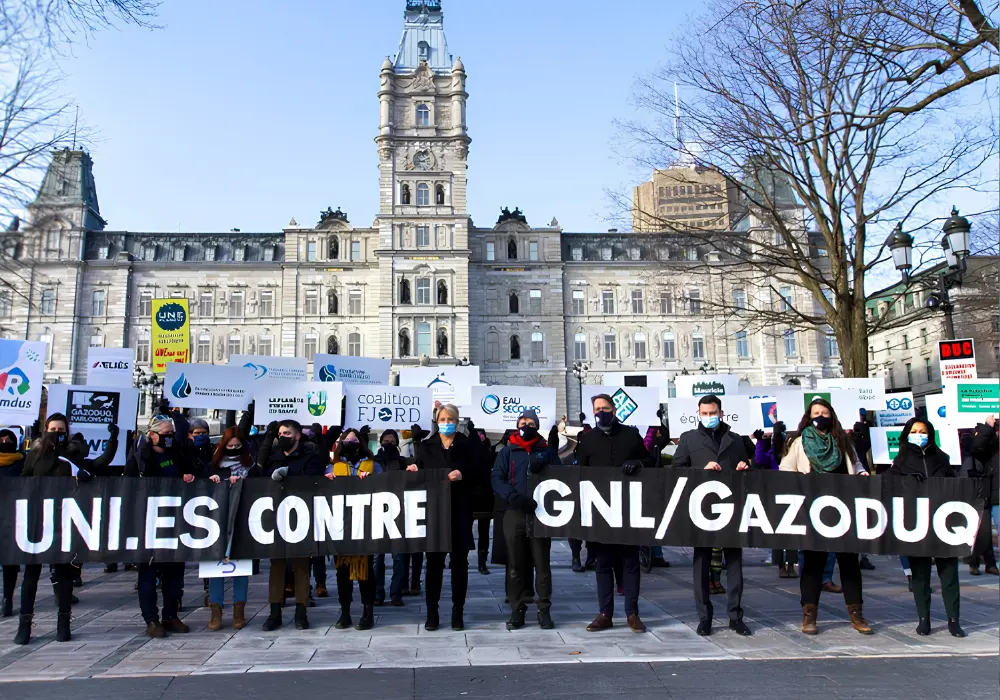
The Kino Aski proposal is, in many ways, the spiritual successor to the defunct GNL Québec–Énergie Saguenay proposal. That earlier multi-billion-dollar initiative sought to pipe Western Canadian gas to the Saguenay region for liquefaction and export. After years of intense public scrutiny, grassroots organizing, and fierce environmental debate across the province, the GNL Québec project was decisively rejected by both federal and provincial authorities in 2021 and 2022. Regulators and politicians alike concluded that the proponents had failed to demonstrate meaningful, verifiable life-cycle emissions reductions spanning from upstream extraction to downstream consumption. Estimates for GNL Québec’s full annual emissions ranged anywhere from 50 to 83 megatons.
Rebranding and the Current Pre-Application Phase
Kino Aski has attempted to pivot past the regulatory failures of its predecessor by introducing structural changes—most notably, Indigenous equity leadership and plans for extensive electrification via wind power and hydroelectricity. Despite these adjustments, the project remains in its infancy. It has not yet entered a formal regulatory review process with federal or provincial environmental assessment agencies.
Currently sitting firmly in the "pre-application" phase, the project’s architects are actively courting early-stage development financing at venues like the Canada Investment Summit. By showcasing Kino Aski on a national stage, the federal government lends the venture a degree of administrative visibility and institutional credibility. However, analysts emphasize that inclusion in a government prospectus does not equate to regulatory endorsement, nor does it substitute for the arduous, legally binding processes required to achieve true bankability.
Supporting Context & Metrics: Unpacking the Claims
Investors evaluating Kino Aski must look past high-level marketing pitches and scrutinize the underlying data across three primary domains: Indigenous governance, carbon accounting, and grid infrastructure dependencies.
1. Ownership Versus Comprehensive Consent
Kino Aski Inc. operates under the leadership of the Atikamekw Nation Council, which holds a 50.1% controlling stake in the proponent company, with international partners like Marinvest holding the remainder.
The significance of Indigenous economic self-determination and equity ownership in major industrial projects cannot be overstated. Indigenous Peoples possess the fundamental right to initiate, own, and reap the financial rewards of resource development on their traditional lands. However, as legal and governance experts point out, a pipeline and its associated climate and environmental impacts do not exist in a vacuum, nor are they confined solely to the communities where the primary owners reside.
The proposed 1,000-kilometre corridor would traverse the ancestral territories of multiple distinct Indigenous Nations. Crucially, one Nation’s right to say "yes" to a project cannot and does not extinguish another Nation’s sovereign right to say "no." The assumption that Indigenous equity ownership by one council translates to blanket, cross-territorial consent is a profound miscalculation that invites immediate legal challenges, injunctions, and severe permitting delays.
2. The Carbon Calculus and Emissions Transparency
Kino Aski’s second major selling point—its designation as an "ultra-low-emission" facility—has drawn sharp pushback from the scientific community. Shortly after the project’s details came to light, a collective of 30 prominent academics published a stinging critique warning that the venture remains fundamentally incompatible with established climate science.
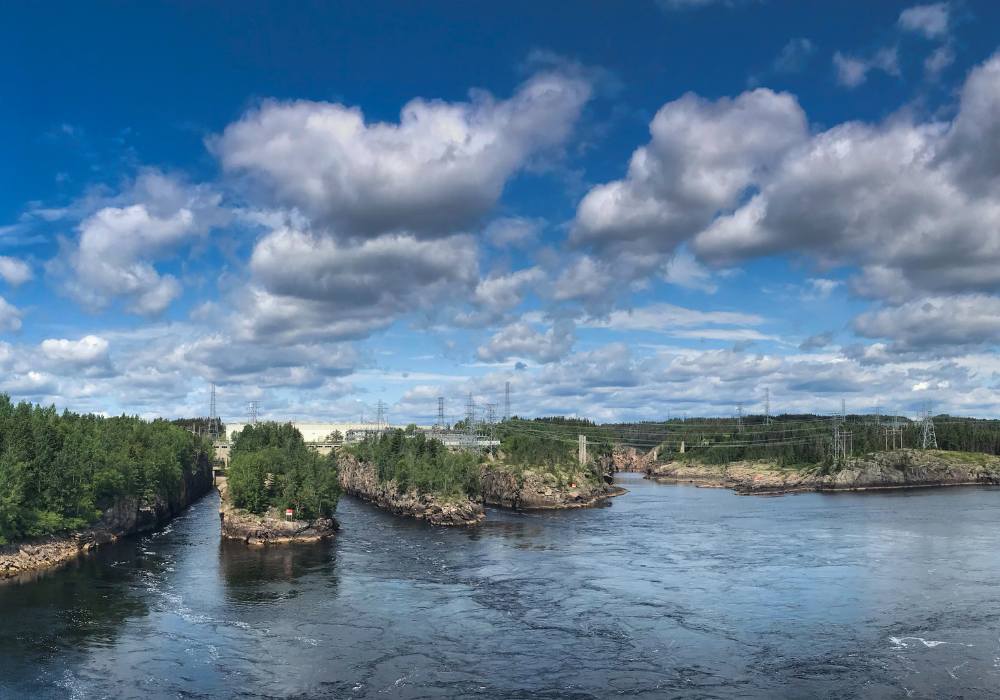
While Kino Aski plans to construct 1,700 megawatts of dedicated wind capacity and secure an additional 550 megawatts from Hydro-Québec to power its Baie-Comeau facilities, electrification alone does not eliminate the carbon intensity of LNG.
- Feed-gas composition and CO2 venting: Natural gas arriving via pipeline at Baie-Comeau will frequently contain high concentrations of carbon dioxide that must be stripped out to meet commercial LNG specifications. If this separated carbon dioxide is vented directly into the atmosphere—rather than captured, transported, and permanently stored—the benefits of facility electrification are severely undermined.
- Data blackouts: These critical lifecycle emissions cannot be accurately modeled or audited because Kino Aski has not publicly disclosed its feed-gas composition, upstream treatment requirements, or comprehensive carbon-dioxide-management plans. Without transparent, peer-reviewed data, the "low-carbon" label remains an unsubstantiated promise.
3. The Quebec Energy Grid Dependency
The project’s heavy reliance on local power adds another layer of complexity. Kino Aski asserts that its wind generation will be "balanced by the clean grid." In practice, this means the project is inextricably dependent upon open access to Quebec’s overarching electricity network and the operational flexibility of its vast hydroelectric reservoirs.
This dependency places Kino Aski in direct competition with other pressing societal and industrial needs. Hydro-Québec’s electricity is a finite resource urgently required for provincial transportation electrification, municipal heating transitions, and the broader decarbonization of existing Quebec industries. Diverting hundreds of megawatts of clean power to feed an export-oriented fossil fuel facility will inevitably trigger intense domestic political resistance.
Official Statements and Stakeholder Perspectives
The debate surrounding Kino Aski has drawn sharp divisions among researchers, policy institutes, and political actors.
In a joint analysis published by energy and environmental policy experts—including Johanne Whitmore (HEC Montréal), Éric Pineault (Université du Québec à Montréal), Normand Mousseau (Université de Montréal and the Trottier Energy Institute), and Angela Carter (Memorial University)—the authors issued a clear warning to the financial community:
"Indigenous rights disputes create permitting and schedule risks; political uncertainty creates regulatory risk; electricity constraints create infrastructure and operating risk; unresolved emissions questions undermine environmental assessment and financing. Delays turn all of them into financing risk."
The researchers emphasize that while the federal government is eager to showcase major economic ventures, investors must perform independent, rigorous due diligence. They note that a federal prospectus is not a substitute for Indigenous consent, nor is it a stamp of regulatory approval. Furthermore, a conceptual wind-power blueprint does not constitute verifiable proof of low-carbon performance.
Meanwhile, the political landscape in Quebec adds an unpredictable variable to the equation. With the province currently navigating an active election cycle, political parties and voters are grappling with the foundational territorial, energy, and environmental trade-offs of the project. No major political faction has provided definitive authorization for a pipeline and export terminal of this magnitude, leaving the project’s future hostage to shifting electoral mandates.
Future Outlook: The Path to Bankability
For institutional lenders, project financiers, and corporate stakeholders, the trajectory of Kino Aski LNG will serve as a bellwether for the viability of mega-scale resource corridors in an era of heightened climate scrutiny and stringent Indigenous governance standards.
To transition from a speculative prospectus item to a truly bankable asset, Kino Aski must clear several formidable hurdles:
- Unanimous Territorial Consent: Proponents must engage in meaningful, nation-to-nation consultations and secure free, prior, and informed consent (FPIC) not merely from the equity-holding Atikamekw Nation, but from every single Indigenous community and traditional territory crossed by the proposed infrastructure corridor.
- Regulatory and Provincial Alignment: The project must weather the shifting political winds in Quebec and satisfy rigorous provincial and federal environmental impact assessments—a process that defeated its predecessor, GNL Québec.
- Scientific and Technical Transparency: Proponents must release comprehensive, verifiable data regarding upstream gas quality, CO2 management, and carbon capture integration to prove that the facility can genuinely achieve low-emission operations without relying on carbon venting or compromising Quebec’s domestic electricity reserves.
Until these fundamental questions are addressed with empirical rigor and legal certainty, Kino Aski remains less of a guaranteed investment and more of a high-stakes gamble—one where political friction, environmental ambiguity, and unmitigated social risk threaten to convert every potential milestone into a costly financial liability.



