

Executive Overview
In the world of modern horticulture, the boundary between urban agriculture, ecological preservation, and personal sanctuary is increasingly porous. This year’s prestigious Gardens of the Year 2026 “Best of the Best” competition brought this synergy into sharp focus, culminating in a resounding victory for expert ecologist and passionate gardener Nadine Mitschunas. Outshining 20 exceptional finalists from across the British Isles, Mitschunas captured both the critical acclaim of a distinguished panel of horticultural authorities and the hearts of the public in a fiercely contested final three people’s vote.
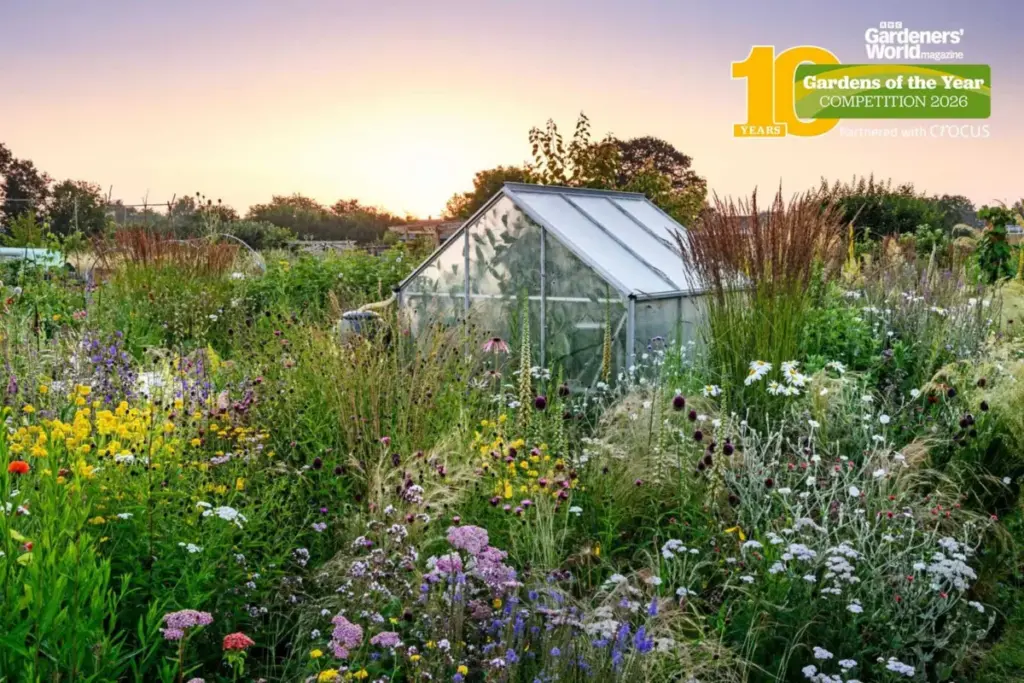
Her winning masterpiece—a sprawling, immersive tapestry spanning three adjoining plots alongside a shared wildflower meadow at the Fir Tree Allotments in Wallingford—represents a masterclass in naturalistic design. Judges lauded the space not merely for its aesthetic presentation, but for its robust biodiversity, sustainable methodologies, and profound atmosphere of coexistence between plants, pollinators, and people.
This retrospective overview explores Mitschunas’s triumph, maps a decade of extraordinary amateur and community gardening through the historical lens of past finalists, and highlights the broader socio-ecological movements shaping green spaces in the UK today.
Detailed Chronology: A Decade of Excellence in the Gardens of the Year
To fully appreciate the magnitude of Mitschunas’s achievement in 2026, one must contextualize it within the evolution of the competition itself. Over the past decade, the Gardens of the Year awards have documented a cultural shift in how Britons approach cultivation, moving from rigid traditionalism toward resilient, wildlife-first, and deeply personal spaces.
Below is the historical chronicle of the finalists and category winners who have defined the competition’s pedigree from 2016 through 2026.
2016: Microclimates, Family Play, and Wildlife Refuges
- Steve Moodey (Abingdon, Oxfordshire) – Small Space Winner: Moodey leveraged the microclimates of a south-facing plot to turn a cluttered, overlooked enclosure into a dense, tropical hideaway. Utilizing structural evergreens for privacy and towering exotic specimens for dramatic scale, he incorporated a curving pathway that invited continuous movement and exploration.
- Magda D’Ingeo (Reigate, Surrey) – Family Plots Winner: Sparked by the arrival of her daughter, D’Ingeo reimagined a standard new-build garden into a multi-sensory natural playground. Her design featured a scented bower, a vine-wrapped treehouse, a rope swing, and clever dual-purpose installations, such as a sandpit that doubled as an outdoor coffee table.
- Pam Woodall (Poole, Dorset) – Wildlife Gardens Winner: Taming an impenetrable thicket of brambles and fallen timber, Woodall propagated robust flora by seed and division. By integrating a natural pond, vibrant flowering perennials, log-edged pathways, and preserved mature trees, she established a thriving ecosystem populated by birds, amphibians, insects, badgers, and deer.
2017: Architectural Rooms, Crofts, and Coastal Winds
- Caroline Cassell (Waltham Abbey, Essex) – Small Space & Judge’s Choice Winner: Cassell carved a traditional cottage garden into intimate "rooms." Romantic borders were paired with a circular dining lawn and sun-trap patios. Fragrant honeysuckle, small trees, and box balls successfully blurred boundaries and drew the gaze vertically.
- Helen Rushton (Inverurie, Aberdeenshire) – Wildlife Friendly Winner: Transforming a derelict croft into a bucolic sanctuary, Rushton introduced sweeping meadows, native hedging, three discrete water bodies, and numerous bird and bat boxes. Pygmy shrews settled in the compost heaps, while roe deer roamed freely among the wildflowers.
- Caroline Critchlow (Mainland, Orkney) – Challenging Plot Winner: Confronting storm-force coastal winds, Critchlow and her husband Kevin erected stone boundary walls, mesh windbreaks, and staked raised beds. Their design was anchored by a striking linear pond and a coastal-reflective planting scheme overlooking Scapa Flow.
2018: Urban Jungles and Minimalist Monochromes
- Wayne Amiel (South London) – Judge’s Choice Winner: On a shoestring budget, Amiel converted a narrow, north-facing, debris-filled site into a vibrant Caribbean-inspired micro-jungle. Bold exotic foliage, painted seating, and vertical climbers provided an immediate sense of shelter and seclusion.
- Richard Small (Tyne and Wear) – People’s Choice Winner: Small transformed a concrete courtyard into a tranquil, container-based oasis. Relying on a restrained white palette—featuring alliums, foxgloves, lobelia, and lupins—complemented by terracotta tiles, gravel, and integrated evening lighting, he created a masterclass in urban minimalism.
2019: Decades of Dedication and Therapeutic Sanctuaries
- Frank Bowdler (Wigan) – Judge’s Choice Winner: Over decades, Bowdler evolved a monotonous side lawn bordered by Leylandii into a densely planted botanical haven. Featuring intricate topiary, a clematis-draped historic well, and meandering paths converging on a central brick patio, the garden celebrated sheer abundance.
- Annette Eales (Hampshire) – People’s Choice Winner: Eales spearheaded a lawn-to-cottage transformation that doubled as a therapeutic sanctuary. Featuring a potting shed, pergolas, pollinator-friendly species mirroring the adjacent countryside, and repurposed furniture acting as planters, the space championed mindful, restorative horticulture.
2020: Coastal Escapes and Steep Slopes
- Elizabeth and Malcolm Schofield (Buckie, Moray) – Judge’s & People’s Choice Winner: The Schofield family tamed a steep coastal bank above a public footpath, forging a multi-tiered coastal paradise. Tropical plantings, gravel paths, and small vegetable beds harmonized with a built-in children’s slide that made functional use of the dramatic gradient.
2021: Vertical Maples and Ecologist Allotments
- Thomas Jose (South Yorkshire) – People’s Choice Winner: Jose constructed specialized tiered shelving to showcase an extensive collection of Japanese maples. Supported by a sustainable irrigation system, the garden offered year-round structural interest punctuated by fiery autumnal foliage displays.
- Nadine Mitschunas (Oxfordshire) – Judge’s Choice Winner (Precursor to 2026 Triumph): Taking over a weed-choked allotment, Mitschunas laid the foundational groundwork for her future masterwork. Combining ornamental crops with high-biodiversity naturalistic planting, she established a haven for local pollinators.
2022: Remote Cliffs and Upcycled Idylls
- Vicky Ward and Maxine Stringer (Cornwall) – People’s Choice Winner: Overcoming steep inclines and remote coastal exposure, Ward and Stringer hauled resilient tropical plants, stone, and reclaimed wood along narrow coastal paths to establish an inspirational seaside allotment.
- Nicola House (Kent) – Judge’s Choice Winner: House designed a "staycation" retreat grounded in sustainability. Utilizing entirely upcycled and donated structural elements, she blended ornamentals, vegetables, and herbs around a central fire-pit gathering space.
2023: Urban Courtyards
- Clive-Johnson Cooper (Edinburgh) – Judge’s & People’s Choice Winner: Converting a makeshift living room extension into an verdant courtyard within Scotland’s bustling capital, Cooper utilized strategic placements of structured and tropical foliage to establish absolute urban privacy.
2024: Boho Urban Sanctuaries and Global Tapestries
- Sara Faulkner (Raynes Park, London) – Judge’s Choice Winner: Faulkner layered a compact urban garden into three distinct zones. Vintage containers, small boundary trees, and colorful perennials successfully introduced depth, privacy, and year-round dynamism.
- Andi and Jo Butler (Telford, Shropshire) – People’s Choice Winner: Drawing inspiration from Asian travels, the Butlers developed a tapestry of garden rooms. Utilizing propagated plants, upcycled materials, and extensive lighting, they created a lush, multi-functional landscape.
2025: Drought-Tolerant Prairies and Canal-Side Havens
- Simon Richards (Folkestone, Kent) – Judge’s Choice Winner: In response to challenging heatwaves, Richards replaced a traditional lawn with a drought-tolerant, prairie-style gravel garden anchored by two interlinked wildlife ponds.
- Kamal Hussain (Saltaire, Yorkshire) – People’s Choice Winner: Hussain transformed a tiny canal-side plot into a vibrant, container-packed floral display designed to brighten the days of local passersby while actively supporting beneficial urban wildlife.
Supporting Context & Metrics: The Philosophy of Nadine Mitschunas
The crowning of Nadine Mitschunas as the 2026 "Best of the Best" winner highlights a vital movement within modern horticulture: the transition from ornamental perfection to functional ecological stewardship.

Key Characteristics of the Winning Wallingford Allotment:
- Scale and Scope: Spanning three legally adjoining plots plus an integrated shared space wildflower meadow at the Fir Tree Allotments, the garden operates on a community scale rarely achieved in standard allotment culture.
- Scientific Foundation: Drawing directly from Mitschunas’s professional background as a pollinator ecologist, the planting scheme intentionally maximizes nectar and pollen corridors throughout the seasonal cycle.
- Aesthetic Approach: Judges repeatedly emphasized the "naturalistic design" ethos, which rejects manicured lines in favor of fluid, dynamic plant associations that mimic natural meadow and woodland-edge ecologies.
Official Statements and Expert Assessment
The elite panel of judges—comprising BBC Gardeners’ World presenter Arit Anderson, renowned garden designer and author Ann-Marie Powell, BBC Gardeners’ World Magazine Brand Voice Director Kevin Smith, and Crocus Head Gardener Ashley Edwards—unanimously praised Mitschunas’s creation.
"Nadine’s allotment is a tour de force in how we should be thinking about our green spaces," noted Arit Anderson during the evaluation process. "It transcends the traditional boundaries of growing vegetables or flowers; it creates an immersive atmosphere where ecology and aesthetic design speak the exact same language."
Ann-Marie Powell added: "The biodiverse planting choices are supported by an underlying sustainable framework that demonstrates extraordinary vision. To manage three plots with this level of artistic and ecological coherence is an inspiration to gardeners everywhere."
Future Outlook: Resources and Inspiration for Gardeners
For those inspired by Mitschunas’s triumph and eager to integrate wildlife-friendly principles into their own green spaces, the BBC Gardeners’ World Magazine and its partners have rolled out a series of educational resources:
- In-Depth Print Coverage: Comprehensive insights into Nadine’s garden—including its historical evolution and practical advice on wildlife planting—are detailed in the October issue of BBC Gardeners’ World Magazine.
- Visual Tours: A complete, cinematic walkthrough of the Wallingford allotment featuring presenter Ashley Edwards is now available via the official BBC Gardeners’ World Magazine YouTube Channel.
- Audio Discussions: Dedicated podcast episodes exploring shared spaces for plants, pollinators, and people can be accessed via major podcast streaming platforms.
- Horticultural Support: Official partner Crocus is offering exclusive promotions (using code GOTY20 for 20 per cent off full-price plants) to help enthusiasts turn their ecological aspirations into reality.
As urbanization increases and biodiversity pressures mount, gardens like Nadine Mitschunas’s stand as vital blueprints for the future—proving that beauty, sustainability, and community can flourish side by side.



