


Executive Overview
From the thawing permafrost of Arctic Canada to the volatile slopes of the Nepalese Himalayas and the increasingly fragile river basins of the Ecuadorian Amazon, Indigenous territories are serving as the frontline battlegrounds of a rapidly destabilizing climate. Catastrophic weather events—once viewed as anomalous, isolated tragedies—are now striking these ecosystems in rapid, overlapping successions. Droughts bleeding into flash floods, prolonged heatwaves culminating in ferocious wildfires, and compounding ecological stress tests are redefining the daily realities of millions of Indigenous peoples.
Yet, a glaring paradox defines the contemporary global climate architecture. While mainstream scientists, environmental policymakers, and international bodies increasingly acknowledge the efficacy of traditional ecological knowledge, they systematically overlook the foundational engine that makes this knowledge operational: Indigenous governance.
A landmark report released today by Land Is Life, a global nonprofit dedicated to Indigenous self-determination, seeks to dismantle this blind spot. Drawing on extensive case studies and more than 200 comprehensive survey responses spanning 46 countries across six distinct global ecosystems—forests, mountains, drylands, freshwater systems, grasslands, and coastal zones—the report provides a definitive global accounting. It demonstrates that Indigenous peoples are not merely passive victims of a warming planet; they are the world’s most proactive, efficient, and successful architects of climate adaptation.
However, the report issues a stark warning: the systems that allow these communities to protect their lands and mitigate disaster risks—legal recognition, direct financing, and equitable cross-border partnerships—are starving for support on a global scale. As international funding wanes, geopolitical conflicts stretch global resources thin, and bureaucratic gatekeeping diverts funds to non-Indigenous intermediaries, the world is ignoring the proven blueprint staring it in the face.
To avert global climate catastrophe, international powers must transition from extractive models of environmental tokenism to funding and respecting the autonomous governance structures that have kept these lands resilient for millennia.
Detailed Chronology: Compounding Disasters and the Anatomy of Indigenous Response
To understand the urgency of the Land Is Life findings, one must examine how climate disasters manifest on the ground. The era of the single, predictable seasonal crisis is over. More than 80 percent of survey respondents in the global study report facing two or more catastrophic climate events simultaneously, and over 90 percent report a dramatic escalation in frequency.
The 2019 Sarayaku Floods: A Masterclass in Self-Determination
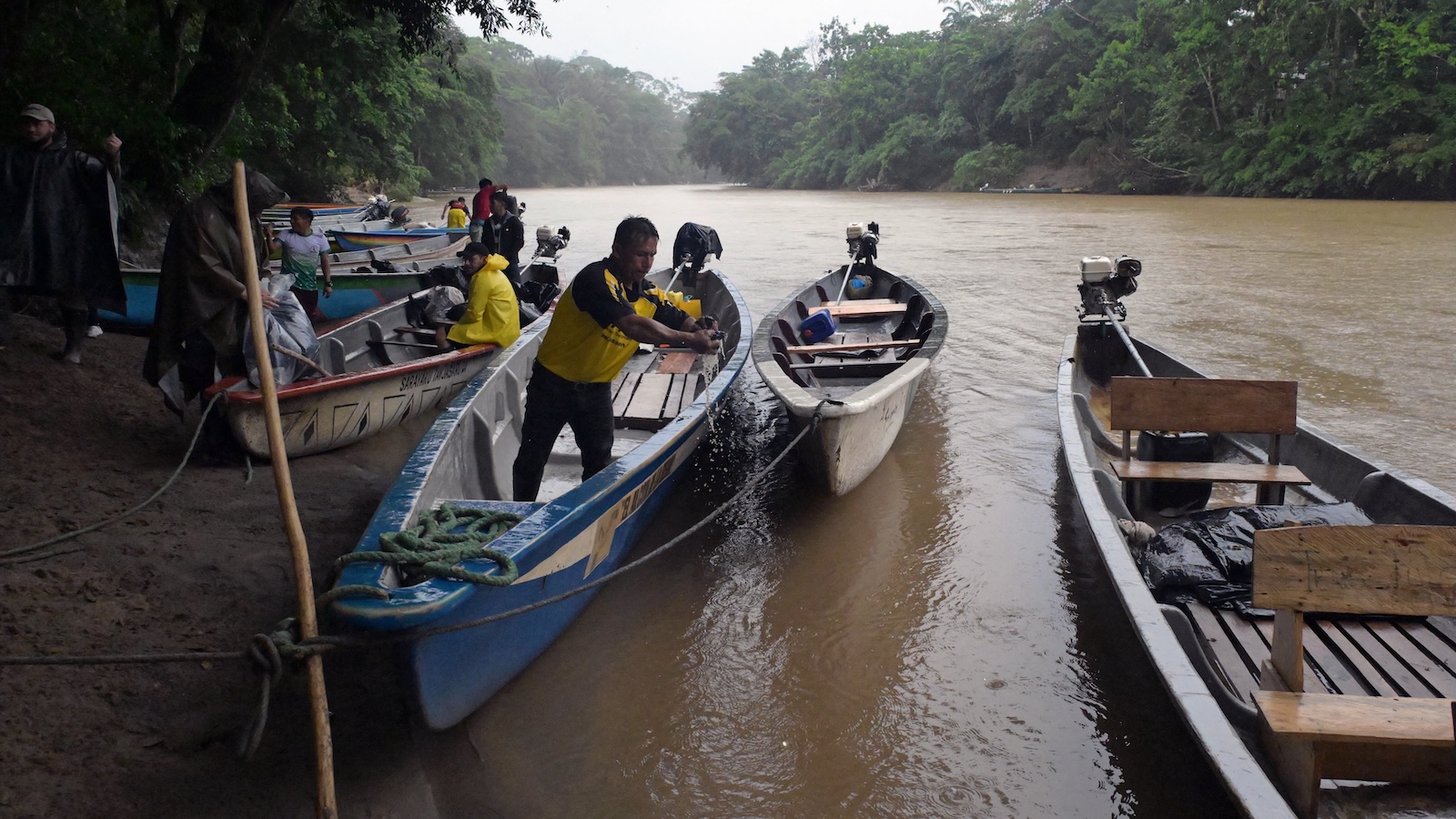
A striking illustration of this reality unfolded in the Ecuadorian Amazon in 2019. The Kichwa People of Sarayaku, a community of roughly 1,600 inhabitants stewarding over 500 square miles of rainforest, were battered by severe and unseasonal floods along the Bobonaza River. The surging waters decimated crops, destroyed homes, and threatened food security.
In a traditional state or municipal setting, such an emergency might have paralyzed local response networks while waiting for federal disaster relief. For the Sarayaku, however, disaster response was immediate and structurally sound. Because the community possesses robust self-governance systems and well-established decision-making frameworks, leaders were able to rapidly mobilize resources, prioritize the most vulnerable families whose homes were washed away, and communicate real-time status updates to external authorities.
This swift coordination is guided by minga, a foundational Kichwa concept embodying solidarity and collective responsibility. Furthermore, this adaptation is deeply intertwined with generational ecological literacy. Prior to the deluge, Sarayaku elders closely monitored anomalous rain and lightning patterns at the headwaters of the Bobonaza River—indicators that signaled impending catastrophe long before any modern meteorological alert system could process the data. Armed with this foresight, the community issued internal warnings and prepared defensive infrastructure.
Global Variations of Crisis and Adaptation
The Ecuadorian Amazon is far from an isolated case study. The report maps out diverse, ecosystem-specific interventions deployed across the globe:
- The Drylands of Kenya: Facing years of unprecedented, prolonged droughts that devastated standard agricultural yields, Indigenous Endorois and Tugen women bypassed failing commercial supply chains. They actively cultivated indigenous, drought-resistant varieties of sorghum, millet, and other ancestral food staples. These resilient crops provided some of the region’s sole successful harvests during peak drought cycles, preventing widespread famine.
- The Amazon Basin of Brazil: To combat the escalating menace of intentionally set wildfires and climate-driven blazes, the Coordination of Indigenous Organizations of the Brazilian Amazon—the country’s largest regional Indigenous network—stepped into the vacuum left by shifting state policies. The network organizes sophisticated, grassroots fire management systems, provides specialized training to local youth, and mobilizes rapid-response teams across massive tracts of rainforest.
- The High Andes of Peru: In the Ausangate Regional Conservation Area, Quechua communities entered into a strategic partnership with established conservation organizations. By combining their generational environmental indicators with Western scientific monitoring methodologies, they successfully documented ecological shifts and implemented precision-management strategies to safeguard glacial water sources.
Supporting Context & Metrics: The Architectural Flaws of Global Climate Finance
Despite these breathtaking examples of grassroots ingenuity, structural barriers continue to undermine the efficacy of Indigenous climate stewardship. The Land Is Life report highlights a pervasive structural disconnect within international climate policy: governments and philanthropic bodies frequently celebrate "traditional knowledge" while systematically undermining the political and legal frameworks required to sustain it.
The Metrics of Marginalization
- Multifaceted Crises: Over 80% of surveyed communities globally report managing overlapping, simultaneous environmental shocks (e.g., severe drought followed immediately by flash flooding or pest infestations).
- Escalating Frequencies: Over 90% of respondents note a measurable, steady increase in the frequency of extreme weather events over the past decade.
- The Funding Desert: Despite billions of dollars in climate adaptation pledges made annually at global summits like COP and New York Climate Week, a negligible fraction of this capital reaches Indigenous communities directly.
The Intermediary Trap
When international funding is nominally earmarked for Indigenous-led projects, it is frequently intercepted by bureaucratic gatekeepers.
"It’s also so frustrating, right? Because there are so many projects that are supposed to be for Indigenous peoples, but they are implemented by non-Indigenous organizations and non-Indigenous peoples."
— Anisha Buda, Kaike Magar community and program officer at the Indigenous Women Forum in Nepal
This dynamic creates a perverse economic cycle. Non-Indigenous NGOs and international agencies absorb significant administrative overhead costs from funds intended for grassroots protection, while the actual stewards of the land remain cash-strapped and legally vulnerable.
Compounding this financial starvation is active legal hostility. Many nation-states fail to legally recognize Indigenous land titles, routinely reject the use of Indigenous languages in national emergency alert and early warning systems, and, in many jurisdictions, actively criminalize traditional cultural practices like controlled burning—a practice proven to prevent catastrophic mega-fires.
Official Statements and Expert Perspectives
The release of the Land Is Life report during New York Climate Week served as an urgent wake-up call to policymakers, philanthropists, and world leaders. The authors and community leaders behind the study emphasize that solving the climate crisis does not require inventing complex new technological frameworks; rather, it requires investing in systems that have proven their efficacy over centuries.
+-----------------------------------------------------------------------------------+
|                        THE CORE PHILOSOPHY OF THE REPORT                          |
|                                                                                   |
|  "When it comes to adaptation, we don’t really need to create new structures      |
|   or systems. We just need to see what is working."                               |
|                                                                                   |
|  — Luisa Castañeda Quintana, Executive Director of Land Is Life                   |
+-----------------------------------------------------------------------------------+
Luisa Castañeda Quintana underscored that environmental disasters are fundamentally borderless, ignoring both national borders and ecological zones. Consequently, human responses must also transcend these artificial boundaries by amplifying the voices of those who read the earth most accurately.
Gisela Hurtado, the primary author of the report, addressed the modern geopolitical landscape characterized by shrinking international aid budgets. With traditional donor nations in the United States and Europe scaling back their multi-billion-dollar foreign climate commitments, and protracted global conflicts diverting public attention and treasury resources, resources are scarcer than ever.
"We are in a moment where resources are scarce," Hurtado noted. "Where can we put the little money that we have? Where can we put it to make it much more effective? And for me, for the report, the idea is put it into what already is working."
This sentiment is echoed by leaders like Daniel Santi of the Sarayaku, who stresses that true partnership requires more than rhetorical solidarity. It requires formal legal protections for Indigenous territorial authority, open-access resources, and institutional humility from Western scientific and political establishments.
Anisha Buda of Nepal reinforced this point from the perspective of the Hindu Kush-Himalayan region, noting that the persistent lack of direct financial access compounds vulnerabilities in areas already destabilized by melting glaciers and erratic monsoons. Without flexible, unrestricted funding streams, local communities are forced to spend their limited energy fighting institutional bureaucracy rather than defending their ecosystems.
Future Outlook: A Road Map for Global Resilience
As global temperatures continue to track upward and the frequency of compounding climate shocks accelerates, the international community stands at a crossroads. The traditional paradigm of top-down, centralized disaster management has repeatedly proven sluggish, expensive, and ill-equipped to handle the realities of the Anthropocene.
The insights compiled by Land Is Life point definitively toward an alternative future—one where Indigenous governance is recognized not as an obstacle to national development or conservation, but as the golden standard for planetary survival.
To pivot toward this sustainable horizon, the report outlines several urgent, non-negotiable imperatives for governments, international policymakers, and philanthropic institutions:
- Unconditional Legal Recognition: Governments must formally secure and respect Indigenous land rights, codifying territorial autonomy into national legal frameworks to eliminate land-grabbing and resource exploitation.
- Direct, Flexible Financing: Philanthropists and international climate funds must bypass bureaucratic intermediaries, delivering direct, unrestricted grants to Indigenous-led organizations that allow communities to deploy capital where needs are most acutely felt.
- Equitable Co-Management Partnerships: Collaborative models—such as the integration of Quechua traditional knowledge with Western scientific monitoring in Peru—must be replicated globally, ensuring that Indigenous communities retain leadership roles in ecological stewardship.
- Decentralized Emergency Integration: National disaster response systems must incorporate Indigenous early warning networks, utilize local languages for crisis communication, and integrate traditional ecological management techniques (such as indigenous fire management) into regional planning.
As lead author Gisela Hurtado reflects, the behaviors and survival mechanisms exhibited by Indigenous territories today are a preview of the conditions the rest of the world will inevitably face tomorrow.
"What they are seeing in the territories, we’re going to see it also in the future," Hurtado warns. "They are the ones that are much more connected with the Earth to know what is going to happen in the future."
Whether global powers possess the wisdom to listen, fund, and step aside before those future conditions consume the rest of the world remains the defining question of our era.



