The transition of heavy-duty commercial freight to zero-emission platforms stands as one of the most critical and complex frontiers in the global clean energy transition. While passenger electric vehicles (EVs) have achieved widespread consumer adoption and structural cost parity in many regions, the heavy-duty commercial trucking sector—specifically Class 8 long-haul and regional transport—has historically proven exceptionally difficult to disrupt.
According to data compiled by the International Council on Clean Transportation (ICCT), a stark geographic divergence has emerged in recent years. While electric truck prices in Europe have experienced a significant downward trajectory, declining by roughly 27 percent as supply chains matured and foreign market competition heated up, US prices have moved in the opposite direction. American electric truck prices climbed by 32 percent over a comparable timeframe. Critics and market analysts point to an entrenched domestic trucking and manufacturing status quo that has leveraged every available regulatory and economic tool to slow the proliferation of zero-emission alternatives, thereby protecting the lucrative, high-margin sales of traditional diesel-powered Class 8 vehicles.
To counter these systemic barriers, a coalition of heavy hitters has emerged to forcibly inject economies of scale into the market. The Zero-Emission Truck Shipper-Carrier Alliance Leading Electrification—better known as ZET SCALE—has officially launched with the aggressive mandate of deploying 10,000 heavy-duty electric trucks across North America. Operating as an offshoot of Catalyst Mobility (formerly known as CALSTART) in partnership with the Smart Freight Center, Microsoft, and PepsiCo, ZET SCALE seeks to dismantle the individual financial and operational risks that have paralyzed fleet operators for years.
Simultaneously, legislative and market interventions are attempting to inject transparency and stability into an otherwise opaque market. California’s enactment of Senate Bill 1213 (SB 1213) promises to bring unprecedented price tracking and accountability to public investments in clean commercial vehicles. Together, these developments signal a pivotal inflection point: the transition of zero-emission freight out of the slow-moving pilot phase and into the realm of large-scale commercial reality.
Detailed Chronology: The Birth of ZET SCALE and Its Landmark 2,500-Truck Commitment
The genesis of ZET SCALE lies in the recognition that isolated fleet operators cannot bear the capital expenditure and technological risks of electrification alone. Transitioning a commercial fleet from internal combustion engines to battery-electric powertrains requires vastly more than simply swapping vehicle chassis. It demands co-locating high-capacity megawatt-scale charging infrastructure, restructuring logistical operations to accommodate duty cycles, and navigating unproven residual resale values.
Uniting the Value Chain
Recognizing these hurdles, Catalyst Mobility and its partners engineered ZET SCALE to act as a central clearinghouse. The alliance fundamentally alters the traditional procurement model by bridging shippers, carriers, vehicle original equipment manufacturers (OEMs), charging infrastructure developers, and financial institutions into a single unified entity.
Rather than fleets negotiating individual, high-cost custom orders, ZET SCALE aggregates multi-company demand into massive, consolidated bulk purchase requests. This coordinated approach unlocks institutional-grade vehicle pricing, streamlined financing, and synchronized freight demand, turning what was once a high-risk financial gamble into a predictable commercial service.
The Landmark 2,500 Class 8 Order
In a major milestone for the alliance, ZET SCALE announced that its participating members have committed to purchasing 2,500 battery-electric Class 8 trucks—a figure that matches the total operational population of heavy-duty electric trucks in the United States today.
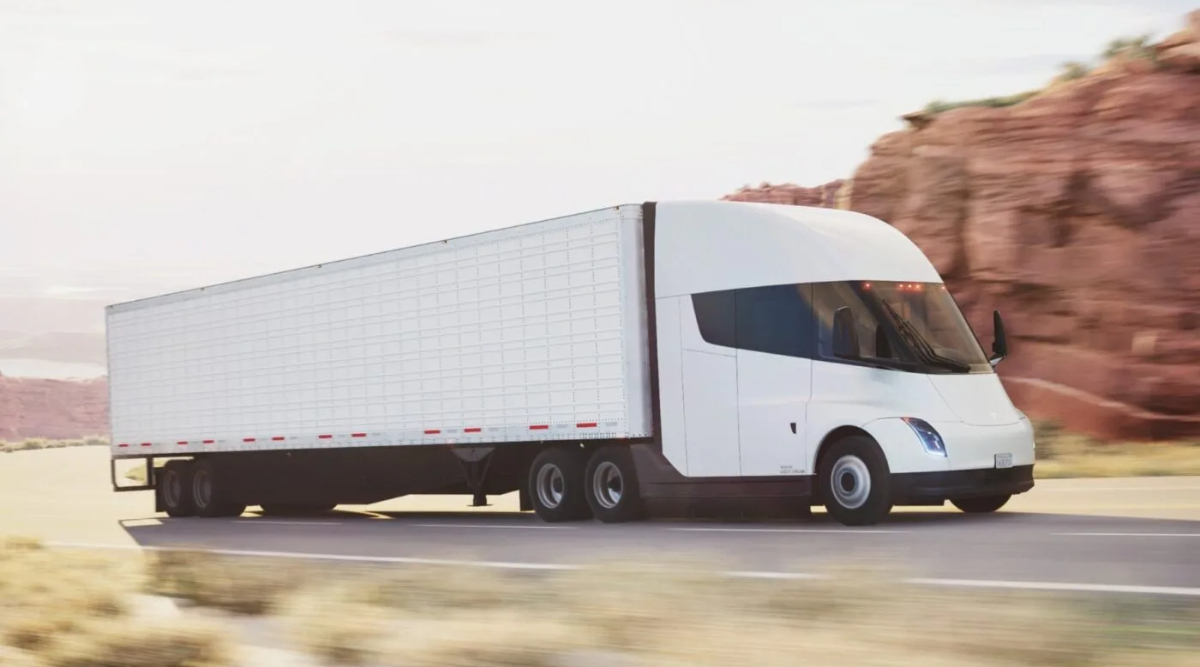
The competitive tender process, which was opened to every Class 8 truck manufacturer operating in North America, ultimately favored Tesla as the primary supplier. After a rigorous internal evaluation weighing purchase price, real-world driving range, charging architecture compatibility, and OEM production capacity, the alliance selected the Tesla Semi to anchor the initial rollout. Additional vehicles within the aggregate commitment are slated to be supplied by legacy and emerging commercial manufacturers, including Kenworth, Volvo, and RIDE.
Deployment Footprint and Infrastructure Hubs
The deployment of these 2,500 heavy-duty electric trucks will not occur in a vacuum; rather, it has been strategically mapped across ten critical North American freight and logistics hubs. The targeted regions include:
Los Angeles, California
Stockton, California
Bakersfield, California
Seattle/Tacoma, Washington
Houston, Texas
Dallas, Texas
San Antonio, Texas
Chicago, Illinois
Atlanta, Georgia
The Newark/New York metropolitan area
While the exact delivery schedules remain fluid and subject to OEM manufacturing scaling, the concentration of these vehicles in major logistics arteries is explicitly designed to maximize the utilization of shared charging corridors and prove out long-term operational reliability.
Supporting Context & Metrics: Overcoming Market Barriers and Financial Risk
The core challenge facing heavy-duty transport electrification has rarely been a lack of technological capability. Modern electric semi-trucks boast impressive torque, rapid acceleration, and sufficient battery capacities to handle regional drayage and regional corridor runs. Instead, the market has stalled due to deep-seated structural and financial asymmetries.
The Total Cost of Ownership vs. Upfront Sticker Shock
On paper, the total cost of ownership (TCO) heavily favors electric trucks over the long run, primarily due to the volatility and high ongoing cost of diesel fuel, alongside significantly reduced mechanical maintenance requirements. However, fleet operators are inherently pragmatic enterprises that manage capital with a multi-year horizon.
According to industry data, a traditional diesel-powered Class 8 truck commands an upfront purchase price of roughly $180,000, whereas a newly minted battery-electric commercial truck can easily top $400,000. If fleet managers harbor doubts about the long-term trajectory of diesel prices or fear catastrophic battery degradation, the incentive to pull the trigger on a $400,000 asset plummets. They default to the familiar, lower-cost diesel baseline.
De-Risking the Balance Sheet: ZET Financial
To dismantle this psychological and financial barrier, ZET SCALE integrated a specialized financial arm known as ZET Financial. This division acts as the intermediary purchaser, executing bulk orders and administering the proprietary ZET Lease program.
The primary innovation of the ZET Lease program is its ability to strip residual value risk entirely off the balance sheets of individual fleet operators. Residual value risk—the uncertainty surrounding how much a used electric truck will be worth after five to seven years of heavy commercial use—has historically terrified fleet CFOs. By absorbing and pooling this risk across a massive portfolio, ZET Financial provides the necessary financial predictability to make fleet electrification bankable.
The California Legislative Backstop: SB 1213
Coinciding with the ZET SCALE announcement, regulatory frameworks are rapidly evolving to support market transparency. In California, Governor Gavin Newsom signed Senate Bill 1213 (SB 1213) into law, a landmark piece of legislation designed to introduce rigorous price tracking and public accountability to the state’s burgeoning zero-emission medium- and heavy-duty truck markets.
Sponsored by State Senator Eloise Gómez Reyes, SB 1213 targets a historical blind spot: the actual transaction prices of clean trucks. Because state and federal incentive programs pour billions of dollars into subsidies, taxpayers and fleet operators require verifiable data to ensure those public investments are genuinely driving down manufacturing costs rather than simply padding OEM margins.
Furthermore, SB 1213 directs state agencies to explore and implement alternative financing structures, including low-cost capital loans and state-backed residual value guarantees. By establishing a replicable template for price data reporting—a framework already being explored by a coalition of seven progressive states—California is attempting to build a standardized, transparent foundation that accelerates market maturation nationwide.
Official Statements and Industry Perspectives
The convergence of corporate commitments, financial innovation, and public policy has generated robust commentary from leaders across the freight ecosystem.
Michael Berube, CEO of Catalyst Mobility:
"You can have good technology and still not have a market. What is different about ZET SCALE is that the demand was organized so manufacturers could price at scale. That is how costs move, and that is how clean trucks leave the pilot phase."
Christoph Wolff, CEO of the Smart Freight Center:
"Every part of the freight industry wants cleaner trucks, but until now each company faced that transition—and its risks—alone. ZET SCALE aligns shippers, carriers, manufacturers, and financiers around a single, real demand signal. When the risk is shared across the whole chain instead of resting on any one player, the industry can finally move at scale."
Dan Priestley, Head of the Tesla Semi Program:
"ZET SCALE’s goals are exciting because they take the operational cost advantage and predictability that electricity provides and amplifies it at scale. We are proud to have been the primary selection in this RFP and look forward to giving shippers and carriers a new competitive edge."
State Senator Eloise Gómez Reyes, Sponsor of SB 1213:
"California is making significant investments in our clean transportation future, and taxpayers and fleet operators deserve to know those investments are delivering real value. SB 1213 brings greater transparency and accountability to the clean truck market so we can better understand what these vehicles actually cost and help drive those costs down over time. For communities like the Inland Empire, where families have carried the health impacts of goods movement for generations, making cleaner trucks more affordable means cleaner air and healthier neighborhoods."
Future Outlook: The Global Competition Landscape
As the North American market takes its first major coordinated steps toward fleet electrification via initiatives like ZET SCALE, the broader global landscape reveals both immense promise and lingering structural anxiety.
The Rise of Global Competition
In Europe, the gradual cooling of electric truck pricing has been catalyzed in no small part by the aggressive market entry of international competitors. Chinese manufacturers, including industry titans such as BYD and Sany, have aggressively expanded their footprint into Western markets, offering technologically advanced commercial electric vehicles at highly competitive price points. BYD’s commanding display at major international expos, such as the IAA Transportation show in Hannover, Germany, underscored the reality that global competitors are rapidly capturing market share in medium- and heavy-duty electric logistics.
Conversely, the United States market remains insulated by heavy regulatory and trade barriers designed to protect domestic manufacturing from foreign competition. While domestic policy incentives like the Inflation Reduction Act and state-level grants provide vital capital injections, industry observers frequently debate whether protectionist policies inadvertently slow down the pace of cost reduction. Without the fierce price competition driven by foreign market entrants, domestic truck manufacturers face less immediate pressure to slash production costs, potentially lengthening the timeline to true cost parity with diesel.
The Road Ahead for American Freight
Despite these headwinds, the momentum generated by ZET SCALE, combined with recent commercial traction—such as Tesla’s major multi-hundred-truck orders from firms like Einride and IMC Logistics—demonstrates that the commercial electric truck is shedding its status as an experimental novelty.
The blueprint has been drawn. By organizing fragmented market demand into cohesive, multi-thousand-vehicle blocks, aligning financial institutions to absorb residual risk, and demanding legislative transparency through statutes like SB 1213, the North American freight industry is attempting to engineer its own industrial revolution. If successful, ZET SCALE’s initial deployment of 2,500 Class 8 electric trucks will serve as the tipping point that transforms American heavy-duty transport from a diesel-dependent relic of the 20th century into a clean, predictable, and commercially viable engine for the decades ahead.