

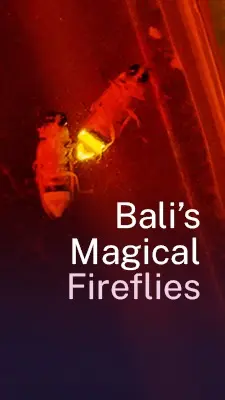
Executive Overview
Across the emerald rice paddies and lush river valleys of Bali, a silent extinction is unfolding in plain sight. For generations, the hypnotic, bioluminescent dance of fireflies was an intrinsic part of the island’s tropical dusk—a natural light show that signaled the health of rural ecosystems and inspired local folklore. Today, however, that living magic is rapidly fading. Driven by a relentless wave of rapid commercial development, sprawling urbanization, the proliferation of artificial light, and heavy reliance on chemical pesticides, firefly populations throughout Southeast Asia—and specifically on the Indonesian island of Bali—are facing unprecedented threats.
Enter Wayan Wardika, a dedicated local conservationist swimming against the tide of modern "progress." In 2020, amidst the global uncertainty of the COVID-19 pandemic, Wardika founded Bring Back the Light, marking Indonesia’s first and only dedicated firefly conservation initiative. Operating with a small, passionate team of scientists and environmental advocates, Wardika is not merely studying the decline; he is actively working to reverse it through captive breeding programs and habitat restoration.
Yet, Wardika’s mission has evolved beyond laboratory breeding. Through years of fieldwork, he and his team have realized a fundamental truth of ecological restoration: you cannot successfully reintroduce a species if its home has been destroyed. Captive breeding can buy time, but true, sustainable recovery requires systemic change on the ground. Consequently, Wardika has expanded his crusade to the agricultural heartlands of Bali. He is actively persuading neighboring farmers to abandon synthetic chemical fertilizers and pesticides, urging a return to traditional organic farming methods.
This comprehensive report explores the multifaceted crisis facing Bali’s fireflies, examines the genesis and operational strategies of Bring Back the Light, highlights the broader socioeconomic and environmental contexts of agricultural chemical use, and projects the long-term outlook for ecological preservation in one of the world’s most heavily visited tourist destinations.
Detailed Chronology: From Twilight Spectacle to Conservation Emergency
The Pre-Development Era: A Natural Symphony of Light
To understand what is being lost, one must look back at Bali’s ecological history. Prior to the rapid acceleration of mass tourism and industrial-scale agriculture in the late 20th century, the island’s complex network of subak—traditional cooperative water management systems for the cultivation of rice—created a pristine, interconnected wetland habitat. These flooded fields, bordered by dense tropical foliage and unmarred by heavy electrical grids, provided the ideal breeding grounds for Lampyridae, the family of beetles commonly known as fireflies or lightning bugs.
For centuries, these insects thrived in harmony with Balinese agriculture. Their presence was so ubiquitous that villagers took them for granted, viewing the nocturnal glow as a permanent fixture of rural life. Larvae fed on snails and soft-bodied insects within the damp soils of the paddies, helping to naturally regulate pest populations, while adult fireflies performed their elaborate light displays to secure mates during the warm, humid evenings.
The Turning Point: Rapid Development and Environmental Stressors
As Bali transformed into an international tourism hotspot, the landscape underwent a radical metamorphosis. Acres of traditional agriculture were paved over to construct luxury resorts, villas, roads, and commercial hubs. This rapid urbanization introduced two lethal threats to firefly populations:
- Habitat Fragmentation: Continuous swaths of natural wetlands were broken up into isolated patches, preventing fireflies from migrating, finding diverse mates, and establishing resilient gene pools.
- Light Pollution (Phototoll): Fireflies rely heavily on their bioluminescent signaling to reproduce. The exponential increase in streetlights, neon signs, and floodlights severely disrupts this mating ritual. Male fireflies become disoriented by artificial illumination, failing to locate females, while females struggle to distinguish natural flashes from human-made glare.
Concurrently, the agricultural sector underwent a seismic shift. Traditional, low-input farming methods were largely abandoned in favor of the "Green Revolution" package: high-yielding seed varieties coupled with heavy applications of synthetic fertilizers, herbicides, and broad-spectrum insecticides. While these chemicals temporarily boosted crop yields, they proved devastating to non-target insect species, wiping out the very invertebrates upon which fireflies depend for food and destroying the delicate balance of the paddy soil ecosystem.
2020: The Birth of Bring Back the Light
Recognizing that inaction would mean the complete local extinction of these iconic insects, Wayan Wardika took decisive action in 2020. Eschewing the conventional wisdom that individual citizens can do little against systemic environmental degradation, Wardika established Bring Back the Light.
Initially conceived as an independent grassroots rescue effort, the initiative quickly realized that standard wildlife conservation models—typically applied to charismatic megafauna like orangutans or elephants—needed to be completely re-engineered for micro-fauna. Wardika assembled a lean, dedicated team of local scientists, entomologists, and field technicians. Together, they established makeshift breeding stations to understand the delicate life cycles of native Balinese firefly species, experimenting with optimal humidity, temperature, and feeding protocols to successfully rear generations of fireflies in captivity for eventual release back into protected wild habitats.
Supporting Context & Metrics: The Science of Firefly Decline
Understanding the Threats
The plight of Bali’s fireflies is not an isolated local anomaly; it is part of a broader global insect apocalypse. According to comprehensive biological studies published over the past decade, insect populations worldwide are plummeting at alarming rates. In Southeast Asia, fireflies face a synergistic cocktail of anthropogenic pressures:

- Pesticide Toxicity: Modern agricultural chemicals—particularly neonicotinoids and organophosphates—are indiscriminate killers. When farmers spray crops to eliminate planthoppers or stem borers, the chemical residue poisons the soil and water. Firefly larvae, which spend up to two years burrowing in damp earth and hunting terrestrial snails, absorb these toxins directly, resulting in catastrophic mortality rates long before they reach adulthood.
- Habitat Loss and Alteration: Fireflies are remarkably sensitive environmental indicators. They require specific microclimates featuring high moisture, unpolluted water sources, and undisturbed soil for pupation. The conversion of wetlands into concrete developments strips the landscape of these vital criteria.
- Light Pollution Dynamics: Entomological research confirms that artificial light at night (ALAN) interferes with the nocturnal nervous systems of insects. For fireflies, whose entire reproductive success depends on precise temporal and spatial light signals, urban glow acts as an evolutionary trap.
The Economic and Ecological Interdependence
Why should humanity mourn the potential loss of a glowing beetle? The answer lies in ecosystem services. Fireflies are apex predators within the micro-fauna world. Their larvae play a critical role in controlling populations of agricultural pests, such as slugs and snails, which can devastate young rice shoots.
Furthermore, fireflies serve as the quintessential "umbrella species." By protecting and restoring the habitats required to sustain healthy firefly populations, conservationists inadvertently safeguard hundreds of other beneficial insects, amphibians, and aquatic plants that share the same ecosystem. In essence, saving the firefly is a proxy for preserving the biological integrity of Bali’s remaining agricultural heartlands.
Official Statements & Field Insights
The Vision of Wayan Wardika
In interviews detailing the mission of Bring Back the Light, Wayan Wardika emphasizes that conservation cannot succeed in a vacuum. His philosophy bridges high-tech biological intervention with grassroots community education.
"We started Bring Back the Light because we realized that if we did nothing, our children would only ever read about fireflies in books or see them in digital archives," Wardika explains. "People often think of conservation as locking nature away behind fences. But in Bali, nature and human agriculture have coexisted for centuries. To bring back the fireflies, we cannot just release lab-bred bugs into a toxic landscape. We have to heal the soil, turn off unnecessary lights, and convince our farming communities that chemical-free agriculture is the only way forward for both our crops and our wildlife."
The Scientific Challenge of Captive Breeding
Breeding fireflies outside of their natural habitat is an extraordinary scientific hurdle. Unlike mammals or birds, the biological requirements of many tropical firefly species remain poorly documented. Wardika’s team of scientists has had to pioneer proprietary methodologies for emulating the exact environmental conditions necessary for egg incubation, larval feeding, and pupal maturation.
According to field biologists collaborating with the initiative, the success of these breeding programs hinges on replicating the micro-ecosystems of healthy rice terraces—complete with native ground cover, appropriate moisture levels, and clean, unpolluted water channels. Every successful release of adult fireflies represents months of meticulous laboratory monitoring and environmental preparation.
Future Outlook: A Critical Junction for Bali’s Environment
Shifting the Paradigm: The Organic Agriculture Push
Looking ahead, the long-term viability of Bring Back the Light depends heavily on scaling its community outreach efforts. Wardika’s current strategic focus is shifting from urban centers and laboratories out into the rural farming districts. By engaging directly with neighboring farmers, the initiative is working to demonstrate that organic farming is not merely an idealistic environmental crusade, but a practical, economically viable alternative to chemical-dependent agriculture.
Chemical fertilizers and pesticides impose a heavy financial burden on smallholder farmers in Bali, often trapping them in cycles of debt as pest resistance builds and soil fertility degrades naturally over time. By educating farmers on the benefits of biological pest control, composting, and companion planting, Wardika’s team is fostering a symbiotic relationship: farmers reduce their chemical footprint to save money and improve crop safety, while simultaneously recreating the pristine chemical-free habitats that fireflies desperately need to survive and multiply.
Policy, Tourism, and the Path Forward
Despite the inspiring strides made by Bring Back the Light, the broader systemic challenges facing Bali remain daunting. Unchecked tourism development and weak enforcement of environmental zoning laws continue to threaten the island’s green spaces.
To secure a sustainable future for Bali’s fireflies, conservationists argue that several key steps must be taken over the next decade:
- Zoning Protections: Local government bodies must designate critical agricultural zones and river corridors as protected ecological sanctuaries, strictly limiting disruptive commercial construction.
- Lighting Ordinances: Municipalities across Bali should implement dark-sky initiatives, encouraging or mandating the use of shielded, warm-toned outdoor lighting to minimize light pollution in rural and semi-rural areas.
- Subsidies for Organic Transition: Agricultural authorities should introduce financial incentives and training programs to help Balinese farmers transition away from synthetic chemical inputs.
- Institutional Support: Initiatives like Bring Back the Light require expanded funding, academic partnerships, and international recognition to scale their operations from a localized project into a island-wide conservation framework.
Conclusion
Wayan Wardika and his team have proven that even in the face of overwhelming developmental pressures and environmental degradation, individual dedication can spark a powerful movement. The glow of the firefly may be faint and fragile, but it serves as a brilliant beacon of hope for Bali’s environmental future. Whether this living light can be successfully sustained across the island will depend not only on the success of laboratory breeding tubes, but on a collective human willingness to rethink how we farm, build, and coexist with the natural world.



