

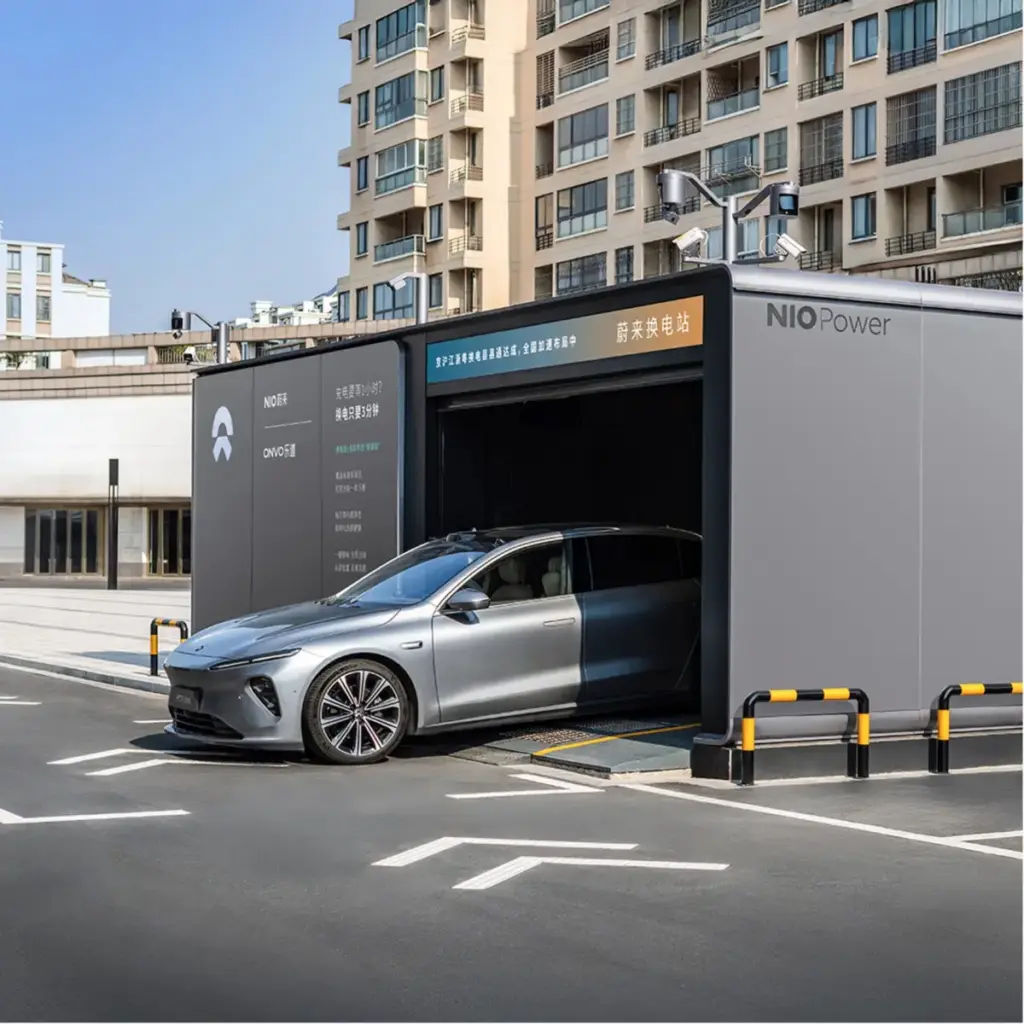
For more than a decade, the electric vehicle (EV) industry has harbored a deep skepticism regarding battery swapping. While the concept initially promised to eradicate "range anxiety" by offering automated, sub-five-minute battery replacements as a substitute for lengthy plug-in charging sessions, the graveyard of pioneers has loomed large. From the high-profile collapse of Better Place in 2013 to numerous quiet corporate withdrawals, the consensus among Western automakers and industry analysts has largely branded battery swapping as capital-intensive, logistically complex, and ultimately destined for obsolescence.
Yet, history is rarely a monolith, and outliers often redefine the boundaries of what is deemed possible. Enter NIO, the Chinese electric vehicle manufacturer that doubled down on battery swapping when virtually every other major player abandoned the infrastructure-heavy strategy. NIO built out a sprawling network of proprietary swap stations, attempting to prove that battery-as-a-service (BaaS) could scale successfully.
Now, that high-stakes bet has received the ultimate validation. In a massive structural realignment that could fundamentally alter the trajectory of the global EV market, Chinese automotive powerhouse Zhejiang Geely Holding Group has acquired a 30% stake in NIO Power, NIO’s dedicated battery-swapping arm. This is not a modest venture capital injection; it is a multi-layered strategic consolidation involving asset integration, massive cash infusions, and a unified technological roadmap.
This comprehensive alliance bridges two of China’s most formidable automotive players, uniting them across technology, operations, and capital. By integrating Geely’s commercial-focused Yiyi Power subsidiary into NIO Power and establishing shared standards for consumer-facing vehicles, the partnership signals a paradigm shift. Battery swapping is no longer viewed merely as a desperate alternative to slow charging, but as an indispensable pillar of a diversified, multi-modal EV ecosystem. As Geely commits its massive weight and manufacturing prowess to the ecosystem, the entire global EV landscape is forced to ask a provocative question: Was battery swapping written off prematurely?
Detailed Chronology: The Evolution from Pioneer Failure to Strategic Consolidation
To fully appreciate the gravity of the Geely-NIO partnership, one must trace the rocky timeline of EV battery-swapping technology—a trajectory characterized by audacious ambition, staggering financial losses, and, ultimately, stubborn resilience.
The Early Era: The Cautionary Tale of Better Place
Long before multi-gigawatt gigafactories dotted the globe and ultra-fast DC chargers became standard highway infrastructure, Shai Agassi’s Better Place envisioned a world where drivers would never wait for an EV to charge. Founded in 2007, the company raised nearly $1 billion, partnered with Renault-Nissan, and deployed automated battery-swapping infrastructure in Israel and Denmark.
However, the venture faced insurmountable hurdles: proprietary battery designs that locked automakers into a single ecosystem, astronomical infrastructure costs, and a lack of industry standardization. By 2013, Better Place filed for bankruptcy, leaving behind a chilling effect across the automotive industry. For years, legacy automakers took away a singular lesson: battery swapping is a financial black hole.
The NIO Exception
While the rest of the automotive world pivoted aggressively toward direct-current (DC) fast-charging plugs (exemplified by Tesla’s expanding Supercharger network and the CCS standard), Chinese startup NIO swam against the tide. Beginning with the launch of its vehicles in the late 2010s, NIO invested heavily in its Power Swap infrastructure.
Critics frequently highlighted the immense capital expenditure required to build, maintain, and stock automated swap stations with expensive lithium-ion battery packs. Yet, NIO persisted, refining its automated swapping technology through multiple generations—evolving from manual assistance to fully automated, autonomous-parking-assisted swaps that take mere minutes. Over the years, NIO’s cumulative swap count surged into the tens of millions, proving that urban apartment-dwellers and commercial drivers without home-charging access found immense value in the service.
The Geely Integration: A New Paradigm
The current turning point arrives with Geely Holding Group—a sprawling multinational automotive titan that owns or holds major stakes in Volvo Cars, Polestar, Lotus, Zeekr, and Lynk & Co. Rather than building a competing proprietary network or ignoring the space entirely, Geely recognized the maturity of NIO’s infrastructure.
Under the terms of the newly minted agreement, the transaction is executed through a dual-faceted approach:
- The NIO Power Stake: Geely Holding Group is acquiring a 30% equity stake in NIO Power (which encompasses both battery-swapping and charging infrastructure divisions) through a strategic blend of RMB 640 million in cash and 100% equity transfer of Yiyi Power, a Geely subsidiary specializing in commercial mobility battery swapping.
- The Haohan Energy Cross-Investment: In a reciprocal move, NIO will acquire a 10% equity stake in Haohan Energy, Geely’s smart-charging subsidiary, effectively linking their respective digital charging infrastructures.
This structural unification does not just represent corporate portfolio diversification; it establishes an operational alliance designed to rationalize supply chains, eliminate redundant infrastructure spending, and unify battery standards across major segments of the Chinese automotive market.

Supporting Context & Metrics: Decoding the Deal’s Financial and Operational Mechanics
To understand why this partnership is sending shockwaves through the clean tech sector, one must examine the mechanics of what is being merged and standardized.
The Yiyi Power Integration
Yiyi Power, a wholly owned subsidiary of Geely Holding Group, has historically focused on the commercial mobility sector—providing swapping infrastructure for fleets, taxis, and ridesharing vehicles where vehicle downtime directly impacts corporate profitability. Commercial vehicles are the ideal use case for battery swapping; a taxi idling at a DC fast charger for 40 minutes is losing revenue, whereas a 3-minute swap keeps the meter running.
By absorbing Yiyi Power’s commercial footprint into NIO Power, the newly expanded entity instantly broadens its operational scale. NIO Power will continue to optimize its network to support Yiyi’s commercial mobility ecosystem, creating an immediate, high-utilization revenue stream that cushions the heavy capital expenditures required to run consumer-facing swap networks.
Technological Standardization for the Mass Market
One of the historical bottlenecks of battery swapping has been vehicle architecture. Because every EV model features a unique chassis, battery geometry, and thermal management system, cross-brand swapping was virtually impossible.
The NIO-Geely agreement explicitly targets this friction point. The two companies have agreed to co-develop unified battery-swapping technologies and standardized specifications for consumer-facing vehicle models.
- Geely’s Commitment: Geely Holding Group will engineer future consumer-facing vehicle models specifically designed to be compatible with this standardized swappable battery architecture.
- NIO Power’s Role: NIO Power will supply the backend infrastructure, operational management, and servicing for these upcoming Geely-branded swappable models.
This interoperability is a game-changer. By moving away from closed, proprietary ecosystems toward an open, collaborative framework, the cost of manufacturing swappable battery packs drops precipitously through economies of scale. Furthermore, consumers gain peace of mind, knowing that a battery-swapping subscription is not tied to a single automotive brand, mirroring the interoperability of traditional gas stations.
Smart Charging Synergy
Importantly, the agreement is not myopically focused exclusively on swapping. By securing a 10% equity stake in Geely’s Haohan Energy, NIO ensures that its footprint in traditional plug-in charging is simultaneously fortified. The two companies will fully integrate their respective charging networks, expanding spatial coverage, optimizing load-balancing, and cutting operational redundancies. This hybrid approach acknowledges that the future of EV energy replenishment is not a zero-sum game between charging and swapping, but an integrated continuum of options tailored to user context.
Official Statements: Perspectives from the Leadership C-Suite
The strategic rationale behind this venture is articulated clearly by the executives steering these corporate titans.
Andy AN Conghui, CEO of Geely Holding Group, emphasized that the modern automotive landscape demands systemic collaboration rather than isolated, cutthroat competition:
"High-quality development of the automotive industry is not about scale alone. It calls for more resilient supply chains, higher quality and greater efficiency, safer and greener development, and a more open and collaborative ecosystem. Recharging networks are public infrastructure that serve society as a whole. They should be built together, shared openly, and connected across networks, so that users ultimately benefit the most."
Conghui’s remarks underscore a critical philosophical shift within the Asian automotive sector. Rather than treating charging and swapping networks as proprietary moats designed to lock customers into a single brand ecosystem, industry leaders are beginning to view heavy energy infrastructure as a shared public utility—akin to telecommunications towers or electrical grids.
Conghui further highlighted Geely’s long-term vision for an all-scenario recharging framework:

"Geely Holding Group has long driven innovation in core new energy vehicle technologies, building an all-scenario recharging network that combines charging and swapping. This partnership marks another step toward the high-quality development of China’s intelligent connected new energy vehicle industry. With an open approach and a long-term commitment, Geely Holding Group will work with NIO and other industry partners to build a denser, more reliable, and safer recharging network, making mobility more seamless and worry-free for users."
NIO, through its corporate communications, echoed these sentiments, framing the partnership as a blueprint for future industry alignment:
"The partnership marks a new model for open and mutually beneficial cooperation in China’s automotive industry. Under the agreement, Geely Holding Group will invest in NIO Power… The two sides will co-develop unified battery swapping technologies and standards for consumer-facing vehicle models. Geely Holding Group will develop consumer-facing battery-swappable vehicle models, while NIO Power will provide battery swapping services for these models."
Future Outlook: A New Paradigm for the Global EV Ecosystem
As the dust settles on this massive corporate transaction, the broader implications for the global electric vehicle industry are profound.
The Death of the "Plug-Only" Dogma
For years, Western automotive media and legacy OEMs framed the EV charging debate as a technological Darwinism battle: ultra-fast DC plugs would inevitably win, and battery swapping would fade into historical obscurity. However, the Geely-NIO alliance shatters this rigid binary.
Even as 800V architecture and 350kW+ ultra-fast chargers promise five-to-ten-minute top-ups, physical chemistry and grid limitations present persistent challenges. High-power DC fast charging places immense strain on local electrical substations, accelerates battery degradation through thermal stress, and requires vast amounts of scarce urban real estate.
Battery swapping offers a compelling alternative: batteries are charged slowly and safely off-peak inside the controlled environment of the swap station, extending their operational lifespan while shielding the municipal power grid from localized demand spikes. Furthermore, for the massive demographic of urban drivers living in multi-family housing without dedicated home-charging stalls, the ability to swap a depleted pack for a fully charged one in under five minutes remains unmatched by any plug-in infrastructure.
The Consumer Value Proposition: The Battery-as-a-Service (BaaS) Model
Beyond operational convenience, this partnership supercharges the Battery-as-a-Service (BaaS) financial model. By decoupling the cost of the battery—often accounting for 30% to 40% of an EV’s total purchase price—from the initial vehicle acquisition cost, automakers can dramatically lower the barrier to entry for prospective buyers.
Consumers purchase the vehicle shell and subscribe to a monthly battery service. This model introduces two revolutionary consumer benefits:
- Capital Relief: Lower upfront vehicle purchase prices.
- Technological Future-Proofing: Every time a driver visits a swap station, they have the potential to drive away with a newer, higher-density solid-state or semi-solid-state battery pack as technology evolves, entirely bypassing the vehicle obsolescence trap that plagues early EV adopters.
Global Implications: Will the West Follow?
The crucial question remaining is whether this Chinese model of battery-swapping consolidation will find a foothold in Western markets (North America and Europe). Historically, Western automakers have resisted collaborative infrastructure sharing, preferring walled gardens (such as Tesla’s initial exclusivity, though the North American Charging Standard (NACS) has forced some opening of plugs).
However, as Western legacy automakers face margin pressures, slowing EV adoption curves, and fierce competition from Chinese imports, the pressure to cut infrastructure costs and improve consumer convenience has never been higher. If Geely and NIO successfully prove that a shared, multi-brand swapping network can operate profitably at scale, international executives may be forced to swallow their historical skepticism.
Conclusion
The Geely investment in NIO Power is much more than a routine corporate acquisition. It is a strategic inflection point that validates a once-mocked technology and sets the stage for a mature, diversified EV ecosystem. By uniting manufacturing muscle with operational infrastructure expertise, Geely and NIO are proving that the future of electric mobility will not rely on a single, uniform solution. Instead, it will be built on an open, collaborative network where charging and swapping work in tandem—ensuring that the green transition is as frictionless, scalable, and resilient as possible.



