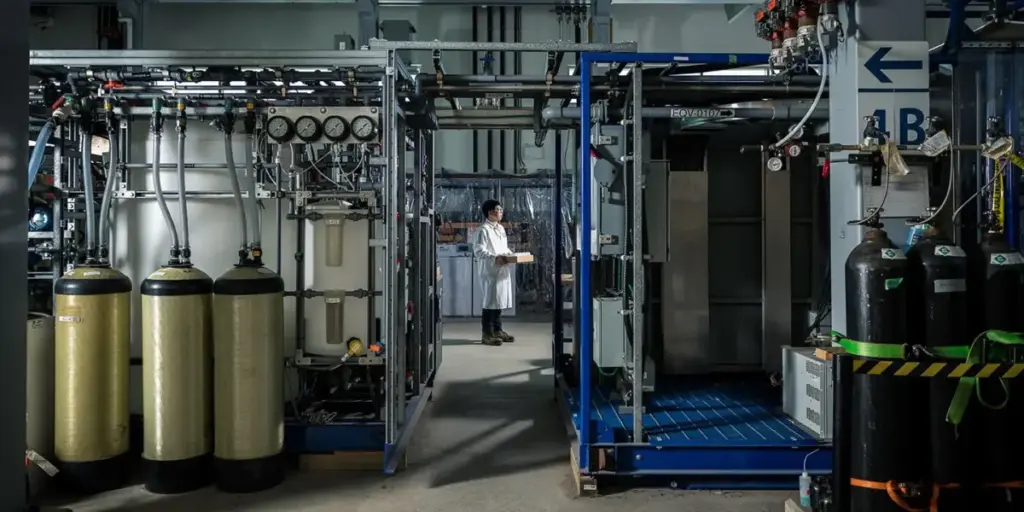
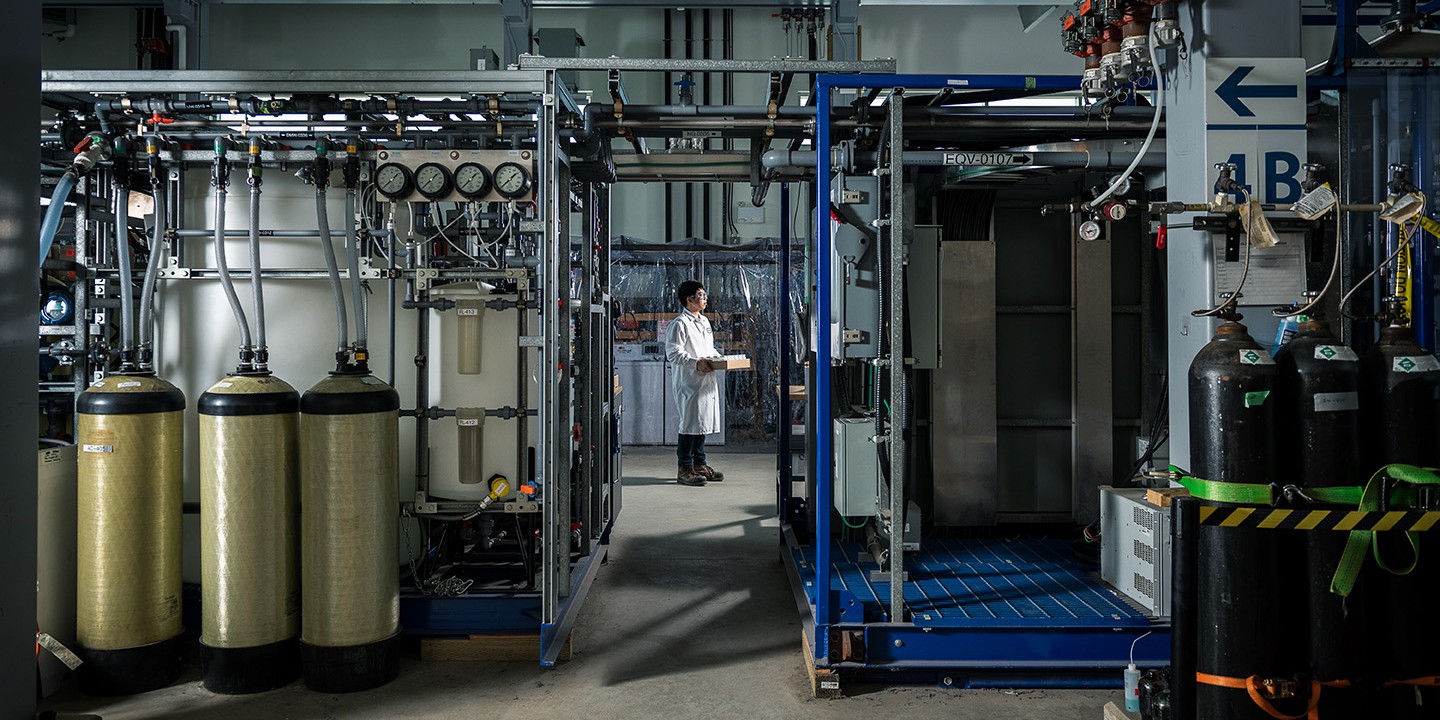
In a milestone development for the North American electric vehicle (EV) supply chain, clean technology innovator Mangrove Lithium has officially inaugurated the continent’s first commercial electrochemical lithium refinery. Located in Delta, British Columbia, the state-of-the-art facility—known as the Single Stack Plant (SSP)—marks a pivotal departure from traditional, heavily polluting overseas chemical refining practices. Operating at an initial capacity of 1,000 tonnes of battery-grade lithium per year, the plant is poised to dramatically reduce North America’s reliance on foreign processing hubs, mitigate crippling supply chain bottlenecks, and inject unprecedented resilience into the domestic battery manufacturing ecosystem.
For decades, the global lithium supply chain has suffered from a critical geographic disconnect: while North America holds significant raw mineral reserves, the vast majority of extraction and processing has historically been outsourced overseas, primarily to Asia. This structural vulnerability has exposed automotive manufacturers to extreme price volatility and geopolitical supply risks. Mangrove Lithium’s newly unveiled Delta facility directly addresses this vulnerability. By utilizing a proprietary electrochemical refining process, the company is proving that critical battery materials can be refined locally in a manner that is cleaner, cheaper, and more flexible than conventional methods.
More than just a regional production plant, the Delta site also serves as Mangrove’s new corporate headquarters, signaling the company’s long-term commitment to anchoring its operations in Canada. With the capacity to produce enough high-purity lithium to support approximately 25,000 electric vehicles annually, the SSP functions as both a commercial proof-of-concept and the foundational stepping stone for a much larger, continent-spanning industrial strategy. As governments across North America race to secure critical mineral independence through legislation like the United States’ Inflation Reduction Act (IRA) and Canada’s Critical Minerals Strategy, Mangrove Lithium’s commercial debut arrives at a critical juncture for the global energy transition.
Detailed Chronology: From Innovation to Industrial Reality
The ribbon-cutting ceremony in Delta, British Columbia, represents the culmination of years of intensive research, pilot-scale testing, and strategic scaling by Mangrove Lithium. Understanding the significance of the Single Stack Plant requires tracing the technological and corporate milestones that transformed a novel electrochemical concept into a commercial reality.
The R&D and Pilot Phase
Long before breaking ground on the Delta facility, Mangrove operated out of smaller-scale laboratories and pilot plants to validate its core intellectual property: a proprietary electrochemical conversion process. Conventional lithium refining relies on traditional hydrometallurgical and pyrometallurgical techniques that consume vast amounts of fresh water, require heavy inputs of hazardous reagents like sodium hydroxide or sulfuric acid, and generate substantial waste streams.
Mangrove’s engineering team focused on reimagining this conversion sequence. By applying precise electrical currents to direct raw lithium inputs into high-purity battery-grade lithium hydroxide or lithium carbonate, the company bypassed many of the environmental and economic drawbacks of legacy chemical plants. Following successful validation at its pilot facilities, the company began planning its transition to a commercial-scale footprint, ultimately selecting Delta, British Columbia, as the optimal location for its flagship operation due to the region’s clean hydroelectric grid, highly skilled workforce, and proximity to major Pacific trade corridors.
Groundbreaking and Construction
The journey toward the Delta facility accelerated significantly as global automotive manufacturers increased pressure on domestic suppliers to build out localized, transparent supply chains. Construction of the Single Stack Plant required meticulous engineering to ensure that the proprietary electrochemical stacks could operate continuously at industrial scale without compromising purity or energy efficiency.
Throughout the construction phase, Mangrove collaborated closely with local regulatory bodies, engineering firms, and environmental consultants to meet stringent Canadian industrial standards. The facility was designed with scalability in mind, incorporating modular engineering principles that allow the company to monitor operational data in real-time, optimize throughput, and refine its proprietary algorithms.
The Grand Opening and Corporate Realignment
The official ribbon-cutting ceremony in Delta marked a dual milestone: not only did it introduce North America’s first commercial electrochemical lithium refinery to the public, but it also established the site as Mangrove’s new corporate headquarters. Industry leaders, local government officials, and clean-tech investors gathered to witness the transition from startup developer to commercial producer. With the SSP now fully commissioned, Mangrove has shifted its operational focus from construction to continuous optimization, ensuring that output ramps up smoothly to meet contracted offtake agreements and market demand.
Supporting Context & Metrics: Reshaping the "Mine-to-Cathode" Pipeline
To fully grasp the magnitude of Mangrove Lithium’s achievement, one must examine the macro-economic and logistical challenges currently facing the North American electric vehicle market. The transition from internal combustion engines to zero-emission mobility requires an unprecedented scaling of battery production. However, raw material extraction is only half the battle; the transformation of raw ore or brine into battery-grade chemicals—specifically lithium hydroxide and lithium carbonate—is widely recognized as the most technically demanding and environmentally sensitive bottleneck in the entire supply chain.
Breaking Free from Overseas Bottlenecks
Historically, raw lithium mined in the Americas or Australia has been shipped across oceans—predominantly to processing facilities in Asia—before returning to North America in the form of refined chemicals or finished battery cells. This circuitous route not only inflates transportation costs and carbon emissions, but it also leaves automotive supply chains vulnerable to geopolitical friction, trade disputes, and sudden logistics disruptions.
By establishing domestic refining capacity, Mangrove is championing the "mine-to-cathode" vision. This paradigm seeks to colocate or closely integrate mining, refining, and precursor manufacturing within North America. By shortening supply chains, automakers gain unprecedented visibility into the provenance of their battery materials, ensuring compliance with strict environmental, social, and governance (ESG) standards, as well as qualifying for lucrative tax credits under regional trade frameworks.
The Power of Electrochemical Innovation
At the heart of Mangrove’s disruptive model is its proprietary electrochemical technology. Traditional lithium refining requires massive volumes of chemical reagents to precipitate impurities and convert lithium salts into usable materials. This often results in large quantities of secondary waste, such as sodium sulfate, which presents disposal challenges.
Mangrove’s electrochemical process operates with a significantly lower chemical footprint. By leveraging electricity—ideally sourced from clean grids like British Columbia’s renewable hydroelectric network—the process splits and purifies lithium streams with remarkable precision. According to the company, this method yields several distinct operational advantages:
Feedstock Flexibility: The technology is engineered to process a wide variety of lithium inputs, ranging from traditional brines to hard-rock spodumene concentrates.
Environmental Sustainability: Reduced chemical usage and a smaller carbon footprint align directly with the net-zero sustainability goals shared by major automotive OEMs and battery cell manufacturers.
Scaling Up: The Eastern Canada Horizon
While the 1,000-tonne-per-year Single Stack Plant in Delta is a monumental commercial milestone, Mangrove views it as the foundational stepping stone for a much larger industrial expansion. The company is already laying the groundwork for a second, vastly larger facility slated for Eastern Canada.
Designed to process hard-rock spodumene, this proposed facility will operate at a scale capable of supplying battery-grade lithium for approximately 500,000 electric vehicles annually—a fifty-fold increase over the Delta plant’s current capacity.
To accelerate this ambitious project, Mangrove has secured conditional funding support of up to $21.88 million CAD from Natural Resources Canada via its Critical Minerals Research, Development, and Demonstration (CMRDD) program. This capital injection is dedicated to advancing engineering design work and rigorous spodumene piloting studies.
Furthermore, Mangrove has solidified a strategic partnership through a Memorandum of Understanding (MOU) with Élévra, a prominent lithium producer. Under this agreement, Mangrove will source spodumene directly from Élévra’s operations in Quebec. By directly linking Quebecois mining output with advanced Eastern Canadian refining capacity, this collaboration embodies the practical realization of a fully domestic, localized "mine-to-cathode" supply chain.
Official Statements and Industry Perspective
The launch of the Delta facility drew widespread acclaim from industry leaders, government officials, and clean-energy advocates, all of whom underscored the strategic importance of domestic critical mineral processing.
Saad Dara, Chief Executive Officer and Founder of Mangrove Lithium, emphasized the broader national and international implications of the company’s technological breakthrough during the ribbon-cutting ceremony:
"This is a landmark moment not just for Mangrove, but for Canada," said Dara. "By commissioning the first commercial electrochemical lithium refinery in North America, we are proving that lithium can be refined domestically, sustainably, and competitively. This facility is an important step toward a fully Canadian lithium supply chain, one that strengthens our energy security, accelerates the transition to EVs, and positions Canada as a global leader in critical mineral processing."
Economic analysts and trade experts have echoed Dara’s sentiments, noting that independent refining capabilities are essential if North American automakers hope to compete globally in the coming decades. As trade policies tighten and environmental regulations demand greater supply chain transparency, companies possessing proprietary, low-emission processing technologies like Mangrove will find themselves in a commanding market position.
Future Outlook: The Road Ahead for North American Lithium
As the Delta Single Stack Plant ramps up to its full operational capacity—capable of supporting roughly 25,000 EVs per year—Mangrove Lithium is entering a crucial execution phase. The success of this facility will serve as the empirical proof point required by major automotive original equipment manufacturers (OEMs) and battery cell gigafactories looking to secure long-term offtake agreements for ethically sourced, locally refined lithium.
Looking further ahead, the successful realization of the planned Eastern Canadian facility will represent a transformative leap for North America’s industrial base. By scaling production to meet the demands of half a million electric vehicles annually, Mangrove is not merely expanding its corporate footprint; it is helping to cement Canada and the broader North American continent as self-sufficient powerhouses in the global energy transition.
The convergence of government support through initiatives like Natural Resources Canada’s CMRDD program, strategic resource partnerships with regional miners like Élévra, and proprietary technological innovations positions Mangrove Lithium at the vanguard of the clean-tech revolution. As the world accelerates toward a zero-emission transportation future, facilities like the Delta SSP prove that the building blocks of the green economy can—and will—be forged closer to home.