

Executive Overview
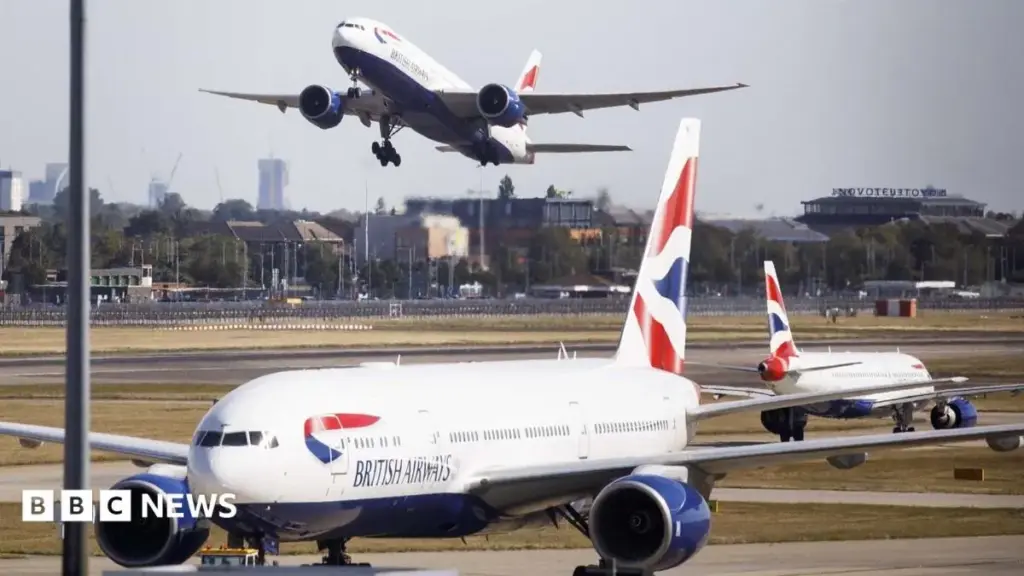
The long-running battle over the future of British aviation has reached a critical juncture following a definitive intervention by the government’s independent climate advisers. The Climate Change Committee (CCC) has formally declared that the proposed £33bn third runway at Heathrow Airport cannot be approved under current environmental frameworks. The advisory body has warned that the massive infrastructure project—designed to vault Heathrow’s passenger capacity from 85 million to 150 million annually—is fundamentally incompatible with the United Kingdom’s legally binding Net Zero targets unless sweeping structural reforms are forced upon the aviation sector.
The controversy touches on the core tension of modern economic policy: the desire for national growth versus the uncompromising math of global carbon reduction. According to the CCC, once fully operational, an expanded Heathrow would generate more carbon dioxide by 2050 than any other single sector of the British economy. To reconcile this immense output with climate obligations, the committee argues that the aviation industry must be compelled to completely internalize the costs of its environmental footprint. This would involve fully funding the development and deployment of sustainable aviation fuels (SAFs) alongside heavy investment in direct air capture (DAC) technologies designed to pull carbon dioxide directly from the atmosphere.
However, internalizing these costs comes with a severe economic sticker shock for consumers. The CCC estimates that forcing airlines and passengers to pay for these nascent decarbonization technologies will drive up the cost of flying dramatically. By 2050, a return trip to Alicante could cost approximately £150 more in today’s money, while a trans-Atlantic journey to New York could see fares rise by up to £400.
While the CCC’s report does not possess the statutory power to unilaterally veto a new runway, it piles intense political pressure on the government. Ministers must now weigh these warnings against the promised economic windfall—estimated at £40bn—and the creation of up to 60,000 local jobs. With a pivotal House of Commons vote expected later this year, the Heathrow expansion has become a major test of the administration’s commitment to its green credentials in the face of persistent demands for regional and national economic stimulation.
Detailed Chronology
The resurrection of the Heathrow third runway project follows decades of political indecision, community opposition, and evolving environmental standards. Understanding how the debate reached this stalemate requires examining the timeline of policy shifts, consultations, and political repositioning.
Decades of Delay and Indecision
Proposals to expand London Heathrow—historically the UK’s busiest aviation hub—have been debated for more than two decades. The notion of a third runway was first floated seriously in the early 2000s, only to be shelved and revived through successive changes of government. The Airports Commission, led by Sir Howard Davies, eventually recommended the Heathrow expansion in 2015, concluding it offered the greatest economic benefits compared to rival schemes at Gatwick.
Despite parliamentary approval in principle in 2018, the project has faced relentless legal challenges from local councils, environmental campaigners, and residents living beneath the proposed flight paths. Court battles, changes in leadership, and the catastrophic disruption of the global aviation industry during the COVID-19 pandemic further delayed progress, leaving the £33bn infrastructure scheme in a state of perpetual limbo.
The Modern Policy Framework and Consultations
In recent months, the government initiated a formal consultation process designed to judge the merits of the expansion against four rigid tests: economic impact, climate change alignment, local air quality, and noise pollution. This consultation serves as the administrative bridge to a formal planning vote in the House of Commons.
Concurrently, the Climate Change Committee was tasked with evaluating whether the expansion could fit within the UK’s carbon budgets. The publication of the CCC’s report in early 2024 marked a turning point, providing ammunition to both critics and proponents of the scheme. While the Department for Transport (DfT) maintains that it is "carefully considering" the advice alongside other responses, senior government figures have made it clear that they view the economic arguments for expansion as overwhelmingly compelling.
Last week, responding to parliamentary questions, Chancellor John Healey signaled the administration’s impatience with further delays. "After years of delay, years of indecision, years of often vexatious challenge, we have given the go-ahead to this project quite simply because the economic case stacks up and will help bring growth," he stated.
Despite this bullish ministerial stance, the final hurdle remains. A formal vote in the House of Commons to approve the National Policy Statement framework for the expansion is scheduled for later this year, where backbench rebellions and cross-party friction over climate commitments are expected.
Supporting Context & Metrics
The debate over Heathrow’s third runway is defined by stark numerical realities, ranging from massive capacity expansions to eye-watering consumer costs and profound localized disruptions.
Capacity and Economic Projections
- Passenger Growth: The £33bn project is engineered to lift Heathrow’s annual passenger capacity from its current ceiling of 85 million to an unprecedented 150 million travelers.
- Economic Impact: Department for Transport models suggest the expanded hub could inject approximately £40bn into the broader UK economy and support up to 60,000 local jobs in west London and the surrounding counties.
- Emissions Reality: By 2050, the expanded airport complex would produce more carbon dioxide emissions than any other single sector of the British economy, turning aviation into an outsized liability for national carbon accounting.
The Cost of Decarbonization
The CCC’s conditional green light relies entirely on the aviation sector footing the bill for deep decarbonization. Without heavy industry investment in cleaner operations, the expansion is a non-starter. However, the financial burden will inevitably trickle down to the flying public:
- European Destinations: A standard return flight to regional European hubs, such as Alicante, is projected to cost roughly £150 more by 2050 in today’s money.
- Long-Haul Routes: Intercontinental travel will be hit hardest, with a return ticket to New York potentially rising by up to £400 to account for the deployment of synthetic fuels and carbon removal offsets.
Localized and Regional Opposition
Beyond national carbon budgets, the footprint of the third runway carries immediate, devastating consequences for local communities:
- Property Demolition: Approximately 750 homes face direct demolition to clear the land required for the physical runway and its associated infrastructure.
- Noise and Air Pollution: Millions of residents living under existing and extended flight paths face heightened noise pollution and worsening local air quality.
- Geographic Inequality: Prime Minister Andy Burnham, before entering Downing Street, argued vociferously against the third runway on regional equity grounds, asserting that it would cannibalize investment and "trap it in London and the South East" at the expense of northern towns and cities. London Mayor Lord Sadiq Khan has similarly maintained fierce opposition, citing acute public health risks from noise and emissions.
Official Statements
The deep ideological split over the Heathrow expansion is vividly illustrated by the contrasting public positions taken by government officials, independent watchdogs, airport executives, and scientific researchers.
The Climate Change Committee
Nigel Topping, chair of the CCC, minced no words when releasing the committee’s landmark guidance:
"Our advice today is clear – Heathrow expansion is not currently compatible with the UK’s Net Zero target.
Government needs to ensure that the aviation industry takes responsibility for the emissions it creates and bears the costs of decarbonisation. Those conditions do not exist today."
Heathrow Airport Limited
In response to the CCC report, airport management pushed back, maintaining that environmental responsibility and commercial growth are not mutually exclusive propositions:
"Expansion and climate goals are not a choice. We will deliver both."
Heathrow executives insist that the airport is fully prepared to work alongside government regulators to mandate sustainable aviation fuels and integrate carbon removal mechanisms as the technology matures over the coming decades.
The Department for Transport
A DfT spokesperson emphasized that while the government is bound by statutory climate targets, the sheer scale of the project’s economic potential makes it difficult to dismiss:
"Any expansion would need to align with the country’s climate targets, but it could deliver around £40bn to the economy and support up to 60,000 local jobs."
Scientific Skepticism
Not all experts believe the CCC’s conditions go far enough. Dr. Lois Pennington of the Tyndall Centre for Climate Change Research told the BBC that relying on speculative technologies like sustainable fuels and direct air capture is a dangerous gamble that ignores the laws of atmospheric physics:
"We need to make sure that we are not flying more than we are now.
Because cleaner fuel and carbon removal are unlikely to arrive at the scale needed, the only reliable way to stay within the UK’s carbon limits is to stop the expansion of flying—or even to reduce it."
Future Outlook
As the debate moves toward its legislative climax in the House of Commons, the future of British aviation hangs in a precarious balance. The intersection of economic ambition and climate reality has created a political crucible for the administration.
If the government chooses to push ahead with the Heathrow third runway—as current ministerial rhetoric suggests it will—it risks violating the spirit, if not the strict legal enforcement, of its own carbon budgets. To satisfy the CCC’s prerequisites, ministers would need to introduce aggressive, highly unpopular regulatory mandates that artificially inflate the cost of flying, effectively pricing millions of ordinary citizens out of international travel.
Conversely, halting the expansion would alienate major business lobbies, airlines, and economic traditionalists who view global connectivity as an indispensable pillar of post-Brexit economic resilience. The specter of forfeiting £40bn in economic growth and tens of thousands of jobs is politically unpalatable to an administration hyper-focused on boosting national productivity.
Ultimately, the decision will rest on a parliamentary vote expected later this year. Lawmakers will be forced to choose between two competing visions of Britain’s future: one anchored in traditional, high-growth infrastructure expansion, and another bound by the unyielding, austere limits of a climate-conscious global economy. Whatever the outcome, the Heathrow third runway remains a defining monument to the unresolved contradictions of the modern green transition.



