


SAN DIEGO — In what industry leaders are hailing as a watershed moment for sustainable materials management, the US Flexible Film Initiative (USFFI) announced its inaugural slate of binding commercial contracts on Monday at the SPC Advance conference in San Diego. The milestone comes paired with a significant operational achievement: the nonprofit broker has successfully diverted more than 3 million pounds of flexible plastic packaging from California collection programs, routing the material to specialized reclaimers across the United States and Canada for advanced processing.
The announcement marks a tangible transition from theoretical packaging design discussions to concrete, long-term operational supply chains. By acting as an operational bridge between Material Recovery Facilities (MRFs) and downstream plastic reclaimers, USFFI is directly confronting one of the recycling sector’s most stubborn bottlenecks—the pervasive lack of infrastructure and economic incentives to collect, sort, and process complex flexible films.
As regulatory pressures mount nationwide—particularly under California’s stringent extended producer responsibility (EPR) laws—the initiative’s early successes offer a blueprint for how consumer goods giants can collaborate to solve the end-of-life puzzle for hard-to-recycle materials.
Executive Overview
The US Flexible Film Initiative was established in 2025 by a coalition of major consumer-packaged-goods (CPG) companies, predominantly led by heavyweights in the food and pet food sectors. Recognizing that flexible packaging—such as multi-layer snack bags, pouches, and wrappers—offers unparalleled performance, product protection, and a lower carbon footprint during transport, these brands faced a stark reality: while flexible formats are resource-efficient during manufacturing and shipping, they have historically been an operational nightmare at municipal recycling facilities.
Traditional sorting machinery at standard MRFs often jams on flexible films, leading facilities to reject the material or send it directly to landfills. Furthermore, even when collected, the lack of dependable offtake agreements rendered processing economically unviable for reclaimers.
To break this logjam, USFFI was designed to function not just as an advocacy group, but as an active market-maker. By funding operational subsidies, streamlining logistics, and establishing predictable supply-demand feedback loops, the nonprofit has proven that flexible film circularity is not merely a theoretical ideal, but a commercially achievable reality.
The announcement in San Diego formalizes contracts with key industry operators: MRF innovators Valemi and GreenWaste (the latter operating advanced sorting systems in San Jose), alongside sophisticated plastic film reclaimers EFS Plastics and Merlin Plastics. Together, these partnerships currently support up to eight full commercial loads of recycled flexible plastic per month, scaling up operations as the initiative expands its footprint.
Detailed Chronology: From Concept to Commercial Contracts
The journey toward Monday’s landmark announcement spans nearly two years of strategic planning, industry consultation, and aggressive pilot testing.
Genesis and the California Catalyst (2025)
The roots of USFFI trace back to the urgent compliance demands facing businesses operating in California. The state’s landmark Extended Producer Responsibility law, known as Senate Bill 54 (SB 54), established draconian timelines for packaging sustainability. Under SB 54, all single-use packaging and plastic food ware must be proven recyclable or compostable by 2032, with an interim mandate requiring a robust 30% recycling rate for covered materials by 2028.
For flexible packaging—which historically hovered near a zero-percent recycling rate in municipal curbside systems—SB 54 represented an existential regulatory hurdle. Realizing that the needle simply wasn’t moving fast enough through individual corporate efforts, a coalition of forward-thinking food and pet food brands banded together to launch USFFI in 2025. The core diagnosis was clear: the system lacked operational subsidies and structural integration between the entities generating the waste (brands), the entities capturing it (MRFs), and the entities transforming it (reclaimers).
The Request for Information (RFI) Phase (Late 2025)
As detailed by USFFI Executive Director Maite Quinn-Richards during her address at SPC Advance, the initiative formally kicked off its operational phase in late 2025 by issuing a comprehensive Request for Information (RFI).
The call to action caught the market by surprise with its high level of interest, attracting roughly 32 distinct applicants across the recycling value chain. Rather than attempting to scale everywhere at once, USFFI deliberately selected a targeted, highly capable subset of MRFs and reclaimers to test logistical pathways.
Over the subsequent months, this cohort engaged in rigorous trial runs. They tested bale integrity, ironed out contamination thresholds, and systematically identified what specifications were required to produce a commercially viable baled product. Crucially, they mapped out the exact transit corridors needed to move the collected materials efficiently from West Coast municipal streams to specialized processing plants in the U.S. and Canada.
The San Diego Reveal (September 2026)
Culminating months of behind-the-scenes logistics and refinement, Monday’s announcement at SPC Advance officially transitioned USFFI from an experimental pilot into a permanent, contracting entity. By verifying that over 3 million pounds of flexible plastic had already successfully navigated the pipeline, the organization demonstrated operational proof-of-concept on a mass scale.
Supporting Context & Metrics: Decoding the Data and Regulatory Pressures
To fully understand the gravity of USFFI’s milestone, one must examine the operational hurdles of flexible film recycling and the regulatory hammer driving these innovations.
The Flexible Film Dilemma
Flexible packaging comprises a complex matrix of polymers, often combining various types of polyethylene, polypropylene, and barrier materials like aluminum foil or EVOH (ethylene vinyl alcohol) to keep foods fresh and extend shelf life. While these multi-layer structures are engineering marvels for food safety and waste reduction, they are notoriously difficult to separate and recycle using conventional mechanical recycling infrastructure.

When flexible plastics find their way into residential curbside bins (often referred to as "wish-cycling" by well-meaning consumers), they wrap around rotating screens and shafts at MRFs, causing costly plant shutdowns and equipment damage. Consequently, MRFs historically banned flexible films from single-stream recycling programs.
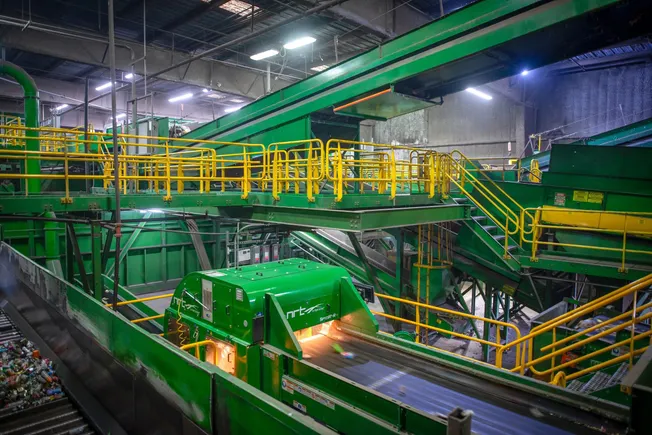
USFFI’s operational model attacks this problem by upgrading collection protocols at partnering facilities like GreenWaste in San Jose and Valemi, implementing specialized optical sorting and air classification technologies that can safely capture film without disrupting other recyclable streams (like cardboard and rigid plastics).
The Regulatory Landscape: SB 54 and Beyond
California’s SB 54 is not an isolated regulatory experiment; it is part of a growing national wave of EPR legislation that includes laws passed in states like Oregon, Colorado, Minnesota, and Washington. These frameworks shift the financial and operational burden of end-of-life waste management from municipalities and taxpayers onto the producers of the packaging.
Under California’s timeline, producers failing to meet the 2028 recycling rate targets face severe financial penalties and potential sales bans within the state. For brand owners whose product portfolios rely heavily on flexible pouches and wrappers—such as pet food brands, candy manufacturers, and snack food companies—investing in initiatives like USFFI is no longer viewed as corporate philanthropy or public relations; it is a vital business continuity strategy.
Official Statements and Industry Perspectives
The weight of Monday’s announcement was underscored by prominent leaders from across the packaging and recycling supply chain, who emphasized that these contracts represent a fundamental shift from corporate rhetoric to undeniable market reality.
A Long-Term Commitment from Brand Owners
Eadaoin Quinn, Sustainable Packaging Senior Manager at Mars—a foundational member of USFFI—stressed the profound significance of moving past pilot projects into binding commercial agreements.
"These new contracts are a very big deal because it’s not just showing that it can be done, but it’s actually a long-term commitment from both USFFI and recyclers," Quinn remarked during the San Diego conference.
Quinn also addressed the delicate balance brand owners strike between packaging functionality and environmental stewardship. While acknowledging that swapping out flexible packaging for a "readily recyclable" rigid alternative would be ideal in a vacuum, she noted that functional realities often dictate otherwise.

"If we could switch to a readily recyclable package tomorrow, that would be the best," Quinn explained. "But there are reasons that we are choosing to be in flexible packaging, and therefore we need to choose to see it through to end of life."
Furthermore, Quinn highlighted the strategic value of these developments when interfacing with state regulators across the country.
"We’re really excited to share this with the regulators in California, regulators in Minnesota, Washington, to see that brands are committed to this. It’s not just talking," she added.
Proving Commercial Viability
From the perspective of packaging suppliers and converters, the USFFI model provides a missing link that has plagued the recycling economy for decades: market certainty.
Kevin Kelly, CEO of Emerald Packaging and an associate member of USFFI, expressed immense satisfaction with the initiative’s trajectory.
"These tangible contracts are exactly the outcome we hoped to help create," Kelly stated in the official announcement. "It shows circularity is achievable when recyclers can sell the material at a profit."
For reclaimers like EFS Plastics and Merlin Plastics, guaranteed feedstock combined with brand-backed financial support transforms flexible film processing from a high-risk financial gamble into a stable, scalable business line.
Future Outlook: Scaling the Infrastructure
With its initial California-centric framework successfully processing upwards of 3 million pounds of material and securing continuous offtake agreements supporting eight loads per month, USFFI is wasting no time looking toward the horizon.
Expansion Horizons
The operational blueprints forged in California are intentionally designed to be portable. As other states with newly minted EPR frameworks—such as Oregon, Colorado, and Minnesota—begin implementing their own recycling mandates, USFFI stands ready to export its broker-and-subsidy model to new geographical jurisdictions. By establishing early relationships with regional MRFs and local reclaimers in these emerging markets, brand owners can preemptively secure compliance pathways well ahead of regulatory deadlines.
The Next RFI Round: Deadline Approaching
To sustain this momentum and scale its operational capacity, USFFI is actively expanding its network. The nonprofit has officially opened its next round of Requests for Information (RFI), targeting additional California-based MRFs, plastic reclaimers, and secondary processors capable of handling flexible packaging streams.
Interested operators have until December 18 to submit their qualifications and operational metrics for consideration in USFFI’s upcoming contract cycles.
Conclusion
The US Flexible Film Initiative has fundamentally reframed the conversation around difficult-to-recycle plastics. By transforming cooperative brand intentions into hard commercial contracts, and by bridging the operational chasm between municipal sorters and industrial reclaimers, USFFI is proving that packaging circularity is entirely possible—provided the value chain is willing to invest in the mechanics of the end-of-life journey. As the initiative scales toward new states and deeper processing partnerships, the 3-million-pound milestone announced in San Diego may well look like the modest beginning of a sweeping national revolution in packaging recovery.



