

Executive Overview
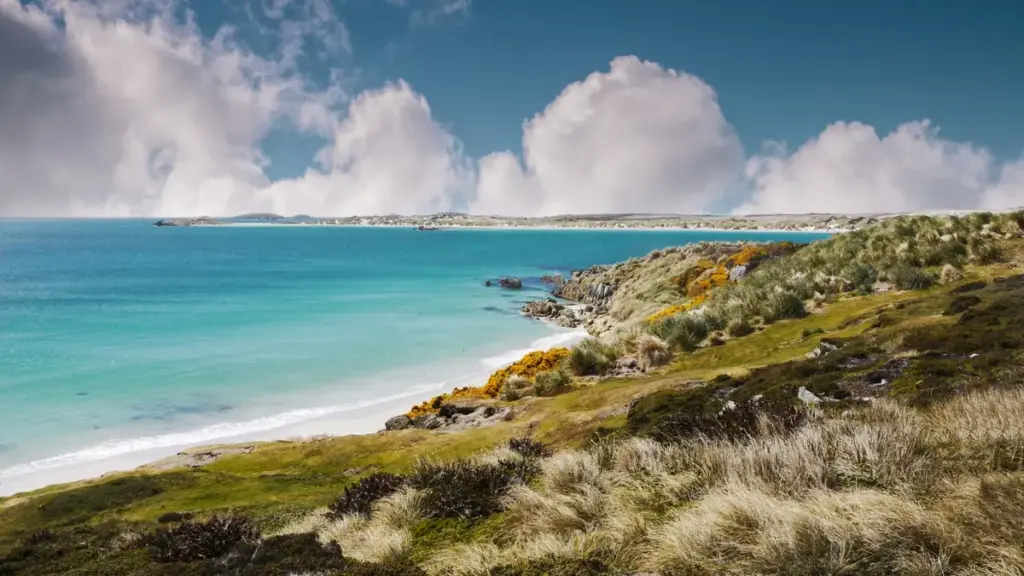
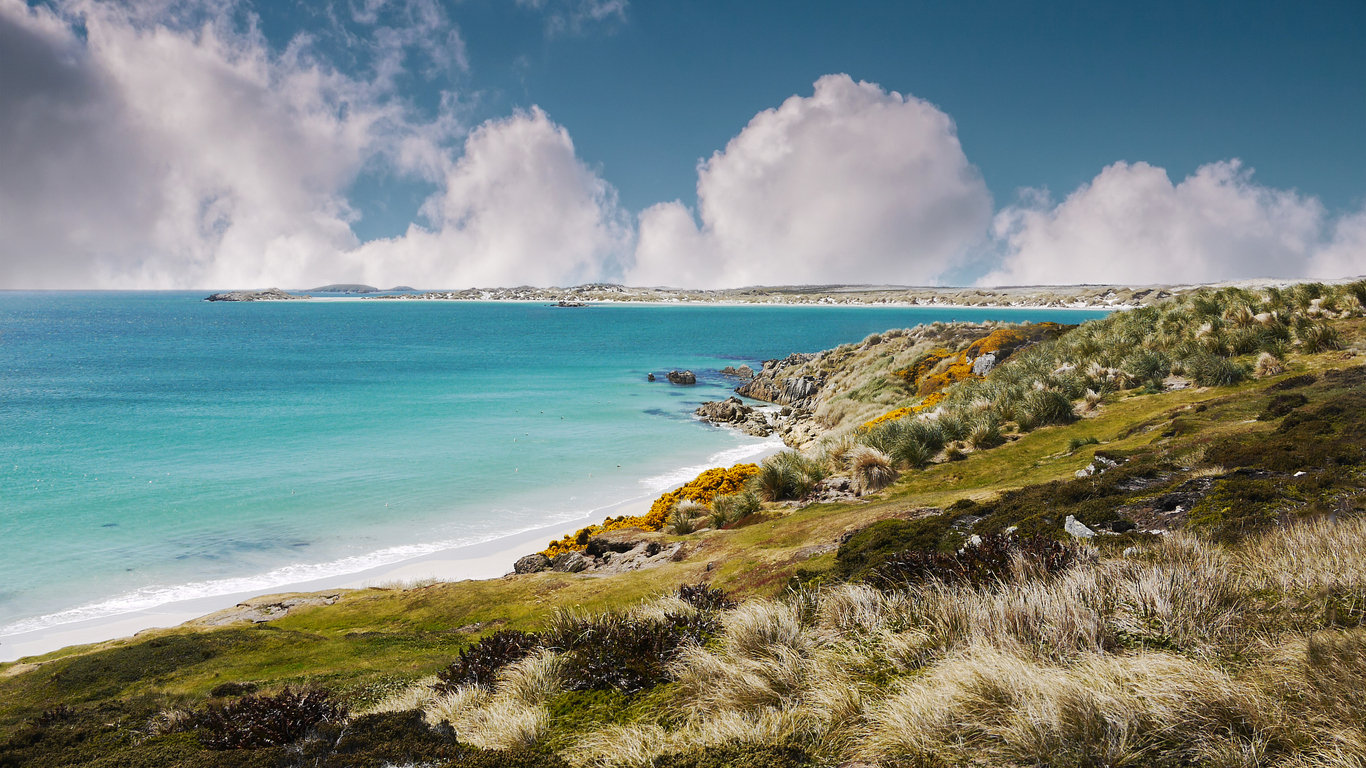
Just a single minute’s drive outside of Stanley—the Falkland Islands’ sole township, home to a resilient community of roughly 3,000 residents—lies a landscape that feels almost untouched by modern human interference. A traveler stepping out of a vehicle finds themselves immediately upon windswept beaches teeming with colonies of wild penguins. Spend no more than five minutes quietly observing the rolling sand dunes, and the horizon is likely to be pierced by the breaching of wild dolphins, the lumbering forms of resting seals, and the majestic, effortless glide of wandering albatross overhead.
Yet, this picturesque shoreline is merely the threshold to a far grander ecological treasure. The sub-Antarctic waters surrounding the Falkland Islands represent one of the most biologically productive and intact marine environments left on Planet Earth. Supporting one of the Southern Ocean’s most economically vital and sustainably managed squid fisheries, these cold, nutrient-rich seas boast a dazzling array of biodiversity. Five distinct species of penguin call the islands home, alongside majestic southern right whales, orcas, and countless pelagic seabirds.
So pristine and ecologically balanced is this marine ecosystem that international marine scientists frequently utilize the Falkland waters as a vital baseline—a living laboratory demonstrating precisely what a healthy, unpolluted cold-water sea is supposed to look like in an era of cascading global climate and biodiversity crises.
However, this delicate aquatic sanctuary is now facing an unprecedented and existential threat. On the horizon looms the specter of industrial open-net salmon farming—a lucrative, highly controversial corporate enterprise that conservationists and local communities warn could fundamentally alter, pollute, and degrade the very foundations of the Falklands’ natural wealth. As powerful multinational aquaculture entities eye the pristine waters of the South Atlantic for expansion, a fierce David-versus-Goliath battle has erupted. At stake is not merely the economic future of a small British Overseas Territory, but the integrity of one of the last truly wild marine baselines on Earth.
Detailed Chronology: The Clash Over the South Atlantic
To understand the gravity of the current confrontation between local Falkland Islanders and industrial aquaculture proponents, it is necessary to examine how this high-stakes environmental struggle has unfolded over recent years.
Phase One: The Quiet Incursions and Corporate Ambitions (2020–2022)
For decades, the Falkland Islands economy has been sustainably anchored by two primary pillars: tourism—driven by the islands’ unmatched wildlife viewing opportunities—and commercial fisheries, predominantly centered around high-value squid and finfish stocks governed by strict, science-based catch limits.
However, as traditional salmon-farming regions around the globe—such as Norway, Chile, Scotland, and western Canada—face mounting regulatory crackdowns, environmental degradation, biological exhaustion, and catastrophic parasite outbreaks (such as sea lice), multinational aquaculture corporations have begun actively scouting the globe for new frontiers.
By the early 2020s, preliminary commercial interest in establishing open-net pen finfish aquaculture in the Falkland Islands began to circulate in corporate boardrooms. Initially dismissed by many locals as unfeasible given the territory’s remote geography and notoriously volatile weather, whispers of exploratory ventures soon transformed into concrete proposals. Business entities backed by international capital began pitching salmon farming as a lucrative diversification strategy for the islands, promising foreign direct investment and new employment streams outside of the traditional fisheries sector.
Phase Two: Grassroots Awakening and Scientific Alarm (2023–2024)
As news of potential aquaculture leases filtered through the tight-knit community of Stanley, resistance crystallized with remarkable speed. Local conservationists, commercial fishermen, tourism operators, and scientists recognized the existential incompatibility of industrial open-net salmon farming with the Falklands’ existing economic and environmental model.
Unlike land-based recirculating aquaculture systems (RAS), traditional open-net salmon pens act as biological extensions of the surrounding ocean. They require zero physical barriers between the massive concentrations of farmed fish and the wild marine environment. Waste products, including uneaten feed, fish feces, chemical treatments, antibiotics, and therapeutic agents, flow directly and unhindered into the surrounding water column.
By mid-2023, local advocacy groups began mobilizing. Scientific assessments commissioned by environmental watchdogs highlighted the grave dangers that intensive salmon farming poses to cold-water ecosystems. Warnings were issued regarding the risks of disease transmission from densely stocked pens to native marine species, the potential introduction of invasive fish species escaping from nets, and the catastrophic impact of nutrient overloading on local benthic (seabed) habitats.
Phase Three: The Battle Lines Drawn (2025–2026)
By 2025, the debate transcended local council chambers, exploding onto the international stage. Media coverage from prominent marine publications, including Oceanographic, thrust the Falkland Islanders’ resistance into global focus. The phrase "One Voice: Falklanders Fighting Big Salmon" became a rallying cry for an international coalition of marine conservationists, independent scientists, and local stakeholders.
Legislative bodies within the Falkland Islands government found themselves caught in an intense crossfire. On one side stood corporate lobbyists waving projections of short-term economic gains and diversification; on the other stood unified local communities demanding the absolute protection of their clean waters, cultural heritage, and sustainable industries.
As of late 2026, the struggle has reached a boiling point. The government faces pivotal policy decisions regarding whether to permit exploratory aquaculture licenses or enact sweeping, precautionary moratoriums modeled after progressive jurisdictions elsewhere that have prioritized long-term ecological preservation over short-term corporate exploitation.
Supporting Context & Metrics: The Ecological Value of Falkland Waters
To fully grasp why local residents are putting up such fierce resistance against "Big Salmon," one must examine the staggering ecological and economic metrics that define the Falkland Islands marine environment.
A Biodiversity Hotspot of Global Significance
The waters surrounding the Falkland Islands sit at a critical oceanic crossroads, influenced by the convergence of major current systems that deliver rich nutrients from the Southern Ocean. This dynamic oceanography underpins an extraordinary density of marine life:
- Penguin Populations: The islands support five distinct breeding species of penguin—Gentoo, Magellanic, King, Rockhopper, and Macaroni. The Falklands host globally significant percentages of several of these populations, making the territory a premier global stronghold for sphenisciform seabirds.
- Marine Mammals: Beyond penguins, the coastal waters serve as vital feeding and breeding grounds for southern right whales, sei whales, killer whales (orcas), Commerson’s dolphins, Peale’s dolphins, and southern elephant seals.
- Avian Diversity: Over two-thirds of the global population of black-browed albatross nest on the cliffs and slopes of the Falkland Islands, alongside millions of other seabirds, including petrels, shearwaters, and cormorants.
The Economic Pillar: Sustainable Fisheries
The commercial fisheries sector is the lifeblood of the Falkland Islands economy. Operating under an Individual Transferable Quota (ITQ) system and rigorous scientific oversight, the local fisheries generate tens of millions of pounds annually in revenue for the local government, funding public infrastructure, healthcare, and education.
The focus of this fishery is overwhelmingly centered on Loligo squid (Doryteuthis gahi) and Illex squid, alongside valuable finfish stocks. These fisheries are internationally recognized as models of sustainable management. Strict closures, real-time monitoring of catches by onboard scientific observers, and adaptive management plans ensure that marine harvesting remains within sustainable biological thresholds.
The Contrast: The True Cost of Open-Net Salmon Farming
Industrial open-net salmon farming operates on a high-input, high-waste model that is fundamentally incompatible with the pristine environmental standards required to maintain the Falklands’ current marine baseline. Key ecological vulnerabilities include:
- Organic Pollution: A medium-sized salmon farm containing one million fish produces organic waste equivalent to the raw sewage of a city of 60,000 to 65,000 people. This waste drops directly to the seabed, smothering benthic flora and fauna and creating localized dead zones devoid of oxygen.
- Chemical and Pharmaceutical Loads: To combat diseases and parasitic infections such as sea lice (Lepeoptheirus salmonis), salmon farms routinely utilize massive quantities of chemical pesticides, antibiotics, and synthetic dyes. These substances do not remain inside the pens; they disperse into the surrounding water column, impacting non-target crustaceans, crabs, lobsters, and wild fish larvae.
- Genetic Pollution and Competition: Escapes from net pens are an inevitable consequence of storms, predator attacks, or structural wear-and-tear. Farmed Atlantic salmon—often selectively bred for rapid growth rather than survival traits—frequently escape into non-native waters, competing with wild species for food and spawning grounds, and potentially interbreeding with native populations to the detriment of overall genetic fitness.
Official Statements and Stakeholder Perspectives
The debate over the future of the Falkland Islands marine environment features starkly contrasting viewpoints from local communities, environmental NGOs, and industry advocates.
The Local Voice: Defending a Way of Life
For the 3,000 residents of Stanley and the surrounding remote settlements (camp), the threat to the ocean is deeply personal. Local fishers, tourism operators, and community leaders emphasize that their livelihoods are inextricably linked to the health of the sea.
"We don’t need to look very far across the globe to see what happens when you trade clean, wild oceans for industrial fish pens," noted a prominent Falkland Islands conservation advocate during a recent community forum. "Once you introduce massive chemical inputs, disease reservoirs, and nutrient pollution into a cold, pristine ecosystem like ours, you can’t simply hit an undo button. The corporations fly away with their profits; we are left living with the ecological wreckage."
Tourism operators have been similarly vocal, pointing out that visitors travel thousands of miles to witness wild penguins striding across unspoiled beaches and clean, biodiverse waters. The introduction of industrial-scale infrastructure—including feed barges, processing vessels, service boats, and unsightly shoreline installations—would irrevocably damage the remote, pristine aesthetic that draws ecotourists to the territory in the first place.
The Scientific Community: Protecting a Global Baseline
Marine scientists studying the Southern Ocean have added considerable academic weight to the local resistance. Researchers stress that as climate change warms global oceans and human pressures expand into increasingly remote waters, intact baseline ecosystems are priceless scientific assets.
Dr. Aris Thorne, a marine ecologist specializing in sub-Antarctic ecosystems, underscored the global stakes:
"Science relies on having untouched reference points to measure human impacts against. The Falkland Islands marine ecosystem is one of the very few remaining functional baselines we have in the southern hemisphere. Introducing high-density, open-net aquaculture into this equation is not just a local environmental risk; it is an act of scientific vandalism that threatens our ability to understand healthy ocean dynamics globally."
The Industry Perspective: Economic Diversification Claims
Conversely, proponents of aquaculture—backed by international seafood conglomerates and domestic investment advocates—argue that the criticisms are overly alarmist and reactionary.
Industry representatives maintain that modern aquaculture has evolved significantly, incorporating advanced monitoring technologies, improved net materials, and fallowing practices designed to minimize environmental footprints. Proponents argue that the Falkland Islands economy remains overly dependent on a single seasonal fisheries sector and that sustainable aquaculture could provide year-round employment, diversify export streams, and generate robust tax revenues to support the territory’s growing public service needs.
Future Outlook: A Critical Junction for the South Atlantic
As the calendar turns through 2026, the Falkland Islands stand at a defining crossroads in their modern history. The decisions made by lawmakers, community leaders, and regulatory authorities over the coming months will reverberate for generations.
1. Regulatory Scrutiny and Precautionary Policy
Pressure is mounting on the Falkland Islands Government to implement robust, precautionary legislative frameworks. Conservation groups are lobbying for an outright ban on open-net finfish aquaculture within territorial waters, arguing that the ecological risks vastly outweigh any speculative economic benefits. Alternatively, policymakers are being urged to insist on mandatory land-based, closed-containment recirculating aquaculture systems (if any aquaculture is to be permitted at all), which completely isolate farmed fish from the natural marine environment.
2. The Power of Global Solidarity
The fight for the Falklands has also demonstrated the vital potency of international media exposure and transnational environmental solidarity. By partnering with global institutions like the Blue Marine Foundation and prominent media outlets such as Oceanographic, local campaigners have successfully elevated a localized territorial debate into a matter of international conservation conscience. Global consumers, seafood retailers, and environmental watchdogs are watching closely, ready to apply market pressure against any corporate entities attempting to industrialize the South Atlantic.
3. Preserving the Wild Soul of the Falklands
Ultimately, the battle over salmon farming in the Falkland Islands is about much more than fish, economics, or regulatory policy. It is a fundamental philosophical question about the value of wildness in the twenty-first century.
When a traveler steps out of Stanley onto a windswept beach, greeted by the cacophony of penguin colonies and the majestic sweep of the Southern Ocean, they are experiencing one of the last truly untamed sanctuaries on Earth. Whether that sanctuary remains a pristine baseline for humanity and a thriving home for marine wildlife, or succumbs to the industrial pressures of modern aquaculture, depends entirely on the outcome of this fierce, ongoing resistance. The voice of the Falklanders has been cast: they intend to keep their waters wild.



