

Executive Overview
In the landscape of modern climate policy, few legislative frameworks have sparked as much optimistic rhetoric—and subsequent intense scrutiny—as Oregon’s Senate Bill 98 (SB 98). Enacted in 2019, the landmark law was championed as a vital instrument to curb greenhouse gas emissions, empowering natural gas utilities to invest ratepayer funds into renewable natural gas (RNG) projects. By capturing methane from agricultural waste, landfills, and anaerobic digesters and funneling it into traditional utility pipelines, the state sought to chart a pragmatic course toward decarbonization.
Yet, nearly five years after its implementation, a scathing new report paints a starkly different picture. According to the findings, SB 98 has largely failed to deliver on its grand environmental promises. Instead of accelerating a meaningful transition away from fossil fuels, critics argue the regulatory regime has effectively functioned as a lifeline for natural gas utilities trying to dodge substantive emissions reductions, while simultaneously acting as a lucrative subsidy for industrial animal agriculture.
The report highlights a compounding series of systemic challenges: sluggish procurement growth, volatile and ultimately failed capital investments, retracted infrastructure projects, and emerging questions regarding the true carbon intensity of the credits being acquired. Central to these criticisms is Northwest Natural (NW Natural), one of the state’s primary utilities, which is currently falling well short of its legislative milestones. Amid shuttered facility investments in the Midwest, quiet withdrawals from Pacific Northwest landfill initiatives, and controversial requests to pass financial losses onto everyday ratepayers, the viability of SB 98’s foundational mechanisms is facing an unprecedented stress test.
This deep-dive investigation explores the anatomy of Oregon’s RNG experiment, tracing the path from legislative aspiration to operational stagnation, evaluating the financial and environmental fallout, and examining the sharp divide between utility defenders and climate accountability advocates.
Detailed Chronology: From Legislative Triumph to Regulatory Reality
To understand the current crisis surrounding Oregon’s RNG mandate, one must retrace the legislative trajectory that brought the policy to life and the subsequent series of operational missteps that have undermined its credibility.
2019: The Passage of Senate Bill 98
When the Oregon Legislature debated and ultimately passed Senate Bill 98 in 2019, it arrived with a broad coalition of support. Environmental proponents, waste management associations, and utility executives coalesced around the concept of capturing fugitive methane—a greenhouse gas significantly more potent than carbon dioxide in the short term—and repurposing it as a clean energy source.
The waste management sector enthusiastically backed the bill. Industry advocates noted that it would catalyze crucial funding for landfill gas capture facilities and sophisticated anaerobic digesters designed to process organic food waste. When then-Governor Kate Brown signed SB 98 into law, it established an ambitious, escalating procurement schedule for the state’s natural gas utilities. Under the mandate, utilities were directed to steadily increase their acquisition of RNG to offset conventional fossil gas usage, aiming for milestones of 15% by 2030, 20% by 2035, and an ultimate target of 30% by 2050. Crucially, the law permitted utilities to pass the capital expenditure costs of these ventures directly onto their ratepayers, a financial framework that initially seemed essential to de-risk pioneering clean energy infrastructure.
2021–2023: Early Investments and Strategic Pivots
Armed with ratepayer capital, utilities like NW Natural moved quickly to secure RNG portfolios. Among their most prominent early maneuvers was a multi-million-dollar capital commitment to anaerobic digestion facilities co-located with major industrial agricultural operations.
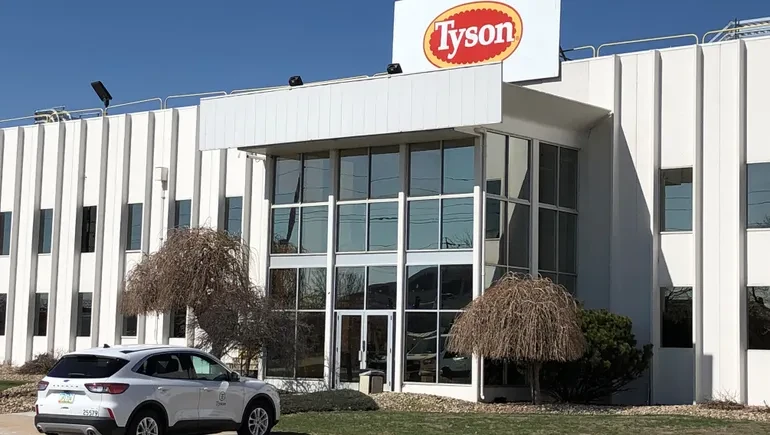
Beginning in 2021, NW Natural invested $8.3 million into an anaerobic digestion plant situated alongside a Tyson Foods beef packaging facility in Lexington, Nebraska. The facility was heralded as a flagship win for the utility’s RNG strategy, with initial projections anticipating an annual output of approximately 190,000 million British thermal units (mmBtus) of renewable gas. Simultaneously, the utility deployed $12.5 million into a second Tyson Foods project located in Dakota City, Nebraska, projected to generate an additional 100,000 mmBtus annually.
Beyond out-of-state agricultural ventures, the utility also set its sights on local waste infrastructure. Plans were drawn up for a high-profile project intended to convert landfill gas into utility-grade RNG at an expansive site in East Wenatchee, Washington.
However, beneath the surface of these corporate announcements, structural vulnerabilities were beginning to accumulate. Agricultural supply chains proved volatile, local waste management partnerships encountered friction, and the capital-intensive nature of direct project ownership exposed the utility—and by extension, its ratepayers—to unprecedented financial exposure.
2024–2026: Project Collapse and Regulatory Reckoning
The structural fractures within the SB 98 framework became impossible to ignore by the mid-2020s. The flagship Lexington, Nebraska digestion facility collapsed under the weight of severe market volatilities within the domestic beef industry, forcing the plant toward permanent closure. Rather than absorbing the financial blow, NW Natural petitioned the Oregon Public Utility Commission (PUC) for authorization to charge ratepayers for the sunk costs of the shuttered project, sparking immediate public outcry.
Concurrently, the East Wenatchee landfill initiative quietly dissolved. Without public fanfare, NW Natural scrubbed references to the project from its corporate website and regulatory filings. Waste Management (WM) subsequently confirmed that discussions with the utility had broken down entirely, though WM noted it would continue evaluating independent options for the site’s landfill gas.
Recognizing the mounting risks of direct asset ownership, NW Natural signaled a major tactical pivot in a December regulatory filing. The utility announced it was shifting away from direct facility investments, opting instead to prioritize offtake agreements with third-party suppliers. This pivot, the utility argued, would insulate its broader portfolio from localized plant failures. Yet, the strategic retreat underscored a sobering reality: the direct-investment model underpinning much of the utility’s initial compliance strategy had failed to deliver reliable, long-term energy generation.
Supporting Context & Metrics: The Performance Gap
The operational troubles facing individual projects are symptomatic of a broader, systemic underperformance across Oregon’s entire RNG compliance regime. A critical examination of utility filings reveals a widening chasm between legislative ambitions and quantifiable environmental results.
The 2025 Compliance Deficit
According to annual filings submitted to the Public Utility Commission of Oregon in June, NW Natural reported that a mere 3.35% of its total gas load was offset by renewable natural gas in 2025. When measured against the trajectory required to meet the state’s statutory milestones—most notably the 15% threshold mandated for 2030—the utility’s current pace falls demonstrably short.
Independent researchers and energy analysts note that this anemic growth is not merely a temporary bottleneck, but a structural indictment of the framework. As utilities struggle to secure physical volumes of RNG that match their compliance obligations, the reliance on paper credits and complex financial offsets has intensified.
The Debate Over Carbon Intensity Scores
Compounding the concerns over volumetric shortfalls are deep-seated questions regarding the environmental integrity of the RNG credits being procured. A central pillar of the recent report by energy watchdogs and climate strategists involves the carbon intensity (CI) scores assigned to the RNG credits entering NW Natural’s procurement program.
According to the study’s authors, a comparative analysis of the disclosed CI scores reveals troubling anomalies. In specific instances, the carbon intensity of the procured RNG credits appeared equal to—or in some cases higher than—the carbon intensity of conventional fossil natural gas. This finding directly challenges the foundational premise of SB 98: that ratepayer funds are being deployed exclusively to displace high-carbon fossil fuels with demonstrably superior, low-carbon alternatives. If certain RNG pathways generate lifecycle emissions profiles that rival or exceed extracted natural gas, the regulatory regime risks subsidizing carbon-intensive industrial processes under the guise of green innovation.
The Agriculture Connection
Furthermore, the report fiercely critiques the economic entanglement between utility decarbonization mandates and industrial animal agriculture. By channeling ratepayer subsidies into massive concentrated animal feeding operations (CAFOs) via anaerobic digesters, critics argue that SB 98 inadvertently creates a perverse economic incentive. Rather than encouraging the fundamental reduction of agricultural methane emissions at their source—such as through livestock herd management or dietary shifts—the framework rewards large-scale meat processors and mega-dairies by monetizing their waste streams, thereby entrenching the existing industrial agricultural model.
Official Statements and Stakeholder Perspectives
The chasm between utility leadership and climate accountability advocates has generated a fierce public relations and regulatory battleground, characterized by sharply contrasting interpretations of data, methodology, and legislative intent.
The Voice of Accountability
Critics of the current regulatory structure view SB 98 not as a missed opportunity, but as a deliberate distraction designed to protect corporate business models. Danny Noonan, a climate, energy, and labor strategist at the Breach Collective and co-author of the investigative report, didn’t mince words in a public statement:
"SB 98 was sold as a climate solution, but in practice it has become a subsidy for industrial animal agriculture and a lifeline for a gas utility trying to avoid real emissions reductions."
Noonan and his co-authors emphasize that by allowing utilities to point to minor percentages of RNG procurement, the law effectively grants political and operational cover for continued investments in fossil gas infrastructure. They argue that true decarbonization requires an aggressive, managed transition toward full electrification and building efficiency, rather than locking in decades of reliance on pipeline networks fueled by scarce and contested renewable gases.
The Utility Defense
In sharp contrast, leadership at NW Natural has vigorously defended its record, dismissing the report’s conclusions as politically motivated attacks lacking rigorous academic methodology. Stefanie Week, the utility’s senior manager of communications, addressed the controversy in an emailed statement, categorizing the study as advocacy masquerading as objective research:
"Several of the stated conclusions in the piece rely on mismatched carbon-accounting boundaries, and casual claims that cited data does not support. The report also reflects a glaring lack of transparent methodology, was not peer-reviewed, and includes multiple inaccuracies."
Week staunchly defended the utility’s adaptive management strategy, pointing to its recent pivot toward third-party offtake agreements as evidence of sound risk management. The utility maintains that its strategic shift will successfully mitigate the threat of facility closures impacting its broader portfolio, while allowing it to pursue its stated goal of acquiring RNG equivalent to approximately 4% of its total sold gas.
Moreover, utility representatives contend that complex legislative mandates inherently encounter transitional turbulence, and that discarding the RNG framework would prematurely abandon a critical tool in the multi-faceted toolkit required to achieve economy-wide net-zero emissions.
Future Outlook: Navigating the Crossroads of Oregon’s Energy Policy
As Oregon looks toward the remainder of the decade, the debate over Senate Bill 98 has evolved into a proxy war for the broader future of American energy policy. The intersection of municipal utility regulation, corporate accountability, and climate urgency has rarely been more sharply defined.
Regulatory Decisions on the Horizon
The immediate battleground centers on the Public Utility Commission of Oregon. The PUC holds the decisive authority regarding whether NW Natural will be permitted to pass the multi-million-dollar financial losses of the shuttered Lexington, Nebraska project onto its captive customer base. A decision favoring the utility could establish a controversial precedent, effectively insulating investor-owned utilities from the financial risks of speculative out-of-state clean energy ventures. Conversely, a ruling that shields ratepayers from these costs would signal a profound shift in regulatory posture, forcing utilities to absorb the financial consequences of failed asset investments.
The 2030 Mandate Horizon
Looking further ahead, the structural viability of SB 98 faces an existential countdown. With the state’s statutory target stepping up dramatically to 15% RNG by 2030, utilities are running out of time to bridge the performance gap. Given that current compliance hovers near 3.35%, scaling procurement nearly fivefold within five years—especially after retreating from direct project ownership—will require unprecedented capital deployment, flawless supply chain execution, and unassailable carbon accounting.
If the current trajectory persists, lawmakers may face mounting pressure to fundamentally overhaul or sunset the legislation. Reformers are increasingly calling for stricter transparency requirements, independent verification of carbon intensity scores, and a pivot away from ratepayer-funded subsidies for industrial agricultural methane. At the same time, clean energy advocates are intensifying demands to redirect public and ratepayer resources away from gas infrastructure entirely, channeling capital instead toward deep building electrification, grid modernization, and genuine demand-side efficiency measures.
Conclusion
Oregon’s experiment with Renewable Natural Gas stands at a precarious crossroads. What began as a celebrated bipartisan compromise to capture waste and green the gas grid has devolved into a cautionary tale of regulatory capture, financial volatility, and unfulfilled climate promises. Whether state regulators, lawmakers, and utility executives can course-correct before the 2030 statutory deadlines arrive will determine not only the future of NW Natural’s compliance strategy, but the credibility of market-based decarbonization frameworks across the Pacific Northwest and beyond.



