

Executive Overview
Deep within the dense, perilous expanse of Panama’s Darién Gap—a formidable rainforest frontier traditionally known more for its geopolitical isolation and migratory crossroads than its financial innovations—an ecological quiet revolution is unfolding. Faced with the relentless, creeping encroachment of illegal logging operations and unbridled agricultural expansion, four Indigenous Wounaan and Emberá-Wounaan villages have taken their ecological destiny into their own hands.
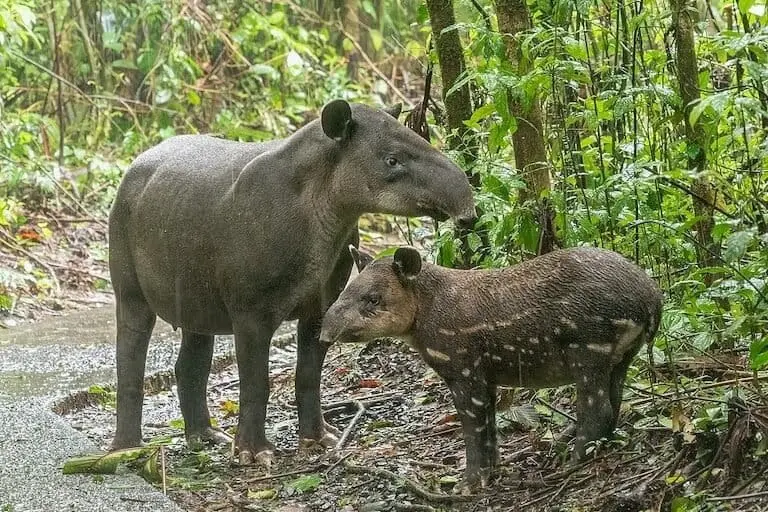
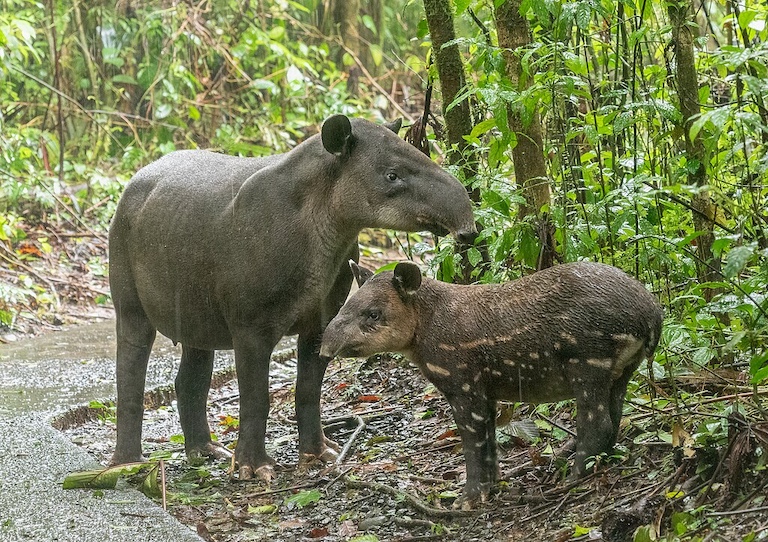
Instead of waiting for distant government agencies or international bodies to intervene, these communities have launched a comprehensive, community-led biodiversity monitoring initiative. Spanning 18,000 hectares (approximately 44,500 acres) of heavily threatened tropical forest, the project has already documented more than 200 distinct species, including charismatic and ecologically vital "umbrella" species such as jaguars (Panthera onca), Baird’s tapirs (Tapirus bairdii), and crested eagles (Morphnus guianensis). Crucially, at least 15 of these cataloged species are officially classified as threatened.
Reported originally by Mongabay contributor María Paula Rubiano A., this grassroots endeavor is much more than a routine wildlife survey. The communities are utilizing this rich ecological baseline to position themselves at the cutting edge of the emerging biodiversity credit market. In a remote region historically starved of sustainable economic opportunities, this innovative market-based mechanism offers a dual promise: preserving ancestral lands from ecological collapse while securing tangible financial streams for local residents.
Supported by strategic alliances with the Panama-based FSC Indigenous Foundation, the international health and conservation nonprofit Health In Harmony, and Savimbo—an Indigenous-co-founded biodiversity credit enterprise—these villages are proving that Indigenous stewardship, backed by modern technology and fair market mechanisms, may well be the ultimate blueprint for 21st-century conservation.
Detailed Chronology: From Existential Threat to Grassroots Innovation
The Gathering Storm in the Darién
For generations, the Indigenous Wounaan and Emberá-Wounaan peoples have coexisted with the hyper-biodiverse ecosystems of the Darién. Acting as de facto guardians of the forest, their traditional land management practices preserved a vast, unbroken ecological corridor connecting North and South America. However, over the past decade, the pressures facing these communities have escalated exponentially.
Illegal logging syndicates have pushed deeper into Indigenous territories, eyeing valuable tropical hardwoods, while slash-and-burn agriculture and cattle ranching have steadily chipped away at the forest margins. Compounding these pressures is a chronic lack of sustainable local economies. With few formal avenues to generate income, community members often found themselves economically cornered, occasionally forced to participate in or turn a blind eye to extractive industries that degrade their environment.
Recognizing that traditional defense methods alone could no longer hold back the tide of deforestation, leaders across four distinct Wounaan and Emberá-Wounaan villages decided to pivot toward data-driven advocacy and economic self-determination.
Deploying Science and Ancestral Knowledge
The turning point came when the communities partnered with the FSC Indigenous Foundation and Health In Harmony. These organizations brought technical capacity, funding networks, and advanced monitoring methodologies to the ground. Rather than relying solely on external researchers, the initiative was built around local capacity-building. Indigenous community members were trained to deploy high-tech conservation tools, transforming local hunters and gatherers into skilled citizen scientists and wildlife monitors.
The initiative integrated two primary technological approaches:
- Bioacoustic Monitoring: Strategically placed acoustic sensors record the ambient soundscapes of the forest, capturing the vocalizations of birds, amphibians, and mammals. This provides a continuous, non-invasive stream of data on species presence and ecosystem health over large geographic areas.
- Camera-Trapping: Motion-activated cameras were installed along wildlife corridors and deep-forest tracks, capturing rare glimpses of elusive nocturnal and semi-solitary fauna that rarely interact with humans.
To translate this massive influx of raw data into a standardized, monetizable format, the communities adopted a specialized methodology developed by Savimbo, a pioneering biodiversity credit company co-founded by Indigenous leaders. Savimbo’s framework relies on tracking 15 carefully selected indicator species as a living proxy for overall forest health. If these species thrive, the ecosystem is verified as healthy, allowing the communities to issue and sell biodiversity credits to corporate and philanthropic buyers seeking verified, high-integrity offsets or nature-positive investments.
Behavioral Shifts on the Ground
The ripple effects of this monitoring project were felt almost immediately within the participating villages. According to Samuel Cheucarama, a resident of an Indigenous Wounaan village interviewed by Mongabay, the project fundamentally altered how local residents view their relationship with local wildlife.
"People don’t go hunting anymore," Cheucarama reported, highlighting a profound psychological shift catalyzed by the data collection. "They’re saying, ‘We’re going to put up a ‘No Hunting’ sign.’"
By actively participating in tracking jaguars and tapirs—species that many residents had previously viewed merely as game or potential threats—community members developed a renewed sense of pride and active custodianship. The forest was no longer perceived merely as a resource to be harvested out of economic desperation, but as a living asset of immense intrinsic and potential financial value.
Supporting Context & Metrics: The Anatomy of the Project
To fully grasp the significance of the Darién initiative, it is essential to examine the scale of the operation, the ecological stakes, and the mechanics of the emerging biodiversity credit market.
Quantitative Breakdown of the Initiative
- Geographic Scope: 18,000 hectares (approximately 44,500 acres) of primary and secondary tropical forest under direct Indigenous stewardship.
- Species Diversity: Over 200 distinct species cataloged through combined bioacoustic and camera-trap methodologies.
- Conservation Flagships: Three critical "umbrella" species documented:
- Jaguars (Panthera onca): Apex predators requiring vast home ranges, serving as a primary indicator of ecosystem integrity.
- Baird’s Tapirs (Tapirus bairdii): The largest native land mammals in Central and South America, crucial seed dispersers often referred to as the "architects of the forest."
- Crested Eagles (Morphnus guianensis): Rare, forest-dependent raptors sensitive to habitat fragmentation.
- Vulnerability Index: At least 15 of the cataloged species carry official classifications as threatened on international conservation red lists.
Understanding Biodiversity Credits
While carbon offsets have dominated environmental markets for decades, critics have frequently pointed out their blind spots—namely, that a forest can store carbon while being ecologically sterile or devoid of native fauna. Biodiversity credits represent the next evolution in environmental finance. They assign a quantifiable economic value to the health, restoration, and preservation of biodiversity within a specific area.
In the model implemented by Savimbo and embraced by the Wounaan and Emberá-Wounaan communities, credits are generated not through vague promises, but through rigorous, verifiable biological data. By proving that threatened indicator species are present and stable across their 18,000 hectares, the communities can sell these verified credits on international markets.
This model directly addresses a historical flaw in conservation finance: the exclusion of Indigenous peoples from the economic upside of land stewardship. Too often, international conservation funds flow to centralized governments or large international NGOs, while the local populations bearing the daily cost of conservation receive little to nothing. The Darién project flips this paradigm, ensuring that direct revenue flows straight into the bank accounts of the Indigenous villages guarding the frontier.
Official Statements and Perspectives
The success of the pilot project has drawn praise from conservation scientists, Indigenous leaders, and institutional partners alike.

Samuel Cheucarama, Wounaan Community Member:
"People don’t go hunting anymore. They’re saying, ‘We’re going to put up a ‘No Hunting’ sign.’"
Cheucarama’s testimony underscores the internal cultural transformation sparked by the project. By shifting the community’s economic and mental paradigm from extraction to conservation, the initiative has fostered a grassroots conservation ethic that top-down government mandates have historically failed to achieve.
Advocates and Institutional Partners:
Representatives from Health In Harmony and the FSC Indigenous Foundation have emphasized that empowering Indigenous communities with advanced monitoring tools is the most cost-effective and socially just method of halting global biodiversity loss. Studies consistently show that lands managed by Indigenous peoples retain higher biodiversity and lower deforestation rates than government-managed protected areas. By combining this ancestral aptitude with cutting-edge bioacoustics and blockchain-ready credit metrics, these organizations are helping to create a replicable global template.
Future Outlook: Scaling Indigenous-Led Conservation
As the four Wounaan and Emberá-Wounaan villages prepare to formally issue their first batch of biodiversity credits, the eyes of the global conservation community are fixed on the Darién. If this pilot proves financially viable over the long term, it could radically transform how tropical forests are valued and protected worldwide.
Challenges on the Horizon
Despite its immense promise, the initiative faces several hurdles as it looks toward the future:
- Market Maturity: The global biodiversity credit market is still in its infancy. Unlike the well-established (though heavily scrutinized) carbon markets, biodiversity credits lack standardized global regulatory frameworks, meaning pricing and buyer demand can fluctuate significantly.
- Geopolitical Pressures: The Darién Gap remains a volatile region marked by transnational migration corridors, drug trafficking routes, and weak state law enforcement. Ensuring the physical safety of community monitors and maintaining the integrity of remote camera-traps requires constant vigilance.
- Long-Term Verification Costs: Maintaining high-tech bioacoustic arrays and processing massive amounts of telemetry data requires ongoing technical support and digital infrastructure that rural communities cannot yet maintain entirely independently.
The Road Ahead
Nevertheless, the momentum is palpable. By proving that local ecological data can be converted into a viable economic engine, these communities are demonstrating that conservation and livelihood enhancement are not mutually exclusive.
If scaled successfully across the broader Darién and replicated throughout the Amazon and Mesoamerica, this model could unlock billions of dollars in private capital for Indigenous territories worldwide. More importantly, it ensures that the true custodians of the Earth’s most critical ecosystems are finally compensated as the essential economic actors they have always been—securing a greener, wilder future for Panama’s vanishing forests.



