

Executive Overview
For decades, the global conversation surrounding sustainable agriculture has been firmly anchored to the earth. Healthy soil—replete with dynamic microbiomes, rich organic matter, and intricate nutrient-cycling networks—has long been championed as the fundamental bedrock of regenerative farming. Yet, soil covers less than one-third of our blue planet. The vast majority of Earth’s surface is submerged beneath oceans that serve as vital economic lifelines and sources of sustenance for billions of people.
Recognizing that the future of global food security depends on transcending artificial boundaries between terrestrial and aquatic ecosystems, the renowned Rodale Institute has officially forged a strategic research partnership with GreenWave, a pioneering organization dedicated to regenerative aquaculture. This collaboration is designed to explore how ocean-based food production can directly supply valuable, nutrient-dense resources to land-based farmers, creating a closed-loop agricultural paradigm.
At a time when conventional industrial farming practices—both on land and at sea—are pushing planetary boundaries to the breaking point, this partnership offers a radical corrective. By integrating the zero-input, climate-mitigating mechanics of vertical ocean farming with the rigorous soil science of organic agriculture, the two organizations are laying the groundwork for a unified, regenerative food system. As populations surge and wild fisheries face terminal decline, this cross-disciplinary alliance seeks to prove that the answers to our most pressing ecological crises lie in a harmonious continuum stretching from mountain top to ocean floor.
Detailed Chronology: From Open-Sea Exploitation to Regenerative Aquaculture
The Historical Context of Foraging and Fishing
Long before modern humans cleared forests and cultivated monoculture crops, our ancestors gathered sustenance directly from the water’s edge. Shellfish reefs, kelp forests, and coastal fisheries provided the dense concentrations of protein, trace minerals, and essential fatty acids that fueled human neurological development.
Fast forward to the modern era: according to a 2024 report published by the USDA Economic Research Service, the average American consumer eats roughly 20 pounds of fish and shellfish annually. To meet this escalating demand, seafood cultivation has scaled up dramatically over the past several decades. Data from the National Oceanic and Atmospheric Administration (NOAA) indicates that more than 50 percent of the global seafood supply is now raised on water-based farms.
However, this explosive growth in aquaculture did not initially translate to ecological harmony.
The Awakening of a Commercial Fisherman
The systemic flaws of modern aquaculture became painfully clear to Bren Smith, a native of Newfoundland, Canada, who began commercial fishing in the grueling waters of the Georges Bank and Grand Banks at just 14 years old. By the 1990s, decades of overfishing, habitat destruction, and compounding climate impacts had rendered wild fishing an increasingly precarious way of life.
Desperate for a viable livelihood, Smith transitioned into finfish aquaculture, operating under the assumption that "blue jobs" would successfully put people back to work while relieving pressure on wild stocks. Instead, he made a sobering realization.
"I soon saw that all the mistakes that have been made in farming on land were being repeated in the sea," Smith reflects.
Commercial finfish aquaculture had rapidly mirrored the resource-intensive, environmentally degrading playbook of industrial land-farming. It relied heavily on artificial nutrients, chemical pesticides, and prophylactic antibiotics, which poisoned surrounding waters, degraded aquatic landscapes, and systematically disrupted delicate marine ecosystems.
Reinventing Ocean Farming: The GreenWave Model
Determined to chart a radically different path, Smith envisioned a system that bypassed the ecological traps of fish pens. Instead of raising animals that swim away and require tons of resource-heavy feed, he turned to stationary, non-fed species.
"I thought we should grow seaweed and shellfish—crops that don’t swim away and that can feed on the nutrients that already exist in the water," he explains.
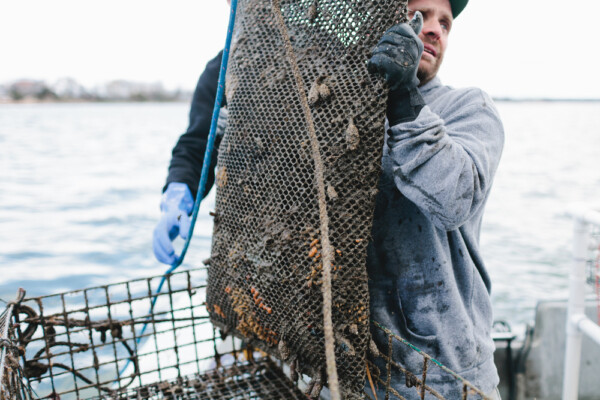
This foundational insight gave birth to GreenWave and its revolutionary model for vertical ocean farming. Engineered to withstand punishing open-ocean conditions, these farms utilize hurricane-proof anchors at their perimeters and floating horizontal ropes stretched across the water’s surface.
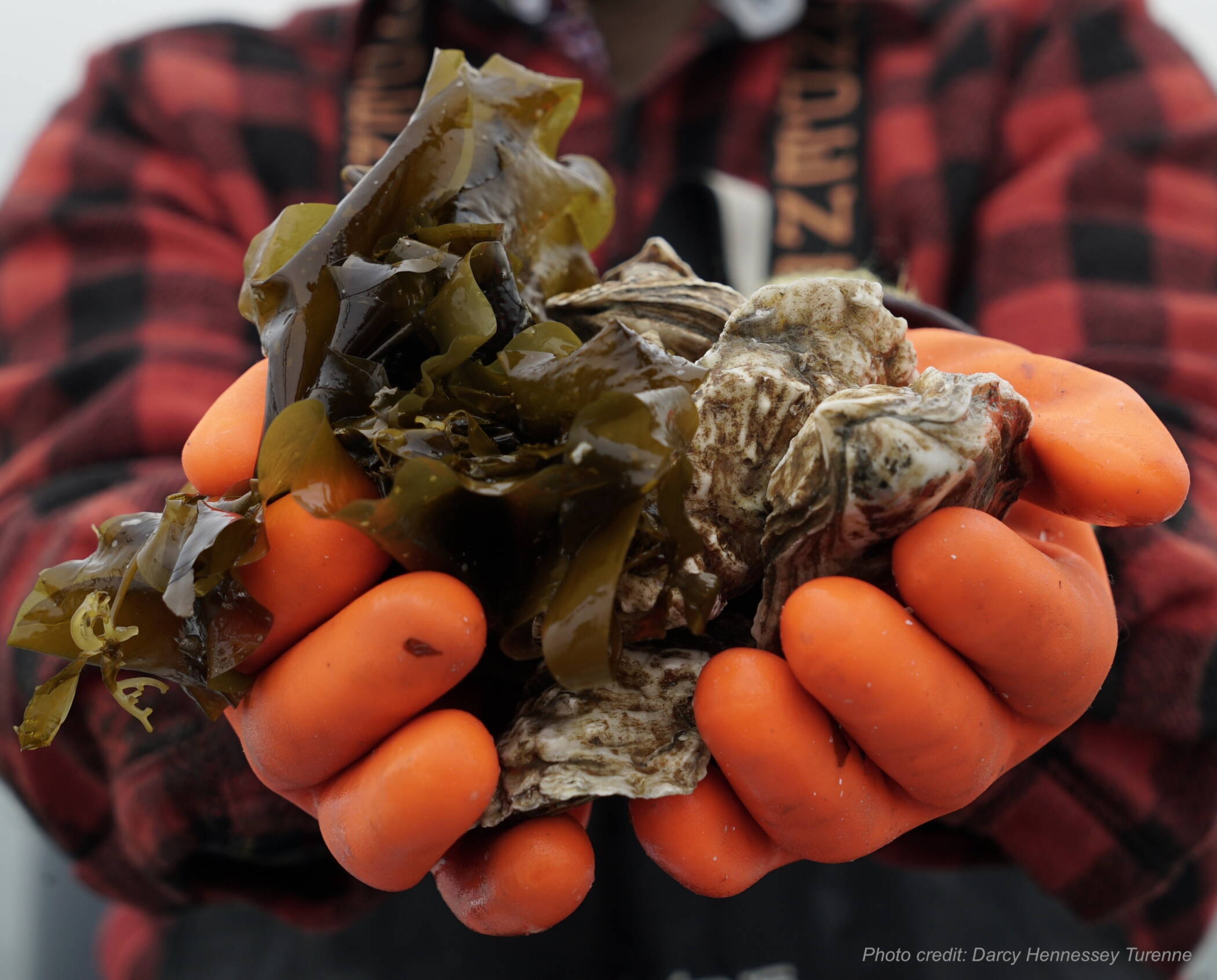
From an aesthetic and spatial perspective, the farms are remarkably unobtrusive. "If you look for our farms from the shore, there’s almost nothing to see," Smith notes. "They have very small footprints."
Beneath the surface, however, a complex, high-yield polyculture thrives in vertical strata:
- Kelp and Seaweed Varieties: Grow downward from the surface ropes, capturing sunlight and dissolved nutrients.
- Scallops and Mussels: Suspended in hanging nets and mesh socks respectively, filtering passing currents.
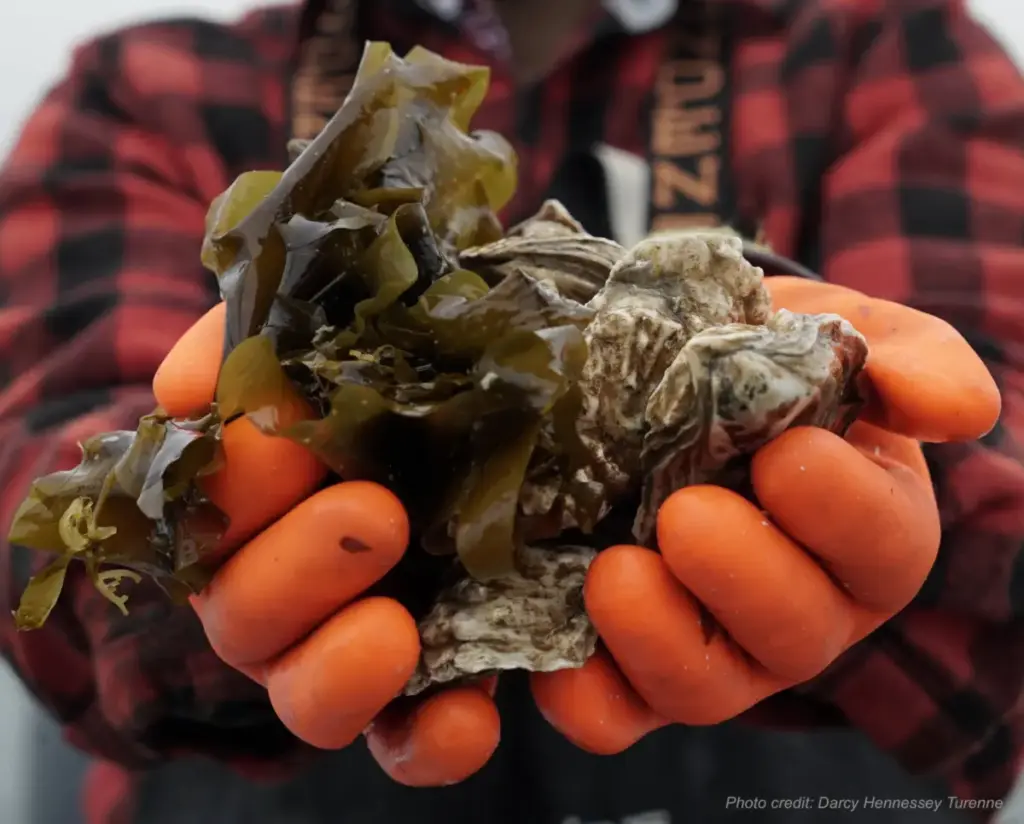
- Oysters and Clams: Occupy cages and the sandy sea floor at the absolute base of the system, consuming excess organic matter and phytoplankton.
Democratizing Ocean Farming
Beyond production, GreenWave developed an open-source "farmer toolkit" designed to empower coastal communities. Launched in 2017, the organization’s regional training programs have educated and supported more than 8,500 ocean farmers, hatchery operators, and green entrepreneurs.
By championing farmer-owned and farmer-run cooperatives, GreenWave has lowered the barrier to entry for communities where traditional fishing is collapsing.
"We’re no longer pillagers hunting the last fish," Smith asserts. "We are a new generation of climate farmers who have joined the fight to restore our planet."
Supporting Context & Metrics: The Numbers Behind the Movement
To fully grasp the disruptive potential of this partnership, one must examine the staggering productivity metrics and ecological benefits generated by regenerative ocean farming compared to conventional systems.
High-Yield, Zero-Input Production
The GreenWave vertical farming model yields astonishing amounts of nutrient-dense food per square acre without demanding any of the traditional inputs required by land-based agriculture.
- Crop Yields: A single acre of vertical ocean farm can produce up to 250,000 shellfish and 25 tons of restorative kelp every five months.
- Resource Footprint: This is classified as "zero-input food," meaning it requires no fresh water, no synthetic fertilizers, no chemical feed, and no arable land.
- Nutritional Density: The resulting harvest supplies exceptional amounts of clean, lean protein via bivalves alongside mineral-rich greens via kelp.
The Ecological Engine of Kelp and Bivalves
Ocean farming does more than extract food; it actively repairs damaged marine environments.
- Carbon Sequestration & De-acidification: Kelp rapidly absorbs dissolved carbon dioxide from seawater while releasing life-giving oxygen. This biochemical process helps buffer local waters against acidification driven by rising global temperatures, ensuring that delicate bivalves can successfully build and maintain protective shells.
- Water Filtration: Oysters, clams, and mussels act as natural biological filters, consuming massive volumes of phytoplankton and excess nutrients (such as nitrogen and phosphorus runoff from land). By filtering the water column, they dramatically improve light penetration, which in turn accelerates the growth of adjacent kelp lines.
Nutritional Interventions for Agricultural Soils
For generations, coastal farmers intuitively understood the deep connection between sea and soil, routinely hauling decaying seaweed inland to amend depleted fields. This practice largely ceased with the advent of cheap, fossil-fuel-derived synthetic fertilizers following World War II.
Modern industrial fertilizers offer a quick chemical fix at the expense of soil biology, killing off beneficial microbes and degrading structural integrity over time. In stark contrast, organic land farmers rely on natural soil amendments. Herein lies the core thesis of the Rodale-GreenWave partnership: marine biomass can serve as a potent biostimulant for terrestrial crops.
Official Statements and Scientific Inquiry
The formal research partnership between the Rodale Institute and GreenWave is not merely symbolic; it is anchored in rigorous, empirical scientific evaluation. Both organizations emphasize the necessity of evidence-based research to validate traditional ecological wisdom.
Bridging the Gap Through Science
"We have long known that products harvested from the sea have the power to promote plant growth and plant health," states Dr. Andrew Smith, Chief Scientific Officer at the Rodale Institute.
Dr. Smith notes that kelp functions as a powerful agricultural biostimulant. When applied to agricultural soils, it triggers dormant microbial activity, significantly enhances a plant’s ability to uptake vital nutrients, and fortifies crops against abiotic stresses such as severe drought.
Echoing this sentiment, GreenWave founder Bren Smith highlights the critical need for institutional validation:
"We need credible science to evaluate kelp’s benefits and find out how to get the most from it. We knew we had to have a technically sophisticated partner to dig deep into this. When we were meeting with the research team at Rodale Institute, I knew we were talking farmer to farmer, that we are working toward the same goals."
Inside the Research Trials
To quantify the exact efficacy of marine biostimulants, Rodale Institute scientists have initiated a comprehensive, multi-phase research initiative led by soil scientist Dr. Dinesh Panday.
- Study Design: The project encompasses a two-year field trial running concurrently with a one-year controlled greenhouse experiment.
- Testing Parameters: Researchers are evaluating how GreenWave-derived kelp biostimulants impact the nutritional content, yield, and overall resilience of specialty crops, specifically focusing on lettuce and bell peppers.
- Comparative Analysis: The kelp treatments are being rigorously tested against and combined with biochar—a widely recognized, carbon-rich organic soil amendment—applied at varying rates across distinct test plots.
"Kelp has many trace minerals that support healthy plant growth," explains Dr. Dinesh Panday. "We are studying its value for specialty crops in regenerative organic systems."
The empirical findings from this ground-breaking research project are scheduled to be officially published in 2027, providing the agricultural community with actionable data on marine-terrestrial nutrient cycling.
Future Outlook: A Unified Regenerative Food System
As the global community confronts the intersecting crises of climate destabilization, soil degradation, and food insecurity, the Rodale-GreenWave partnership points toward a hopeful horizon.
Redefining Consumer Choices
The ripple effects of this partnership extend directly to the consumer plate. Navigating seafood choices can often feel overwhelming given the prevalence of overfishing and destructive aquaculture practices. To cut through the confusion, conservation organizations like the Monterey Bay Aquarium Seafood Watch program have established frameworks like the "Super Green List."
This list identifies nutrient-dense seafood options that can be harvested with minimal or net-positive ecosystem impacts. Notably, the top-tier items on this list—mussels, clams, oysters, and kelp—are precisely the crops produced by GreenWave’s regenerative vertical ocean farms. By incorporating these items into daily diets, consumers actively support a restorative marine economy.
Toward a Circular Planetary Economy
Ultimately, the collaboration between the Rodale Institute and GreenWave signals a paradigm shift away from extractive industries toward circular, closed-loop stewardship.
Whether nurturing soil microbiomes on Pennsylvania farmlands or anchoring kelp lines in rough coastal waters, the underlying philosophy remains identical: working with nature rather than attempting to conquer it. By demonstrating that the ocean can heal the land—and that land-based organic principles can inform aquatic cultivation—these organizations are forging a unified front.
In this emerging regenerative food system, producers on land and sea share a common mission: protecting the natural resources upon which all life depends, and ensuring that our blue planet can nourish generations to come.



