Executive Overview
In an era defined by compounding ecological pressures, shifting consumer demands, and economic volatility, modern agriculture faces a stark imperative: pivot toward sustainability or risk obsolescence. At the epicenter of this agricultural renaissance is regenerative organic farming—a holistic practice that restores soil biodiversity, sequesters carbon, and produces nutrient-dense food without synthetic chemical inputs.
However, transitioning to or maintaining a certified organic operation requires a rare convergence of traditional intuition and complex modern science. Farmers must master disciplines as diverse as soil microbiology, entomology, organic certification compliance, financial cost accounting, and digital marketing. Historically, acquiring this multidisciplinary expertise meant attending in-person agricultural schools, completing localized apprenticeships, or relying on ad-hoc, fragmented information found across the internet. For working farmers—who rarely get weekends off, let alone extended leaves of absence—this knowledge gap has long posed a formidable barrier to entry and expansion.
Enter the Rodale Institute Farmer Training (RIFT) Online initiative. For over 15 years, the flagship Rodale Institute in Pennsylvania has served as the gold standard for hands-on, experience-tested agricultural education. Recognizing that geographical and temporal constraints prevent countless aspiring and veteran producers from participating in its elite nine-month residential program, the Institute has fundamentally transformed its educational delivery model.
By leveraging cutting-edge digital learning management systems and synthesizing over 75 years of agricultural research into university-grade video modules, Rodale Institute has launched a virtual campus. This expansion shatters historical capacity bottlenecks. While the physical campus trains roughly a dozen agricultural entrepreneurs annually, the new online ecosystem possesses the infrastructure to educate up to 6,500 farmers simultaneously.
By bridging the gap between rigorous scientific validation and accessible, self-paced virtual instruction, Rodale Institute is democratizing agricultural literacy. This initiative is not merely teaching farmers how to grow crops; it is equipping a new generation of agricultural business owners with the foundational tools needed to build profitable, resilient enterprises that can feed communities and heal the planet.
Detailed Chronology: The Evolution of Rodale’s Educational Extension
To understand the gravity of Rodale Institute’s digital pivot, one must trace the institutional lineage that birthed it. The journey from localized field research to a global virtual classroom spans decades of trial, error, and scientific validation.
The Foundation of Practical Research (1940s–2000s)
Long before "regenerative agriculture" became a mainstream corporate buzzword, J.I. Rodale founded the Rodale Institute in 1947, pioneering the organic movement in the United States. For more than three-quarters of a century, the Institute’s research farms—most notably its flagship campus in Kutztown, Pennsylvania—have conducted long-term trials, such as the renowned Farming Systems Trial. These studies scientifically proved that organic systems match or outperform conventional agriculture during droughts while using significantly less energy and emitting fewer greenhouse gases.
However, generating groundbreaking research data is only half the battle; translating that data into actionable insights for working farmers has always been the primary hurdle of agricultural extension services.
The In-Person Training Era (Early 2000s–Present)
Recognizing a severe shortage of skilled organic growers, the Institute formalized its educational mission by launching the Rodale Institute Farmer Training (RIFT) program. Designed as an intensive, immersive, nine-month residential experience, RIFT combined classroom theory with back-breaking, sun-up-to-sun-down fieldwork. Graduates emerged as elite agricultural entrepreneurs, highly sought after across the country. Yet, the physical realities of the program inherently capped its reach. Maintaining optimal mentor-to-student ratios on a working farm limited cohorts to roughly a dozen participants per year. Thousands of other applicants—bound by family obligations, geographic isolation, or existing farm operations—were left on waiting lists or turned away entirely.
The Genesis of the Virtual Campus (2020–2024)
The catalyst for change arrived quietly three years prior to the platform’s full rollout. Recognizing that digital transformation was no longer optional for modern workforce training, Rodale’s leadership initiated a multi-year archival and production effort. Led by Director of Education Dr. Jason Slipp and Dean of Education Renée Baran, the education team began systematically recording the RIFT curriculum on video.
Rather than simply filming lectures, the team sought to translate the rigorous, science-backed methodologies of their physical classrooms into interactive digital modules. They partnered with educational technology specialists to deploy the Canvas learning management system, ensuring that the interface would remain intuitive for producers who might not consider themselves "tech-savvy."
The Nationwide Rollout and Strategic Partnerships (Present Day)
With the virtual campus officially operational, Rodale Institute has transitioned from a localized training center to a national educational hub. The platform has quickly attracted the attention of agricultural nonprofits, regional farm apprenticeship programs, and higher education institutions.
Among the earliest institutional adopters is Good Roots, a nonprofit organization dedicated to helping organic producers build sustainable, intergenerational businesses. By integrating Rodale’s online modules into their support networks, organizations like Good Roots can now offer small-scale producers high-level business management and marketing training that would otherwise be cost-prohibitive.
Supporting Context & Metrics: The Mechanics of Modern Ag-Education
The transition to online agricultural education addresses several deep-seated structural challenges within modern farming economies. Analyzing the metrics behind the initiative reveals why this digital extension is uniquely positioned to succeed.
Quantifying the Knowledge Gap
Farming is one of the few professions where practitioners are simultaneously chief executive officers, head agronomists, mechanics, and laborers. According to institutional data from Rodale Institute, the primary vulnerabilities for transitioning and beginning farmers are not just agronomic—they are financial and managerial.
- The Time Deficit: Working farmers frequently log 60-to-80-hour workweeks during peak seasons. Weekends do not exist in livestock husbandry or crop harvesting. Traditional continuing education, which requires physical attendance during business hours or multi-day travel, is structurally incompatible with farm life.
- The Scale Disparity: While large conventional agribusinesses can afford dedicated legal, accounting, and marketing departments, small-to-midsize organic operations must operate as lean, single-person or family-run enterprises. Without formal business training, many struggle with cost accounting, regulatory compliance, and profit optimization.
- The Capacity Leap: The physical RIFT program trains approximately 12 new farmers annually. In stark contrast, the newly established virtual campus possesses a designated capacity of 6,500 concurrent learners, expanding institutional educational output by over 50,000 percent.
The Curriculum: Beyond Basic Googling
A common critique of online agricultural resources is that they offer superficial, one-size-fits-all advice that fails to account for regional soil types, microclimates, or specific pest pressures. Dr. Jason Slipp emphasizes that the RIFT Online curriculum avoids this trap by maintaining university-level academic rigor based on proven instructional design principles.
The curriculum is broadly categorized into two critical pillars:
- Regenerative Agronomy: In-depth, video-based modules covering advanced soil science, biological pest management (entomology), complex multi-species crop rotations, mechanical and cultural weed control, and the safe, efficacious application of organic fertilizers and soil amendments.
- Agricultural Entrepreneurship: Pragmatic business training focusing on organic certification requirements (such as USDA National Organic Program standards), financial recordkeeping, enterprise budgeting, direct-to-consumer marketing strategies, and wholesale supply chain logistics.
The Learning Management Experience
Utilizing the Canvas platform allows Rodale to deploy an interactive pedagogical model that mimics a physical classroom while retaining asynchronous flexibility. Key features include:
- Self-Paced Modules: Students can access instructional videos, reading materials, and resource guides at 3:00 AM during calving season or on a rare rainy afternoon.
- Peer-to-Peer Communities: Discussion boards connect isolated farmers in rural counties with peers facing similar agronomic challenges across different climate zones.
- Instructor Feedback: Direct lines of communication between students and Rodale experts ensure that complex theoretical concepts are contextualized for individual farm applications.
Official Statements and Institutional Perspectives
Leadership at Rodale Institute and its strategic partners have articulated a clear vision for how this digital educational infrastructure will alter the landscape of American agriculture.
"Farming is a unique way to make a living because farmers don’t get vacations or even weekends off when they can take time to focus on learning," explains Renée Baran, Rodale Institute Dean of Education. "But new farmers and many experienced ones have gaps in their knowledge they need to fill. We train a dozen or so new farmers in our in-person RIFT program each year. Our virtual campus can serve 6,500 farmers. We want to be the ‘regenerative organic agriculture YouTube’ where farmers can find the information they’re looking for, but with real scientific integrity and a community of others to connect to and learn with."
The depth of the curriculum is designed to replace the trial-and-error method that drives many beginning farmers out of business within their first five years. Dr. Jason Slipp, Director of Education, notes the intentionality behind the platform’s design:
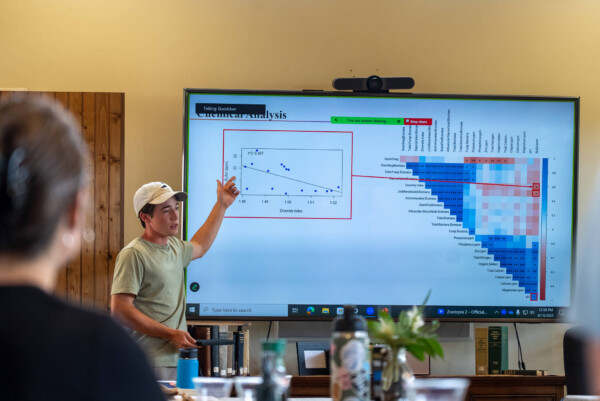
"At Rodale Institute, we have accumulated more than 75 years’ worth of knowledge, and for the past three years, we’ve been capturing much of our RIFT curriculum on video. We’re now offering it to farmers who are not able to enroll in our nine-month, in-person program. These are university-level classes based on proven instructional principles. This is easy for everyone to use, even if they’re not too tech-savvy."
External partners have immediately recognized the value of embedding these resources into community-level agricultural support networks. Rebecca Frimmer, a partner and principal consultant for the nonprofit organization Good Roots, highlights the critical intersection of agronomy and business acumen:
"Farmers need training in business management and finance to ensure they are profitable and viable for the long term. The biggest challenge for farmers is finding the time to balance all that must be done. It’s essential to carve out the space to work on the farm business and not just in the business.
Smaller-scale producers may not have the resources to access consulting services or other professional services like bookkeeping and marketing. The self-paced educational resources and interactive support offered by Rodale Institute open up effective ways for Good Roots to ensure the next generation of farmers can scale up with strong financial and marketing foundations."
Future Outlook: Democratizing Health from the Ground Up
As Rodale Institute looks toward the future, the scope of its educational programming is expanding beyond the traditional boundaries of commercial farming. While the primary engine of RIFT Online remains the empowerment of growers, the platform is increasingly opening its digital doors to the public—bridging the chasm between rural producers and urban consumers.
Expanding the Consumer-Producer Continuum
Transforming the food system requires shifting demand just as urgently as it requires transforming supply. To achieve this, Rodale Institute has curated specialized virtual coursework aimed at everyday citizens, gardeners, and health advocates.
Virtual campus offerings now include courses such as:
- "Being a Regenerative Consumer": Educating shoppers on how purchasing decisions impact soil health, carbon sequestration, and regional farm economies.
- "Regenerative Health: The Power of the Plate": Exploring the direct biochemical links between soil vitality, the nutrient density of crops, and human health outcomes.
- Hobbyist and Horticultural Modules: Practical, expert-led classes in backyard gardening and hobby beekeeping.
By welcoming non-farmers into the digital ecosystem, Rodale is building a unified constituency. When an urban consumer takes an online class on soil science or beekeeping, they do not merely build personal hobbies; they become informed advocates who understand why supporting regional organic farmers is essential for public health and planetary survival.
The Road Ahead
The digitization of agricultural extension services marks a structural inflection point. By decoupling world-class agricultural education from physical classroom seats, Rodale Institute has removed the friction that has historically hindered the adoption of regenerative practices.
As thousands of new agricultural entrepreneurs log onto the platform—balancing ledgers, studying entomology, and sharing weed-management strategies across state lines—the movement toward a regenerative future gains unstoppable momentum. Through the synthesis of 75 years of rigorous field science and modern educational technology, Rodale Institute is ensuring that the tools to heal the earth are available to anyone, anywhere, who is willing to plant a seed and put in the work.
For detailed course schedules, curriculum breakdowns, and enrollment information, visit RodaleInstitute.org/education.