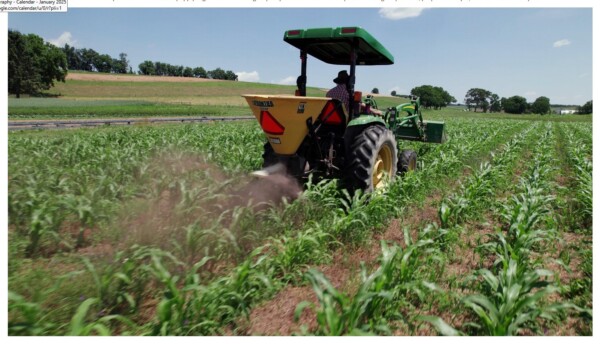
In the modern agricultural landscape, the survival and prosperity of a farm depend less on the sheer expanse of its acreage and more on the depth of its ecological and financial literacy. For decades, the pursuit of regenerative organic farming—a holistic discipline integrating soil science, entomology, complex crop rotations, and rigorous organic certification compliance—has been bottlenecked by access. Traditional agricultural extension programs, while invaluable, often require physical relocation, immense time commitments, or rigid scheduling that simply does not accommodate the relentless, 24/7 demands of running a working farm.
Enter the Rodale Institute Farmer Training (RIFT) online initiative, a transformative digital leap bridging the chasm between time-tested scientific research and the modern agricultural workforce. For over 15 years, the Rodale Institute has operated its premier, highly selective nine-month residential training program at its Pennsylvania campus, graduating cohorts of dedicated agricultural entrepreneurs. However, that physical campus could only accommodate a dozen or so students annually.
By migrating decades of peer-reviewed, experience-tested agronomic expertise onto a robust virtual learning platform, Rodale Institute has shattered geographical and logistical barriers. The new digital extension is not merely a collection of recorded lectures; it is a university-grade curriculum designed to empower thousands of agricultural producers, transition-seeking conventional farmers, and passionate consumers. By marrying academic rigor with the flexibility of the Canvas learning management system, the Institute is positioning itself to become the definitive "YouTube of regenerative agriculture"—a trusted, scientifically rigorous digital commons where the global farming community can connect, learn, and scale up profitable, sustainable operations.
Detailed Chronology: The Evolution of Rodale’s Educational Outreach
To understand the profound significance of Rodale Institute’s virtual expansion, one must trace the institutional milestones that paved the way for this digital transformation.
1. The Foundation of Empirical Research (Mid-to-Late 20th Century)
Long before "regenerative agriculture" became a mainstream buzzword, the Rodale Institute stood as a global pioneer in organic farming systems trials. Founded on the premise that healthy soil equals healthy food and healthy people, the organization spent more than 75 years compiling empirical data on soil health, weed suppression, pest management, and crop yields. This accumulated body of research proved that organic systems could match—and often outperform—conventional methods, particularly during times of environmental stress such as drought.
2. The Birth of the Residential RIFT Program (Early 2000s)
Recognizing that academic research must be translated into practical, boots-on-the-ground farming skills, the Institute established the Rodale Institute Farmer Training (RIFT) program at its Pennsylvania headquarters. Designed as an immersive, nine-month, in-person curriculum, RIFT offered aspiring agriculturalists hands-on experience in every facet of running a certified organic operation. From mastering tractor mechanics to navigating the bureaucratic hurdles of USDA organic certification, RIFT produced a cadre of highly capable organic entrepreneurs. Yet, the physical limitations of the campus meant its reach was severely restricted, capping enrollment at a mere dozen students per year.
3. The Three-Year Digital Pivot (2021–2024)
Anticipating the growing demand for sustainable food systems and the acute knowledge gaps facing a new generation of growers, Rodale’s leadership initiated a comprehensive multi-year project. Over the span of three years, the education team systematically captured, refined, and expanded the RIFT curriculum onto high-definition video. Rather than diluting the rigorous content for online consumption, subject matter experts worked to transform complex university-level agricultural science into modular, digestible digital lessons without sacrificing scientific integrity.
4. The Launch of the Virtual Campus (Present Day)
With the integration of the Canvas learning management system, the virtual campus officially went live, turning vision into reality. This platform introduced interactive discussion boards, peer-to-peer collaboration tools, assignment trackers, and comprehensive testing modules. Today, the digital ecosystem serves as an all-encompassing virtual extension office, capable of scaling its educational footprint to thousands of active learners across the country simultaneously.
Supporting Context & Metrics: The Scale of the Challenge and the Solution
The imperative for Rodale’s digital expansion is underscored by stark economic and operational realities within the modern farming sector.
The Time Deficit of Modern Agriculture
Farming is unlike almost any other profession. It operates on biological clocks, weather patterns, and market demands that leave zero room for traditional work-life boundaries. As Renée Baran, Rodale Institute Dean of Education, points out:
"Farming is a unique way to make a living because farmers don’t get vacations or even weekends off when they can take time to focus on learning. But new farmers and many experienced ones have gaps in their knowledge they need to fill."
These knowledge gaps frequently dictate the difference between financial solvency and farm failure. Transitioning from conventional to organic management requires a three-year transitional period during which farmers must adopt entirely new philosophies regarding weed control, soil biology, and fertility management, all while absorbing the potential financial risks of shifting production models. Without access to accurate, proven data, many farmers stumble blindly through the transition phase.
Scaling Up Through Digital Infrastructure
The numbers tell a compelling story of impact amplification:
In-Person Limitation: Approximately 12 to 15 new farmers trained annually through the residential RIFT campus in Pennsylvania.
Digital Capacity: Up to 6,500 agricultural producers and learners supported simultaneously via the new virtual campus.
Institutional Heritage: Over 75 years of accumulated regenerative organic agricultural research distilled into the curriculum.
Curriculum Development Phase: A dedicated 3-year video production and instructional design period to ensure university-level academic standards.
By leveraging the Canvas learning management system, Rodale has bypassed the traditional friction points of remote education. The platform is intentionally engineered to be intuitive and accessible, ensuring that even agriculturalists who may not consider themselves "tech-savvy" can seamlessly navigate course materials, participate in video-based modules, and engage with instructors and peers.
Official Statements: Perspectives from Leadership and Industry Partners
The success of the RIFT online initiative relies heavily on strategic alliances with agricultural nonprofits, higher education institutions, and farm apprenticeship programs across the United States.
Bridging Agronomy and Business Management
While agronomic knowledge—such as safe fertilizer application, entomology, and soil microbiology—is critical, financial literacy is equally paramount for long-term farm survival. Many small-scale producers struggle not because they lack passion or crop-growing capability, but because they lack access to high-level business consulting, bookkeeping, and marketing strategies.
Rebecca Frimmer, partner and principal consultant at Good Roots—a nonprofit organization dedicated to helping organic farmers build lasting, sustainable enterprises—emphasizes the importance of this dual focus:
"Farmers need training in business management and finance to ensure they are profitable and viable for the long term. The biggest challenge for farmers is finding the time to balance all that must be done. It’s essential to carve out the space to work on the farm business and not just in the business."
Frimmer notes that smaller-scale and transitioning producers are often priced out of professional consulting, marketing agencies, and specialized bookkeeping services. By integrating Rodale’s self-paced educational resources into their support networks, organizations like Good Roots can equip emerging producers with the financial foundations necessary to scale successfully.
Maintaining Scientific Integrity in a Digital Age
In an era where agricultural advice is readily available via unstructured internet searches and social media algorithms, finding reliable, scientifically backed guidance can be hazardous. Much of the content found online is anecdotal, unverified, or commercially driven.
Jason Slipp, PhD, Director of Education at Rodale Institute, underscores the academic rigor embedded within the virtual platform:
"At Rodale Institute, we have accumulated more than 75 years’ worth of knowledge, and for the past three years, we’ve been capturing much of our RIFT curriculum on video. We’re now offering it to farmers who are not able to enroll in our nine-month, in-person program. These are university-level classes based on proven instructional principles."
Renée Baran expands on this vision for the future, highlighting the ambition to create a trusted digital space for the global agricultural community:
"We want to be the ‘regenerative organic agriculture YouTube’ where farmers can find the information they’re looking for, but with real scientific integrity and a community of others to connect to and learn with."
Future Outlook: Democratizing Regenerative Agriculture for All
As the RIFT online training platform continues to onboard new cohorts, expand its course offerings, and forge partnerships with nationwide agricultural organizations, its long-term trajectory points toward a wholesale democratization of sustainable farming education.
Extending Beyond the Farm Gate
Crucially, Rodale Institute’s educational philosophy recognizes that true systemic change in the food system requires engagement across the entire supply chain—from the tractor operator in the field to the consumer at the grocery store checkout.
To address this, the virtual campus features specialized courses tailored for non-farmers and conscious consumers. Programs such as "Being a Regenerative Consumer" and "Regenerative Health: The Power of the Plate" allow individuals outside of commercial agriculture to build their literacy around food systems, nutritional density, and environmental stewardship. Furthermore, hobbyist classes covering topics like backyard gardening and sustainable beekeeping invite the public to actively participate in the broader regenerative movement.
The Road Ahead
By removing the physical, financial, and temporal barriers that have historically restricted agricultural education, Rodale Institute is laying the groundwork for a generational shift in farming. As thousands of new producers log onto the virtual campus to study soil microbiology, master financial recordkeeping, and connect with peer-led discussion groups, the movement toward a healthier, more resilient food system gains unprecedented momentum.
For aspiring agriculturalists, transitioning farmers, and conscious citizens alike, the message is clear: the knowledge required to heal the soil, build profitable businesses, and feed communities is no longer locked behind ivy-covered gates or restricted by geographic coordinates. It is available anytime, anywhere, at RodaleInstitute.org/education.