

Executive Overview
The inaugural Canada Investment Summit, spearheaded by high-profile financial architects and convened against a backdrop of escalating geopolitical urgency, was widely hailed by foreign bankers, pension executives, and investment fund managers as a resounding networking success. Promising nearly $500 billion in pre-pledged domestic lending and investment prior to its doors opening, the gathering was designed to position Canada as a premier destination for global capital.
However, beneath the celebratory veneer of boardroom handshakes and headline-grabbing figures lies a profound paradox. The summit occurred during a grim global climate reality—weeks after searing temperatures scorched Europe, wildfires blanketed eastern North America in toxic smoke, and scientists warned of a potent El Niño cycle threatening unprecedented planetary heat. Yet, explicit alignment with the climate emergency was largely absent from the core proceedings.
An exclusive sustainability analysis of the federal government’s pre-summit “deal book” conducted by the Corporate Knights research unit reveals that while approximately 36% of prospective capital expenditures (capex) lean into the low-carbon transition, a staggering 28%—representing over $129 billion—is tethered directly to fossil fuel expansion and carbon-intensive infrastructure.
As Canada chases a target of $1 trillion in total new capital from top-tier financiers, financial analysts, environmental advocates, and sustainable investment experts are sounding the alarm. They warn that the government’s project roster risks locking the nation into stranded assets, out-of-step fossil fuel expansions, and a dangerous "bull trap" in global energy markets. This investigation examines the dual nature of Canada’s economic pivot, dissecting the numbers, the strategic vulnerabilities, and the ideological clashes defining the nation’s financial future.
Detailed Chronology of Events and Commitments
The Road to the Summit
The path to the Canada Investment Summit began months prior, characterized by aggressive federal positioning to attract international liquidity. Recognizing shifting global supply chains and a heightened demand for stable, democratic energy and resource partners, Ottawa mobilized financial leaders to curate a pipeline of prospective national investments.
- Pre-Summit Pledges: In the weeks leading up to the event, Canada’s own financial industry—comprising major domestic banks, institutional investors, and asset managers—pledged an unprecedented $500 billion in new lending and investment earmarked for national projects.
- The Deal Book Release: To grease the wheels of commerce, the federal government published a comprehensive deal book detailing 167 prospective investment projects across various sectors, totaling $465 billion in capital requirements. This document served as the primary menu for foreign bankers, pension executives, and investment fund managers attending the summit.
- The Summit Convening: Held last week, the high-stakes summit functioned as a match-making forum for project proponents and global capital allocators. Attendees lauded the logistical execution and the direct access to key decision-makers. However, the event quickly drew criticism from climate scientists and sustainable finance advocates for its glaring omission of systemic climate-risk frameworks.
- Post-Summit Realities: As the dust settles, market watchers are shifting their focus from the celebratory rhetoric of the summit floor to the granular details of the deal book. The central question remains whether these capital commitments will build a resilient, sustainable economy or merely prop up legacy industries destined for obsolescence.
Supporting Context & Metrics: Decoding the Deal Book
To understand the trajectory of the capital flowing out of the summit, Corporate Knights subjected the 167 projects in the federal deal book to a rigorous sustainability taxonomy. The analysis maps out a complex financial landscape divided into distinct tiers of capital expenditure.
Sustainable Capex: A Silver Lining
Corporate Knights defines sustainable capex as capital investments that directly accelerate the transition to a low-carbon economy. Out of the 167 projects evaluated:
- The High Performers: 43 projects, representing a potential $169 billion (36% of the total deal book value), qualify as sustainable capex.
- Macro Comparison: According to Corporate Knights research director Ralph Torrie, this 36% figure compares favorably against global equity benchmarks. The All Country World Index (ACWI), a widely cited global stock index, contained only 16% sustainable capex in 2024—less than half the proportion found in the summit’s deal book.
- Flagship Green Projects: The heavy lifting of this sustainable capex is driven by a handful of mega-projects. These include the proposed $44-billion Wind West project in Nova Scotia, the $36-billion Novatron project designed to transmit Atlantic wind energy to Quebec, and two ambitious high-speed rail initiatives in Western Canada collectively estimated at over $30 billion.
- The Gray Area: An additional $95 billion (21% of the total) exhibits potential sustainable characteristics, though initial disclosures lack the granular detail required for a definitive classification. Furthermore, roughly $71 billion (15%) is categorized as infrastructure with a neutral sustainability rating.
The Threat of Carbon Lock-In
Conversely, the deal book reveals a deep institutional commitment to fossil fuels that threatens to undermine Canada’s international climate commitments.
- Fossil Fuel Expansion: More than $129 billion (28%) of total potential projects fail to meet any standard of sustainable capex. This category is dominated by massive hydrocarbon extraction and transport infrastructure.
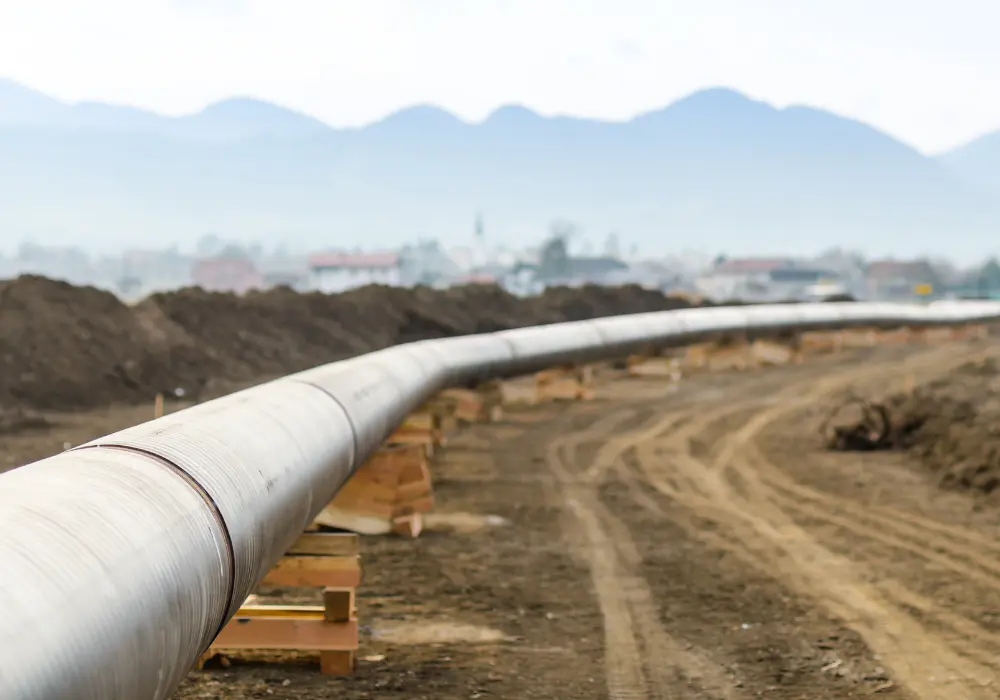
- Key Legacy Projects: Prominent among these are Alberta’s proposed $35-billion pipeline designed to move oil sands crude to the West Coast, British Columbia’s $29-billion Ksi Lisims and $10-billion Woodfibre liquefied natural gas (LNG) projects, and Quebec’s $23-billion Kino Aski LNG venture.
- Carbon Lock-In Risk: Torrie warns in an internal research note that these initiatives commit the Canadian economy to long-term emissions paths. "Fully 28% of the identified capex is in the old economy and would bring carbon lock-in," he states, highlighting a fundamental contradiction in national economic planning.
Official Statements and Industry Perspectives
The friction between immediate economic mobilization and long-term climate imperatives has sparked a fierce debate among financial leaders, environmental advocates, and governance experts.
The Fossil Fuel Conundrum
Richard Brooks, climate finance director at the advocacy group Stand.earth, did not mince words regarding the composition of the federal deal book.
"The No. 1 problem with the deal book is the amount of oil and gas projects that are proposed," Brooks noted in a recent statement. "It features $100 billion of new oil and gas projects that Mark Carney is fostering and seeking investment in."
However, pragmatists within the financial sector argue that political and economic realities dictate a hybrid approach. Kevin Thomas, CEO of the Shareholder Association for Research and Education (SHARE), pointed out that excluding fossil fuels entirely was never a politically or economically viable option for Ottawa.
"The likelihood that a Canadian federal government, at this point in time, would put all this together and not have any oil and gas on the table is pretty much nil," Thomas observed in an interview.
The Subsidy Trap and Market Realities
Despite their inclusion in the deal book, Canada’s new oil and gas ventures face intense skepticism regarding their long-term economic viability. Federal and provincial governments have signaled plans to subsidize the construction of controversial projects, such as the West Coast oil pipeline. This comes despite financial analyses—including warnings from organizations like the Pembina Institute—forecasting that declining global oil demand will fail to cover project costs over its operational lifespan.
Similarly, energy economists warn that proponents of Canadian LNG developments are falling prey to a market "bull trap." The recent spikes in global gas prices, exacerbated by geopolitical conflicts such as the war involving Iran, are being misconstrued as permanent structural shifts rather than temporary supply shocks.
Kevin Thomas questions the fundamental business case for these legacy assets:
"How robust do we think that the actual market for legacy energy projects is going to be once those subsidies end? You can get them built, but do you really think they’re going to generate revenues long-term?"
Strategic Deficits and Future Outlook
Beyond the debate over fossil fuels, structural critiques of the summit’s deal book point to a deeper vulnerability: the absence of a cohesive, top-down industrial strategy.
A Hodgepodge of Regional Proposals
Ralph Torrie characterizes the federal project list not as a calculated master plan, but as a reactive compilation of regional wish lists.
"There really isn’t any underlying strategy or framework under this—it’s the cards and letters that came in the mail," Torrie notes, pointing out that a small handful of massive projects in Eastern Canada skew the optics of the national sustainable capex ratio.
This lack of strategic cohesion creates an uneven playing field. Kevin Thomas warns that decentralized, uncoordinated proposal-gathering tends to favor politically entrenched legacy sectors—like oil, gas, and large pipelines—over more complex, highly necessary transitions, such as the development of critical-minerals mines required for electric vehicle supply chains.
The Path Forward: National Electrification and Micro-Dealmaking
To rectify these strategic shortcomings, experts advocate for a fundamental pivot in how Canada attracts and deploys capital. Rather than relying solely on multi-billion-dollar megaprojects that risk becoming stranded assets, Ottawa must double down on systemic enablers.
- Coordinated National Electrification: Analysts argue the federal government must rigorously operationalize its electricity strategy, released earlier this year, to ensure that the grid can handle the impending wave of industrial and consumer electrification.
- Expanding Dealmaking Capacity: Thomas suggests the creation of a dedicated "minor projects" initiative to complement the existing Major Projects Office. By nurturing earlier-stage developments, the government can foster a diversified, resilient ecosystem of sustainable enterprises.
- Strategic Discipline: Ultimately, Canada’s pursuit of $1 trillion in foreign capital must be governed by strict environmental and economic filters. Throwing public subsidies at legacy projects to satisfy immediate geopolitical anxieties risks saddling future generations with unpayable debts and obsolete infrastructure.
As the smoke clears from the Canada Investment Summit, the nation stands at a financial crossroads. While the influx of private capital signals robust global confidence in Canada’s resource wealth, the true measure of the summit’s success will not be found in the sheer volume of dollars pledged, but in whether those investments build a forward-looking, sustainable economy—or lock the country deeper into the energy systems of the past.



