

EXECUTIVE OVERVIEW
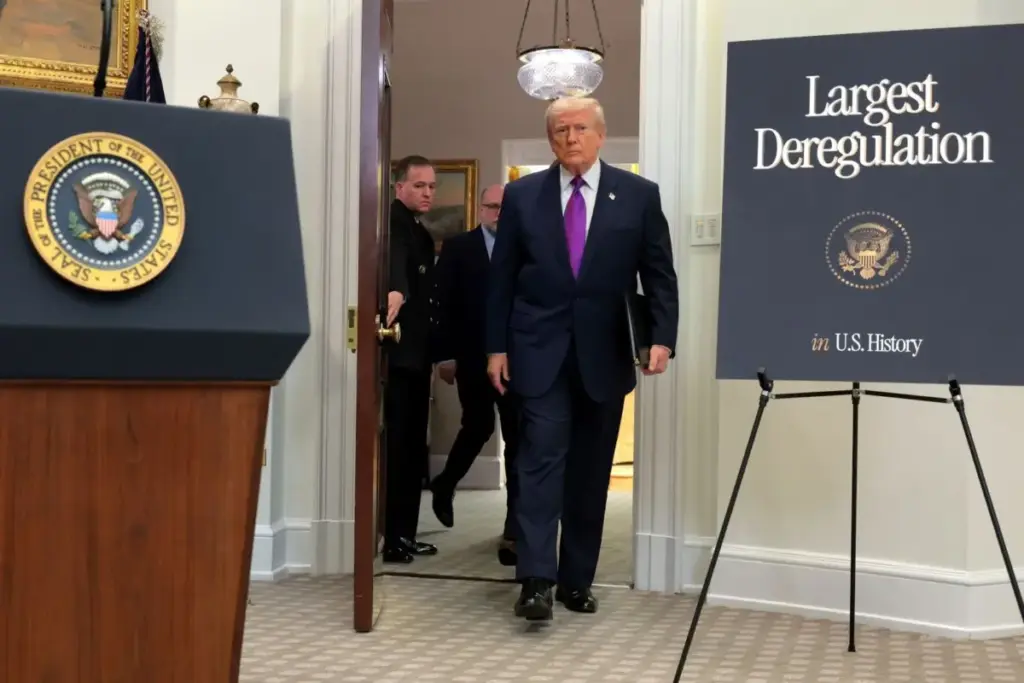
The federal government’s decades-long oversight of greenhouse gas emissions from passenger vehicles has effectively ground to a halt. In a sweeping regulatory rollback, the Trump administration finalized a plan to dismantle federal fuel-efficiency standards for cars and light trucks, cementing a series of aggressive policy reversals that have stripped Washington of its authority to govern automotive carbon pollution. With Congress having previously eliminated financial penalties for non-compliance and the administration systematically rolling back fundamental climate authorities, the federal landscape for vehicular emissions control is virtually non-existent.
Yet, America’s car culture and climate trajectory remain deeply contested. Standing directly in the path of total deregulation is a singular, formidable bulwark: the State of California. Armed with a half-century-old statutory exemption under the Clean Air Act, California retains the regulatory authority to enforce its own tailpipe emissions standards—rules that carry immense national weight. Because automotive manufacturers rarely build distinct fleets for different regional markets, California’s standards act as a de facto national baseline. Roughly 40 percent of the new car market in the United States is bound by these stricter requirements, compelling automakers to weigh the demands of the world’s fifth-largest economy against shifting federal mandates.
As the Trump administration pursues aggressive legislative and judicial strategies to strip California of its unique waiver, the ensuing conflict has escalated into a high-stakes constitutional showdown. The outcome will not only determine whether gas-powered vehicles remain on American roads for decades to come, but will also set a defining precedent for the boundaries of federal and state environmental authority.
DETAILED CHRONOLOGY: THE UNRAVELING OF FEDERAL CLIMATE REGULATION
The systematic dismantling of federal automotive emissions policy represents one of the most coordinated regulatory rollbacks in modern American history. Understanding how the federal government arrived at its current state of inaction requires tracking a series of fast-moving policy and legal maneuvers that accelerated sharply through 2025 and 2026.
Early 2025–Early 2026: Stripping the EPA’s Scientific Foundation
The legal architecture underpinning federal climate regulation began to fracture in early 2026, when the Trump administration set out to revoke the Environmental Protection Agency’s (EPA) 2009 Endangerment Finding. This foundational scientific determination had long established that greenhouse gases threaten public health and welfare, providing the legal bedrock for the EPA to regulate carbon pollution under the Clean Air Act. By targeting this finding, the administration systematically stripped the federal government of its statutory rationale for limiting vehicle emissions.
May 2025: Congressional Intervention Against California
Recognizing that federal rules alone could not suppress the transition toward zero-emission vehicles as long as California maintained its ambitious climate goals, the Trump administration turned to Capitol Hill. In May 2025, following intense pressure from the EPA, both houses of Congress utilized an unusual legislative maneuver to block California’s landmark initiative to phase out the sale of new gas-powered cars by 2035. This executive order, championed by Governor Gavin Newsom, relied entirely on the state’s special Clean Air Act waiver.
The congressional intervention immediately triggered a fierce backlash. California Attorney General Rob Bonta filed a high-profile lawsuit against the Trump administration, labeling the legislative block a retaliatory measure. "What we’re seeing is a thinly veiled attempt by the president to retaliate against California for choosing progress over regression," Bonta stated during the lawsuit’s announcement.
September 2026: The Final Rollback and Judicial Pushback
The conflict reached a fever pitch in September 2026. On a single Monday, the Trump administration announced its final plan to radically ease fuel-efficiency requirements, effectively completing the dismantling of federal oversight. This administrative action followed prior congressional steps that eliminated financial penalties for automakers violating federal corporate average fuel economy (CAFE) standards.
Simultaneously, the administration attempted to deploy Congress to overturn California’s legacy vehicle emissions standards—rules that were otherwise scheduled to sunset at the end of 2026. However, California secured a crucial victory when a federal judge blocked the EPA’s maneuver in early September, temporarily preserving the state’s previous generation of emissions rules. While these older standards do not force automakers to achieve deeper carbon reductions, they serve as a critical floor, preventing companies from actively backtracking on environmental gains already achieved.
SUPPORTING CONTEXT & METRICS: HISTORY, MARKET REALITIES, AND THE POWER OF THE GOLDEN STATE
To grasp why California’s regulatory ecosystem commands such outsized influence over the multi-billion-dollar automotive industry, one must examine both historical precedent and contemporary market dynamics.
The Origins of California’s Special Exemption
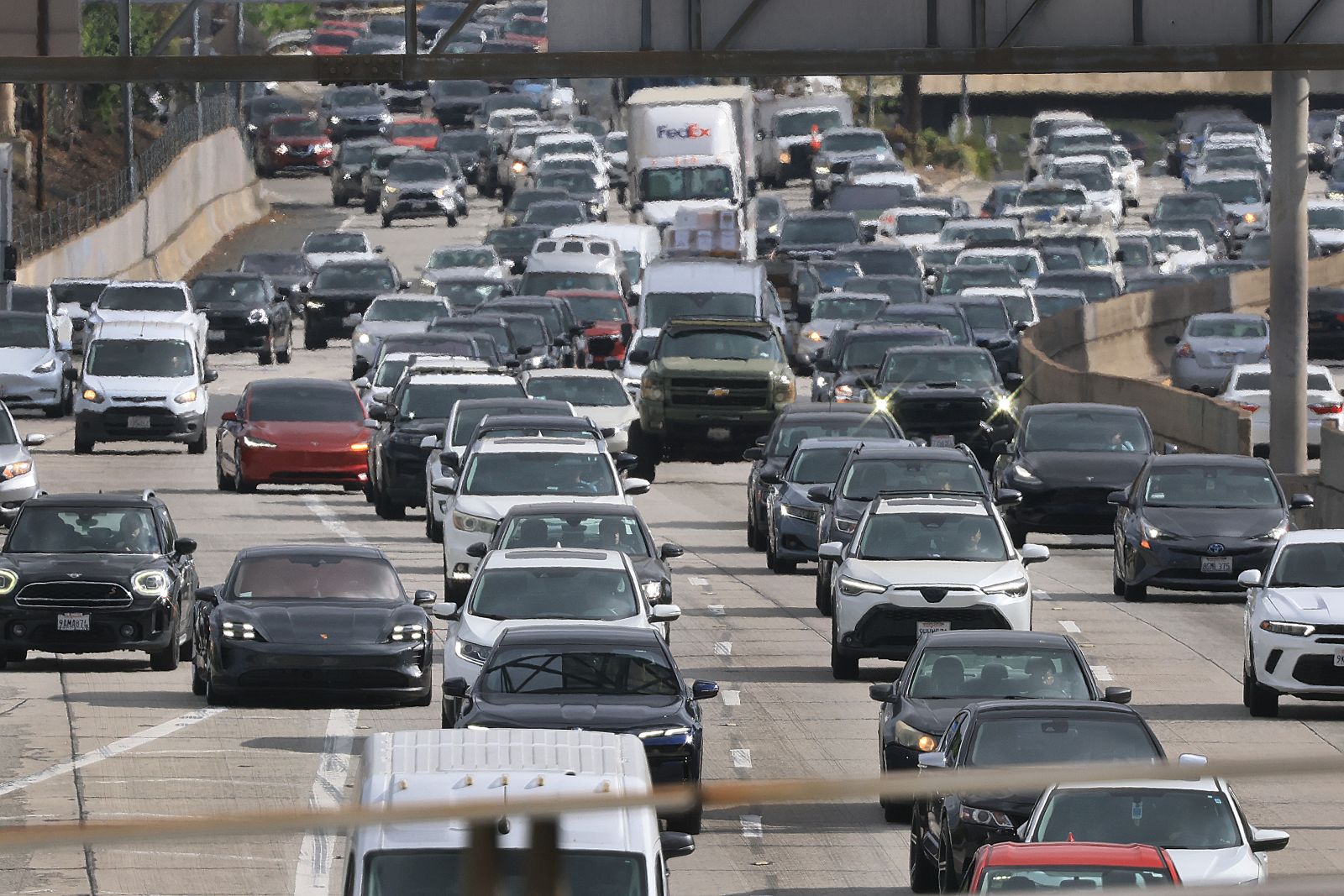
California’s unique regulatory status is rooted in geography and public health crises of the mid-20th century. In the 1950s, the Los Angeles basin was choked by a severe, toxic smog crisis that predated modern federal environmental legislation. Recognizing that standard federal policies would not adequately address the state’s unique topography and atmospheric conditions, Congress carved out a special exemption within the 1970 Clean Air Act. This provision specifically authorized California to enact tailpipe emissions standards stricter than federal guidelines, provided the state obtained a federal waiver. Over the decades, this exemption transformed California from a regional regulator into the de facto architect of American automotive policy.
The "1977 Provision" and the Multi-State Coalition
Under Section 177 of the Clean Air Act, other states are legally permitted to adopt California’s more stringent vehicle emissions standards rather than relying on federal baselines. This mechanism has created a formidable coalition: by 2022, 19 states plus the District of Columbia had adopted California’s standards. Because these jurisdictions collectively represent roughly 40 percent of all new car sales in the United States, automakers face an economic reality. Producing one fleet of vehicles for the California-compliant states and an entirely separate fleet for the remainder of the country is economically unfeasible. Consequently, major automakers have consistently designed their national fleets to meet California’s benchmarks.
Market Whiplash, Shifting Consumer Preferences, and the Rise of Hybrids
While regulatory battles rage in Washington and Sacramento, automakers are navigating a complex and shifting consumer landscape. The aggressive electric vehicle (EV) adoption targets set during the Biden administration ran headfirst into consumer hesitation. Despite significant capital investments by the "Big Three" and foreign automakers into EV platforms—totalling tens of billions of dollars—consumer demand failed to scale at the anticipated rate. This friction worsened significantly after the Trump administration terminated federal consumer tax credits for electric vehicles, causing a sharp cooling of domestic EV sales.
Nevertheless, market forces are not entirely aligned with total deregulation. Driven by volatile gasoline prices—exacerbated by geopolitical tensions and international conflicts involving major oil producers—American consumers have increasingly turned toward fuel efficiency. Hybrid electric vehicles (HEVs) surged in popularity, capturing a record 16 percent of total passenger vehicle sales by the summer of 2026.
Furthermore, major automakers are pragmatic about the global trajectory of the industry. While domestic mandates may fluctuate wildly with each changing administration, the international market is pivoting firmly toward electrification. As General Motors President Mark Reuss noted during a September 2026 industry conference: "We’re in for the long haul, and we’re maybe a little slower on EVs, for instance. That’s OK, but the whole world is moving that way, and so we invested in the platforms that are EV platforms."
OFFICIAL STATEMENTS & LEGAL ARGUMENTS
The legal battlegrounds are defined by sharp rhetoric and complex constitutional questions regarding the division of powers between federal regulators and state governments.
- California Attorney General Rob Bonta: Condemning the federal efforts to suppress state-level climate leadership, Bonta emphasized the punitive nature of the administration’s actions: "What we’re seeing is a thinly veiled attempt by the president to retaliate against California for choosing progress over regression."
- Rebecca Higgins, Vice President of Policy at the Eno Center for Transportation: Highlighting the procedural irregularities surrounding the congressional block of California’s waiver, Higgins pointed to institutional friction: "There are multiple levels of shenanigans, depending on your viewpoint, that are being litigated. That creates tremendous uncertainty." Commenting on the broader existential lawsuit targeting California’s foundational authority to regulate greenhouse gases, she added: "That one feels like it could have the potential to sort of reset the authorities going forward."
- General Motors President Mark Reuss: Addressing the strategic posture of legacy automakers caught in the regulatory crossfire, Reuss remarked: "We’re in for the long haul… the whole world is moving that way, and so we invested in the platforms that are EV platforms."
FUTURE OUTLOOK: THE ROAD AHEAD FOR U.S. CLIMATE POLICY
The immediate future of American vehicular emissions policy hangs on a knife-edge, with multiple intersecting legal battles moving through the federal court system. Legal scholars and transportation analysts suggest that the ultimate resolution will unfold across two distinct legal frontiers.
1. The Legality of the Congressional Waiver Revocation
California maintains a strong legal argument regarding the unusual legislative maneuver deployed by congressional Republicans to revoke its Clean Air Act waiver. At the time of the vote, both the Government Accountability Office (GAO) and the Senate parliamentarian issued opinions declaring the maneuver procedurally improper and legally questionable. If lower courts or the Supreme Court ultimately determine that Congress overstepped its bounds—or if a future Democratic administration occupies the White House in 2028—California’s aggressive zero-emission vehicle phaseout plan could be legally resurrected.
2. The Existential Threat to State-Level Climate Authority
More perilous for California is a separate, systemic legal challenge brought by the Trump administration. This lawsuit aims to strip California of its foundational authority to regulate greenhouse gas emissions altogether, arguing that any state-level rule touching upon fuel economy is preempted by federal statute—even if executed indirectly through tailpipe standards.
While federal courts have historically ruled in California’s favor on this specific preemption issue, the composition of the federal judiciary, particularly the conservative majority on the Supreme Court, introduces profound uncertainty. Because the nation’s highest court has never directly ruled on this precise question, a future Supreme Court ruling could permanently redraw the regulatory map of the United States.
Until these judicial questions are definitively settled, automakers and consumers alike are left navigating an era of profound regulatory whiplash. The transition toward a cleaner transportation sector will no longer be driven by a unified federal mandate, but rather by a fractured, contentious patchwork of state-level resistance, corporate global strategy, and volatile market economics.



