


By Yashvi Shah
Toronto-based writer and editor
Executive Overview
As the global imperative to transition toward a low-carbon economy accelerates, policymakers, financiers, and environmentalists frequently frame the challenge in macro-economic terms. Trillions of dollars are routinely cited as the requisite price tag to overhaul national grids, retrofit aging housing stock, and deploy renewable energy generation at scale. Yet, while the scale of institutional and federal funding can seem daunting, an increasingly vital counter-narrative is taking root across Canada: the answer to our clean energy transition may be far more local than we think.
Across the country, a quiet revolution in decentralized financing is proving that everyday citizens do not need to wait for multi-national conglomerates or federal bailouts to build a sustainable future. Through community bonds, renewable energy cooperatives, and grassroots capital pools, Canadians are increasingly bypassing traditional, risk-averse financial intermediaries. Instead, they are pooling their own resources to directly fund local solar arrays, wind turbines, electric vehicle (EV) charging networks, affordable net-zero housing, and sacred spaces retrofitted for energy efficiency.
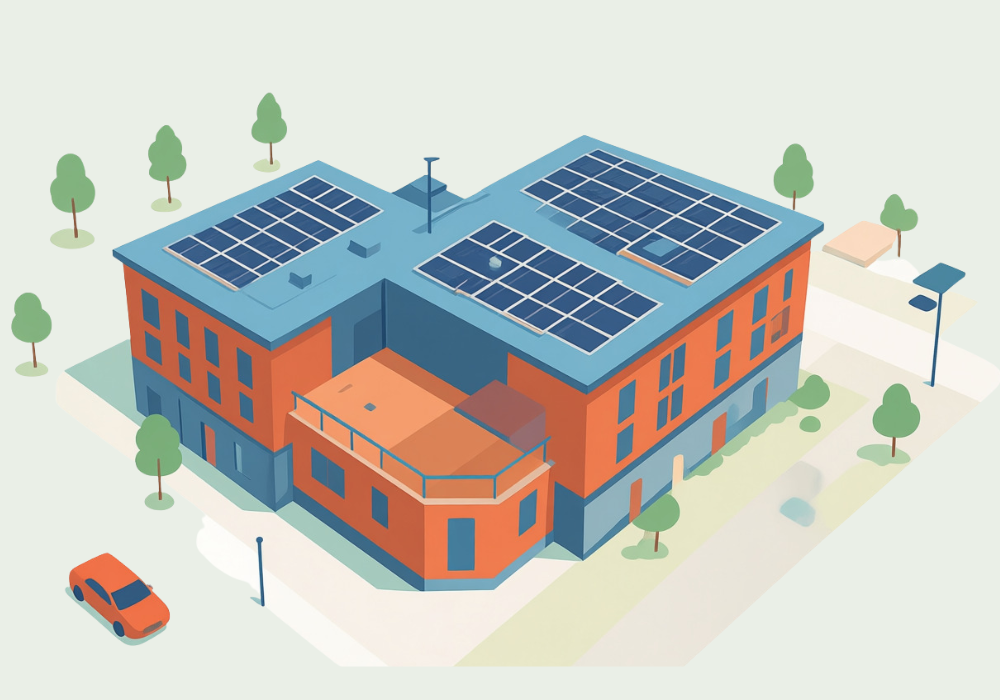
This article examines eight pioneering Canadian initiatives that harness the power of local capital. From urban apartment dwellers collectively owning solar panels in Regina to faith groups funding green retrofits in historic sanctuaries, these projects demonstrate how grassroots finance can democratize the green transition while keeping economic benefits within local communities. However, as the checkered financial history of ventures like ZooShare reveals, this decentralized model is not without its operational hurdles and financial risks.
By analyzing these diverse case studies, we explore the mechanics, triumphs, and cautionary tales of community-led climate action in Canada.
Detailed Chronology and Case Studies: Eight Pioneers of Local Green Finance
To understand how grassroots financing has evolved in Canada, one must look at a timeline stretching from pioneering urban wind projects launched over two decades ago to modern, multifaceted EV and housing bond campaigns.

1. WindShare (Toronto, Ontario)
- The Milestone: Canada’s First Community-Owned Clean Energy Project
- The Mechanism: Co-owned by 825 Toronto residents and Toronto Hydro.
- The Context: Launched at the dawn of the millennium, WindShare shattered the paradigm that utility-scale generation must exclusively belong to monolithic corporate or Crown entities. By installing and operating a commercial-grade wind turbine on the Exhibition Place grounds in downtown Toronto, WindShare proved that urban citizens could play a direct, equity-owning role in clean energy generation. The project established a crucial regulatory and social precedent, demonstrating that partnerships between municipal utilities and grassroots cooperatives were entirely viable.
2. OREC – Ontarians/Ontario Renewable Energy Cooperative (Lake Huron, Ontario)
- The Milestone: Scaling Up Wind Generation Through Cooperatives
- The Mechanism: Founded in 2010, OREC partly owns two commercial-scale wind turbines.
- The Context: Building on the foundational success of earlier urban projects, OREC set its sights on rural, high-yield generation sites. Today, the cooperative’s stake in its Lake Huron wind turbines generates roughly 3.3 million kWh annually—enough electricity to power more than 400 homes each year. OREC exemplifies how local investors can achieve meaningful industrial-scale impact, translating modest individual contributions into gigawatt-hour realities.
3. Wintergreen (Kingston, Ontario)
- The Milestone: Democratizing Solar Power Generation
- The Mechanism: Run by SolarShare, Canada’s leading renewable-energy cooperative.
- The Context: Situated just outside Kingston, the Wintergreen solar array is a testament to the maturation of solar co-ops in Ontario. Capable of powering 100 homes, Wintergreen operates under the umbrella of SolarShare, an organization that has systematically lowered the barriers to entry for everyday investors wanting exposure to clean energy assets without needing a residential roof of their own.
4. ZooShare (Toronto, Ontario)
- The Milestone: Turning Waste into Watts (and Testing the Limits of Community Bonds)
- The Mechanism: Financial backing from 800 cooperative members who purchased community bonds.
- The Context: ZooShare represents one of the country’s most innovative biomass initiatives, turning organic animal waste from the Toronto Zoo and local food waste into renewable electricity for Ontario’s grid. However, the project also serves as a critical case study in the financial vulnerabilities inherent in grassroots infrastructure. Following a member vote in 2023, ZooShare was forced to halt interest payments on its community bonds, shifting to a structure where bonds will be repaid strictly as cash permits. The pivot highlights the operational, supply-chain, and regulatory pressures that can beset capital-intensive green projects operating outside traditional corporate safety nets.
5. EcoCharge (Quebec and New Brunswick)
- The Milestone: The First EV-Charging Community Bond Campaign
- The Mechanism: Community bond financing resulting in direct member ownership.
- The Context: As the transportation sector electrifies, the rollout of charging infrastructure has often lagged behind consumer demand, particularly in smaller municipalities or non-traditional corridors. EcoCharge broke new ground as the first EV-charging community bond campaign of its kind. Through pooled local capital, its members collectively own roughly 100 charging stations distributed across Quebec and New Brunswick, bridging critical charging gaps while building localized revenue streams.
6. Propolis (Kamloops, British Columbia)
- The Milestone: Net-Zero and Affordable Housing Finance
- The Mechanism: $1 million raised in community bonds from approximately 100 investors.
- The Context: Climate justice and housing affordability are deeply intertwined crises in Canada. Propolis addressed both simultaneously by mobilizing $1 million from about 100 local investors to construct a 53-unit affordable, net-zero apartment building in Kamloops, B.C. This project demonstrates that community bonds are not strictly reserved for energy generation; they can also fund high-performance, low-carbon social infrastructure.
7. Faithfully Green Fund (Interfaith Network)
- The Milestone: Greening Sacred Spaces on a Revolving Basis
- The Mechanism: Selling community bonds to fund green retrofits for houses of worship.
- The Context: Religious institutions often occupy historic, energy-inefficient buildings that drain financial resources through exorbitant heating and electricity bills. The Faithfully Green Fund provides an ingenious financial vehicle: it sells community bonds to values-aligned investors, then lends that capital to temples, churches, and mosques to execute energy-efficiency retrofits. As these buildings realize utility savings, they repay the loans on a revolving basis, creating an evergreen pool of capital for ongoing community decarbonization.
8. Wascana (Regina, Saskatchewan)
- The Milestone: Urban Solar for Non-Homeowners
- The Mechanism: 400 solar panels collectively owned by roughly 100 members.
- The Context: For renters and apartment-dwellers, the rooftop solar boom has historically been inaccessible. Wascana solved this equity gap in Regina, Saskatchewan, by installing 400 community-owned solar panels. The installation is collectively owned by about 100 members—predominantly urban apartment-dwellers who lack the physical infrastructure or property ownership required to mount traditional private solar systems.
Supporting Context & Metrics: The Mechanics of Community Capital
To fully appreciate the scope of these eight initiatives, one must analyze the financial instruments that make them possible. Chief among these is the community bond.
Unlike standard municipal bonds—which are backed by the taxing power of a local government—or corporate bonds issued by publicly traded multinationals, community bonds are debt instruments issued by non-profit cooperatives, charities, or social enterprises. They allow everyday residents to invest locally, typically offering fixed returns over a set term while funding projects that deliver clear, measurable environmental and social dividends.
| Initiative | Region | Asset Type | Capital / Scale Metric | Key Innovation |
|---|---|---|---|---|
| WindShare | Toronto, ON | Wind Turbine | 825 co-owners + Utility | Pioneer urban community wind project. |
| OREC | Lake Huron, ON | Wind Turbines | 3.3 million kWh/year (400+ homes) | Rural scale generation via co-op structure. |
| Wintergreen | Kingston, ON | Solar Array | Powers 100 homes | Mainstreamed co-operative solar access. |
| ZooShare | Toronto, ON | Biogas / Biomass | 800 bondholders | Converted animal/food waste to grid power (restructuring in 2023). |
| EcoCharge | QC & NB | EV Charging | ~100 charging stations | First EV-charging community bond campaign. |
| Propolis | Kamloops, BC | Housing / Net-Zero | $1 million raised (53 units) | Blended affordable housing with net-zero building. |
| Faithfully Green | Various | Building Retrofits | Revolving loan model | Targeted interfaith spaces for energy upgrades. |
| Wascana | Regina, SK | Urban Solar | 400 panels (100 members) | Solved solar access for apartment dwellers. |
The metrics underscore a profound socioeconomic shift. While an individual institutional investment might dwarf the $1 million raised by Propolis or the modest capitalization of Wascana’s 400 solar panels, the multiplier effect of local capital is distinct. When citizens invest in their own backyards, public buy-in for renewable energy infrastructure skyrockets. NIMBYism (Not In My Backyard) is frequently neutralized when local residents are transformed into financial stakeholders.

Official Statements and Stakeholder Perspectives
The viability and challenges of community-led green infrastructure have drawn commentary from across the cooperative finance, municipal, and regulatory sectors. While formal endorsements from municipal utilities like Toronto Hydro (dating back to the WindShare partnership) established early institutional trust, contemporary observers emphasize the need for balanced expectations.
Industry analysts note that while projects like SolarShare and EcoCharge prove the scalability of retail-investor participation, the financial restructuring experienced by ZooShare following its 2023 member vote offers a sobering reminder.
Financial planners and cooperative advocates point out that grassroots green bonds occupy a delicate niche. They bridge the gap between philanthropy and conventional investing, requiring a high degree of financial literacy and risk tolerance from everyday citizens who choose to participate. As one cooperative sector insider observed:

"Community bonds do more than just build solar panels and charging stations; they build civic muscle. But because they operate in real-world markets without the backstops of major chartered banks, transparency regarding project risks, cash flow fluctuations, and regulatory hurdles must remain paramount."
Furthermore, municipal leaders in cities like Kamloops and Regina have increasingly praised grassroots initiatives for stepping into housing and energy spaces where municipal budgets are severely constrained. By mobilizing private citizen capital toward public good, these cooperatives alleviate pressure on municipal tax bases while accelerating local climate action plans.
Future Outlook: Scaling the Grassroots Green Transition
As Canada looks toward its mid-century climate commitments, the role of decentralized, community-led financing is poised to evolve dramatically. Several key trends will dictate whether local clean energy and sustainability bonds can transition from niche experiments to mainstream economic pillars:

-
Regulatory Modernization and Provincial Policy Support:
The early success of many Ontario-based cooperatives was heavily propelled by now-defunct feed-in tariff (FIT) programs. For community bonds to flourish nationally—particularly in provinces with less progressive clean-energy policies—provincial regulators must design frameworks that simplify the issuance of prospectus-exempt community bonds while maintaining robust consumer protection standards. -
Expanding Beyond Energy into Adaptation and Resilience:
While early community bonds focused predominantly on wind and solar generation, recent pioneers like Propolis (affordable housing) and EcoCharge (EV infrastructure) signal a broadening scope. Future grassroots capital campaigns are expected to target urban forestry, localized battery storage networks, community geothermal systems, and climate-resilience retrofits against extreme weather events. -
Mitigating Financial Risk and Enhancing Transparency:
The ZooShare restructuring serves as an invaluable cautionary tale. For the community bond market to retain the trust of retail investors, future projects must build in more robust liquidity buffers, diversified revenue streams, and transparent communication protocols to manage downturns or unexpected regulatory delays.
-
Bridging the Urban-Rural and Renter Divide:
Projects like Wascana in Regina and EcoCharge in Quebec prove that grassroots finance can solve equity issues that institutional programs frequently miss. Expanding these models to remote, northern, and Indigenous communities represents one of the most promising frontiers for Canadian climate finance.
Conclusion
The transition to a low-carbon future is often portrayed as a top-down technological challenge requiring billions in corporate expenditure. Yet, the mosaic of Canadian cooperatives, community bonds, and grassroots initiatives cataloged here tells a fundamentally different story. From wind turbines on the shores of Lake Huron to net-zero apartments in Kamloops, everyday Canadians are demonstrating that the most resilient infrastructure is often built from the ground up.
By anchoring climate investments locally, these projects do more than simply reduce carbon emissions—they foster civic engagement, keep economic returns within communities, and prove that when it comes to saving the planet, home is truly where the capital starts.



