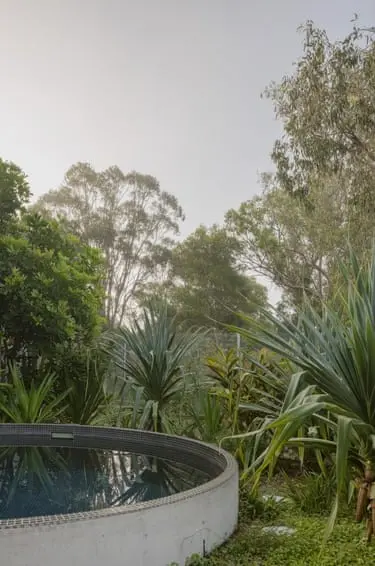
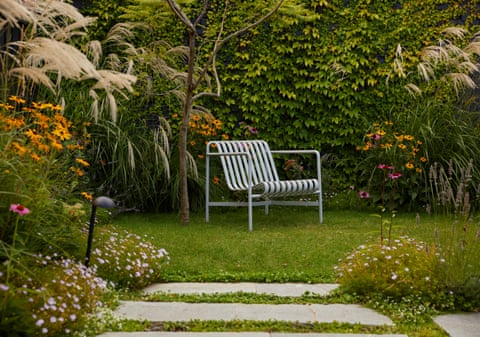
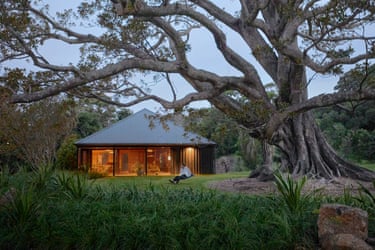
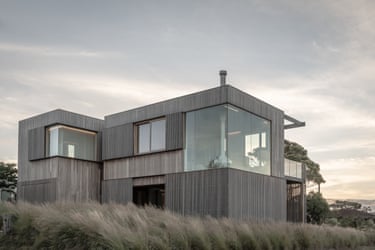
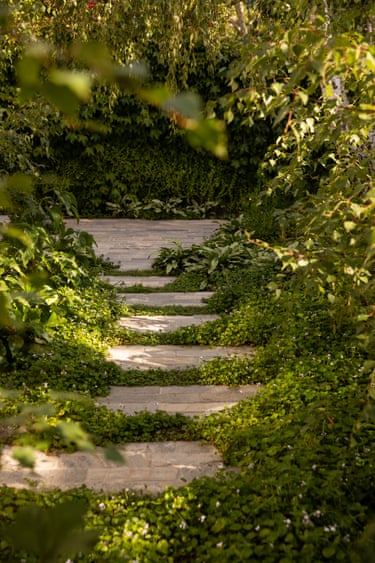
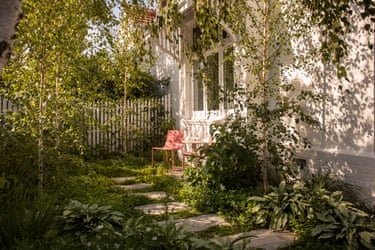
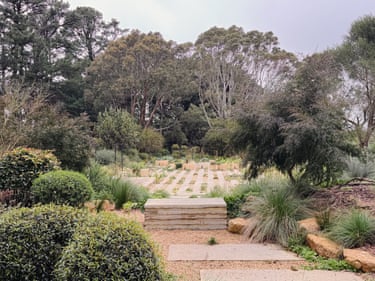
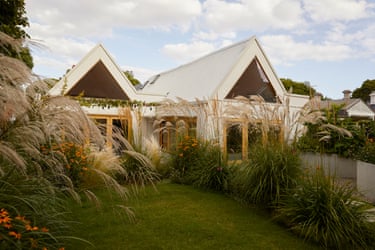
The inaugural shortlist for the Landscape Australia Awards has officially been unveiled, setting a new benchmark for modern environmental design, residential architecture, and urban planning. Comprising 20 exceptional residential gardens from across the country, the finalist projects transcend traditional landscaping by positioning outdoor spaces as critical infrastructure in the fight against climate change, biodiversity collapse, and extreme weather events.
Selected from a nationwide pool of submissions, these residential landscapes reject conventional ornamental aesthetics in favor of ecological resilience. Jury Chair Emily Wong highlighted that the featured projects operate as vital components of a "larger living commons," actively supporting regional ecologies, cooling urban heat islands, and mitigating the impacts of flood and fire.
Because private residential land accounts for a massive percentage of total urban land use in Australian cities, the awards signal a cultural shift: domestic gardens are no longer viewed merely as private backdrops for leisure, but as essential environmental contributors to the shared public infrastructure. From rewilded inner-city sanctuaries in Victoria to bushfire-resilient retreats in Western Australia and vast Indigenous-led landscape restorations in New South Wales, the 2026 finalists offer a masterclass in regenerative design.
Detailed Chronology: Evolution of the Awards and the 200-Year Shift
To understand the significance of the 2026 Landscape Australia Awards shortlist, one must trace the evolution of Australian residential gardening from colonial transplantation to contemporary ecological stewardship.
The Early Eras: Imposed Landscapes
For generations following European settlement, Australian residential gardens were heavily influenced by imported European ideals. Homeowners sought to replicate English country gardens and lush northern hemisphere aesthetics, relying heavily on thirsty exotics like turf lawns, hydrangeas, and English oaks. This approach ignored local soil conditions, native water cycles, and endemic flora, placing an unsustainable burden on local ecosystems and water reserves.
The Turning Point: Climate Realities
Over the past two decades, escalating climate pressures—including severe multi-year droughts, catastrophic bushfires, and unprecedented urban heatwaves—forced a radical re-evaluation of how Australians interact with their immediate outdoor environments. Designers began experimenting with drought-tolerant native plants and water-sensitive urban design (WSUD).
The 2026 Shortlist Breakthrough
The establishment of the Landscape Australia Awards formalizes this paradigm shift. Announced in October 2026, the awards evaluate landscape architecture not strictly on visual appeal, but on metrics of carbon negativity, water efficiency, ecological restoration, and cultural reconnection. The resulting shortlist represents the pinnacle of this evolutionary trajectory, showcasing projects that actively repair damaged landscapes rather than simply decorating them.
Supporting Context & Metrics: Innovations Across the States
The 20 finalists reflect the diverse climatic challenges and rich ecological communities found across Australia’s varied landscape. Several standout projects illustrate the breadth of technical and creative innovation driving the industry:
1. Water Conservation and Soil Health
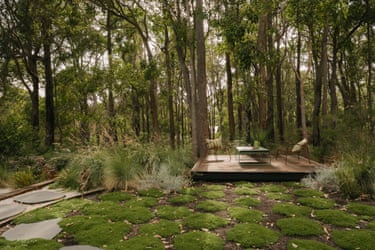
Wildwood (Western Australia, by Svalbe and Co): Located in a rugged bushland setting, this retreat replaces high-maintenance lawns with a resilient carpet of hardy thyme. When walked upon, the herb releases a calming aroma while dramatically slashing the property’s overall water consumption.
Bridgewater Bushland Retreat (Western Australia, by Good Batch Co): Balancing strict bushfire safety regulations with ecological health, this site limits planting to 74% of the land. The remaining area utilizes gravel pathways to maximize rainfall infiltration and rejuvenate depleted soil.
Carlton Cottage (Victoria, by Jala): Built upon a historic watercourse, this urban garden prioritizes total water absorption. Permeable materials are integrated throughout, while the home’s single-sloping roof harvests and stores rainwater for garden reuse. Natural "garden lungs" formed by dense fern plantings help channel cool air directly into the home.
2. Carbon-Conscious and Circular Construction
The Winter Garden (Victoria, by Timothy Mitchell Landscape Architecture): Transforming an abandoned, 40-year-old concrete tennis court—which carried a carbon debt of approximately 30 tonnes of CO2—the designers aimed for a carbon-positive outcome. Rather than demolishing the slab, they preserved and repurposed the existing concrete into terraces and paving. The garden is maintained entirely by hand, utilizing intelligent drainage to capture naturally pooling water.
Bronte Sandstone (New South Wales, by EBLA Studio): Operating on a tight budget, this coastal project successfully repurposed discovered sandstone flagging, ballast, and recycled brick for all paving, steps, and retaining wall restorations.
Saltbush on the Bellarine (Victoria, by Phillip Withers): Originally an award-winning exhibition garden, this installation was relocated to an east Geelong family home. Recycled crushed brick pathways meet the practical demands of daily family life, while plantings were reconfigured to mirror the natural ecological community of the Bellarine Peninsula.
3. Urban Cooling and High-Density Micro-Climates
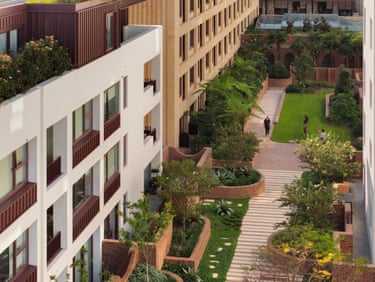
Surry Hills Village (New South Wales, by Aspect Studios, SJB, and Studio Prineas): In a triumph of urban renewal, a closed-off, inward-facing retail block was opened into a porous, walkable neighbourhood center. Extensive rooftop gardens and native flora, including the resilient tulipwood, were introduced to combat the urban heat island effect.
Kauri Lane (Queensland, by Aspect Studios and RPS): Squeezed tightly between four towering residential structures, this project successfully integrates a 15-meter gap by planting 12 mature kauri pines, creating a dense, high-canopy urban forest.
Erindale (Victoria, by Saint Remy): A compact inner-city footprint transformed through dense layering, featuring 18 moss-white birches and over 1,100 individual plants representing more than 40 distinct species.
4. Rewilding and Country Connection
Thora Property (New South Wales, by Bede Brennan and Garden Juju): Spanning a 65-hectare degraded farm, this project represents a profound collaboration between Gumbaynggirr elders, ecologists, and design specialists. Over five years, the team restored creek lines, reinstalled forest tracks, regenerated pastures, and established sustainable food production systems to actively reconnect the land "back to Country."
The Big Putty Project (New South Wales, by Bushy Landscapes): Across a massive 200-acre site, every ounce of soil displaced during house construction was carefully cataloged and redistributed post-build. Using plant translocation and assistive natural regeneration, the landscape was guided back to its pristine, pre-disturbance state.
Saddleback Mountain Farmstead (New South Wales, by Bates Holmes): Operating on a working cattle farm, designers constructed a traditional "ha-ha" wall—a sunken ditch boundary. This ingeniously maintains unobstructed coastal views for residents while cleanly separating grazing cattle from human leisure zones, complemented by the strategic relocation of mature trees.
Official Statements and Industry Insights
The philosophical backbone of the 2026 awards centers on architecture’s duty to the broader environment. Jury Chair Emily Wong emphasized the urgent necessity of viewing private property through a communal lens:
"Each project is a direct response to urgent contemporary issues—the climate crisis, escalating fire and flood risks, and the alarming loss of biodiversity. These designers do not see gardens as isolated decorations; they see them as part of a larger living commons that supports different ecologies and ultimately dictates the future of Australian cities.
Private gardens occupy an enormous footprint within our urban environments. When we redesign these spaces with ecology in mind, individual landscape designs transform into vital contributions to our shared civic infrastructure."
Industry analysts note that the 2026 shortlist marks a cultural turning point where client demand has shifted away from high-maintenance, sterile lawns toward low-impact, native ecosystems that demand less resources while offering psychological and environmental restoration.
Future Outlook: The Next Generation of Australian Landscapes
As Australian cities grapple with population density, shifting weather patterns, and the ongoing pressures of climate change, the 20th-century model of the suburban lawn is officially obsolete. The finalists of the inaugural Landscape Australia Awards point toward a resilient, regenerative future.
By championing water-sensitive design, Indigenous land management practices, circular material economies, and urban biodiversity, these 20 gardens establish a new blueprint for residential architecture worldwide. They prove that beauty and ecological survival are not mutually exclusive; rather, the most breathtaking gardens of tomorrow are those that actively heal the earth they inhabit.