

Originally published by Yale E360 and reproduced here as part of the Climate Desk collaboration.
Executive Overview
Inside a nondescript, five-story building in the heart of Hamburg, Germany, technicians are carefully positioning heavy gray metal hardware racks. These casings, designed to house high-performance computing components, are being integrated into the labyrinthine, dimly lit corridors of the German Climate Computing Center (DKRZ)—one of the planet’s premier repositories for climate simulation data. This new equipment will soon expand the facility’s storage capacity by roughly 5 petabytes, building upon the staggering 254 petabytes already archived within its walls. To put that scale into perspective, a single petabyte can hold approximately 200 million high-resolution images.
Ordinarily, the DKRZ’s mandate is straightforward: provide world-class computing power and data storage for the domestic German climate science community. However, these new server racks have been commissioned for a far more sensitive, urgent, and transnational mission. They are designated to house secure, off-site backup copies of critical climate simulations originating from the other side of the Atlantic.
This multi-million-dollar operation is designed to ensure that vital scientific research, spearheaded by U.S. scientists for the upcoming United Nations Intergovernmental Panel on Climate Change (IPCC) assessment scheduled for 2029, cannot be suppressed, altered, or dismantled by the administration of U.S. President Donald Trump.
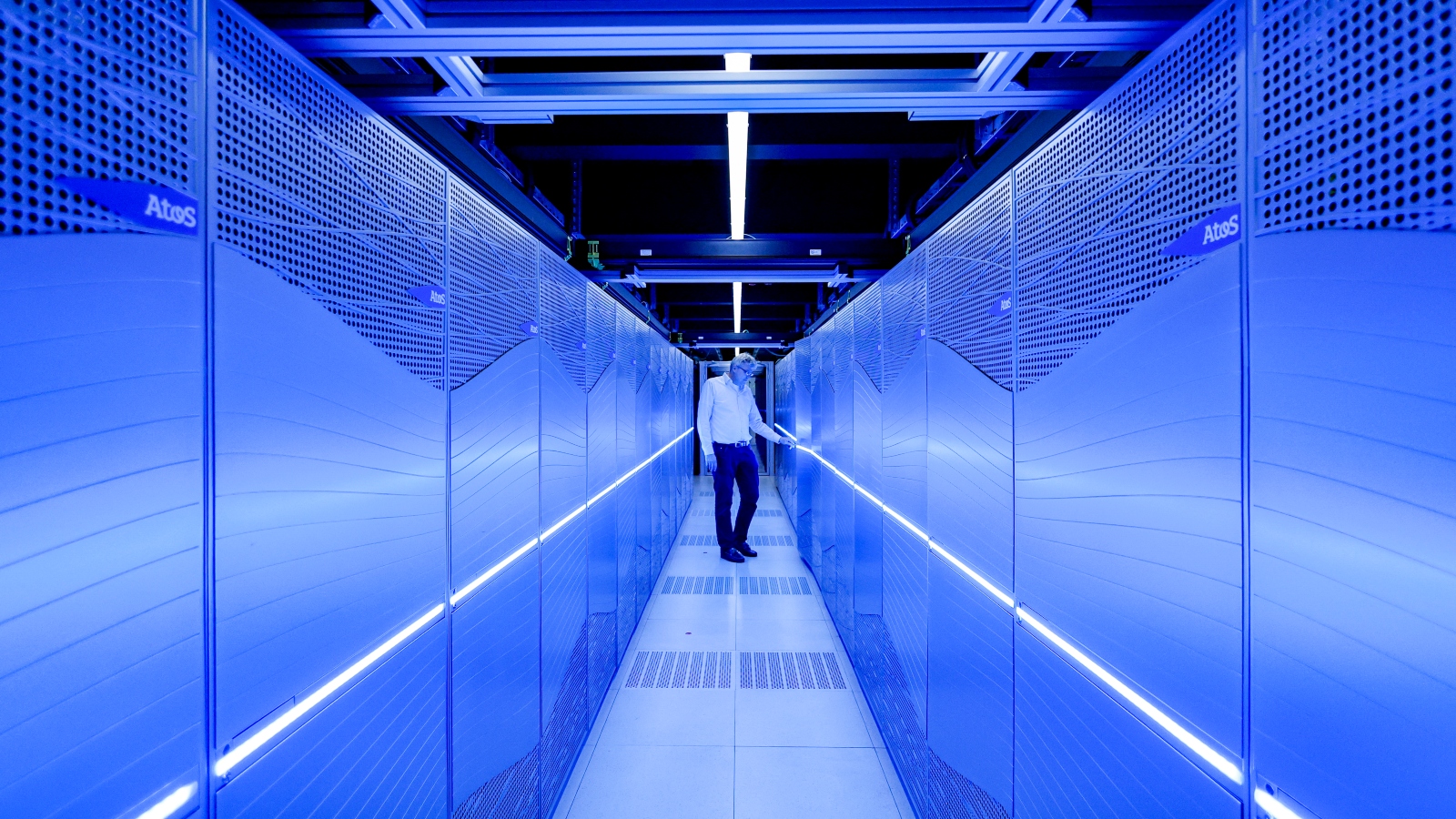
Over the past year, the Trump administration has systematically defunded climate studies, buried peer-reviewed scientific reports, systematically purged references to human-driven global warming from dozens of federal agency websites, and attempted to curtail satellite-based earth observation programs. By establishing overseas digital sanctuaries, European scientific institutions hope to insulate humanity’s collective environmental knowledge against mounting political hostility, cyber warfare, and armed conflict.
Detailed Chronology: The Erosion of U.S. Scientific Integrity
The systematic dismantling of American environmental infrastructure did not happen overnight. It represents the culmination of a shifting political landscape that has steadily eroded global trust in U.S. science policy.
- January: The United States government formally withdrew from both the UN Framework Convention on Climate Change (UNFCCC) and the Intergovernmental Panel on Climate Change (IPCC). Despite this official exit, individual American researchers continued striving to contribute their expertise to global climate assessments.
- Early April: Alex de Sherbinin, then-manager of NASA’s Socioeconomic Data and Applications Center (SEDAC), made an alarming discovery. SEDAC’s decades-old collection of 300 federally funded datasets—which bridge the gap between Earth science and socio-economic realities like poverty, population distribution, and urban infrastructure—had been entirely scrubbed by efficiency auditors. Only rapid, last-minute intervention by international consortia, scraping active servers before they went dark, salvaged the data and relocated it to the Harvard Dataverse Repository.
- Late Spring: Recognizing the acute vulnerability of public-domain scientific information, the German Research Foundation (DFG)—Germany’s primary science funding agency—inaugurated a dedicated $35 million resilience initiative. This program aimed to create safe, immutable harbors for open-source U.S. datasets.
- Summer: The American Geophysical Union (AGU) launched its global Data Resilience Project. Facing an administration that refused to dispatch official U.S. experts to IPCC functions, the AGU bypassed political channels by forming the U.S. Academic Alliance for the IPCC, successfully nominating nearly 300 American scientists independently.
- March (Following Year): Nearly 100 top-tier international scientists and data experts convened in Berlin under the auspices of the AGU. The summit served as a watershed moment, shifting the global scientific community from emergency data triage to a permanent reinvention of how global research infrastructure is organized, protected, and shared.
Supporting Context & Metrics: The Anatomy of Data Vulnerability
Empirical science relies entirely on continuity. Environmental, climate, and biodiversity research cannot function without unbroken historical and contemporary data streams. Yet, the foundational architecture of these collections has historically been dangerously fragile.
The True Cost of the "Sneakernet"
Traditionally, scientific datasets are stored locally on hard drives or magnetic tapes at the universities or federal labs where they are generated. For generations, the global scientific community operated under the comfortable assumption that political stability was permanent. Consequently, off-site redundancy was rarely prioritized.
Moving petabytes of information is an expensive, logistically nightmarish endeavor. Streaming massive datasets over standard internet pipelines can take months, while leasing dedicated, high-speed fiber-optic connections is cost-prohibitive. As a result, the most economically viable method for transferring petabyte-scale archives remains the physical "sneakernet"—transporting physical hard drives and magnetic tapes by car, commercial aircraft, or container ship.
A Global Crisis: Beyond Political Interference
While the actions of the Trump administration have catalyzed the current urgency, political censorship is not the only threat facing modern research infrastructure.
- Cybercrime: Research institutes worldwide are increasingly targeted by sophisticated ransomware operations. In recent years, high-profile cyberattacks have compromised multidisciplinary scientific centers in Croatia and industrial engineering facilities in Germany, locking researchers out of critical files under threat of financial extortion.
- Armed Conflict: The devastating war in Ukraine has underscored how deliberately targetable scientific assets are during military campaigns. Russian bombardments have heavily damaged or completely destroyed numerous Ukrainian universities and research laboratories. Anastasiia Lutsenko, a Ukrainian researcher at the Max Planck Institute for Innovation and Competition, notes that invading forces recognize the generational harm inflicted by erasing a nation’s scientific foundation. Early meteorological records (1808–1880) and biodiversity archives in Kharkiv were rescued only because international teams rapidly digitized and transferred them to servers in Germany and Norway before artillery strikes hit nearby infrastructure.
Official Statements and Perspectives
The transition from localized data hoarding to globalized, distributed resilience has transformed the rhetoric of institutional leaders worldwide.
- Kathrin Winkler (German Research Foundation): Highlighting the explicit motives behind the German safety net, Winkler noted: "The deletion of data has also become a possibility, and there is a risk that [data] could be manipulated to skew findings in a desired direction."
- Christopher Kadow (DKRZ): Emphasizing the moral imperative of preservation, Kadow stated: "We cannot simply accept that important contributions might be lost for technical or political reasons." Looking toward the future, he added: "It would be ideal if, in the future, all climate data worldwide were connected via digital pipelines. That way, in the event of a threat, we could simply flip a switch to secure it elsewhere."
- Ben Zaitchik (AGU President-Elect): Speaking at the Berlin resilience summit, Zaitchik observed: "We have engaged in triage efforts to ensure data remains usable and accessible. But we clearly now have arrived at a moment where we must fundamentally reimagine data organization and maintenance for long-term viability and growth."
- Frank Oliver Glöckner (University of Bremen / Pangaea Repository): Offering a paradoxical silver lining, Glöckner suggested that political disruption has ultimately strengthened global cooperation: "President Trump has, to a certain extent, done science a favor by making it clear how important it is to not just hoard data in one place but to truly share it with the global scientific community."
Future Outlook: Building an Indestructible Scientific Commons
As the DKRZ rolls out its CMIP7-ark project—alongside six parallel data-rescue initiatives like SHIELD and SEND (Secure Endangered Earth Data)—the global scientific community is sketching out a radically decentralized future.
Preserving raw datasets is only half the battle; future-proofing science requires archiving the proprietary software, metadata, and analytical protocols necessary to interpret those files decades down the line. Institutions like the Senckenberg Natural History Museum in Frankfurt are pioneering similar resilience models, archiving wildlife monitoring data from active combat zones in Ukraine and Yemen.
Yet, experts warn that no single nation is entirely immune to democratic backsliding or populist interference. Christopher Kadow points to the domestic political climate in Germany, where the far-right Alternative for Germany (AfD) party—which frequently promotes climate skepticism—has recently achieved regional electoral breakthroughs.
"We don’t know what political shifts may occur in Germany," Kadow cautioned. "We aren’t completely protected from risks or developments like those in the U.S. either."
Ultimately, the frantic efforts playing out in the server rooms of Hamburg, Berlin, and Cambridge mark a historic turning point. Science, long operating under the naive assumption of institutional immunity, is building an indestructible digital ark—ensuring that humanity’s collective memory of a changing planet remains intact, no matter who holds political power.



