As the impacts of a warming planet accelerate across landscapes, coastlines, and urban centers, a quiet revolution is taking root in American high schools. Across the country, an innovative credential known as the Seal of Climate Literacy is redefining what it means for students to graduate prepared for the modern world.
Far from traditional, text-heavy science units that often leave students feeling hopeless in the face of global existential threats, this diploma endorsement marries rigorous academic coursework with hands-on, community-based environmental service. Originally conceptualized in Colorado by the education non-profit Lyra Colorado, the seal requires students to complete at least two advanced courses exploring Earth’s climate systems—spanning disciplines from environmental science to the humanities and fine arts—alongside an approved practical project tackling a local climate issue.
Since Colorado lawmakers approved the policy in 2024, the framework has rapidly crossed state lines. Maine adopted its own climate seal directly through state education officials, while California signed landmark legislation to establish the credential for its graduates. Student-led advocacy coalitions are actively pushing the model in states like Hawaii and Minnesota.
To date, an estimated 1,200 students have earned the seal nationwide. Yet, this expansion unfolds amid profound political and financial friction. As proponents champion the initiative as a vital bridge to a booming green workforce and a powerful antidote to climate anxiety, the movement faces severe headwinds. Tight public school budgets, partisan debates over climate curricula, threats to the tax-exempt status of environmental non-profits, and federal proposals to defund key scientific institutions like the National Center for Atmospheric Research (NCAR) cast long shadows over the initiative.
This in-depth report examines the genesis of the climate literacy seal, its expansion across diverse geographic landscapes, the pedagogical philosophy driving its success, and the formidable political and financial hurdles threatening its future.
Detailed Chronology: From Airport Flight Paths to Coast-to-Coast Policy
The journey of the climate literacy seal is a testament to student agency, grassroots organizing, and institutional adaptability. The movement’s timeline reflects a steady escalation from local curiosity to state-level legislation and cross-country replication.
2021–2023: The Seeds of Innovation in Colorado
Long before the policy became a formal state endorsement, individual students were already grappling with the localized realities of climate change. Anthony Muñoz, a student at Vista Academy—a charter high school located not far from Denver’s main international airport—often wondered if jet fuel from overhead commercial flights was quietly harming the campus ecosystem.
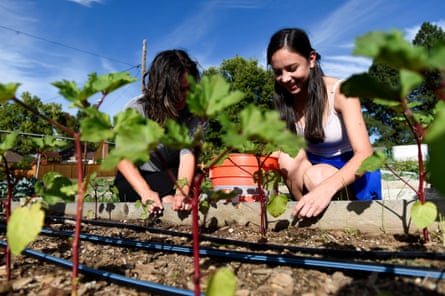
An avid gardener, Muñoz transformed his curiosity into action. Partnering with a local university and climate scientists from the National Center for Atmospheric Research (NCAR) in nearby Boulder, Muñoz designed and built an "ozone garden" on his campus. He filled the plot with native plants sensitive to ground-level ozone pollution, learning how leaf damage reveals air quality metrics and why milkweed is vital for monarch butterfly migrations.
Simultaneously, rural students and educators working with Lyra Colorado—a Denver-based non-profit supporting community-based education—expressed frustration with traditional, abstract textbooks. They demanded a framework that allowed them to study climate change as an immediate reality in their daily lives. Recognizing this appetite for place-based learning, Lyra Colorado’s leadership conceptualized a formal high school transcript endorsement.
2024: Legislative Breakthrough and Statewide Adoption
In 2024, the vision became a legislative reality when Colorado lawmakers officially approved the statewide Seal of Climate Literacy. Designed as a flexible diploma endorsement, the credential required districts to integrate climate systems into existing coursework and foster community problem-solving. Within its first year, 26 of Colorado’s 179 school districts adopted the program.
2025–Present: Coast-to-Coast Expansion and Institutional Resistance
Building on Colorado’s momentum, the climate seal model began migrating outward:
Maine: Earlier this year, state education officials bypassed lengthy legislative debates, directly adopting a climate seal to satisfy overwhelming student and educator demand. A pilot program across nine high schools shattered expectations, drawing nearly 57 senior applicants when only a dozen had been anticipated.
California: California governor and legislative bodies signed a historic bill into law establishing the climate literacy seal for graduates statewide, supercharging the movement on the West Coast.
Hawaii and Minnesota: Youth coalitions and student school board members intensified their advocacy. The Minnesota Youth Council formally recommended the seal during the legislative session, while student leaders championed the cause in Hawaii.
Despite these victories, the policy encountered stiff resistance. Federal policy shifts under the Trump administration—including attempts to discredit climate science as a "hoax," threats to strip tax-exempt statuses from environmental non-profits, and proposed budget cuts aimed at dismantling research institutions like NCAR—have introduced an atmosphere of financial uncertainty and political intimidation.
Supporting Context & Metrics: Data, Diversity, and the Green Workforce
To understand the scope and impact of the climate literacy seal, one must examine the quantitative metrics and educational philosophy underpinning the initiative.
Program Structure and Requirements
To earn the seal on their high school diplomas and transcripts, students must fulfill two core criteria:
Coursework: Completion of at least two advanced courses that cover Earth’s climate systems, its causes, and mitigation strategies. One course must be grounded in the sciences (e.g., environmental science, biology, earth science), while the second can cross into humanities, civics, or fine arts. For instance, Denver public schools integrated climate change lessons into state-mandated civics courses.
Community Capstone Project: A hands-on, approved project addressing a localized climate issue. Student projects across the country have tackled diverse challenges, including:
Monitoring woodland insect infestations.
Building and maintaining hiking trails.
Studying snowpack science and forestry management.
Constructing beaver dam analogues for watershed health.
Developing sustainable fisheries and managing invasive crab species.
Quantifying the Movement
1,200: Estimated number of students who have successfully earned the climate literacy seal since its inception.
26 of 179: The proportion of Colorado school districts that have formally adopted the seal.
$20,000: The modest initial funding provided by Colorado state lawmakers for the seal’s statewide rollout, forcing schools, teachers, and students to rely on grants, out-of-pocket spending, and non-profit micro-grants.
Connecting to the Green Workforce
Proponents emphasize that the seal is not merely an academic exercise, but a direct pipeline to the rapidly expanding green economy. As climate change alters infrastructure, agriculture, and urban planning, industries are clamoring for workers skilled in:
Solar grid installation and maintenance.
Climate-resilient agricultural practices.
Water resource management and conservation.
Urban heat mitigation and green architecture.
Lyra Colorado has actively forged partnerships with higher education institutions, such as Colorado Mountain College, to align the high school seal with certifications in skilled trades like heat pump installation. Furthermore, advocates are pushing universities to grant partial course credit or minor prerequisites to incoming freshmen who hold the climate endorsement.
Official Statements & Expert Perspectives
Educational leaders, policymakers, and student alumni view the climate literacy seal through the lens of empowerment, civic responsibility, and psychological resilience.
"Where we can make the most difference is often in our local community. The seal offers students a chance to learn about the climate crisis—a topic rarely covered in depth in K-12 classrooms—making it a really promising policy."
— Laura Schifter, Senior Fellow, Aspen Institute’s This Is Planet Ed
Schifter and other education experts note that traditional schooling often induces despair by framing climate change as an insurmountable, global catastrophe. By shifting the focus to local action, the seal restores student agency.
"Students want to be involved in climate action, in environmental literacy, in green careers. They’re often doing the work already but don’t have the recognition. They didn’t see a sort of pathway to continue that work and embark on that as a potential career."
— Teddy Lyman, K-12 Climate Education Specialist, State of Maine
The psychological benefit of the seal is echoed by its alumni. Anthony Muñoz, now a sophomore studying mechanical engineering at the Colorado School of Mines and vice-president of its environmental club, reflects on his journey:
"Are you going to think beyond yourself and help not only those in need but the environment, or will you sit back and wait for someone else to change the world for you?"
Rylan Neumann, a graduate of the Boulder Valley School District now studying environmental economics at UC Berkeley, emphasizes the generational urgency of the policy:
"Getting more students involved in climate action and how they’ll be impacted in the future is essential. We’re the ones growing up in this world."
Conversely, the initiative has encountered fierce political friction at the federal level. With prominent political figures dismissing the climate crisis as a "hoax" and executing targeted attacks on environmental non-profits and scientific bodies, institutional anxiety has grown. Mary Seawell, CEO of Lyra Colorado, notes the chilling effect on philanthropy:
"Funders are worried."
Future Outlook: Challenges and Resilience on the Horizon
As the Climate Literacy Seal movement looks toward the future, its trajectory will be defined by its ability to navigate financial insecurity, political opposition, and institutional inertia.
Financial and Administrative Hurdles
The lack of robust state and federal funding remains the primary barrier to universal adoption. With initial rollouts financed by meager legislative allocations and scrappy non-profit grants, under-resourced school districts often hesitate to adopt new programs for fear of overburdening teachers and administrators. Furthermore, renewed scrutiny from the U.S. Treasury Department and congressional Republicans targeting the tax-exempt status of environmental education non-profits threatens to choke off philanthropic lifelines.
Federal Retaliation and Scientific Disruption
The threat of federal defunding extends beyond non-profits to the very scientific institutions that underpin student research. Proposed budget cuts and restructuring efforts directed at the National Center for Atmospheric Research—the very federal facility that mentored Anthony Muñoz—have been described by educators as "devastating."
Sustaining Grassroots Momentum
Despite these formidable barriers, the spirit of the student-led climate movement remains unbroken. Alumni like Muñoz continue to mentor younger generations. During his recent college breaks, Muñoz returned to Vista Academy to help younger students maintain their ozone garden, assisting them in constructing an elevated planting box designed specifically for accessibility by wheelchair-bound gardeners.
Moreover, Muñoz is currently writing open-source code to streamline data collection for Vista Academy’s ozone garden, ensuring that students can continue their vital atmospheric monitoring regardless of shifting federal funding landscapes or institutional access to NCAR scientists.
Ultimately, the Seal of Climate Literacy represents more than a line item on a high school transcript. It is a blueprint for educational resilience—proving that when students are equipped with scientific tools and empowered by their communities, they will not wait for political consensus to begin healing the world.