

Executive Overview
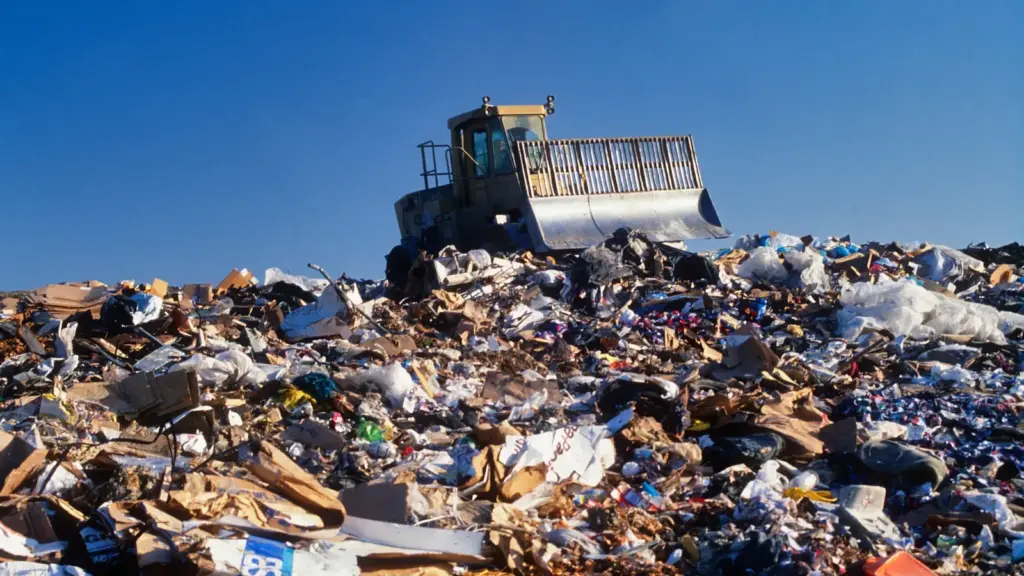
The American waste management landscape is hurtling toward a critical inflection point. Fresh data released by the Environmental Research & Education Foundation (EREF) paints a sobering portrait of an industry under immense strain, characterized by shrinking disposal capacity, consolidating private infrastructure, and an intractable reliance on landfills.
Unveiled at the industry-leading RCon conference in St. Louis, EREF’s latest research integrates a bottom-up tracking methodology of municipal solid waste (MSW) destinations alongside a comprehensive analysis of open landfill sites across the United States. The findings reveal that while alternative waste management pathways—such as composting and anaerobic digestion—are posting modest gains, America’s trash is increasingly funneling into fewer, larger landfills.
At the same time, the raw volume of generated waste continues to climb. Between 2010 and 2023, the total amount of MSW managed nationally grew by roughly 10%, translating to a 3% increase in per capita disposal rates. Landfills, rather than being phased out by a circular economy, expanded their share of the waste pie, handling 71% of all MSW in 2023, up from 67% in 2016. Conversely, waste-to-energy (WTE) facilities saw their handling share drop from 8% to 6%, casualties of widespread facility closures over the past decade.
Concurrently, EREF’s companion report on national landfill infrastructure revealed that the number of active landfills in the U.S. has dropped to 1,412 for 2025—a 10% reduction since 2010. Driven by regulatory hurdles, community pushback, and aggressive private-sector consolidation, this shrinking footprint places unprecedented operational weight on the facilities that remain. As disposal capacity dwindles and hauling distances stretch, municipalities, industry leaders, and policymakers must grapple with a looming infrastructure crisis that threatens to reshape regional waste economics across the country.
Detailed Chronology & Methodology: Moving from Top-Down Estimates to Facility-Level Tonnage
To fully grasp the gravity of EREF’s findings, one must examine the methodological pivot that underpins this new wave of research. For decades, the primary benchmark for understanding American waste habits has been the U.S. Environmental Protection Agency (EPA). Most recently updating its macro-level datasets in 2018, the EPA’s traditional approach relies heavily on a top-down estimation model. This framework calculates national waste generation using economic indicators, material production data, and generalized consumption models.
Recognizing the need for granular, ground-truth data, EREF adopted a radically different strategy for its preliminary 2023 waste destination study. Researchers utilized a bottom-up approach, aggregating actual reported tonnages from individual waste and recycling facilities, regional authorities, and state-level environmental agencies.
Despite the profound methodological divergence between EREF’s facility-reported figures and the EPA’s estimation-based model, Suzie Boxman, EREF’s senior director of programs, noted that the resulting trends largely mirror one another. However, EREF’s micro-level data allows for a sharper focus on how individual streams—ranging from residential curbside blue bins to commercial construction debris—shift across state and regional boundaries.
This research builds upon a 15-year longitudinal analysis of open landfill sites that culminated in a finalized report issued by EREF. Tracking data stretching back to 2010, the foundation mapped the systematic contraction of America’s active disposal network. Key developmental milestones in this timeline include:
- 2010 Baseline: EREF establishes its foundational mapping of active U.S. landfills, documenting a robust network that would soon face systemic headwinds.
- Mid-2010s Implementation: The domestic waste sector absorbs the shocks of broader economic recovery while grappling with increasing regulatory stringency regarding methane emissions, leachate management, and siting approvals.
- 2018 Disruption: China implements its National Sword policy, abruptly closing off the world’s largest market for post-consumer recyclables. U.S. material recovery facilities (MRFs) are left scrambling for domestic outlets, precipitating a structural downturn in national recycling recovery rates.
- 2016–2023 Study Window: EREF tracks a definitive shift in waste destination metrics. Landfill dependency climbs from 67% to 71%, while recycling rates slip from 19% to 17%.
- 2025 Outlook: EREF’s finalized landfill facility analysis identifies exactly 1,412 active municipal solid waste landfills nationwide—representing a net loss of roughly 150 operational sites over a 15-year span.
Supporting Context & Metrics: The Numbers Behind the National Trash Heap
The data presented by EREF at RCon is not merely academic; it provides critical diagnostic metrics for an industry navigating a complex web of environmental, economic, and logistical pressures.
The Shrinking Landfill Fleet
The contraction of America’s landfill capacity is accelerating. With only 1,412 active sites projected for 2025, the U.S. is managing more total waste with fewer facilities. This concentration is largely the result of two interconnected forces: private-sector consolidation and economies of scale. Major corporate waste-hauling conglomerates continue to acquire regional players, systematically routing collected waste away from smaller, localized dumps and toward massive, regional mega-landfills capable of capturing economies of scale.
Interestingly, EREF’s research indicates that the proportional balance between public and private landfill ownership has remained remarkably stable over the past 15 years, with privately owned facilities hovering around 35% of the national total. Public and private sites have closed at remarkably similar rates, driven by shared pressures from surrounding communities resistant to hosting waste facilities.
However, this stable ownership ratio belies a stark operational imbalance. Private landfills handle a vastly disproportionate and growing share of the nation’s total landfilled waste. This is primarily a function of permitted capacity; private facilities are often engineered to handle massive, multi-decade tonnages serving expansive, multi-state regions, whereas public sites are frequently constrained by municipal boundaries and local tax bases.
The Recycling Slump and Material Flow Shifts
While Americans are often encouraged to believe that recycling programs are expanding, EREF’s preliminary data indicates that the percentage of municipal solid waste handled by U.S. recyclers actually dropped from 19% in 2016 to 17% in 2023. These calculations account for material processed through traditional MRFs, direct-to-processor systems, and crucially, subtract residual materials sent from MRFs to landfills.
The fallout from China’s National Sword policy heavily influenced this window. Without viable, low-cost overseas markets for mixed paper and low-grade plastics, domestic MRFs faced severe economic headwinds, leading some programs to narrow their acceptable material lists or scale back collection efforts.
Geographic disparities in recycling performance were stark among the top ten recycling states. Between 2016 and 2023:
- California and Maryland experienced the steepest drops in total recycling tonnages. Despite its decline, California maintained its position as the nation’s second-highest recycling state, trailing only Florida.
- Virginia and Washington swam against the national tide, recording the most significant gains in recycling tonnages over the same period. Washington secured a spot among the top three recycling states nationwide.
The Alternative Pathways: Composting and Anaerobic Digestion
As traditional recycling faced headwinds, organics diversion slowly gained traction, though it still accounts for a minor slice of the overall waste pie.
EREF documented modest national gains in composting tonnages between 2016 and 2023. Regionally, California and New Jersey captured the highest overall composting volumes, while Florida and Illinois registered the fastest growth rates. Boxman noted that EREF’s bottom-up methodology may undercount certain organic streams compared to legacy EPA surveys, as the federal agency historically included alternative uses like animal feed and codigestates within its composting metrics.
Anaerobic digestion (AD) experienced a sharp upward trajectory over the past decade, driven by investments in renewable natural gas (RNG) projects. Yet, despite this rapid growth from a low baseline, anaerobic digestion currently manages a mere 1% of all municipal solid waste handled in the United States.
Official Statements & Industry Perspectives
The implications of EREF’s findings point toward an impending infrastructure crunch that will require careful strategic planning from municipal leaders and corporate waste executives alike. Speaking with Waste Dive at the RCon conference, Suzie Boxman emphasized that the data serves as an essential roadmap for communities confronting hard choices about waste management.
"If we’re thinking about site closures and maybe growing constraints on capacity, you might need every site you can get," Boxman stated during her conference presentation. "We want to be comprehensive and have all the information out there for people to use."
Addressing the surprising disconnect between stable ownership ratios and the massive concentration of waste at private facilities, Boxman elaborated on the ongoing analytical challenges facing researchers:
"Our current theory is that there is an increasing trend to privatization, but it’s a size issue. What this report doesn’t really tell is where the tonnage is going."
That missing link—precisely how waste moves across state lines, how far haulers must travel to find open gates, and how regional disposal markets balance supply and demand—is precisely what EREF’s upcoming waste destination publication aims to resolve later this year.
Industry analysts at RCon echoed Boxman’s concerns. As regulatory hurdles—such as stricter EPA rules on landfill gas emissions, tighter groundwater monitoring mandates, and prolonged permitting timelines—make opening a new landfill nearly impossible in many regions, the existing infrastructure is effectively a finite, depleting asset.
Future Outlook: Navigating a Constrained Waste Economy
The trajectory mapped out by EREF’s latest data establishes an urgent mandate for the American waste management sector. As active landfills continue to close—down to 1,412 and counting—and the national waste stream swells by another 10%, the margin for error in regional planning is evaporating.
For municipalities, the takeaway is clear: local self-reliance in waste management is becoming a luxury of the past. As consolidation forces independent haulers to transport municipal solid waste over increasingly greater distances, tipping fees are poised to rise. Communities that fail to invest aggressively in source reduction, robust composting infrastructure, and localized diversion strategies will find themselves entirely at the mercy of private mega-landfill operators and fluctuating long-haul transportation costs.
For the private sector, the future lies in optimizing the remaining mega-facilities while aggressively scaling up RNG capture, anaerobic digestion, and advanced sorting technologies to divert organic and recyclable materials away from rapidly filling tipping faces.
Ultimately, EREF’s comprehensive data sets provide the empirical foundation necessary to confront these realities. As the foundation prepares to release the final chapters of its waste destination study later this year, stakeholders across the municipal, regulatory, and corporate spectrum will have the clarity they need to navigate an increasingly constrained, high-stakes American waste economy.



