

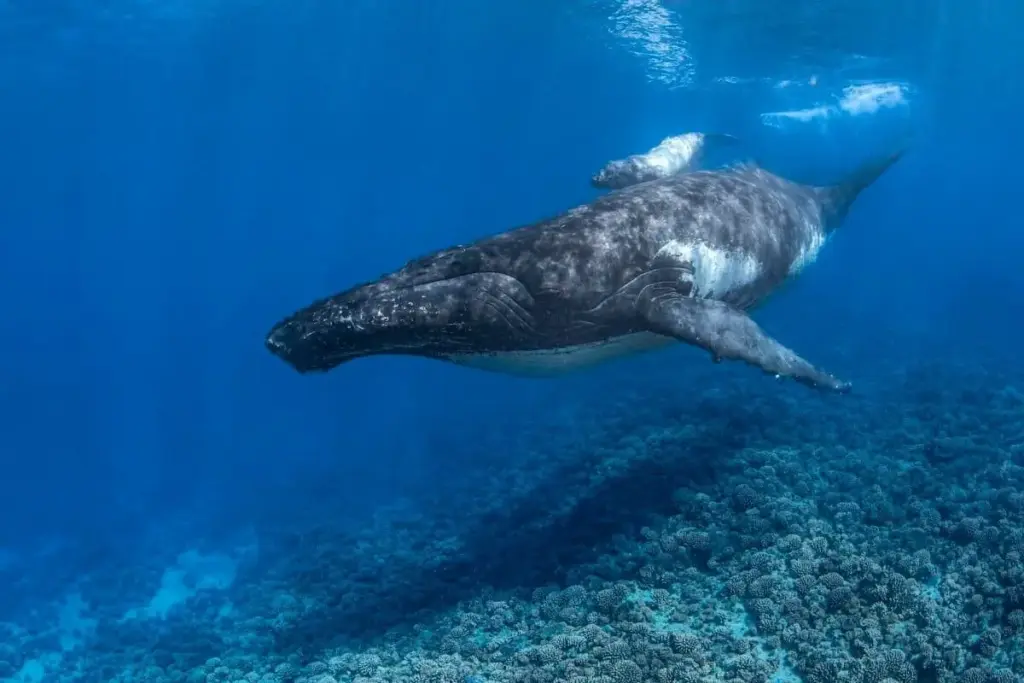
HOBART, Tasmania — The 40-year-old global ban on commercial whaling has survived a high-stakes legislative challenge at the milestone 70th meeting of the International Whaling Commission (IWC). Convening in Hobart, Tasmania, from September 27 to October 2, roughly 400 delegates representing all 89 member governments and numerous observer organizations gathered to mark eight decades since the founding of the intergovernmental body.
While the historic global moratorium held firm, the biennial summit exposed deep geopolitical fault lines, revived longstanding debates over foreign financial aid influence, and underscored mounting friction between conservation advocates and pro-whaling blocs. Despite a coordinated push from a handful of member states to reopen the door to commercial exploitation, critical safeguards were preserved—even as key regional protection bids suffered setbacks and acute threats like climate change loomed large over committee deliberations.
Executive Overview
The primary friction point at IWC70 centered on a controversial draft resolution that sought to establish a pathway toward resuming commercial whaling under the guise of the "sustainable use of whale resources." Put forward by Caribbean nation Antigua and Barbuda, and co-sponsored by Palau, St. Kitts and Nevis, St. Lucia, and West African newcomer Togo, the measure represented the most serious legislative threat to the commercial moratorium in recent history.
However, in a dramatic eleventh-hour reversal, the bill was pulled from the table on the summit’s final day by Grenada—a Caribbean nation that had not officially co-sponsored the text. The eleventh-hour withdrawal left the IWC’s four-decade-old ban on commercial harvesting intact.
Yet, the victory for conservationists was tempered by intense procedural wrangling. Civil society observers and pro-conservation delegates reported that pro-whaling states deployed disruptive tactics, including an unsuccessful attempt to block a much-needed operational budget increase for the commission. Furthermore, a long-sought proposal to establish the South Atlantic Whale Sanctuary was narrowly defeated, and scientific committees faced fierce political friction regarding the integration of climate change metrics into official work plans.

Detailed Chronology & Legislative Battlegrounds
The Rise and Fall of the Pro-Whaling Resolution
The push to dismantle the commercial whaling ban began materializing months ahead of the Hobart gathering. Antigua and Barbuda, backed by a persistent cohort of pro-whaling developing nations, championed a draft resolution directing the IWC to open formal discussions on harvesting cetaceans under sustainable frameworks.
Supporters argued that certain whale populations have rebounded sufficiently to support controlled commercial takes. Opponents, however, categorized the resolution as an existential threat to decades of marine conservation gains.
As plenary sessions progressed through late September, intense lobbying by conservation-minded member states and international NGOs mounted against the proposal. On the final day of the summit, Grenada stepped forward to formally withdraw the draft resolution. While the sudden move averted a polarizing floor vote, it highlighted the volatile nature of IWC politics, where small voting blocs wield disproportionate leverage.
The Defeat of the South Atlantic Whale Sanctuary
In tandem with the commercial whaling debate, the summit witnessed the latest defeat of a perennial conservation priority: the creation of the South Atlantic Whale Sanctuary.
First introduced in 2018 by Argentina, Brazil, Gabon, South Africa, and Uruguay, the proposal aimed to establish a roughly 21-millionsquare-kilometer (8.1 million-square-mile) marine protected area. This zone would have created a contiguous sanctuary linking up with the Southern Ocean Whale Sanctuary (established in 1994) and the Indian Ocean Whale Sanctuary (established in 1979), effectively blanketing vast expanses of the southern hemisphere where commercial whaling would be strictly prohibited.

Despite securing a strong majority of "yes" votes, the bid fell short of the required three-quarters majority. A determined minority bloc voted against the sanctuary, including Antigua and Barbuda, Benin, Cambodia, Côte d’Ivoire, Grenada, Laos, Marshall Islands, Mauritania, Morocco, Nauru, Nicaragua, Norway, Palau, Senegal, St. Kitts and Nevis, St. Lucia, Suriname, and Tuvalu. Iceland and the IWC’s newest member state, Türkiye, chose to abstain.
Marine mammal experts emphasized the ecological blow of this repeated failure. Helena Symonds, co-director of the British Columbia-based whale research station OrcaLab, noted that while whale populations are recovering from the devastation of historic industrial whaling, none have returned to pre-exploitation baseline numbers.
"Putting out the South Atlantic Sanctuary, which makes it contiguous with the other two sanctuaries, means that the whales have the ability to move within those areas and perform their life behaviors and outcomes," Symonds explained. "It’s providing an area for whales to live their lives naturally."
Supporting Context & Metrics: The State of Global Cetaceans
The Persistence of Commercial Whaling
While the IWC moratorium officially governs global policy, commercial whaling has not vanished entirely. Japan formally withdrew from the IWC in 2019 but maintains observer status and continues domestic commercial hunts within its exclusive economic zone. Meanwhile, Norway and Iceland persist with commercial harvesting under formal objections and reservations to the IWC moratorium, respectively.
There may be a glimmer of hope on the horizon for Iceland: in September, the Icelandic government announced plans to introduce a landmark bill in February 2027 aimed at banning commercial whaling altogether, though its legislative fate remains uncertain.

Anthropogenic Threats and Extinction Risks
Away from the plenary floor, scientific presentations at IWC70 underscored the compounding hazards facing marine mammals. A landmark 2023 study published in Conservation Biology by an international team of scientists revealed that one in four cetacean species—accounting for 26% of the 92 assessed species worldwide—are currently threatened with extinction.
While direct harvesting remains a threat for specific populations, indirect anthropogenic mortality is staggering:
- Bycatch and Gear Entanglement: Thousands of whales, dolphins, and porpoises die annually after becoming trapped in commercial fishing gear, such as driftnets and pot lines.
- Vessel Strikes: High-speed maritime traffic continues to inflict fatal blunt-force trauma and propeller lacerations on large whales, particularly in congested migration corridors.
- Ocean Contamination: Chemical, plastic, and acoustic pollution degrade marine habitats and bioaccumulate in cetacean tissues.
- Climate Disruption: Warming oceans are fundamentally altering primary productivity, shifting krill distributions, disrupting food webs, and modifying ancient migration pathways.
Despite these cascading challenges, controversy erupted during committee sessions over the formal recognition of global heating. Mark Worthing, conservation director for the Canadian nonprofit Pacific Orca Society, expressed profound disappointment after the United States successfully lobbied to excise the phrase "climate change" from the official work plans of both the scientific and conservation committees.
"Fossil fuel corporations are the new whalers, and climate change affects all of us," Worthing argued. "It affects the krill in the Antarctic. It affects orcas. It affects ocean currents, strandings, fisheries, everything. I think the IWC should basically create an entire committee focused specifically on climate impacts and understanding the climate impacts and the climate benefits of whales."
Official Statements & Geopolitical Controversies
The dynamics of the IWC continue to be shaped by contentious geopolitical alignments. Critics have long pointed out that several developing nations taking aggressive pro-whaling stances at the commission have no domestic history of commercial whaling whatsoever.

For instance, Antigua and Barbuda has maintained a staunch pro-whaling posture for decades. In previous interviews, Ambassador Daven Joseph, Antigua and Barbuda’s representative to the IWC, acknowledged that his country received approximately $200 million in development assistance from Japan over a 20-year period. While Ambassador Joseph downplayed any direct quid pro quo regarding voting alignment, transparency advocates argue that financial aid from pro-whaling donor nations improperly influences voting blocks within the intergovernmental body. A similar dynamic has been noted regarding West African co-sponsor Togo, which has historically received Japanese development assistance despite having no domestic whaling industry. Neither the governments of Japan, Antigua and Barbuda, nor Togo responded to media inquiries regarding these financial ties prior to publication.
Fabienne McLellan, CEO of the Swiss NGO OceanCare, did not mince words when assessing the conduct of these delegations in Hobart, labeling Antigua and Barbuda and its allies as "agents of chaos" within the commission.
"Their proposed resolution was a major factor of concern, and once it was withdrawn, another destructive trump card was played by Antigua & Barbuda to try and prevent a much-needed budget increase for the IWC and block the approval of the budget," McLellan stated. "Both attempts fortunately failed. In the end, the overall results of the meeting are satisfactory as the majority of countries stood strong in support of defending the ban on commercial whaling, which is one of the most shining success stories in the global efforts to protect wildlife."
Not all resolutions met resistance. Several constructive measures successfully passed during the five-day summit, including initiatives to:
- Improve international data collection and reporting protocols for global cetacean strandings.
- Address the illicit global trade in fish maw (swim bladders), a market driving cetacean bycatch.
- Implement mitigation strategies to reduce vessel strikes in high-risk shipping lanes.
Furthermore, delegates unanimously adopted the Hobart Declaration, a symbolic commemorative statement marking the IWC’s 80th anniversary. The declaration served as a rare moment of unity, allowing member states to set aside polarized policy disputes to honor the commission’s legacy of cetacean science and international stewardship.

Future Outlook
As the 70th meeting of the International Whaling Commission adjourned, conservationists expressed cautious relief balanced with pragmatic vigilance. While the 40-year commercial whaling moratorium remains legally secure, the underlying ideological divisions within the commission show no signs of abating.
Attention is already turning toward the next biennial IWC meeting, scheduled for 2028. NGO leaders and conservation-minded delegations are preparing for a protracted diplomatic struggle, anticipating that pro-whaling nations will reintroduce formal challenges to the moratorium.
"Because we know that those initiatives by the sustainable whaling camp will come back," McLellan warned, "we already know that writing is on the wall."
For the world’s whales, dolphins, and porpoises, the resilience of the global conservation community will remain their most vital defense against an uncertain marine future.



