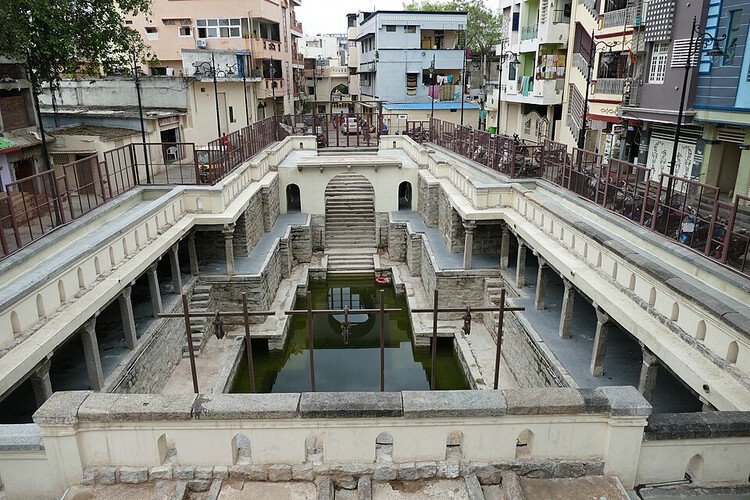
Across the Indian subcontinent, architectural heritage is frequently viewed through a static lens. Monumental stepwells (baolis or vavs), sprawling temple tanks, and subterranean cisterns (tankas) are typically encountered after their primary utilitarian lifecycles have ended. Today, they are photographed by tourists, conserved by heritage foundations, and studied by academics as physical evidence of a sophisticated, bygone water culture.
Yet, beneath their intricate stone carvings, symmetrical colonnades, and descending steps lies a pressing, highly practical engineering question: What happens when infrastructure built centuries ago to capture, manage, and distribute water is put back to work?
As contemporary Indian cities grapple with severe water stress, erratic seasonal monsoons, rapid urbanization, and unprecedented strains on centralized municipal grids, researchers, urban planners, and municipal authorities are re-evaluating the role of vernacular engineering. Recent studies suggest that traditional water architecture was never an isolated or ornamental object; rather, it was embedded in the structural, ecological, and social organization of historic human settlements.
By looking at distributed networks like the underground tankas of Ahmedabad and the monumental stepwells of Hyderabad, this investigation explores whether these historic systems can transition from passive tourist attractions into active, functional components of modern urban water infrastructure.
Detailed Chronology: The Evolution and Re-emergence of Vernacular Water Engineering
To understand how traditional water systems can be reintegrated into modern cities, it is necessary to trace their historical evolution alongside the development of centralized municipal infrastructure.
The Pre-Industrial Era: Decentralized Harmonization (Pre-19th Century)
For centuries, water management in India was decentralized, relying on gravity, topography, and seasonal precipitation cycles. In hyper-dense historic quarters—such as the pols of Ahmedabad or the old city districts of Hyderabad and Delhi—water storage was integrated directly into the built environment.
The Domestic Scale (Tankas): In Ahmedabad’s historic Walled City, the underlying geology is defined by dense clay strata, with the water table frequently plunging deeper than 40 meters. Digging conventional wells was both labor-intensive and hydrologically unviable. Instead, builders turned domestic courtyards and roofs into localized catchments. Rainwater was directed via clay pipes into subterranean chambers known as tankas, lined with water-repellent lime plaster (chuna) to keep stored water cool and potable through the scorching summer months.
The Neighborhood Scale (Pols and Community Wells): Beyond single-family homes, neighborhoods developed shared resources. By the late 19th century, over 200 community wells operated within Ahmedabad’s pols, forming a dense web of localized water autonomy.
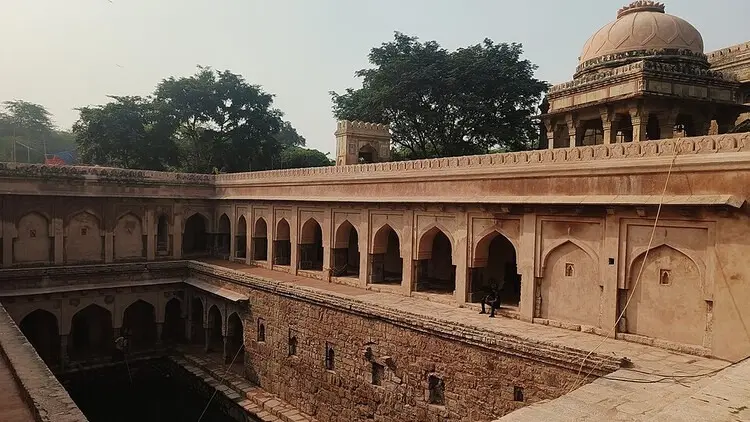
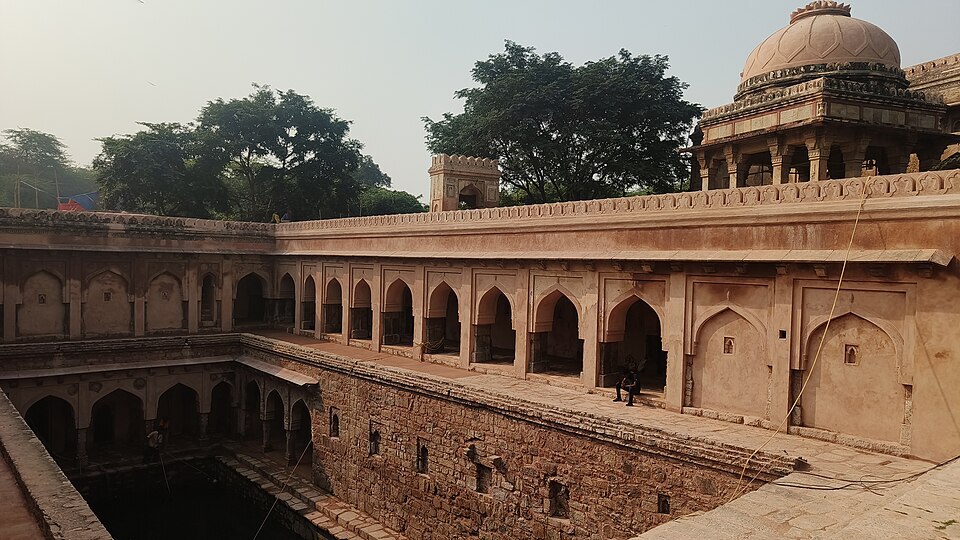
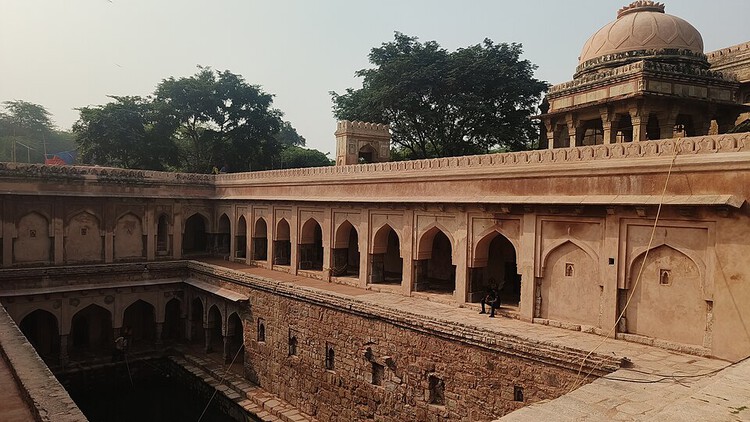
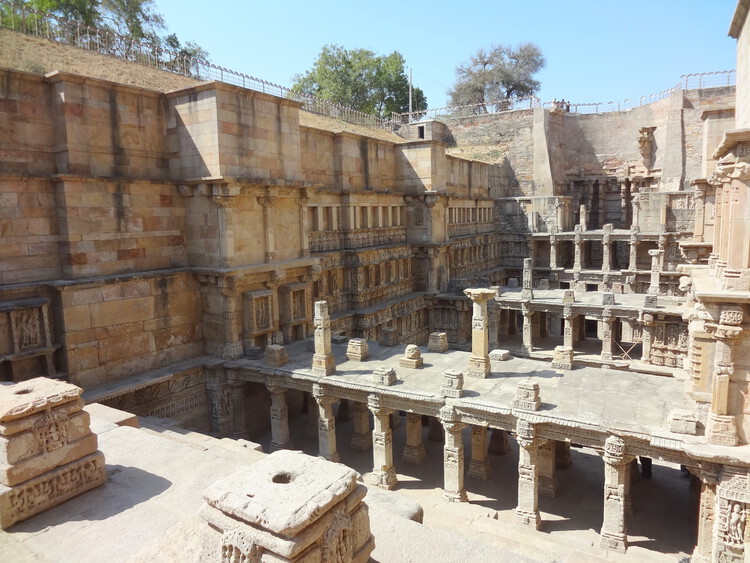
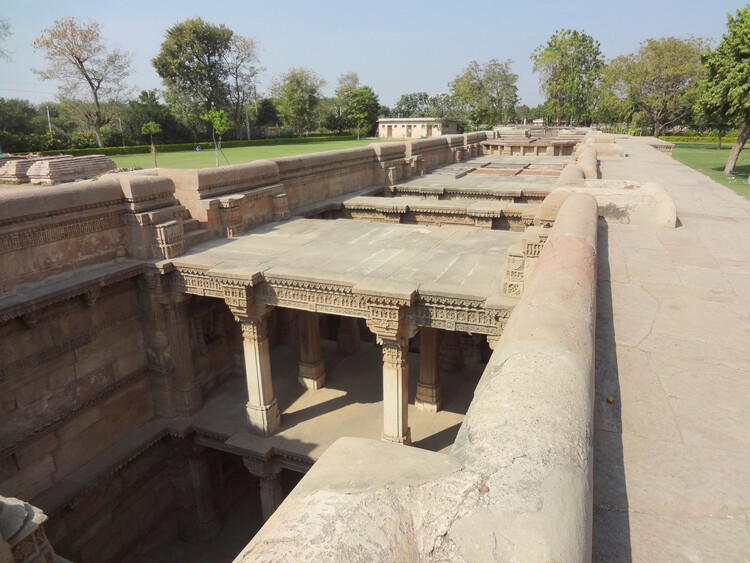
The Regional Scale (Stepwells & Reservoirs): Monumental stepwells, such as the 11th-century Rani ki Vav in Patan or the 18th-century Amritvarshini Vav, served as subterranean aquifers, subterranean temples, and civic microclimate regulators. They captured surface runoff during downpours, filtered it through sandy strata, and stored it for dry months while providing community gathering spaces shielded from the searing heat.
The Centralized Shift: The 19th-Century Municipal Turn
The systemic displacement of vernacular water systems began in earnest during the colonial era, accelerating with the introduction of centralized, engineering-heavy water supply networks.
1892: The commissioning of the Dudheshwar Water Works in Ahmedabad marked a pivotal turning point. Piped municipal water infrastructure and engineered stormwater drainage systems gradually replaced the need for household rainwater harvesting and decentralized storage.
The Intervening Decades: As municipal taps delivered a reliable, continuous (or semi-continuous) flow of treated water, the operational necessity of vernacular systems dwindled. While underground tankas and neighborhood wells physically remained beneath houses and alleys, their original hydrological functions faded from collective memory. They persisted as inert spatial anomalies while water arrived via cast-iron municipal mains fed by distant rivers and deep tube wells.
The Contemporary Revival: From Relics to Resilient Infrastructure (2000s–Present)
As modern cities face compounding climate vulnerabilities and groundwater depletion, municipal and academic sectors have begun initiating targeted revivals.
2004: The Ahmedabad Municipal Corporation successfully recharged the historic Amritvarshini Vav, bringing its original subterranean hydrological function back online.
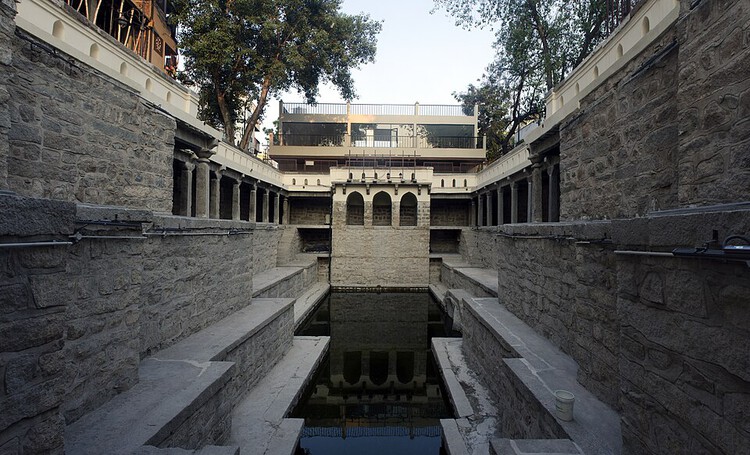
Early 2020s: Grassroots initiatives and municipal partnerships began excavating long-forgotten stepwells choked by decades of urban debris. A notable milestone occurred in Hyderabad, where the 17th-century Bansilalpet Stepwell—long buried beneath 2,000 tonnes of municipal trash—was completely restored.
2026: Recent research published in journals such as Built Heritage and ISPRS Annals has shifted the discourse from isolated heritage conservation to systematic spatial integration, estimating that nearly 10,000 historic tankas remain preserved beneath domestic courtyards in Ahmedabad alone.
Supporting Context & Metrics
The viability of reactivating historic water architecture cannot be measured by nostalgia alone; it requires rigorous quantitative and qualitative assessment. Recent data sheds light on both the potential capacity and the institutional roadblocks of these structures.
Scale, Capacity, and Performance
Bansilalpet Stepwell (Hyderabad): Following the removal of approximately 2,000 tonnes of rubble, engineers located a pristine freshwater source bubbling up just seven meters below ground level. The restored stepwell boasts an active water-carrying capacity of roughly 2.2 million liters. Furthermore, the project integrated state-of-the-art rainwater harvesting systems across the surrounding precinct, linking its ecological footprint directly to the water needs of nearby institutions like Gandhi Hospital.
Ahmedabad’s Subterranean Reserve: A comprehensive 2026 geospatial and architectural survey published in Built Heritage estimates that upwards of 10,000 tankas remain structurally intact beneath the domestic courtyards of Ahmedabad’s historic quarters. If fully restored and reconnected to modern roof catchments, these subterranean chambers represent a massive, decentralized buffer against municipal water shortages.
Public Sentiment: The same 2026 study revealed an encouraging sociological metric: 90 percent of surveyed residents living above or adjacent to these historic systems expressed a direct willingness to reintegrate tanka water into their daily urban routines, provided the water meets safety and quality standards.
Structural Typologies and Operational Mechanics
System Type
Primary Scale
Structural Composition
Historical Function
Contemporary Potential
Tanka
Household / Courtyard
Brick, stone, and lime-mortar lined underground chambers
Capturing and storing rooftop rainwater for drinking
Supplementing household supply, reducing municipal grid pressure
Community Well
Neighborhood (Pol)
Stone masonry rings reaching down to local water tables
Shared domestic and livestock water source
Localized groundwater recharging and emergency supply backup
Stepwell (Baoli / Vav)
Regional / Civic
Multi-story subterranean stone architecture with colonnades and descending flights of stairs
Aquifer storage, microclimate moderation, social gathering
Integrating ancient architecture into modern utility grids requires cross-disciplinary collaboration among architects, hydrologists, municipal bureaucrats, and sociologists.
Urban researchers emphasize that restoring physical masonry is only half the battle. As noted in recent heritage management discourse, a tanka or stepwell was never just a static object; it was part of an active socio-ecological routine:
"A Tanka worked because the roof, courtyard, reservoir, and routines of maintenance formed a single, unbroken system. Bringing it back into use depends entirely on whether the buildings, institutions, and communities around it can support those maintenance routines again."
— Excerpt from contemporary urban heritage research (2026)
Municipal engineers point out that contemporary public health mandates, water-quality standards, and modern plumbing codes do not seamlessly align with medieval engineering. Untreated rainwater collected from urban rooftops can contain atmospheric pollutants, particulate matter, and organic debris. Consequently, experts advocate for a hybrid model:
"The future of urban water resilience in India does not lie in choosing exclusively between centralized mega-dams or isolated heritage conservation. It requires a distributed governance model—one that marries the raw storage and catchment capacity of historic vernacular infrastructure with modern filtration technology, rigorous municipal water quality testing, and incentivized community stewardship."
— Urban Planning & Water Infrastructure Taskforce Analyst
Furthermore, legal and governance scholars highlight the institutional vacuum surrounding privately owned heritage infrastructure. When a functional tanka sits beneath a privately owned home in a densely packed neighborhood, questions of liability, cost-sharing, and regulatory oversight quickly mount. Who pays for structural repairs? Who tests the water safety? How can municipal authorities legally regulate subterranean infrastructure buried under private real estate? Researchers argue that current municipal frameworks lack the financial and administrative incentives required to unlock this latent urban capacity.
Future Outlook: Challenges and Pathways Forward
As Indian metropolises expand under the dual pressures of climate change and rapid population growth, the transformation of historic water systems from passive relics into active infrastructure presents a compelling path forward, albeit one fraught with distinct structural hurdles.
1. Overcoming Governance and Maintenance Barriers
The primary obstacle to reactivating systems like Ahmedabad’s tankas or Hyderabad’s stepwells is not engineering capability—it is institutional governance. Establishing clear legal frameworks that incentivize private homeowners to maintain subterranean water assets is paramount. Municipalities must introduce tax rebates, technical assistance grants, and public-private partnerships (PPPs) that offset the operational costs of cleaning, lime-plaster repair, and water testing.
2. Integrating Modern Filtration and Safety Protocols
Water quality remains a primary concern. To transform historic reservoirs into potable or secondary-use water sources, retrofitting is essential. Modern decentralized filtration units—such as UV sterilization, sand filters, and first-flush diverters—must be seamlessly integrated into historic catchments without compromising the architectural integrity of the structures.
3. Redefining Civic Space and Urban Resilience
When stepwells like Bansilalpet or Amritvarshini are successfully rehabilitated, they do more than store water; they actively transform the public realm. They act as cooling islands within heat-stressed concrete jungles, stormwater detention basins during extreme monsoons, and vibrant civic spaces for communities.
Conclusion
Ultimately, the question of whether India’s historic water systems can work again touches on a broader paradigm shift in global architecture. It challenges the 20th-century dogma that all infrastructural problems require top-down, centralized mega-engineering solutions. By recognizing that historic water architecture is a sophisticated, distributed network waiting to be re-activated, Indian cities have a rare opportunity to weave their deep historical roots directly into a resilient, water-secure urban future.