

Executive Overview
The North American renewable natural gas (RNG) landscape is undergoing a significant structural realignment, underscored by a sweeping asset divestment by Idaho-based Sevana Bioenergy. In a transaction announced on Tuesday, Sevana parted ways with the majority of its remaining footprint, highlighted by the sale of the high-profile Rialto Bioenergy Facility in Southern California to Berq RNG. This transaction follows closely on the heels of another major deal: last week, California Bioenergy announced its acquisition of Sevana’s stake in South Dakota Biogas LLC, a joint venture engineered to construct a robust network of dairy manure digesters across the state.
These rapid-fire transactions leave Sevana with just a single operational digester remaining in Idaho, according to confirmation from CEO Steve Compton. The retreat marks a dramatic inflection point for a company that, only a few years ago, was backed by a monumental $250 million capital commitment from the Ontario Teachers’ Pension Plan Board.
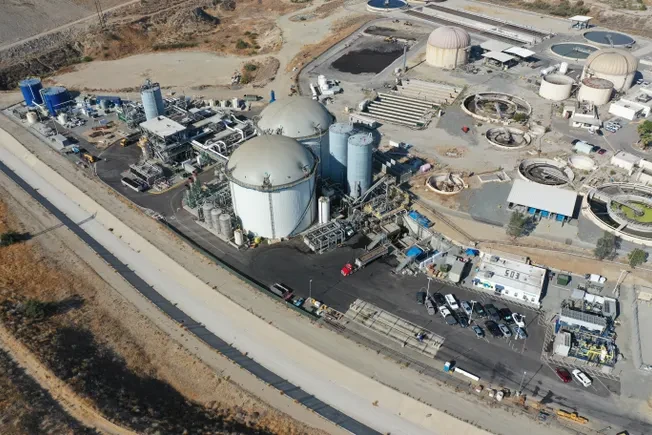
At the center of this corporate pivot is the Rialto Bioenergy Facility—a complex, highly ambitious engineering feat that has spent much of its operational life wrestling with regulatory delays, feedstock shortages, and financial distress. Originally touted as North America’s largest food waste diversion and energy recovery facility, Rialto has changed hands multiple times, weathered a Chapter 11 bankruptcy, and swallowed millions in deferred maintenance. Now, under the stewardship of Berq RNG—a firm backed by Connecticut-based private equity player Lotus Infrastructure Partners—the facility enters its next chapter.
This article explores the cascading events that led to Sevana’s strategic withdrawal, the tumultuous history of the Rialto plant, the broader regulatory shifts in California’s waste economy, and what these developments signal for the future of the continent’s RNG sector.
Detailed Chronology: From Grand Ambitions to Rapid Divestment
To understand Sevana Bioenergy’s recent retreat, one must trace the company’s trajectory from its founding to its heavy-hitting financial backing and eventual portfolio contraction.
Foundation and Institutional Backing (2017–2023)
Founded in 2017, Sevana Bioenergy steadily carved out a niche in the agricultural and organic waste processing sectors. By the early 2020s, the company had established a proven track record, deploying more than 20 digester tanks across various agricultural projects in Oregon, Idaho, and South Dakota.
This steady operational footprint caught the eye of institutional investors looking to green their portfolios. In 2023, the powerful Ontario Teachers’ Pension Plan Board acquired a majority stake in Sevana Bioenergy. Alongside the acquisition came a landmark $250 million capital commitment designed to supercharge the development and acquisition of RNG projects throughout North America. Buoyed by this capital injection, Sevana positioned itself as a major aggregator of biogas assets, expanding its reach into municipal solid waste and large-scale agricultural digester networks.
The South Dakota Divestment
Cracks in this expansive strategy began to show in early 2025. Last week, California Bioenergy announced it had officially acquired Sevana’s stake in South Dakota Biogas LLC. This joint venture had been established to build an interconnected network of dairy manure digesters designed to capture methane emissions and convert them into pipeline-quality RNG. While financial terms of the South Dakota transaction were kept confidential, the move signaled a deliberate contraction of Sevana’s agricultural portfolio.
The Rialto Acquisition and Subsequent Exit
The culmination of Sevana’s asset shedding arrived this Tuesday with the announcement that Berq RNG had acquired the company’s remaining major assets, chief among them the Rialto Bioenergy Facility. Sevana had originally acquired the Rialto site out of Chapter 11 bankruptcy in 2024 for a bargain price of $20 million, inheriting a facility that had previously been pushed to the brink by structural market headwinds.
Despite investing capital into deferred maintenance and managing to push the plant to a peak run rate of 70% of capacity, Sevana ultimately decided to cut its losses. With the South Dakota joint venture sold and Rialto handed over to Berq RNG, CEO Steve Compton confirmed that Sevana’s once-vast portfolio has been pruned down to a single remaining digester in Idaho.
Supporting Context & Metrics: The Anatomy of the Rialto Facility
The Rialto Bioenergy Facility is a microcosm of the systemic challenges and high-stakes gambles characterizing the North American organic waste-to-energy sector. Its history is defined by massive scale, regulatory dependencies, and financial volatility.
Engineering Feat Meets Market Reality
Designed by Anaergia and officially opened in 2020, the Rialto facility was celebrated at launch as the largest food waste diversion and energy recovery plant in North America. The facility was engineered with the capacity to process up to a staggering 1,000 tons of organic material per day, converting food scraps and commercial waste into valuable RNG and nutrient-rich fertilizer.
However, the plant’s financial model was inextricably linked to anticipated regulatory mandates—specifically, California’s landmark Senate Bill 1383 (SB 1383). The legislation was designed to drastically reduce organic waste disposal in landfills and guarantee a steady stream of source-separated organic waste from residents and businesses, particularly across the sprawling Los Angeles metropolitan area.
Regulatory Friction and Bankruptcy
In practice, the anticipated deluge of feedstock failed to materialize on schedule. RecycLA, the municipal agency overseeing Los Angeles commercial waste franchise contracts, repeatedly delayed the enforcement and rollout of provisions tied to the law. Consequently, the Rialto facility was starved of its intended feedstock, running well below its designed processing capacity.
The revenue shortfall proved fatal to the plant’s original corporate structure. In 2023, Anaergia spun off the facility into a dedicated LLC, which promptly filed for Chapter 11 bankruptcy protection. While Anaergia acknowledged that the financial distress stemmed from a painfully slow operational ramp-up, the company committed to keeping the facility running through the court-supervised restructuring proceedings.
The Turnaround Effort and Persistent Financial Losses
Sevana Bioenergy stepped in during 2024, purchasing the distressed asset for $20 million. Sevana immediately retained Anaergia to continue site operations and committed an additional $5 million toward deferred maintenance, optimization projects, and operational enhancements.
According to Sevana CEO Steve Compton, these improvements paid off to a degree, helping the facility reach a peak run rate of 70% of its total capacity. Furthermore, Anaergia’s deployment of organics extrusion machines—sold to waste haulers such as Waste Management (WM) and Universal Waste Systems (UWS)—began to yield results. WM successfully operated its machine and piped organic slurry to Rialto, while UWS brought its own machine online in late 2024, awaiting finalization of municipal hauling contracts in Los Angeles to activate a second unit.
Despite these operational milestones, the facility continued to bleed cash. Yaniv Scherson, Chief Operating Officer at Anaergia, noted that the plant was likely still operating at a loss during Sevana’s tenure, creating an unsustainable financial strain.
"They bought a site that was not making money, and they probably had a budget of how much capital they were willing to invest until profitability," Scherson observed. "It must have taken longer than their plan."
Official Statements and Industry Perspectives
The transition of the Rialto facility to Berq RNG has drawn commentary from key stakeholders across the biogas and waste-management sectors, shedding light on both past missteps and future opportunities.
Berq RNG’s Strategic Vision
Bas van Berkel, CEO of Berq RNG, emphasized a hands-on, operational approach to turning the Rialto asset around. In a formal statement accompanying the acquisition announcement, van Berkel stated:
"We look forward to applying our operating expertise to optimize performance at Rialto, working closely with the City of Rialto, our feedstock partners and the local community."
Berq RNG enters this venture with strong financial backing from Lotus Infrastructure Partners, a Connecticut-based private equity firm. Berq has built a reputation for disciplined asset management, having previously developed and divested landfill-gas-to-RNG projects in Kentucky and New York, alongside securing $110 million in bond financing in Michigan to fund four separate dairy manure digester projects.
Anaergia’s Outlook on Market Catalysts
Anaergia COO Yaniv Scherson expressed optimism regarding the broader California organic waste market, pointing to impending regulatory catalysts that could finally resolve the feedstock starvation that plagued Rialto from its inception.
RecycLA is scheduled to phase in a new wave of commercial waste franchise contracts in the first half of next year. These updated contracts are widely expected to dramatically increase the diversion of municipal food waste away from landfills and into processing facilities.
"That event should be a catalyst for more feedstock incremental to the market," Scherson said. "लेकिन how much, of course, is speculative."
Scherson also confirmed that Anaergia intends to maintain its operational role at the Rialto site, working side-by-side with Berq RNG to ensure continuity. Meanwhile, Sevana CEO Steve Compton declined to comment extensively on his company’s long-term corporate future, though he expressed goodwill toward Rialto’s new ownership group.
Future Outlook: A Maturing Sector Confronts Reality
The departure of Sevana Bioenergy from the front lines of large-scale organic waste processing serves as a cautionary tale for institutional investors entering the renewable natural gas sector. The episode highlights a vital lesson: infrastructural scale and deep-pocketed financial backers cannot entirely insulate a project from macroeconomic delays, regulatory bottlenecks, and feedstock supply chain friction.
The Financial Horizon for Rialto
For Berq RNG and Lotus Infrastructure Partners, the immediate priority at Rialto will be bridging the gap between operational capacity and net profitability. A critical piece of this financial puzzle is the facility’s pending gas offtake agreement with SoCalGas. Once the agreement clears final regulatory hurdles, it will provide a reliable, long-term revenue stream for the plant’s output. At peak performance, the Rialto facility holds the theoretical capacity to generate up to 1 million mmBtus of renewable natural gas annually—a massive volume that could significantly bolster Berq’s bottom line if regulatory approvals align with operational output.
Navigating California’s Regulatory Landscape
The broader California RNG market stands at a crossroads. While state laws like SB 1383 set aggressive, environmentally progressive targets for methane reduction and organic waste diversion, the execution timeline has repeatedly frustrated developers and plant operators. The upcoming rollout of RecycLA’s updated municipal contracts in the coming months will serve as a crucial stress test for the Southern California organics market. If these contracts successfully unlock the promised wave of commercial food waste, facilities like Rialto may finally achieve the continuous feedstock streams required to sustain profitability.
Ultimately, the transaction between Sevana and Berq RNG illustrates a maturing market trend: over-leveraged or impatient pioneers are making way for specialized operating entities with the capital resilience and technical patience required to weather long regulatory gestation periods. As the North American biogas sector consolidates, the success of the Rialto facility under Berq RNG’s leadership will likely serve as a benchmark for how private equity and specialized operators manage high-risk, high-reward organic waste infrastructure in the years ahead.



