

Executive Overview
Across the vast and diverse agricultural landscapes of Africa, a silent crisis is taking root in the soil—one that has the potential to unravel decades of agricultural development, deepen rural poverty, and destabilize regional food security. At the heart of this crisis is a pervasive, highly lucrative, and deeply destructive illicit trade: counterfeit agricultural seeds.
High-quality, certified seeds are the cornerstone of modern agricultural productivity. Engineered to withstand increasingly volatile weather patterns, these specialized varieties offer enhanced nutritional profiles, robust pest-resistance, and critical drought tolerance. For smallholder farmers navigating the accelerating realities of climate change, access to these resilient seeds is often the thin red line separating a bountiful harvest from catastrophic failure.
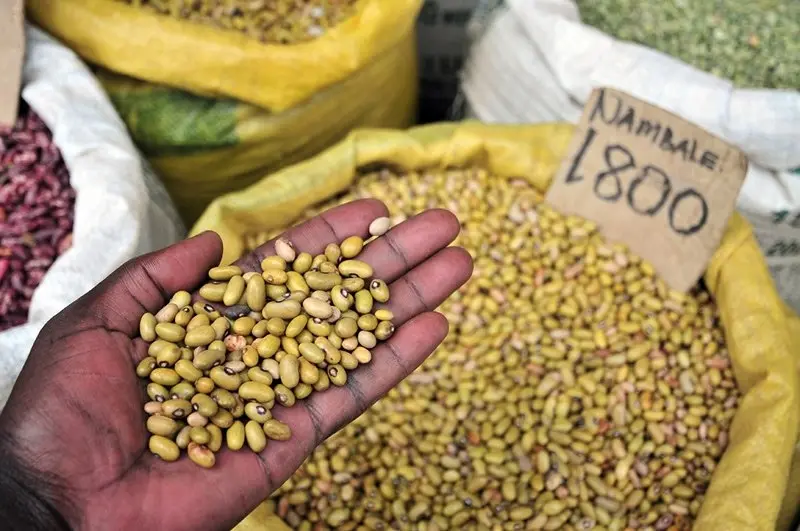
However, a devastating loophole exists in agricultural supply chains across the continent. To the naked eye, advanced, climate-resilient seeds for vital staple crops like maize, various vegetables, and core cereals are practically indistinguishable from counterfeit—or outright "fake"—seeds. This visual parity has created a breeding ground for widespread agricultural fraud. Unscrupulous actors routinely dye, polish, or repackage ordinary grain, passing it off as high-value, certified seed at exorbitant prices.
When unsuspecting farmers purchase these fraudulent products, the consequences extend far beyond a financial swindle. Because planting seasons are bound to narrow climatic windows—often dictated by the arrival of the first seasonal rains—farmers rarely discover the deception until it is too late. Seeds that fail to germinate or yield stunted, diseased crops condemn entire communities to lost seasons, devastating financial debt, and acute food insecurity.
A landmark new study published in Frontiers in Environmental Economics sheds stark light on this continental emergency. Analyzing the regulatory frameworks, policy commitments, and enforcement mechanisms of 50 African nations, an international team of researchers discovered a profound chasm between government promises and on-the-ground reality. While regulatory bodies across the continent have formally condemned seed piracy, severe gaps in institutional capacity, surveillance, and legal enforcement have left smallholder farmers dangerously exposed to predatory fraudsters.
Detailed Chronology and Research Findings: Mapping the Regulatory Landscape
To understand how the counterfeit seed trade reached its current proportions, researchers at Cornell University and collaborating institutions embarked on a comprehensive, continent-wide evaluation of policy responses spanning 50 African nations. The resulting study provides the most exhaustive picture to date of how governments are attempting—and frequently failing—to police their agricultural markets.
The Policy Disconnect
Historically, African agricultural ministries have recognized the existential threat posed by substandard and fraudulent inputs. Over the past two decades, numerous nations have updated their national seed boards, enacted stringent plant variety protection laws, and signed onto regional harmonization frameworks designed to facilitate the cross-border trade of legitimate, high-yielding seed varieties.
Yet, the Frontiers study reveals that possessing legislation on paper is vastly different from enforcing it in the marketplace. The researchers mapped a chaotic patchwork of penalties for selling counterfeit seeds across the 50 studied governments. While some nations feature robust legal deterrents—including substantial mandatory prison sentences and heavy corporate fines—others rely on outdated statutes that treat seed fraud as a minor administrative infraction akin to mislabeling a consumer good.
More alarmingly, the study uncovered a pervasive implementation deficit. Even where stringent laws exist, regulatory bodies routinely lack the personnel, laboratory infrastructure, testing equipment, and operational funding required to monitor thousands of rural agro-dealers, open-air markets, and informal supply chains. Consequently, the risk of apprehension for seed counterfeiters remains remarkably low, creating a high-reward, low-risk criminal enterprise that continues to attract bad actors.
The Anatomy of a Scam: From Grain to "Certified" Seed
To comprehend the mechanics of this fraud, one must look closely at the economics of the seed industry. Developing, breeding, testing, and scaling hybrid or climate-resilient crop varieties requires massive investments of time, scientific expertise, and financial capital by both public research institutions and private seed companies. Once brought to market, these certified seeds command a premium price—in some cases, several times more expensive than ordinary grain, particularly in the case of hybrid maize varieties.
Fraudsters exploit this price gap with chilling efficiency. By acquiring cheap, unselected grain from local markets, counterfeiters may apply chemical dyes to mimic the specialized treatments (such as fungicides or insecticides) used on legitimate seeds. Others simply use rudimentary packaging equipment to replicate the branded seals, holograms, and labels of reputable seed companies.
Because a bag of hybrid maize seed looks visually identical to a bag of ordinary feed maize, rural farmers have no reliable way to verify authenticity at the point of purchase. Trust, therefore, becomes the primary currency of the rural marketplace—a currency that counterfeiters systematically weaponize and destroy.
Supporting Context & Metrics: The Devastating Ripple Effects on Smallholder Agriculture
The proliferation of counterfeit seeds does not merely result in isolated commercial disputes; it acts as a systemic brake on agricultural modernization and rural economic development across Africa.
The Narrow Window of Opportunity
To appreciate the unique vulnerability of smallholder farmers, one must examine the operational realities of rain-fed agriculture in sub-Saharan Africa. Unlike industrialized farming systems equipped with advanced irrigation and mechanization, the vast majority of African smallholders rely entirely on seasonal precipitation.
[Seasonal Rains Arrive]
       │
       ▼
[Farmer Plants Seeds] ──(Counterfeit/Non-viable)──► [Germination Failure]
       │                                                    │
       ├─(Legitimate Seeds)                                 ▼
       ▼                                           [Window Closes: Too Late to Replant]
[Successful Harvest & Food Security]                        │
                                                            ▼
                                              [Acute Food Insecurity & Debt]
As Ed Mabaya, lead author of the study and professor of global development at Cornell University, emphasizes, planting is an intensely time-sensitive event. "For most smallholder farmers in Africa, planting happens once a season, often timed to the first rains," Mabaya explains. "A farmer who buys counterfeit seed usually finds out only after planting, when the seed fails to germinate or the crop grows poorly. By then it is usually too late to replant, so the loss is not a slightly smaller harvest but potentially the whole season’s food and income."

When a crop fails due to fraudulent seed, the farmer is left with depleted savings, no harvest to sell at local markets, and no food to feed their family. To survive, households are frequently forced distress-sell productive assets—such as livestock or land—or sink deeper into informal debt traps, cascading generations into deeper poverty.
Fracturing the Trust in Climate-Resilient Innovation
Perhaps the most insidious long-term consequence of the counterfeit seed trade is its corrosive effect on farmer confidence. Agricultural scientists have developed remarkable crop varieties tailored to the continent’s intensifying environmental stressors:
- Drought-Tolerant Maize: Engineered to endure prolonged dry spells during critical flowering stages.
- Disease-Resistant Varieties: Bred to withstand devastating pathogens like Maize Lethal Necrosis (MLN) and various rusts.
- Biofortified Crops: Nutritional powerhouses such as vitamin A-fortified maize and iron-rich beans designed to combat hidden hunger and micronutrient deficiencies.
However, when a smallholder farmer invests their hard-earned savings into an enhanced seed variety only to discover it was a counterfeit yielding nothing, trust is shattered. A farmer "burned once" by seed fraud frequently swears off certified inputs altogether, retreating to saved traditional seeds that, while locally adapted, lack modern genetic defenses against emerging pests and climate extremes.
This behavioral retreat slows the broader adoption of climate-smart agriculture across entire regions, leaving rural communities increasingly vulnerable to systemic crop failures induced by climate change.
Official Statements and Expert Perspectives
The gravity of the seed quality crisis has drawn urgent commentary from leading agricultural economists and development experts who study the intersections of policy, markets, and rural livelihoods in Africa.
Dr. Ed Mabaya: The Urgency of a Multipronged Defense
Speaking directly on the structural weaknesses exposed by the Frontiers study, Professor Ed Mabaya outlined a comprehensive blueprint for tackling the crisis at its roots. According to Mabaya, relying solely on reactive law enforcement is bound to fail; instead, governments must deploy a synchronized, multipronged strategy.
"A multipronged approach is needed to combat counterfeit seeds including routine surveillance, inspection, and market sampling by regulators," Mabaya stated. "Seed companies also need to report suspect products. Governments must develop public awareness programs to teach farmers how to recognize certified seed, where to buy it, and how to report seeds that may be counterfeit. Furthermore, governments need clear penalties for counterfeit seeds, which are kept up to date and enforced, so that counterfeiting carries real costs."
Mabaya stresses that transparency and traceability must be embedded into every tier of the seed value chain, ensuring that legitimate agro-dealers are protected while illicit operators face swift, unyielding legal consequences.
Dr. Travis Lybbert: Validating the Continental Reality
Weighing in on the findings from an independent perspective, Dr. Travis Lybbert, an agricultural economist at the University of California, Davis, who conducts extensive research on seed systems across Africa, noted that the study accurately captures a complex, uneven reality.
"Counterfeit seeds are a part of this problem—in some countries they are a big part of the problem, but not in all," Lybbert noted in correspondence regarding the study. "The paper seems to capture this reality pretty well."
Lybbert’s observations highlight an important nuance: the severity and nature of seed fraud vary widely depending on local market dynamics, institutional strength, and the specific crop value chains involved. In countries with highly organized formal seed systems and robust agro-dealer networks, counterfeit operations are often pushed to the fringes. Conversely, in regions heavily reliant on open, unregulated informal markets, fake seeds saturate the commercial ecosystem, operating with virtual impunity.
Future Outlook: Securing Africa’s Agricultural Horizon
As climate change accelerates and Africa’s population continues to expand, the demand for high-yielding, climate-resilient crops will only intensify. If the agricultural sector is to fulfill its promise of driving economic growth and ensuring food self-sufficiency, stamping out the counterfeit seed trade must become an urgent continental priority.
Meeting this challenge requires coordinated action across multiple stakeholders:
- Strengthening Regulatory Capacity: African governments must move beyond legislative declarations by allocating dedicated financial resources and technical training to national seed inspection services. Empowering inspectors with mobile testing kits and rapid DNA- or biochemical-tagging verification tools can dramatically shift the balance of power away from counterfeiters.
- Leveraging Digital Traceability: Innovative technologies offer powerful new avenues for protection. The integration of scratch-off verification codes, SMS-based product authentication systems, and blockchain-enabled supply chain tracking allows farmers to verify seed authenticity instantly using basic mobile phones before making a purchase.
- Empowering Farmer Cooperatives: Educating rural communities through targeted extension services and farmer cooperatives ensures that end-users know the authorized distribution channels, understand how to identify tamper-evident packaging, and possess clear reporting pathways when fraud is suspected.
- Enforcing Deterrents: Judicial systems must treat seed counterfeiting not as a minor commercial misdemeanor, but as a grave crime against food security and human livelihoods, applying swift and visible penalties that strip fraudsters of their illicit profits.
Ultimately, protecting the integrity of the seed is protecting the future of African agriculture. By bridging the vast gap between policy commitments and operational reality, governments, researchers, and private sector partners can restore trust in the marketplace—ensuring that every grain planted in African soil fulfills its ultimate promise: life, sustenance, and resilience.



