In an era defined by exponential data consumption, artificial intelligence breakthroughs, and high-performance computing, the physical architecture housing our digital world has traditionally been relegated to utilitarian, windowless industrial boxes. However, a groundbreaking project by Swiss architecture and engineering firm Penzel Valier is challenging this paradigm. The newly completed Hönggerberg Data Center (HRZ) for the Swiss Federal Institute of Technology Zurich (ETH Zurich) stands as a monumental shift in how high-security, high-capacity digital infrastructure is integrated into an institutional campus.
Conceived from the ground up as a unified, holistic ecosystem, the HRZ seamlessly merges structural engineering, complex building services, and refined architectural design. Rather than treating MEP (Mechanical, Electrical, and Plumbing) systems as an afterthought to be retrofitted into a standard shell, Penzel Valier designed the structure, envelope, and technical services concurrently. The result is a monolithic yet deeply integrated facility that houses the critical server, data storage, and telecommunications infrastructure for ETH Zurich’s central IT services, as well as multiple specialized academic departments.
The facility represents more than just a localized upgrade; it is a critical anchor within ETH Zurich’s long-term digital strategy. By consolidating several dispersed, technologically obsolete facilities scattered across the region into a single, state-of-the-art powerhouse, the university has drastically reduced its operational vulnerabilities while scaling its computational capacity. Engineered with modularity and future expansion at its core, the Hönggerberg Data Center ensures that ETH Zurich—globally renowned for its contributions to science, engineering, and technology—retains the robust digital backbone required to lead cutting-edge global research for decades to come.
Detailed Chronology: From Strategy to Realization
The journey toward the realization of the Hönggerberg Data Center was not a sudden pivot, but rather the culmination of years of strategic planning, rigorous site analysis, and multidisciplinary coordination. Understanding the trajectory of this architectural and infrastructural milestone requires a detailed look at its developmental timeline.
Phase 1: Strategic Conception and the Need for Consolidation (Early Planning Years)
For decades, ETH Zurich operated a decentralized digital infrastructure model. As computational demands escalated with the advent of big data, machine learning, and complex scientific modeling, the university’s distributed server rooms—housed in basements and legacy buildings across various campuses—began to reach their limits. These legacy facilities suffered from mounting inefficiencies:
Sub-optimal Power Usage Effectiveness (PUE) ratios.
Fragmented security perimeters.
Severe constraints on physical and electrical expansion.
High maintenance overheads associated with maintaining multiple disparate cooling and power redundancy systems.
Recognizing these compounding bottlenecks, ETH Zurich’s executive board and IT Services directorate initiated a comprehensive long-term digital master plan. The core objective was clear: consolidate core computational assets into centralized, highly secure, and energy-efficient data centers capable of supporting the institution’s trajectory well into the 21st century.
Phase 2: Architectural Competition and the Penzel Valier Vision
The commission for the new data center on the Hönggerberg campus—traditionally home to ETH’s science and architecture departments—was subject to rigorous architectural evaluation. Penzel Valier emerged as the visionary force behind the winning proposal.
From the earliest sketching phases, Penzel Valier rejected the conventional division between "architecture" and "infrastructure." While typical data centers are outsourced to engineering firms that wrap an industrial shell around server racks, Penzel Valier’s multidisciplinary team—comprising both architects and structural engineers—approached the project as an exercise in structural expressionism. They understood that a data center’s primary clients are machines, but its context is a prestigious academic campus. Consequently, the building had to respect its institutional surroundings while fulfilling the brutal, uncompromising technical demands of high-density server farms.
Phase 3: Construction, Integration, and Engineering Precision
The construction phase was characterized by intense logistical and technical coordination. Building a Tier-standard institutional data center demands absolute precision in structural load-bearing calculations, seismic resilience, fire compartmentalization, and airflow dynamics.
Structural Framework: Utilizing high-grade architectural concrete, the construction team erected a building capable of supporting immense floor-loading requirements inherent to dense server racks and heavy uninterrupted power supply (UPS) battery arrays.
Systems Integration: Mechanical ventilation, massive cooling distribution loops, high-voltage electrical risers, and data fiber-optic pathways were coordinated simultaneously using advanced Building Information Modeling (BIM) protocols. This ensured that no spatial conflicts arose between the raw concrete structure and the intricate arterial network of building services required to keep the facility operational 24/7/365.
Phase 4: Commissioning and Operational Go-Live
Upon completion of the structural envelope and the rigorous testing of mechanical redundancy systems, the phased migration of ETH Zurich’s digital assets began. Moving active research data, administrative databases, and departmental supercomputing nodes required meticulous timing to avoid institutional downtime. Today, the Hönggerberg Data Center operates at full capacity, serving as the pulsing digital heart of the campus.
Supporting Context & Technical Metrics
The Hönggerberg Data Center is a masterclass in modern infrastructure engineering. To fully appreciate the scale and sophistication of Penzel Valier’s design, one must examine the quantitative and qualitative metrics that define the facility.
Architectural and Materiality Profile
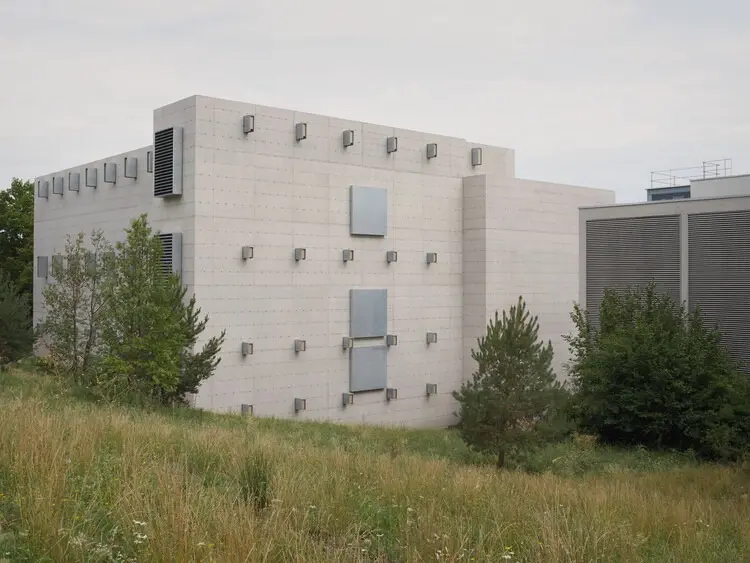
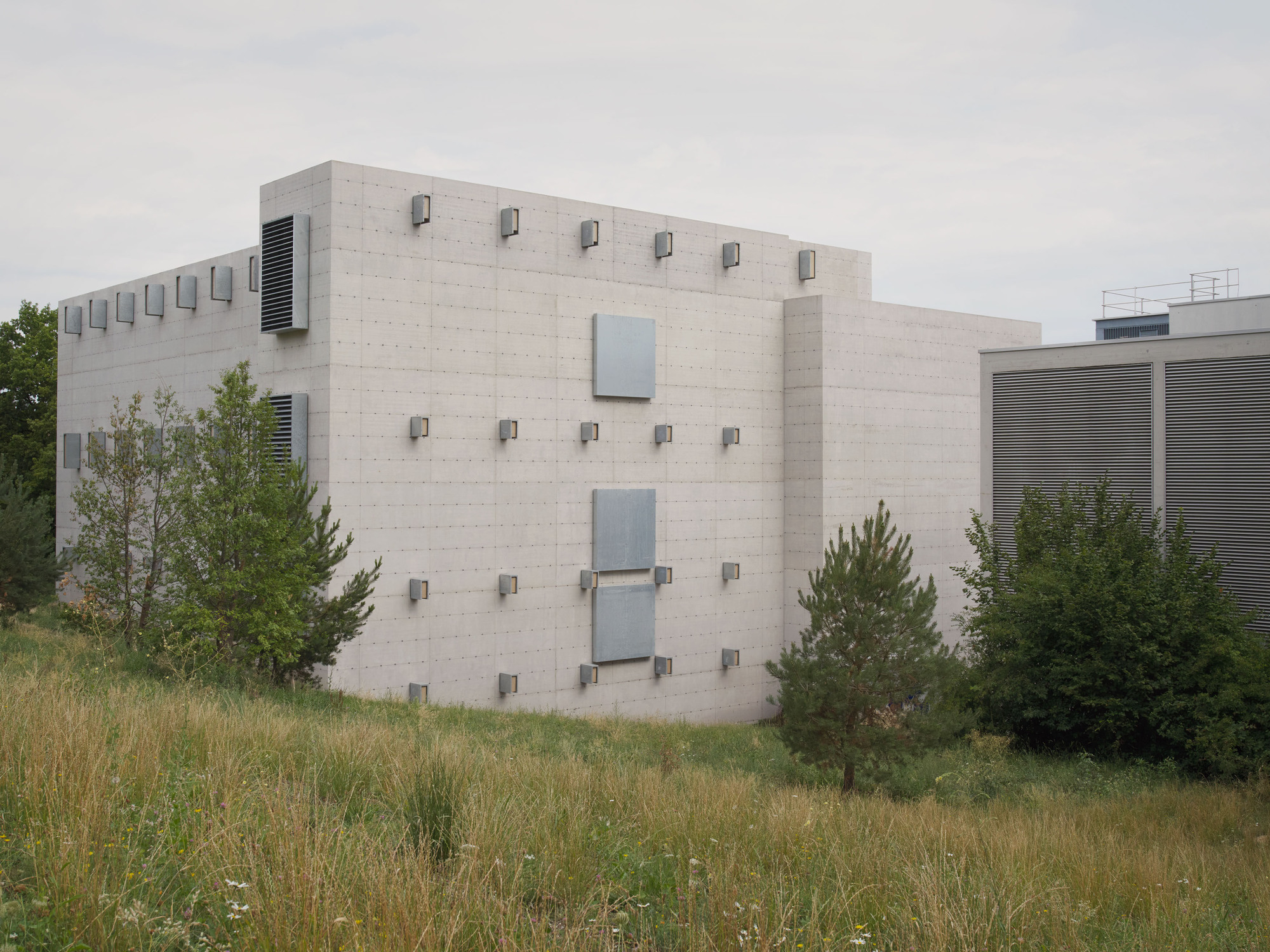
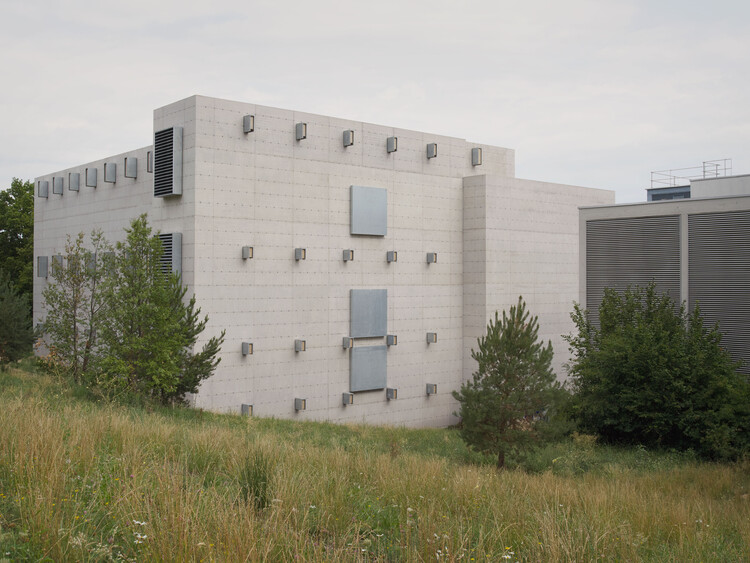
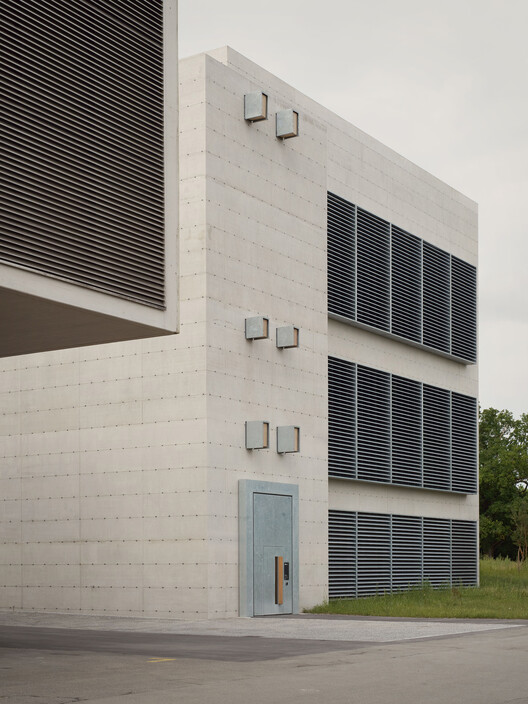
Primary Material: Exposed architectural concrete, chosen for its thermal mass, structural rigidity, security resilience, and fire-retardant properties. The texture of the concrete exterior reflects the industrial gravity of the building while achieving a refined, monumental aesthetic that complements the surrounding modernist Hönggerberg campus architecture.
Façade Strategy: Unlike typical windowless bunkers that present a hostile urban interface, the HRZ’s façade utilizes subtle shifts in texture, depth, and modular rhythm. This breaks down the massive scale of the block, creating an engaging interplay of light and shadow throughout the day.
Spatial Organization: The building layout is strictly zoned according to operational sensitivity. Server halls occupy core, highly protected internal zones, surrounded by infrastructural buffers, air-handling corridors, and monitoring stations that allow facility managers to oversee operations without compromising physical security perimeters.
Sustainability and Energy Efficiency
Data centers are notoriously energy-intensive, consuming vast amounts of electricity for computing and even greater amounts for cooling. ETH Zurich, a leader in sustainability initiatives, mandated stringent environmental performance standards for the HRZ project:
Cooling Innovations: The facility leverages Switzerland’s favorable climate through advanced free-cooling technologies, utilizing outside air for the majority of the year to minimize energy-heavy chiller operations.
Heat Recovery: Recognizing that data centers are essentially massive heat generators, the HRZ is engineered to capture waste heat. This thermal energy is integrated into the campus-wide heating grid, warming surrounding academic buildings and drastically lowering the net carbon footprint of the Hönggerberg site.
PUE Optimization: Through optimal airflow containment, high-efficiency transformers, and intelligent variable-speed cooling fans, the facility achieves an exceptionally low Power Usage Effectiveness (PUE) ratio, placing it among the most energy-efficient institutional data centers in Europe.
Official Statements and Design Philosophy
The success of the Hönggerberg Data Center lies in the collaborative synergy between the architects, engineers, and ETH Zurich’s facilities management teams.
In describing their design ethos for the project, the principals at Penzel Valier emphasized the necessity of breaking down traditional disciplinary silos:
"With the Hönggerberg Data Center (HRZ), our goal was to reject the notion that technical infrastructure must be hidden away or treated as architectural baggage. By conceiving structure, building services, and aesthetic design simultaneously from day one, we created a building where form and function are entirely inseparable. The architecture directly expresses the high-precision machinery it houses, while remaining an enduring, dignified addition to the ETH campus."
Representatives from ETH Zurich IT Services highlighted the strategic importance of the facility to the university’s academic mission:
"Modern scientific research—ranging from climate modeling and quantum physics to genomics and artificial intelligence—relies unconditionally on ultra-reliable, high-performance computing. The HRZ is not merely a warehouse for servers; it is a foundational instrument of modern research. Penzel Valier has provided us with a facility that guarantees absolute operational security, incredible energy efficiency, and the spatial flexibility to adapt to tomorrow’s computational breakthroughs."
Architectural critics and urban planners have similarly lauded the project for redefining the typology of industrial infrastructure in an academic setting. By treating the data center as a monumental sculpture rather than an apologetic utility box, the design team has elevated the public discourse surrounding how contemporary society builds the physical scaffolding of the digital age.
Future Outlook: Scalability and the Next Digital Frontier
As artificial intelligence, large language models, quantum computing integration, and big-data analytics continue to expand, the demands placed on institutional IT infrastructure will only intensify. The Hönggerberg Data Center has been purposefully future-proofed to meet these escalating demands head-on.
Modular Adaptability
The interior layout of the HRZ features modular server halls and scalable power distribution spines. This modularity ensures that as server hardware evolves—shifting from traditional CPU configurations to dense, high-draw GPU clusters—the facility can be upgraded rack-by-rack without requiring fundamental structural alterations. The electrical and cooling infrastructure was designed with built-in headroom, allowing ETH Zurich to incrementally scale up capacity without experiencing service interruptions.
A Blueprint for Institutional Infrastructure
The success of Penzel Valier’s design serves as a vital case study for universities, hospitals, and corporate campuses worldwide. As organizations grapple with the dual imperatives of rapid digital expansion and strict net-zero carbon targets, the integrated approach pioneered at the Hönggerberg Data Center offers a clear roadmap.
By demonstrating that technical infrastructure can be structurally expressive, environmentally responsible, and architecturally distinguished, Penzel Valier and ETH Zurich have set a new global benchmark. The Hönggerberg Data Center stands not just as a monument to Swiss engineering precision, but as a resilient sanctuary for the digital innovations that will shape our future.