Across Europe, urban centers face an unprecedented convergence of environmental and social crises. Cities are locked in an escalating battle against extreme heat waves, erratic climate patterns, and a profound deficit of accessible urban nature. Traditional, slow-moving urban planning models often fail to respond quickly enough to these mounting pressures.
In response, the European Union’s Horizon Europe initiative has launched ReGreeneration, a multi-city collaborative project spanning nine urban areas to pioneer neighborhood-scale renaturing. Among these participating cities, Barcelona stands out as a unique living laboratory.
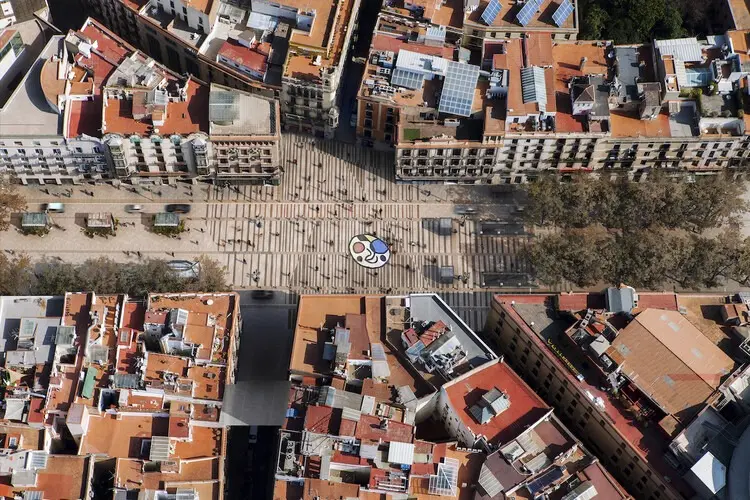
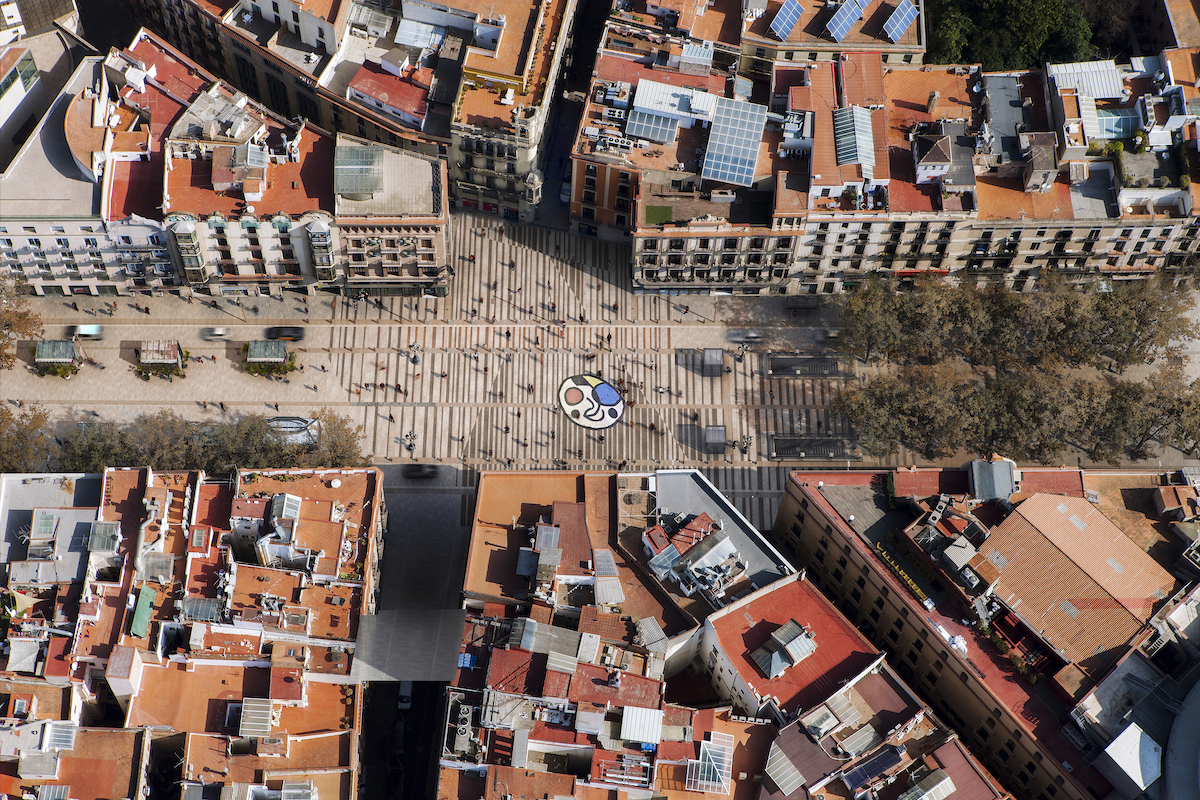
Building on a celebrated history of civic space reclamation—from post-democratic public square transformations to the world-renowned Superblocks (Superilles) model—Barcelona is once again redefining urban resilience. Through the ReGreeneration project, specifically anchored in the peripheral neighborhood of Trinitat Nova, the city is investigating a critical question for modern architecture and governance: How can the flexibility, speed, and responsiveness of temporary tactical urbanism translate into permanent, long-term municipal policy?
Detailed Chronology: Evolution of Barcelona’s Public Space Strategy
To understand Barcelona’s current position within the ReGreeneration framework, one must trace the historical milestones that transformed the Catalan capital into a global reference point for public space design.
1. The Post-Franco Democratic Transition (Late 1970s – 1980s)
Following the death of dictator Francisco Franco, Barcelona’s municipal administration initiated a radical democratization of the city through architecture. Under the philosophy of "facer ciudad" (making city), architects and planners prioritized the creation of small, democratic urban squares (plaças) in neglected working-class neighborhoods. This era established the foundational belief that high-quality public space is a fundamental civic right, not a luxury.
2. The 1992 Olympic Catalyst
The 1992 Olympic Games served as a massive financial and infrastructural catalyst, allowing Barcelona to reconnect with its Mediterranean coastline. Abandoned industrial zones were converted into vibrant beachfronts, residential quarters, and modern transport networks. While heavily top-down, the Olympic interventions proved that large-scale infrastructural visions could successfully reshape a city’s global identity.
3. The Rise of Tactical Urbanism and Leku Studio Interventions (2010s)
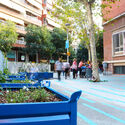
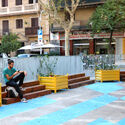
As municipal budgets tightened and bureaucratic delays hindered traditional master-planning, Barcelona increasingly turned to tactical urbanism. Low-cost, high-impact, temporary interventions—such as those spearheaded by innovators like Leku Studio—began testing reversible urbanization strategies. These projects utilized paint, modular seating, and movable greenery to reclaim asphalt for pedestrians, particularly around school zones (camins escolars), laying the groundwork for rapid civic prototyping.
4. The Superblock (Superille) Revolution (2016 – Present)
Pioneered under the municipal leadership of recent years, the Superblock model grouped existing urban blocks into larger polycentric cells. Through traffic calming, removal of private vehicles from interior intersections, and the introduction of permeable green zones, models like the Poblenou and Sant Antoni superblocks demonstrated how entire neighborhoods could be retrofitted for pedestrian well-being and climate mitigation.
5. Integration into ReGreeneration and Trinitat Nova (Present – 2026)
Today, Barcelona’s urban evolution enters its next frontier. Through the Horizon Europe ReGreeneration initiative, focus has shifted away from central showpieces toward peripheral, overlooked districts. The Trinitat Nova neighborhood has become the core testing ground for "designing the in-between"—transforming residual spaces, alleyways, and micro-pockets into vital climate infrastructure.
Supporting Context & Metrics: The Science of Urban Renaturing
The urgency behind Barcelona’s tactical-to-policy evolution is underscored by hard environmental data. Urban heat island effects in Mediterranean cities pose severe health risks, making the integration of nature-based solutions an absolute necessity rather than an aesthetic preference.
The Urban Heat Island Effect: Dense urban cores in Barcelona routinely experience summer temperatures up to 4°C to 7°C higher than surrounding rural areas due to the abundance of heat-absorbent asphalt and concrete surfaces.
Neighborhood Disparities: Peripheral districts like Trinitat Nova historically suffer from lower ratios of green space per capita compared to wealthier central districts like Eixample or Sarrià-Sant Gervasi.
The "Complete Neighborhood" Metric: ReGreeneration operates on the proximity principle—ensuring that everyday resources, green zones, and recreational areas are accessible within a 15-minute walk from any residential doorstep.
Tactical Scalability: Pilot projects in Barcelona have shown that tactical interventions can be planned, approved, and deployed in a fraction of the time (months instead of decades) required for traditional street redesigns, drastically lowering initial capital outlays while gathering real-time user feedback.
Official Statements and Stakeholder Perspectives
The friction and synergy between grassroots tactical interventions and rigid municipal policy have generated robust discourse among urban planners, architects, and city officials.
"Tactical urbanism has given us the speed we need to address immediate climate emergencies, but painting the asphalt and installing movable planters is only the first step. The true challenge for Barcelona—and the core mission of our work in Trinitat Nova—is institutionalizing these temporary wins so they outlast political electoral cycles."
— Lead Urban Researcher, ReGreeneration Barcelona Initiative
Architectural collectives and local studios working on the ground emphasize the psychological shift required by citizens and bureaucrats alike:
"When you design the ‘in-between’ spaces—the leftover alleys, the gaps between social housing blocks, the edges of transit hubs—you aren’t just managing land. You are inviting residents to co-author their environment. When a community tastes the benefits of a cooler, pedestrianized micro-space, they demand that policy catch up to reality."
— Representative, Leku Studio
Municipal authorities acknowledge that translating temporary, experimental designs into binding urban policy requires rewriting outdated zoning laws, traffic codes, and budgetary frameworks. The ongoing dialogue between neighborhood assemblies and city hall highlights a shared commitment to ensuring that climate adaptation does not lead to climate gentrification, protecting vulnerable populations while greening their surroundings.
Future Outlook: From Experimentation to Permanent Policy
As Barcelona continues its work through the Horizon Europe ReGreeneration project, the lessons learned in Trinitat Nova are projected to ripple outward across Europe. The ultimate objective is the creation of a standardized municipal framework—a "tactical policy playbook"—that allows cities to bypass paralyzing bureaucratic hurdles when deploying climate adaptations.
Key Milestones for the Future of Barcelona’s Urban Design:
Codifying Reversibility: Establishing legal definitions for temporary public space usage that can seamlessly convert into permanent pedestrian zones if proven successful by community metrics.
Decentralized Green Infrastructure: Shifting capital investment away from isolated mega-parks toward a hyper-connected network of micro-nature spaces embedded in daily routines.
Data-Driven Policy Feedback Loops: Utilizing sensor networks measuring air quality, pedestrian foot traffic, and ambient temperature changes around tactical sites to automatically trigger permanent municipal rezoning.
Pan-European Knowledge Transfer: Sharing the governance models developed in Barcelona with the eight other cities in the ReGreeneration network, establishing a continent-wide standard for agile, nature-positive urbanism.
By successfully bridging the gap between fleeting tactical interventions and enduring urban policy, Barcelona is proving that the future of city-building lies not in grand, static master plans, but in the flexible, empathetic, and continuous design of the spaces in-between.