

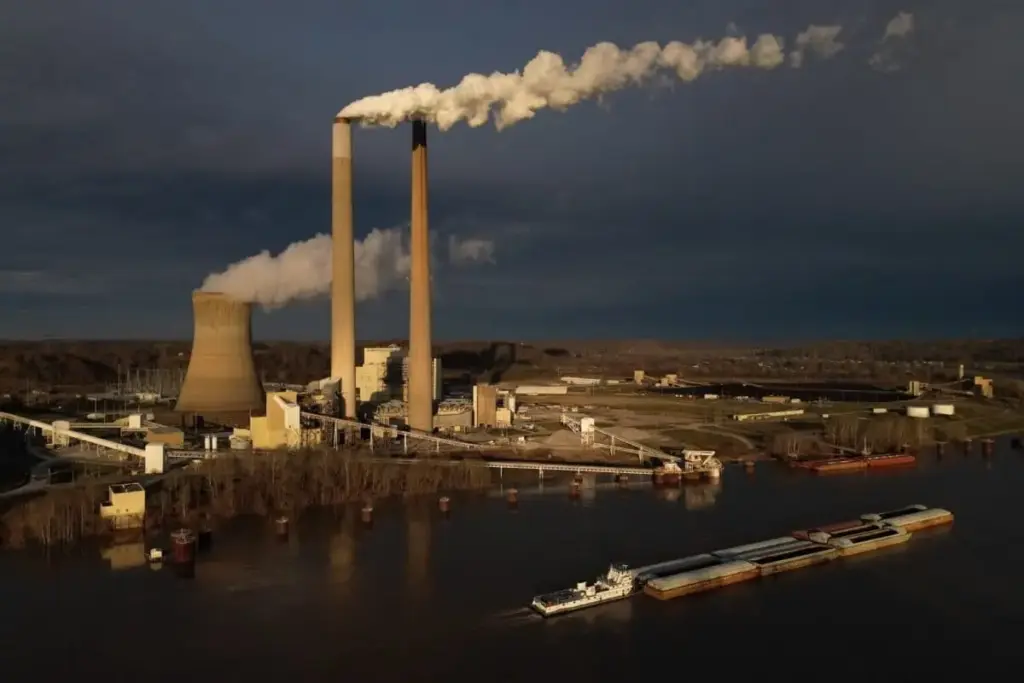
WASHINGTON — In a sweeping regulatory rollback that marks a watershed moment in modern American energy and environmental policy, the U.S. Environmental Protection Agency (EPA) has officially repealed federal rules that strictly limited planet-warming greenhouse gas emissions from coal- and natural gas-fired power plants.
The agency announced the decisive policy shift, arguing that eliminating the legacy carbon mandates will alleviate more than $300 billion in cumulative compliance and operational costs for the domestic utility sector. According to administration officials, the sweeping deregulation is designed to "unleash" American energy production, lower electricity overhead for consumers, and restore operational flexibility to utility operators navigating a complex and volatile energy landscape.
This policy reversal—initially signaled during preliminary rulemakings last year—dismantles the regulatory scaffolding erected by the administration of former President Joe Biden, which closely mirrored and expanded upon the carbon-reduction architecture of the Obama administration’s Clean Power Plan. For over a decade, federal environmental strategy relied heavily on utilizing the Clean Air Act to force power generators to curb carbon dioxide emissions, transition away from fossil fuels, and accelerate the deployment of renewable generation assets like wind and solar.
By jettisoning these strict emissions performance standards, the EPA has fundamentally pivoted away from using federal administrative power to combat global climate change. Instead, the agency’s current leadership maintains that the free market, regional grid demands, and individual state regulatory commissions—rather than federal mandates—should dictate the lifespan and operational parameters of the nation’s aging power generation fleet.
Executive Overview
The formal repeal of the power plant greenhouse gas rules represents one of the most consequential domestic policy reversals in recent regulatory history. For years, the intersection of energy policy and environmental protection has served as the primary ideological battleground for successive presidential administrations. While Democratic administrations prioritized aggressive decarbonization strategies to meet international climate targets under agreements like the Paris Accord, the current rollback aligns with a deregulatory philosophy centered on energy dominance, grid reliability, and industrial cost-reduction.
At the core of the EPA’s justification is the immense financial burden carried by the utility sector. Federal analysts and industry lobbyists have long contended that tightening environmental constraints were forcing premature retirements of coal and natural gas units. These closures, critics argued, compromised regional grid stability, strained baseload capacity, and ultimately drove up electricity rates for residential, commercial, and industrial ratepayers.
By removing these federal carbon caps, the agency aims to inject unprecedented flexibility back into the power sector. Utilities will no longer face stringent administrative penalties or federally mandated operational limits tied directly to their carbon output. Instead, power producers can evaluate their assets based on pure economic efficiency, fuel availability, and local demand.
However, the action has instantly drawn fierce opposition from environmental advocacy groups, public health organizations, and Democratic lawmakers. Critics warn that abandoning federal carbon constraints will accelerate global temperature increases, worsen localized air quality, and stall the nation’s necessary transition toward a clean-energy economy. As legal challenges are prepared and political friction intensifies, the future of American power generation hangs in a delicate balance between economic pragmatism and ecological preservation.
Detailed Chronology: The Evolution and Reversal of Power Plant Regulations
To fully understand the weight of the EPA’s latest decision, it is necessary to examine the protracted regulatory battle over carbon emissions from the U.S. power sector—a conflict spanning more than fifteen years of administrative shifts, courtroom showdowns, and legislative maneuvers.
The Obama Administration and the Clean Power Plan (2009–2016)
The foundation for federal regulation of greenhouse gases from stationary sources was laid in 2009, when the EPA under the Obama administration issued its formal "Endangerment Finding," determining that greenhouse gases threaten public health and welfare. This paved the way for the development of the Clean Power Plan (CPP) in 2015.
The CPP established the first-ever national limits on carbon dioxide emissions from existing power plants, setting state-specific targets designed to slash power sector emissions by 32% below 2005 levels by 2030. The policy was designed not just to encourage efficiency upgrades at individual plants, but to fundamentally shift the nation’s energy mix away from coal and toward natural gas and renewables. However, the rule faced immediate, coordinated pushback from fossil-fuel-producing states and utility companies. In an unprecedented move, the U.S. Supreme Court stayed the implementation of the CPP in February 2016, halting its enforcement while lower courts weighed its legality.
The Trump Administration and the Affordable Clean Energy Rule (2017–2020)
Following the 2016 election, the first Trump administration systematically dismantled the Clean Power Plan. In its place, the EPA promulgated the Affordable Clean Energy (ACE) rule in 2019. The ACE rule significantly narrowed the EPA’s regulatory authority under Section 111(d) of the Clean Air Act, restricting the agency’s oversight primarily to efficiency improvements at individual power plants ("inside the fence line") rather than broad shifts across the entire electrical grid.
The ACE rule was short-lived. In January 2021, the U.S. Court of Appeals for the D.C. Circuit vacated the ACE rule, ruling that the Trump EPA had misconstrued its statutory authority under the Clean Air Act. Just as the legal landscape was thrown back into flux, the incoming Biden administration prepared to draft an entirely new, more aggressive regulatory framework.
The Biden Administration’s Ambitious Climate Targets (2021–2024)
Upon taking office, President Joe Biden rejoined the Paris Climate Agreement and set ambitious targets: cutting U.S. greenhouse gas emissions in half by 2030 and achieving a carbon-pollution-free power sector by 2035.
To achieve these goals, the EPA proposed and finalized rigorous new standards for fossil-fuel-fired power plants. These rules relied heavily on the deployment of advanced control technologies—specifically, Carbon Capture and Storage (CCS) and ultra-efficient low-emitting natural gas co-firing—mandating that plants capture up to 90% of their carbon emissions if they intended to operate long-term. Utilities and coal-heavy states immediately challenged these rules, arguing that CCS technology was neither commercially viable nor economically feasible on the scale demanded by the agency, effectively serving as an unlawful ban on coal-fired electricity.

The Current Repeal and Deregulatory Pivot (2025–Present)
The latest action by the EPA brings this historical arc full circle. By completely repealing the Biden-era emissions rules without installing an immediate restrictive replacement, the agency has opted to clear the regulatory slate entirely. EPA leadership maintains that this decisive break will protect the energy grid from artificial constraints, prevent premature plant retirements, and provide the utility industry with the financial breathing room required to meet rising electricity demands driven by data centers, artificial intelligence, and domestic manufacturing revitalization.
Supporting Context & Metrics: Economic Relief vs. Environmental Toll
The debate surrounding the EPA’s repeal hinges on a complex array of economic projections, grid reliability metrics, and environmental impact assessments. Both proponents and detractors marshal extensive data to support their respective positions.
Financial Impacts and Industry Savings
The primary economic argument advanced by the EPA centers on the $300 billion in projected cost savings for the industrial and utility sectors. Compliance with the Biden-era carbon rules would have required billions in capital expenditures for retrofitting existing facilities with unproven or prohibitively expensive carbon capture systems. Alternatively, many utilities would have been forced to shutter functional coal and gas assets prematurely.
- Baseload Preservation: Coal and natural gas still account for a substantial portion of U.S. electricity generation. Proponents of the repeal argue that keeping these plants online avoids costly capacity shortfalls at a time when electricity demand is projected to surge.
- Ratepayer Protection: Industry analysts suggest that avoiding forced retrofits and accelerated plant retirements will shield consumers from dramatic spikes in monthly utility bills, particularly in regions heavily reliant on fossil-fuel generation, such as the Midwest and the Ohio River Valley.
- Capital Reallocation: Utility executives who favor the repeal argue that the freed-up capital can be directed toward upgrading transmission infrastructure, reinforcing grid resilience against extreme weather events, and expanding grid capacity to handle electrification trends.
Environmental and Public Health Consequences
Conversely, environmental scientists and public health advocates warn that the removal of these emission limits will carry steep, long-term costs that outweigh the immediate financial savings for utilities.
- Greenhouse Gas Trajectory: Power generation is the second-largest source of greenhouse gas emissions in the United States. Without federal caps on carbon dioxide, meeting national and international climate commitments becomes mathematically improbable, increasing the risk of accelerated global temperature rise and worsening extreme weather phenomena.
- Co-Pollutant Concerns: While the rules specifically targeted greenhouse gases, the operation of aging coal and gas plants also releases significant quantities of conventional air pollutants, including sulfur dioxide ($SO_2$), nitrogen oxides ($NOx$), and fine particulate matter ($PM2.5$). Environmental justice advocates point out that communities situated near these industrial facilities—often low-income neighborhoods and communities of color—will bear the brunt of worsened air quality and associated respiratory illnesses.
- Stranded Asset Risks: Some financial analysts caution that while the repeal offers short-term relief for fossil-fuel assets, long-term market forces—including falling costs for renewable energy, corporate sustainability mandates, and international carbon border adjustments—may eventually render high-emitting plants financially unviable anyway, potentially leaving utilities holding stranded assets.
Official Statements and Stakeholder Reactions
The announcement of the repeal has triggered polarized responses across the political spectrum, pitting industry trade groups and conservative policymakers against environmental organizations, state attorneys general, and renewable energy advocates.
Proponents: Restoring Common Sense and Grid Reliability
Supporters of the EPA’s action hailed the decision as a triumph of economic realism and a vital step toward securing American energy independence.
"For too long, federal agencies have weaponized environmental regulations to pick winners and losers in the energy market, driving up costs for hardworking families and threatening the reliability of our electrical grid," said an agency spokesperson during the briefing. "This repeal removes more than $300 billion in regulatory burdens, unleashes American energy, and empowers local utilities to make the best decisions for their ratepayers rather than being forced to close aging or inefficient plants."
Industry trade groups, including the National Mining Association and various regional electric cooperatives, expressed strong support for the move. Representatives noted that utilities are best positioned to balance environmental stewardship with the imperative of keeping the lights on 24 hours a day, 7 days a week, regardless of weather conditions or intermittent generation dips.
Critics: A Reckless Retreat from Climate Responsibility
Environmental organizations and progressive lawmakers offered sharp condemnations, characterizing the repeal as a capitulation to corporate polluters at the expense of public health and future generations.
"This is a reckless and catastrophic retreat from the federal government’s responsibility to protect Americans from the existential threat of climate change," said a senior attorney for a prominent environmental litigation group. "While communities across the country are dealing with the devastating financial and human costs of climate-fueled floods, wildfires, and extreme heatwaves, the EPA is actively rolling back the safeguards designed to curb the primary driver of this crisis."
State-level legal coalitions are already organizing in response. Several attorneys general from states committed to aggressive climate action have indicated they are reviewing the final administrative text to prepare multi-state lawsuits challenging the legality of the repeal under the Administrative Procedure Act and the Clean Air Act.
Future Outlook: What Lies Ahead for U.S. Energy Policy?
As the dust settles on the EPA’s formal repeal announcement, the battleground over the future of American power generation shifts to the courts, state regulatory commissions, and corporate boardrooms.
The Looming Legal Battles
Legal scholars predict that the repeal will face an immediate barrage of lawsuits from environmental coalitions and progressive states. The core of the legal debate will likely center on whether the EPA’s current interpretation of the Clean Air Act adequately fulfills its statutory obligation to address air pollutants that endanger public health and welfare. Given the current composition of the federal judiciary, including a conservative-leaning Supreme Court that has previously reined in expansive federal agency authority (such as in the landmark West Virginia v. EPA ruling), the administration’s deregulatory stance may find a receptive judicial audience—though the outcome remains far from guaranteed.
State-Level Divergence and Market Realities
Even in the absence of federal carbon caps, the U.S. energy sector is unlikely to return entirely to a 20th-century fossil-fuel model. Power markets are increasingly driven by state-level policies, corporate sustainability goals, and fundamental economics:
- State Renewable Portfolios: Numerous states have established their own statutory mandates requiring 100% clean energy or significant carbon reductions over the coming decades, independent of federal rules.
- Corporate Procurement: Major technology companies and industrial consumers—who are rapidly expanding energy-intensive data centers to power artificial intelligence—frequently demand clean energy as part of their corporate procurement strategies.
- The Economic Reality of Renewables: Despite the removal of federal carbon limits, the falling levelized cost of wind, solar, and battery storage technology continues to make renewables economically competitive with aging coal infrastructure in many regions.
Conclusion
The EPA’s repeal of power plant greenhouse gas limits represents a profound pivot in federal environmental strategy, prioritizing immediate economic relief, industrial cost-reduction, and grid flexibility over mandatory federal decarbonization. As the policy takes effect, its ultimate success or failure will be measured not only by courtroom verdicts and industry balance sheets, but by how effectively the American energy sector balances affordability, reliability, and environmental stewardship in an increasingly uncertain future.



