

By The Spark Editorial Team
Published by MIT Technology Review
Executive Overview
The global race to decarbonize the energy grid, modernize industrial manufacturing, and secure reliable power sources for the artificial intelligence boom has reached a critical inflection point. This week, the MIT Technology Review editorial team released its highly anticipated 2026 Climate Tech Companies to Watch list. This annual project highlights the most promising, high-impact advances and firms shaping the future of global climate and energy technology.
As the world confronts accelerating climate pressures alongside surging electricity demands—driven largely by the proliferation of massive data centers—the 2026 cohort of companies reflects the defining economic and geopolitical realities of our era. China has firmly cemented its position as the undisputed center of gravity for renewable energy manufacturing, grid infrastructure, and next-generation battery development. Meanwhile, in the United States, a convergence of Big Tech infrastructure spending and climate innovation is breathing new life into advanced nuclear power and next-generation geothermal energy.
Simultaneously, the imperative for grid stability has pushed energy storage beyond conventional lithium-ion applications. Innovators are deploying iron-air chemistry, compressed carbon dioxide, and second-life electric vehicle (EV) batteries on unprecedented scales. This article provides a comprehensive analysis of the 2026 list, examining the macro trends, breakthrough engineering achievements, and strategic corporate partnerships defining the modern climate tech landscape.
Detailed Chronology: The Evolution of Climate Tech to 2026
The trajectory of climate technology over the past decade has shifted dramatically from theoretical research and small-scale pilot projects to multi-gigawatt commercial deployments. Understanding how the industry arrived at its current state requires examining key milestones across international markets and technological domains.
2022–2024: The Incubation and Pivot Era
- May 2022: Emerging long-duration energy storage startups like Energy Dome gained initial commercial validation, developing carbon-dioxide-based systems before their first commercial-scale plants were fully operational.
- The Post-Inflation Reduction Act (IRA) Surge: Following major legislative pushes in North America and aggressive industrial policies in Asia, venture capital and corporate venture arms flooded the climate tech sector. However, supply chain bottlenecks and inflationary pressures quickly forced a shift toward technologies capable of pairing directly with industrial and computational loads.
- The Data Center Energy Crunch: By late 2024, the exponential growth of generative AI placed unprecedented stress on regional power grids. Big Tech companies—including Google, Amazon, and Microsoft—pivoted from merely purchasing offsets to directly financing baseload clean energy infrastructure, fundamentally altering the venture landscape for nuclear, geothermal, and long-duration storage developers.
2025–2026: Commercialization and Industrial Scale
- May 2025: Next-generation geothermal pioneer Fervo Energy executed a major initial public offering (IPO), raising $2.2 billion to accelerate its horizontal drilling projects and validate the commercial viability of enhanced geothermal systems (EGS).
- Laboratory Breakthroughs in China: Battery innovators like WeLion New Energy shattered previous energy-density records in laboratory settings, hitting 824 watt-hours per kilogram, while rapidly transitioning semi-solid-state chemistries toward commercial EV integration.
- October 2026: The release of the MIT Technology Review 2026 Climate Tech list codified these trends, spotlighting companies successfully bridging the gap between gigawatt-scale manufacturing and critical infrastructure deployment.
Supporting Context & Metrics: Key Themes of 2026
The 2026 selection highlights three overarching themes dominating the climate and energy sectors: China’s unyielding manufacturing dominance, the tech sector’s insatiable appetite for clean baseload power, and the maturation of multi-day energy storage.
1. China as the Global Epicenter of Climate and Energy Tech
It is impossible to analyze modern energy technology without confronting China’s monumental scale. Home to the world’s largest electrical grid, China is deploying renewable energy assets at a pace that continuously outpaces global forecasts.
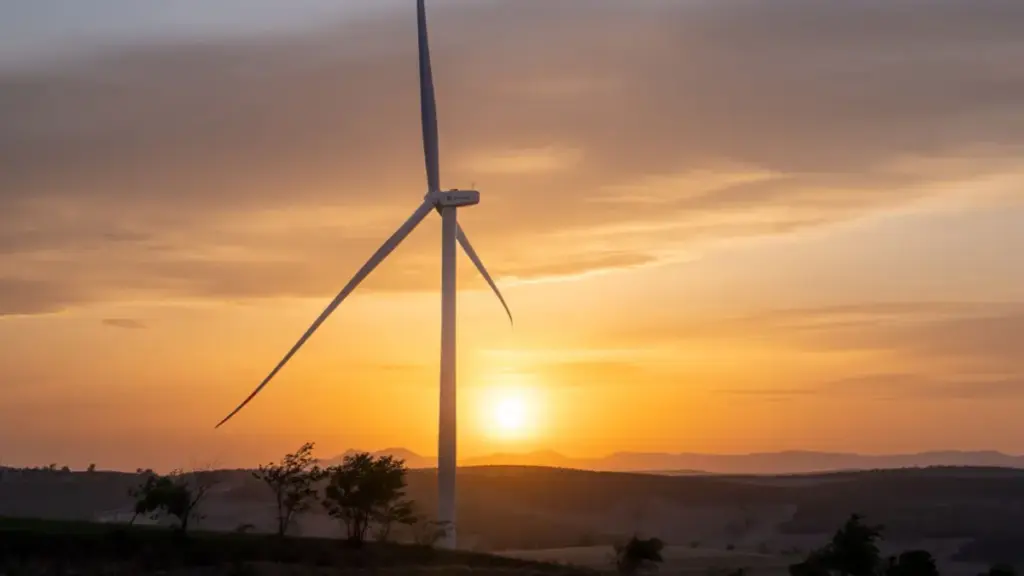
- Wind and Storage Giants: Envision Energy, making its second appearance on the MIT Technology Review watchlist, has installed over 100 gigawatts of wind power worldwide alongside more than 50 gigawatt-hours of battery storage. Faced with a fiercely competitive domestic market, Envision is rapidly expanding its footprint abroad, executing major wind and storage projects across Germany, Brazil, Australia, and Vietnam.
- Next-Generation Solid-State Batteries: Chinese firms are leading the global charge in battery innovation. Solid-state and semi-solid-state batteries—heralded for offering superior safety profiles and dramatically extended EV driving ranges—are moving swiftly from research facilities to production lines.
- WeLion New Energy’s Milestone: WeLion achieved international attention following a landmark lab result yielding 824 watt-hours per kilogram—more than triple the energy density of standard commercial lithium-ion cells used today. While scaling laboratory breakthroughs remains notoriously difficult, WeLion is actively deploying semi-solid-state batteries, a transitional technology bridging the gap to full solid-state commercialization.
2. The Big Tech Scramble for Data Center Power
With the rapid expansion of artificial intelligence and cloud computing, reliable, round-the-clock clean power has become the ultimate corporate currency. Of the select US-based companies featured on the 2026 list, a significant majority have secured major backing from hyperscale technology companies seeking to power energy-hungry data centers.
- Fervo Energy and Next-Gen Geothermal: Fervo utilizes advanced horizontal drilling and hydraulic fracturing techniques—pioneered by the oil and gas sector—to harvest geothermal energy in locations previously deemed unviable. Following its successful $2.2 billion IPO, Fervo has set a target of bringing one gigawatt of geothermal power online by the end of 2030.
- X-energy and Advanced Small Modular Reactors (SMRs): X-energy is redefining nuclear energy through the development of helium-cooled small modular reactors. Their compact design affords unmatched siting flexibility. X-energy is currently collaborating with Amazon on a 320-megawatt reactor cluster in Richland, Washington, and has secured an agreement with industrial chemical giant Dow to deploy the technology at a manufacturing facility in the early 2030s.
- Brimstone: Representing the third US-based inclusion, Brimstone is tackling decarbonization from a different angle, utilizing an innovative one-stop industrial process to manufacture cleaner cement while simultaneously extracting critical minerals—a topic of intense geopolitical and environmental focus.
3. Grid Support and the Multi-Day Energy Storage Revolution
As solar and wind installations proliferate globally, the electrical grid requires robust balancing mechanisms to prevent curtailment and ensure uninterrupted power delivery. Short-duration lithium-ion batteries are no longer sufficient for multi-day lulls in renewable generation, sparking a renaissance in long-duration energy storage (LDES).
- Form Energy and Iron-Air Batteries: Appearing on the list for the third time, Form Energy is scaling its iron-air battery technology to provide ultra-low-cost, multi-day storage. The company is currently constructing a colossal 30 gigawatt-hour project intended to help power a Google data center. Upon completion in phases between 2028 and 2031, it is projected to be the world’s largest battery storage installation by capacity.
- Energy Dome and Carbon Dioxide Batteries: Energy Dome utilizes closed-loop compressed carbon dioxide systems to store grid energy. Economically outperforming lithium-ion for durations exceeding 10 hours, Energy Dome has rapidly scaled from its 2022 pre-commercial phase to global deployment plans exceeding 30 gigawatt-hours. This includes a landmark project with Google in Ireland slated to go live in 2028.
- Moment Energy and Second-Life EV Batteries: Addressing the looming wave of decommissioned electric vehicles—projected to reach over one million batteries by 2030—Moment Energy operates a specialized facility in Vancouver, British Columbia. The company repurposes spent EV batteries into robust, modular energy storage units for commercial backup power.
Official Statements and Industry Insights
The intersection of industrial policy, corporate climate commitments, and engineering innovation has generated substantial dialogue among industry leaders and analysts.
"China’s dominance in energy technology is a global trend that bears repeated mentioning. The country is home to the world’s largest grid, and renewables are coming online more quickly than I can wrap my head around… Like many other Chinese companies right now, Envision is looking beyond the crowded Chinese market and setting its sights abroad."
— The Spark Editorial Analysis, MIT Technology Review
The sentiment regarding data center energy demands underscores a profound structural shift in corporate power procurement. Energy developers note that tech conglomerates are no longer satisfied with virtual power purchase agreements (VPPAs) that rely on market balancing; instead, they require localized, firm power generation directly interconnected with their computational facilities.
"Technologies that can provide consistent power are in high demand. The energy storage market has surpassed even my expectations over the past four years, driven by the sheer volume of intermittent renewables needing grid-level support."
— Energy Technology Analyst Statement
Furthermore, venture capital and public market responses to offerings like Fervo Energy’s IPO demonstrate that institutional investors increasingly view climate infrastructure not merely as ESG-driven portfolios, but as essential growth assets tied directly to the digital economy.
Future Outlook: Navigating the Road to 2030 and Beyond
As the global community looks toward the critical 2030 climate milestones, the technologies highlighted in the MIT Technology Review 2026 watchlist offer a pragmatic roadmap. However, significant hurdles remain.
- Supply Chain and Geopolitical Pressures: The heavy concentration of battery manufacturing, critical mineral processing, and wind turbine production in Asia presents ongoing supply chain vulnerabilities for Western economies. Policies aimed at reshoring or diversifying manufacturing—such as the US IRA and European Union industrial directives—will continue to influence where and how rapidly these technologies deploy.
- Regulatory and Permitting Bottlenecks: Advanced nuclear projects like X-energy’s SMRs and next-generation geothermal facilities face complex regulatory approval processes. Streamlining environmental reviews without compromising safety will be paramount for meeting projected 2030 operational deadlines.
- The AI Power Equilibrium: The synergy between Big Tech and clean energy developers will likely define the decade’s industrial landscape. Whether nuclear, geothermal, and iron-air storage can scale quickly enough to satisfy both grid decarbonization mandates and artificial intelligence growth will determine the success of the modern energy transition.
While 2026 has brought its share of macroeconomic headwinds and geopolitical friction, the pioneering companies featured on this year’s watchlist prove that human ingenuity and engineering rigor continue to push the boundaries of what is possible. By pairing aggressive commercial ambition with transformative technical breakthroughs, these firms are laying the essential foundations for a resilient, low-carbon global economy.
This article expands upon reporting originally featured in The Spark, MIT Technology Review’s weekly climate and energy newsletter. To subscribe to future updates, visit the official MIT Technology Review newsletter portal.



