

Executive Overview
The global energy transition has reached a pivotal juncture. As the world grapples with the accelerating physical impacts of climate change, exponential surges in electricity demand, and shifting geopolitical landscapes, the innovation ecosystem is adapting in real-time. This week, the MIT Technology Review editorial team released its highly anticipated 2026 Climate Tech Companies to Watch list. This annual project highlights the most promising, disruptive, and structurally significant firms shaping the future of global climate and energy technology.
An analysis of this year’s selected companies reveals a rapidly maturing sector driven by three undeniable realities:
- China’s Unrivaled Dominance: China remains the undisputed epicenter of global renewable manufacturing, supply chain scaling, and next-generation battery breakthroughs, increasingly setting its sights on international expansion.
- The Big Tech Power Crunch: The exponential rise of artificial intelligence and energy-hungry data centers has forged an unprecedented symbiotic relationship between Silicon Valley tech giants and clean-firm power developers.
- The Storage Imperative: As variable renewables like wind and solar flood global grids, long-duration and multi-hour energy storage has transitioned from an auxiliary luxury to an absolute necessity.
From advanced geothermal and high-density solid-state batteries to iron-air chemistry and compressed carbon dioxide systems, this year’s cohort offers a masterclass in the technological solutions required to build a net-zero global economy.
Detailed Chronology: The Evolution of Climate Tech to 2026
To understand how the climate technology landscape arrived at its current state in 2026, one must examine the rapid compounding of scientific research, market pressures, and industrial scaling over the past half-decade.
- 2022–2023: The Proof-of-Concept Era
During this window, emerging storage technologies—such as Energy Dome’s carbon-dioxide-based systems and Form Energy’s iron-air batteries—existed primarily in pilot phases or computer models. Financing was heavily dictated by venture capital enthusiasm, and the massive energy draw of generative AI data centers was only beginning to register on utility forecasters’ radar. - 2024–2025: Commercial Validation and Supply Chain Realignment
As geopolitical tensions reshaped trade routes, Chinese manufacturers aggressively optimized renewable supply chains, driving wind, solar, and battery costs down while surging ahead in energy density. Simultaneously, Western tech giants realized that standard grid capacity could not support their planned hyper-scale data centers. This realization triggered a wave of corporate power purchase agreements (PPAs) directly backing next-generation clean tech, including nuclear small modular reactors (SMRs) and enhanced geothermal systems. - May 2026: Financial Milestones and Public Markets
The maturation of the sector was punctuated by major market events, notably next-gen geothermal pioneer Fervo Energy going public in May 2026 and raising $2.2 billion in its initial public offering (IPO). - October 2026: The 2026 Watchlist Release
The unveiling of the MIT Technology Review’s 2026 cohort crystallized these historical threads, proving that climate tech has successfully transitioned from a speculative frontier into a hard-nosed industrial powerhouse.
Supporting Context & Metrics
The technological shifts highlighted in the 2026 list are quantified by striking industrial metrics that underscore the sheer scale of the global energy transformation.
1. The Scale of China’s Clean Energy Apparatus
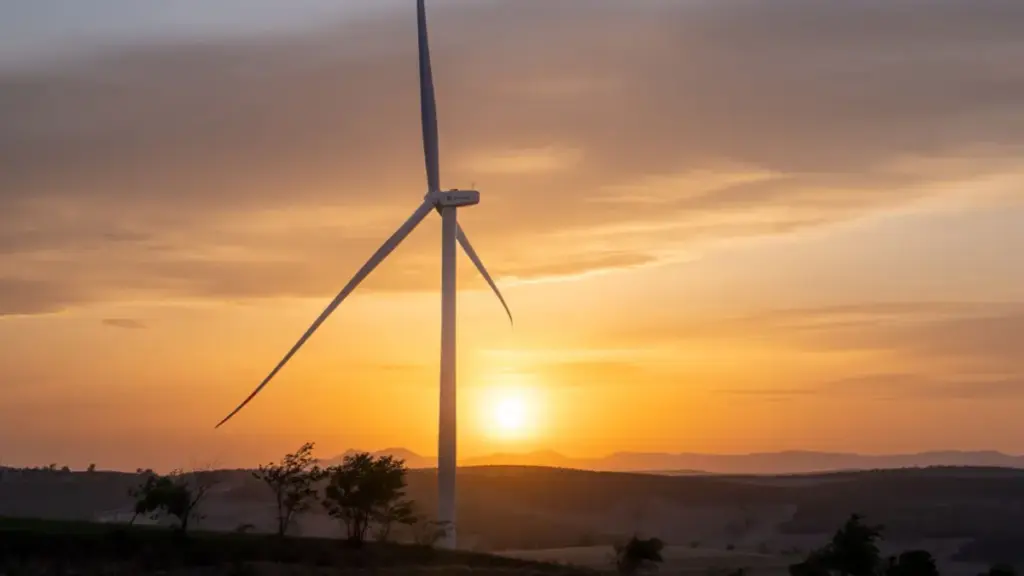
- 100+ Gigawatts: The cumulative global wind power capacity installed by Envision Energy, a renewables titan making its second appearance on the MIT Technology Review watch list.
- 50+ Gigawatt-Hours: Envision’s global footprint in battery energy storage systems. Beyond its domestic market—home to the world’s largest and most complex electrical grid—Envision is rapidly deploying capital and projects across Germany, Brazil, Australia, and Vietnam.
- 824 Watt-Hours per Kilogram: A groundbreaking laboratory energy density milestone achieved by battery innovator WeLion New Energy. This figure represents more than three times the energy density of standard commercial lithium-ion batteries currently powering electric vehicles. While scaling lab results remains notoriously difficult, WeLion is actively bridging the gap by deploying semi-solid-state cells designed to accelerate market entry while drastically improving range and safety.
2. Big Tech and the Data Center Power Demand
The hyper-growth of artificial intelligence has put tech titans on a collision course with grid constraints. Consequently, two-thirds of the US-based companies featured on the 2026 list have secured critical backing from major technology corporations:
- Fervo Energy: By employing horizontal drilling and hydraulic fracturing techniques borrowed from the oil and gas sector, Fervo is unlocking baseload, next-generation geothermal energy. Backed by fresh capital from its $2.2 billion IPO, the company aims to bring 1 gigawatt of geothermal power online by the end of 2030.
- X-energy: This advanced nuclear developer is constructing helium-cooled small modular reactors (SMRs). X-energy is currently collaborating with Amazon on a 320-megawatt reactor cluster in Richland, Washington, while also securing industrial decarbonization deals with chemical giant Dow to deploy SMRs at industrial plants in the early 2030s.
3. Record-Breaking Energy Storage Deployments
- 30 Gigawatt-Hours: The staggering scale of an upcoming energy storage project spearheaded by Form Energy and funded to power a massive Google data center. Utilizing iron-air chemistry for cheap, multi-day long-duration energy storage (LDES), this initiative is on track to become the world’s largest battery project by capacity, with phased deployment slated between 2028 and 2031.
- 30+ Gigawatt-Hours of Global Pipeline: Energy Dome’s projected global footprint for its proprietary carbon dioxide-based energy storage systems. By compressing $textCO_2$ to store grid energy at durations exceeding 10 hours—outperforming lithium-ion on both cost and longevity—Energy Dome has rapidly evolved since its pre-commercial days in 2022. This includes a landmark partnership with Google in Ireland scheduled to come online in 2028.
- 1 Million EV Batteries: The estimated volume of electric vehicle batteries projected to reach the end of their primary automotive life by 2030. Vancouver-based Moment Energy is capitalizing on this impending wave by repurposing these retired packs into containerized backup power units for the grid.
Official Insights & Industry Perspectives
While the commercial metrics are impressive, industry analysts emphasize that the human and strategic elements of these technological shifts are equally vital.
Reflecting on China’s persistent dominance, energy analysts note:
"Forgive me—I know I’ve made this point before. Feel free to call me Captain Obvious. But I think China’s dominance in energy technology is a global trend that bears repeated mentioning."
The reality is that Chinese firms are not merely manufacturing at volume; they are pushing the boundaries of material science. The race toward commercial solid-state and semi-solid-state batteries—championed by giants and startups alike—promises to eliminate consumer anxieties regarding EV range and thermal safety, rewriting the rules of personal and commercial transportation.
Domestically in the United States, the convergence of heavy industry, technology conglomerates, and novel power generation has created an unorthodox alignment of interests. As noted by energy observers tracking the data center boom:
"Technologies that can provide consistent power are in high demand."
This demand has elevated alternative baseload solutions like advanced geothermal (Fervo) and fourth-generation nuclear fission (X-energy) from academic curiosities to prized corporate assets. Similarly, non-lithium storage chemistry pioneers like Form Energy and Energy Dome demonstrate that solving the intermittency of wind and solar is no longer a distant theoretical puzzle, but an engineered reality backed by multi-billion-dollar corporate contracts.
Future Outlook: Navigating the Road to 2030 and Beyond
As the global community looks past 2026 toward the critical 2030 climate milestones, the trajectory of energy technology offers both profound hope and sobering caution.
The companies highlighted in this year’s MIT Technology Review list are not silver bullets; rather, they are structural waypoints. The coming years will test whether laboratory breakthroughs—such as WeLion’s ultra-high-density battery cells—can successfully survive the treacherous valley of death between pilot manufacturing and giga-scale mass production.
Furthermore, regulatory frameworks, transmission line buildouts, and international trade policies will dictate how quickly innovations like X-energy’s SMRs or Moment Energy’s repurposed EV battery containers can be integrated into legacy grids.
Despite the inevitable economic headwinds, market volatility, and geopolitical friction that characterize the modern clean tech sector, the sheer momentum of these enterprises proves one thing: the architectural blueprint of the future global energy system is actively being drawn today. Through relentless innovation in storage, generation, and material efficiency, these companies are continuously nudging the world in the right direction.
This reporting draws from ongoing coverage featured in The Spark, the weekly climate and energy newsletter produced by the MIT Technology Review editorial team.



