Executive Overview
The American biogas sector stands at a critical juncture, characterized by steady consolidation, technological diversification, and evolving regulatory and market incentives. According to a landmark report released by the American Biogas Council (ABC), wastewater treatment plants (WWTPs) continue to serve as the bedrock of the nation’s anaerobic digestion infrastructure, commanding nearly half of the total installed market share. While traditional energy generation remains a core application, a broader operational evolution is underway. Industry leaders are increasingly pivoting toward renewable natural gas (RNG) upgrading, combined heat and power (CHP) configurations, and multi-feedstock co-digestion to extract maximum environmental and economic value from organic waste streams.
Simultaneously, prominent players across the private sector—including Montauk Renewables, Waga Energy, and Opal Fuels—are aggressively expanding their project portfolios. From multimillion-dollar swine waste ventures in North Carolina to expansive landfill-gas-to-energy and CNG fueling stations in California and the Midwest, the biogas economy is maturing rapidly. This expansion occurs against a backdrop of shifting carbon credit markets, fluctuating Renewable Identification Number (RIN) values, and a growing strategic emphasis on diversified end uses as major waste operators approach the completion of their initial landfill-gas-to-RNG commitments.
Detailed Chronology: September 2026 Industry Developments
The month of September 2026 marked a period of robust activity, regulatory milestones, and strategic partnerships across the renewable gas and waste-to-energy landscape.
Mid-September: Montauk Renewables Opens Major Swine Waste Facility
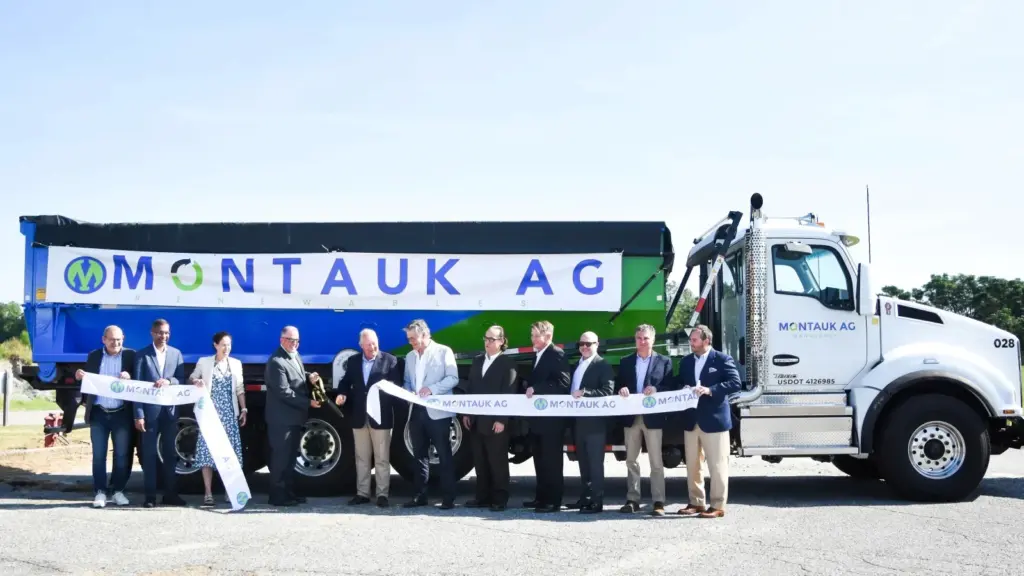
On September 15, 2026, executives from Montauk Renewables, alongside local government officials, celebrated the formal opening of a cutting-edge anaerobic digestion facility in Turkey, North Carolina. Representing a substantial $200 million investment by Montauk, the project is engineered to capture and harvest methane from regional swine manure, transforming agricultural waste into utility-scale electricity.
According to statements from Montauk Renewables CEO Sean McClain, the facility is backed by long-term supply agreements spanning more than 80 individual farming locations in the region. Furthermore, the operational framework includes a 10-year power purchase agreement to monetize the generated electricity, alongside a secondary accord with Duke Energy to offload approximately one-third of the renewable energy certificates (RECs) produced by the site. Industry disclosures indicate that the facility is projected to yield up to 41 megawatt-hours of electrical power annually at maximum operational capacity, while simultaneously generating roughly 870 tons of high-grade organic fertilizer as a value-added agricultural byproduct. This launch complements Montauk’s broader financial momentum, which saw second-quarter revenues climb 19.7% year-over-year to reach $54 million, supported by a 3% uptick in quarterly RNG production.
Mid-September: Waga Energy Secures LRS Partnership in Illinois
On September 15, Waga Energy—the French RNG developer backed by private equity—announced a significant infrastructure agreement with Lake Shore Recycling Systems (LRS). Under the terms of the deal, LRS selected Waga to design, construct, own, and operate a state-of-the-art RNG production facility at the Eco-Hill Landfill. Located in Atkinson, Illinois, the Eco-Hill site serves as LRS’s sole landfill property and plays a critical waste management role for the greater Chicago metropolitan area.
The planned facility is engineered with an initial processing capacity of 3,000 standard cubic feet per minute (scfm), with projections indicating it will yield up to 610,000 million British thermal units (mmBtus) of pipeline-quality RNG annually once operational. Under their collaborative framework, LRS will secure an ongoing revenue share derived from the commercial sale of the on-site RNG. Construction is currently underway, with the facility slated to come online in 2028.
Early September: Waga Energy and Casella Waste Systems Expand Partnership in Pennsylvania
Earlier in the month, on September 3, Waga Energy and Casella Waste Systems jointly announced a major operational milestone: the successful startup of their third collaborative landfill gas project. Situated at Casella’s McKean Landfill in Mount Jewett, Pennsylvania, the facility is designed to process 2,000 scfm of raw landfill gas. At peak operational run rates, the installation is expected to produce up to 407,000 mmBtus of RNG annually.
Production scaling and facility ramping are actively underway. This project anchors a broader strategic alliance between Casella and Waga that encompasses three distinct landfill sites. Under the partnership model, Waga assumes full capital expenditure responsibility for construction while retaining ownership and operational oversight for a 20-year term, with all gross revenues from RNG sales shared equitably between the two corporations.
Mid-September: Opal Fuels Solidifies California Portfolio
Opal Fuels made significant strategic announcements regarding its western U.S. operations during September. On September 16, the company announced a five-year contract renewal with the City of San Diego to continue operating its long-standing landfill-gas-to-energy project at the Miramar Landfill. Operating continuously since 1998, the Miramar facility generates approximately 400,000 megawatt-hours of electricity annually, providing a reliable source of baseload renewable power for the municipal grid.
This municipal renewal followed on the heels of an August-into-September operational upgrade completed at Opal’s compressed natural gas (CNG) fueling station in Goshen, California. Following comprehensive facility renovations, Opal expanded the station’s capacity by 1.7 million gasoline gallon equivalents (GGE) annually, integrating high-purity RNG into the fueling supply. Having acquired the Goshen site in 2025, Opal has poured $52.7 million into its broader project development portfolio through the first half of 2026, helping offset minor fluctuations in periodic corporate earnings.
Supporting Context & Metrics: The American Biogas Council 2026 Report
The release of the American Biogas Council’s updated wastewater report provides a critical macroscopic view of the industry’s structural foundation. Wastewater treatment facilities remain the undisputed backbone of the North American biogas sector, operating roughly 47% of all active anaerobic digesters across the United States.
The ABC report highlights steady, incremental growth within the municipal sector, noting that 29 new wastewater-based anaerobic digestion facilities have come online nationwide since 2020, bringing the total tally of active municipal digester plants to 1,213. Despite this dominance, the report emphasizes that massive untapped potential remains. Industry analysts generally classify municipal wastewater plants as prime candidates for anaerobic digestion when their daily influent flow rates exceed 1 million gallons per day (MGD). Presently, only about 24% of qualifying facilities nationwide operate functional digesters. Bringing the remaining three-quarters of eligible plants online would drastically expand national biogas production capacity.
"Our survey shows there are opportunities to do more — by expanding anaerobic digestion where it makes sense and getting more value from the digesters already in place," noted ABC Executive Director Patrick Serfass.
Environmental, Energy, and Financial Metrics
Quantifying the scale of municipal biogas recovery reveals both current achievements and future potential:
- Current Capture Volume: Existing wastewater digesters collectively capture more than 100 billion cubic feet of biogas annually.
- Untapped Potential: The ABC estimates that widespread adoption across all qualifying facilities could unlock an additional 70 billion cubic feet of biogas per year.
- Technological Shift: Since 2018, municipal facilities have increasingly moved beyond basic flare or standard electricity generation. Newer or retrofitted installations routinely incorporate advanced gas-upgrading equipment to produce pipeline-grade RNG, deploy high-efficiency combined heat and power (CHP) systems, or engage in multi-feedstock co-digestion—processing high-strength organic wastes alongside municipal sewage sludge to boost methane yields.
Carbon and Environmental Credit Benchmarks (As of October 7, 2026)
Market participants rely heavily on environmental attribute pricing to finance capital-intensive biogas and RNG projects. According to market data from the EcoEngineers Carbon Market Snapshot, regulatory credit values exhibited distinct trends entering the final quarter of 2026:
- D3 RIN Prices (Cellulosic Biofuel): Trading at $2.294, representing a modest contraction from $2.380 in 2025. Despite the slight year-over-year dip, D3 RINs continue to provide robust underlying economic support for RNG producers injecting gas into natural gas vehicle supply chains.
- D5 RIN Prices (Advanced Biofuel): Registering at $2.085, experiencing a marginal increase from $2.060 in 2025.
- Oregon Clean Fuels Program (CFP): Priced at $81 per metric ton of carbon dioxide equivalent ($/MT CO2e). Oregon’s clean fuel standards continue to incentivize regional low-carbon fuel producers and waste-to-energy operators.
- California Low Carbon Fuel Standard (LCFS): Priced at $88 per metric ton of carbon dioxide equivalent ($/MT CO2e). California’s LCFS remains one of the primary financial drivers for nationwide RNG projects, dictating project economics for entities like Opal Fuels, Montauk Renewables, and Waga Energy operating within or supplying the California transportation fuel market.
Official Statements and Industry Insights
The convergence of municipal infrastructure reports and private-sector project completions underscores a broader strategic philosophy taking root across the biogas industry. Industry leaders are no longer viewing anaerobic digestion merely as a waste-stabilization or regulatory-compliance obligation; rather, they are treating it as an advanced chemical manufacturing and energy-recovery process.
Patrick Serfass of the American Biogas Council emphasized that the marginal gains achieved since 2020 point toward a necessary evolution in asset management. "Getting more value from the digesters already in place is just as vital as breaking ground on new facilities," Serfass remarked, pointing to the co-digestion of food waste and industrial organics within municipal wastewater infrastructure as a primary vehicle for boosting operational margins.
Corporate executives leading the market share charge echo this sentiment of optimized asset utilization. Sean McClain of Montauk Renewables highlighted the symbiotic relationship between agricultural producers and renewable energy developers during the unveiling of the Turkey, North Carolina swine waste project. By securing long-term supply pacts across more than 80 agricultural sites, Montauk has mitigated feedstock volatility—a historical hurdle in agricultural biogas generation—while simultaneously providing regional farmers with reliable manure management and valuable organic fertilizer alternatives.
Similarly, the execution models championed by Waga Energy and Opal Fuels validate the shift toward outsourced, capital-backed project development. By funding, constructing, and operating proprietary upgrading facilities directly on host utility or waste management properties (such as LRS’s Eco-Hill Landfill and Casella’s McKean Landfill), developers remove the capital expenditure burden from municipal and regional waste operators while ensuring long-term, revenue-sharing agreements that benefit all participating stakeholders.
Future Outlook: Transitioning Toward Diversified End Uses
As the biogas industry looks toward the horizon, the strategic focus is undergoing a profound transformation. Major waste management corporations that spearheaded early capital expenditures to fulfill initial landfill-gas-to-RNG commitments are now reaching completion milestones on those legacy projects. This transition marks the end of the "low-hanging fruit" phase of landfill gas capture and ushers in a more sophisticated operational era.
Moving forward, the industry’s growth trajectory will rely on three key pillars:
- Penetrating the Underserved Municipal Market: With only 24% of qualifying wastewater treatment plants currently operating anaerobic digesters, an immense runway exists for engineering firms, project developers, and municipal leaders to unlock 70 billion cubic feet of currently flared or vented biogas. Capitalizing on this potential will require innovative public-private partnerships (PPPs) and streamlined project financing structures.
- Diversification of End Uses: While heavy-duty transportation fuel (CNG/RNG) has dominated commercial monetization strategies via LCFS and RIN credits, developers are increasingly exploring alternative offtake agreements. These include localized combined heat and power (CHP) microgrids, direct industrial manufacturing utilization, green hydrogen production integration, and the generation of high-value organic soil amendments.
- Advanced Co-Digestion and Feedstock Integration: To maximize methane potential and improve return on investment, existing wastewater and agricultural digesters are rapidly expanding their operational capabilities to accept high-strength organic waste (HSOW)—such as commercial food waste, grease trap waste, and beverage processing byproducts. This multi-feedstock approach not only boosts overall gas production volumes but also allows facilities to capture lucrative tipping fees from commercial generators seeking diversion pathways away from landfills.
Ultimately, the American biogas sector has transitioned from an experimental niche into a cornerstone of the circular economy. Backed by mature technologies, robust environmental credit frameworks, and an expansive pipeline of municipal and private projects, the industry is exceptionally well-positioned to drive decarbonization across the waste, agricultural, and transportation sectors for decades to come.