Executive Overview
To the casual observer, making a cup of tea is a deceptively simple enterprise: boil water, drop in a bag or infuser, steep, and serve. Yet, for true aficionados and culinary purists, this three-step summary glosses over the fundamental chemistry that transforms a soothing elixir into a bitter, astringent disappointment. The difference between a delicate green tea gently warmed to 175°F and one aggressively scalded by a rolling 212°F boil is immediate, discernible, and entirely avoidable.
Water temperature is the secret variable in tea extraction. Different botanical profiles—encompassing varying ratios of catechins, tannins, and amino acids—require specific thermal thresholds to release their ideal flavor notes and aromatic compounds. Standard, boil-only kettles strip away this crucial control, leaving consumers to either rush their pours or wait impatiently for scalding water to cool.
Beyond flavor optimization, material safety has emerged as a paramount concern in modern kitchenware. The prevalence of plastic components in low-cost and mid-tier electric kettles has raised valid health questions. Repeated exposure to boiling water can accelerate the leaching of synthetic compounds, contributing to the broader ecological and physiological footprint of micro- and nanoplastics in drinking water.
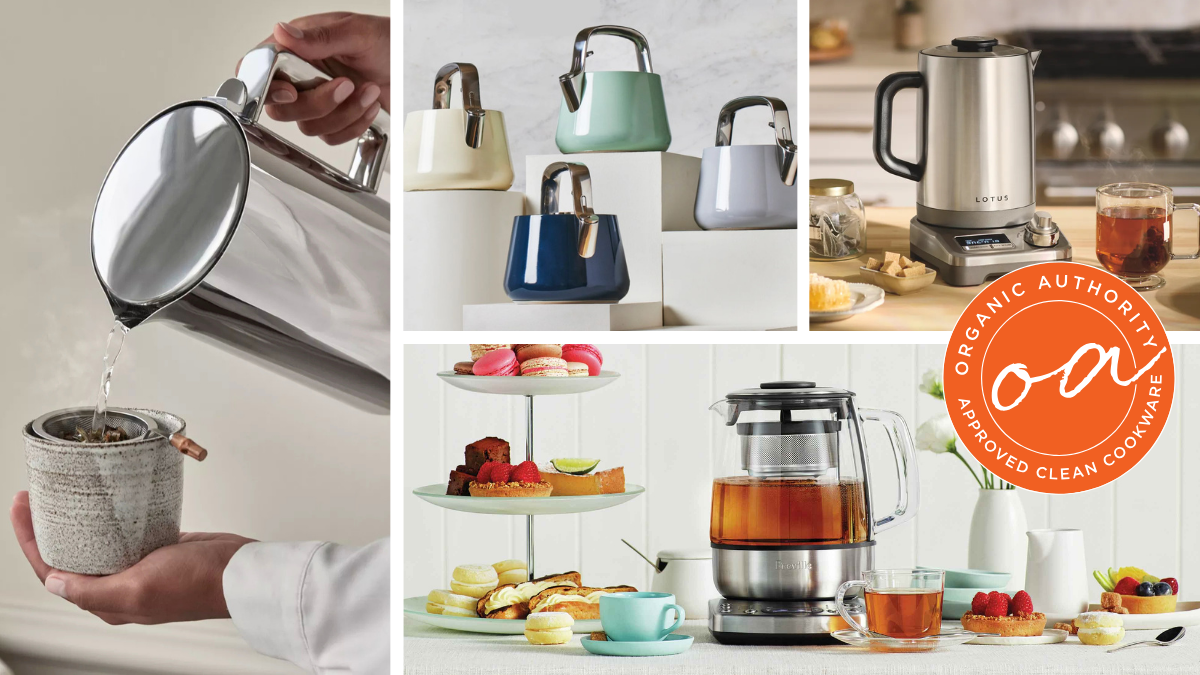
To help consumers navigate this complex landscape, our testing studio evaluated top-tier kettles across categories ranging from non-toxic stovetop models to fully automated precision machines. Whether you prioritize minimalist Scandinavian design, precise digital temperature controls, or hands-free automated steeping, this comprehensive report highlights the four best tea kettles currently available on the market.
Detailed Chronology: The Evolution of Tea Preparation Technology
The historical trajectory of boiling water for tea spans centuries, moving from crude cast-iron cauldrons over open flames to sophisticated countertop appliances equipped with microprocessors and digital interfaces.
The Stovetop Era
For generations, the tea kettle was defined by simplicity. Stovetop models—crafted from copper, cast iron, enamel, or stainless steel—relied entirely on external heat sources. The primary technological innovation during this prolonged era was the acoustic steam whistle, a clever mechanical device designed to alert cooks when water reached a rolling boil at 212°F. While durable and aesthetically timeless, these traditional kettles offered zero thermal control. Brewing delicate white or green teas required culinary guesswork, kitchen thermometers, or the tedious method of boiling water and waiting blindly for it to cool.
The Rise of the Electric On/Off Kettle
The mid-to-late 20th century introduced electric resistance coils embedded within standalone appliance bases. This shifted the burden of heating away from stovetops, drastically reducing boil times and introducing rudimentary automatic shut-off switches to prevent dry boiling. However, these early electric iterations maintained the binary nature of their stovetop predecessors: they were designed strictly to switch on, bring water to a boil, and shut off.
The Precision Temperature Revolution
The modern era of tea and coffee preparation is characterized by micro-control. Recognizing that specialty teas (and pour-over coffees) demand exact temperature thresholds, manufacturers began integrating digital thermostats, heating elements with variable wattage outputs, and insulated double-wall carafes. Today’s advanced electric kettles allow users to dial in exact temperatures—often down to the single degree—or select preset profiles optimized for specific tea families. The pinnacle of this evolution is represented by fully automated systems that not only heat water to precise metrics but actively manage steep times and mechanical extraction, fundamentally altering the domestic tea-drinking ritual.
Supporting Context & Metrics: Chemistry, Materials, and Model Evaluation
To understand why upgrading your kettle matters, one must examine the intersection of food science and consumer health.
The Science of Thermal Extraction
Every variety of Camellia sinensis, as well as herbal tisanes, contains complex organic compounds that react differently to thermal energy:
- Green and White Teas: Rich in delicate catechins and amino acids like L-theanine. When exposed to boiling water (212°F), these compounds break down too rapidly, releasing harsh tannins that result in an overly bitter, astringent taste. Optimal brewing ranges from 160°F to 185°F preserve a clean, grassy sweetness.
- Oolong Teas: Requiring a middle-ground temperature between 190°F and 200°F, oolongs balance floral aromatics with deeper body, necessitating moderate thermal energy to unfurl tightly rolled leaves.
- Black and Herbal Teas: Robust, fully oxidized leaves and dense herbal roots require a near or full boil (200°F to 212°F) to unlock their complete, assertive flavor profiles.
The Material Safety Imperative
Kitchen gadgetry is often judged by speed and convenience, but material integrity is equally critical. Inexpensive electric kettles frequently incorporate hidden plastic components—such as internal water-level windows, silicone seals, spout linings, or plastic inner lids.
Scientific studies increasingly link high-heat environments to the degradation of polymers. When water is brought to a boil in direct contact with degraded or low-grade plastics, the rate of chemical migration accelerates. Research published in environmental and toxicological journals confirms that boiling water in plastic-lined vessels can shed microscopic and nanoscopic plastic particles into beverages. Consequently, our evaluations heavily favor models featuring all-stainless steel, glass, or ceramic-coated interiors that ensure zero prolonged plastic-to-water contact.
Comprehensive Model Comparison
| Kettle | Type | Material Safety | Capacity | Temperature Control | Key Features | Price |
|---|---|---|---|---|---|---|
| Aarke Stainless Steel Kettle | Electric | All-stainless steel interior; no plastic water contact | 1.2 liters | Preset temperature settings | Double-wall insulation, quiet boil, memory function, removable limescale filter | $250 |
| Caraway Tea Kettle | Stovetop | Ceramic-coated stainless steel exterior; no PFAS, PTFE, or PFOA | 2 quarts | No variable control | Single-tone whistle, induction compatible, ergonomic handle | $195 |
| Lotus Purist Precision Temperature Kettle | Electric | Double-wall stainless steel; no plastic water contact | 1.5 liters | Presets and adjustable control (95°F–212°F) | Tea presets, Keep Warm mode, thermal carafe, cool-touch exterior | $299.95 |
| Breville Tea Maker | Electric tea maker | Glass and stainless steel construction; plastic parts in tea brewing basket | 51 oz (no insert) / 41 oz (with insert) | Automatic tea-specific presets and manual control | Auto-lowering tea basket, brew strength control, Delay Start, Keep Warm | $329.95 |
Official Statements & Detailed Product Analysis
Our testing protocol, conducted across diverse household settings, assessed each kettle on material safety, thermal accuracy, ergonomics, capacity, and speed. Below is the detailed breakdown of our top four selections.
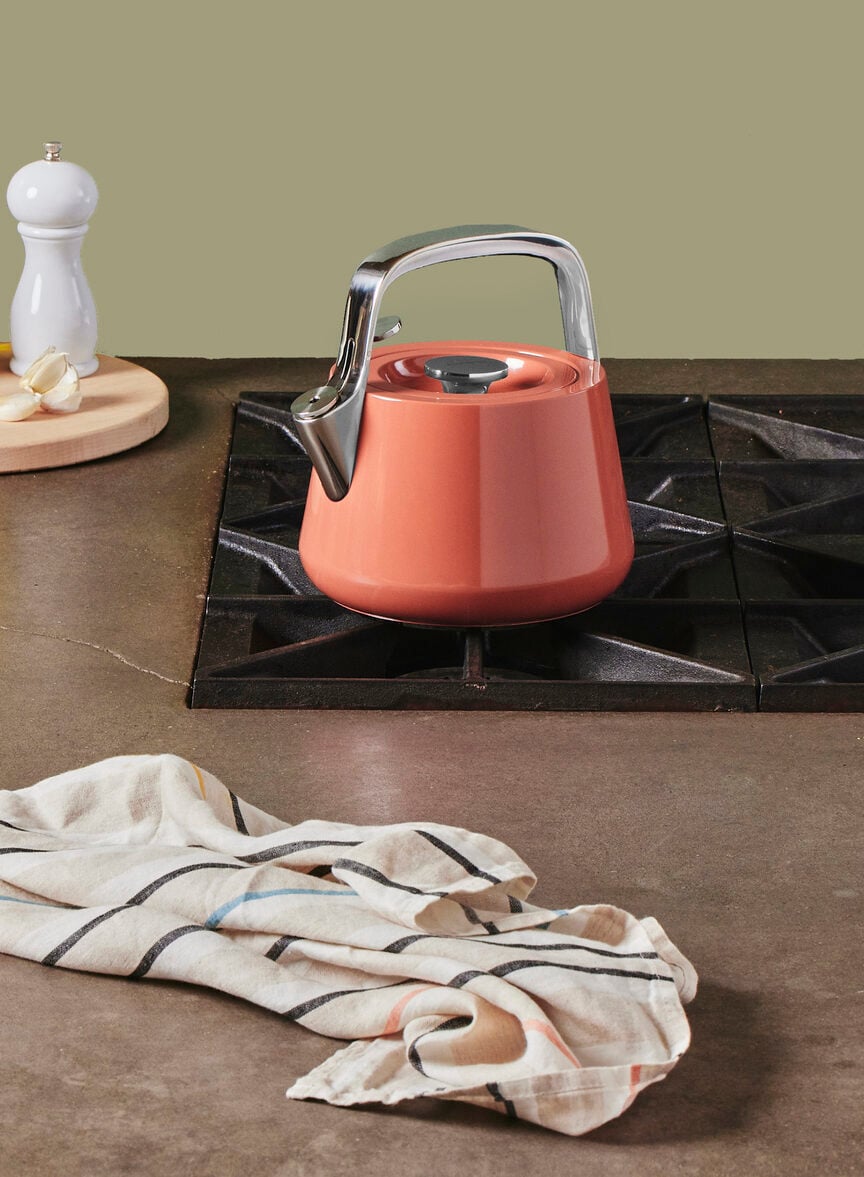
1. Caraway Tea Kettle: Best Non-Toxic Stovetop Option
For consumers who reject digital complexity in favor of timeless physical craftsmanship, the Caraway Tea Kettle stands out as an exceptional statement piece.
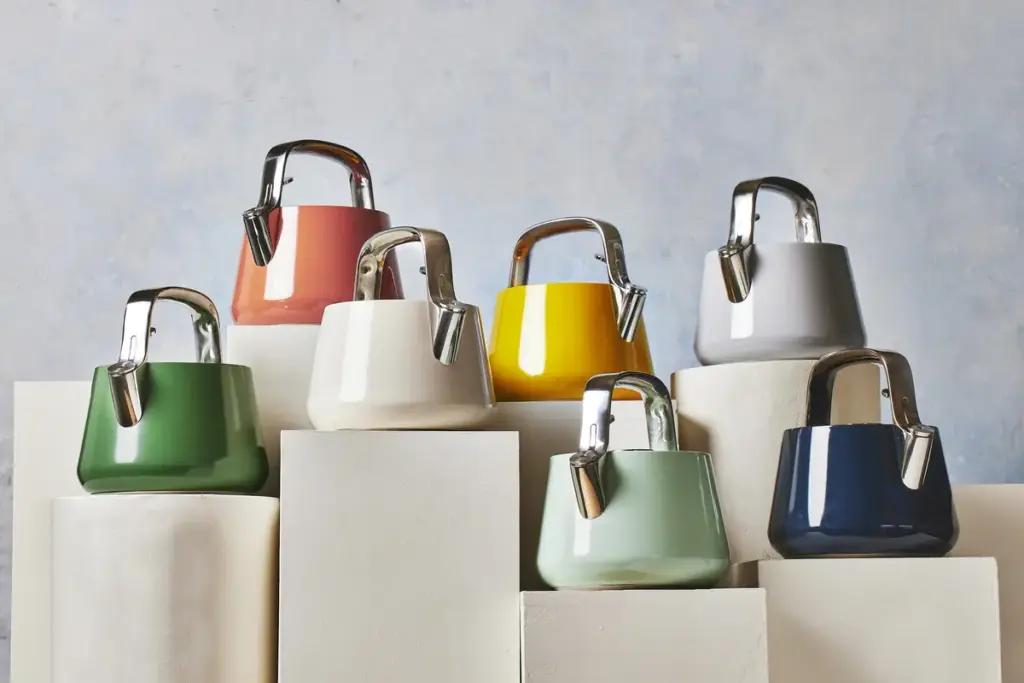
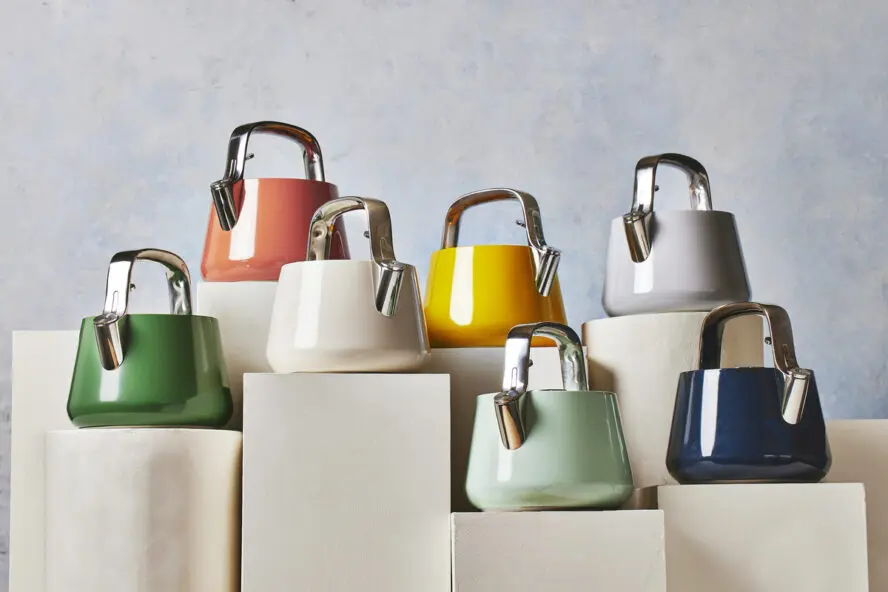
- Design & Materials: Boasting a minimalist silhouette and a fully stainless steel interior coated with a non-toxic ceramic finish, this stovetop model is completely free of BPA, PTFE, PFOA, and PFAS. Your water never makes contact with synthetic plastics. It is compatible with all stovetops, including induction, and is offered in an array of nine striking ceramic colorways, ranging from classic neutrals to vibrant sage and marigold.
- Performance: When water reaches a rolling boil, the kettle emits a mild, single-tone whistle that alerts the user without causing sensory alarm. With a generous two-quart capacity capable of producing up to eight cups, it doubles efficiently as a rapid boiler for pasta water.
- Expert Verdict: While it lacks precision temperature controls—making it less ideal for dedicated green tea purists or pour-over coffee aficionados who require exact thermal drops—its aesthetic appeal, large capacity, and pristine material safety make it a stellar traditional choice. (Exclusive Organic Authority discount: Save 10% using code 10organicauthority).
2. Lotus Purist Precision Temperature Kettle: Best for Pro Tea Drinkers
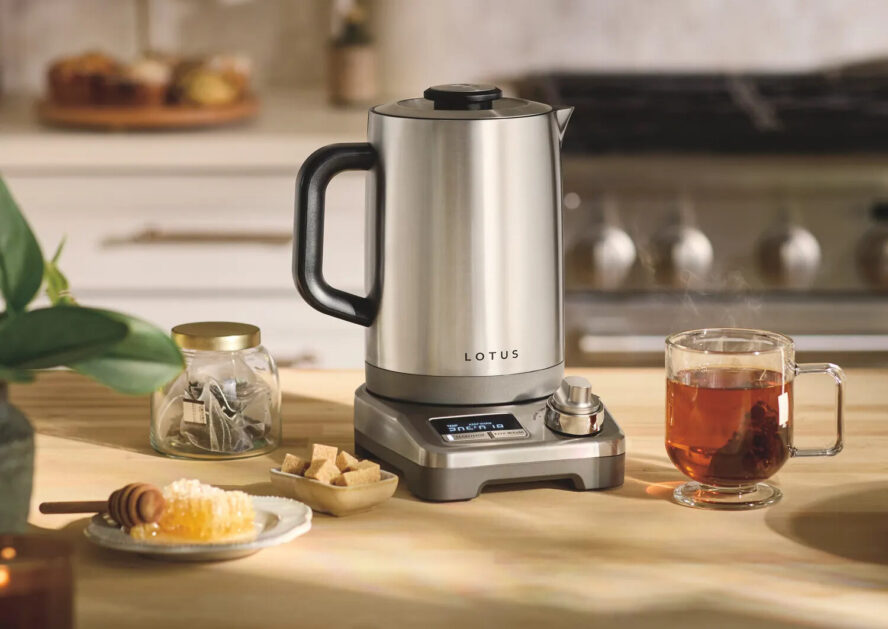
Representing a massive leap forward from standard on/off electric appliances, the Lotus Purist Precision Temperature Kettle bridges the gap between commercial-grade performance and home kitchen utility.
- Design & Materials: Constructed with an all-stainless steel, double-walled carafe, the Lotus guarantees that water touches only inert metal. The fully detachable lid accommodates a standard bottle brush, making interior maintenance effortless.
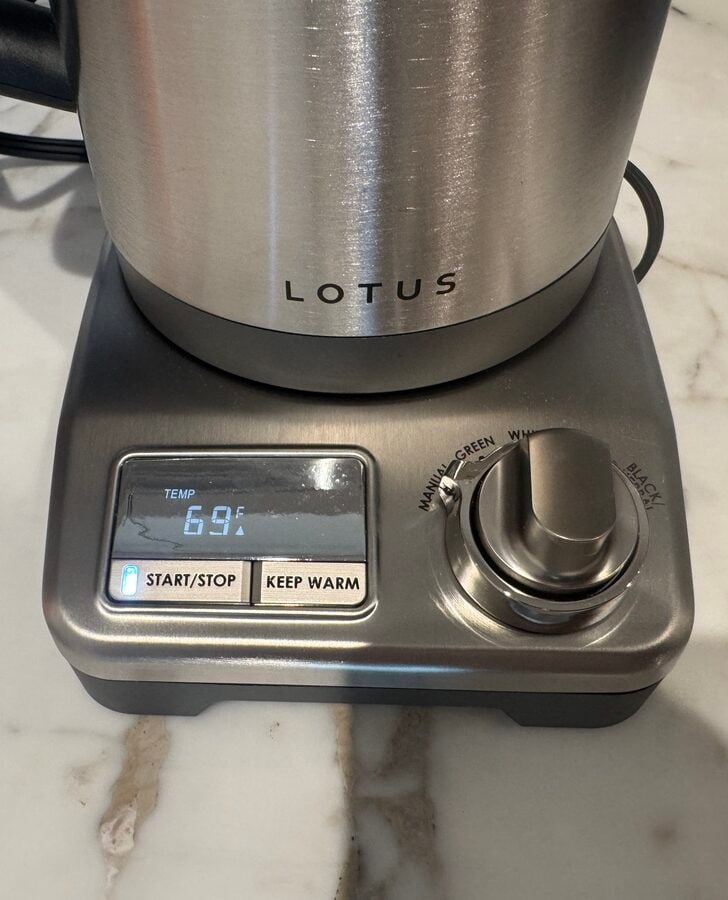
- Performance: The base features an intuitive digital display and rotary dial. Users can choose from helpful preset programs tailored for green, white, oolong, and black or herbal teas, or manually dial in precise temperatures ranging from 95°F to 212°F. A "Keep Warm" mode maintains thermal stability over extended periods, while an automatic dry-boil shut-off ensures safety.
- Expert Verdict: Holding up to 1.5 liters (roughly six cups), the Lotus excels in versatility. Its double-walled exterior stays cool to the touch during operation. The only minor critique from testers involves the audibility of its completion beeps, which may feel sharp in an otherwise quiet kitchen.
3. Breville Tea Maker: Best Full Automation
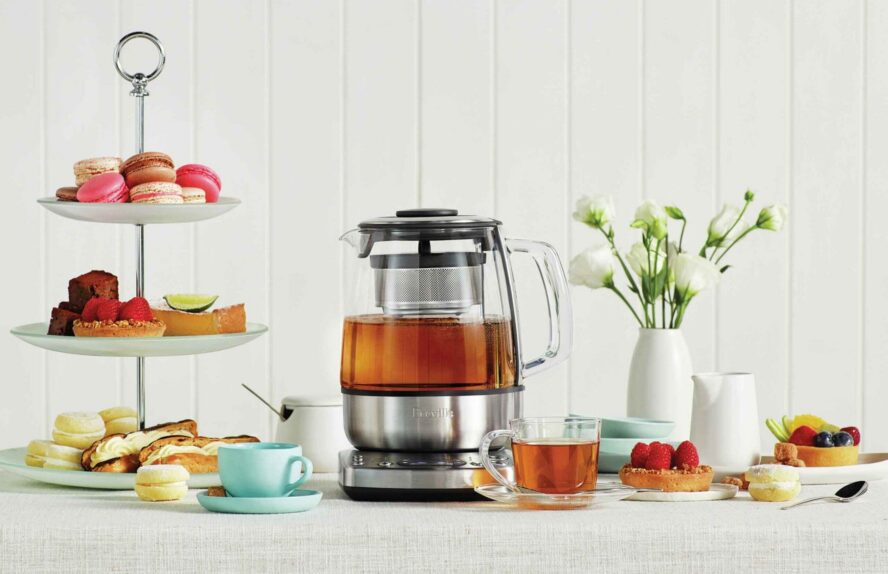
For the dedicated, high-volume tea drinker seeking ultimate efficiency and hands-off perfection, the Breville Tea Maker is in a league of its own.
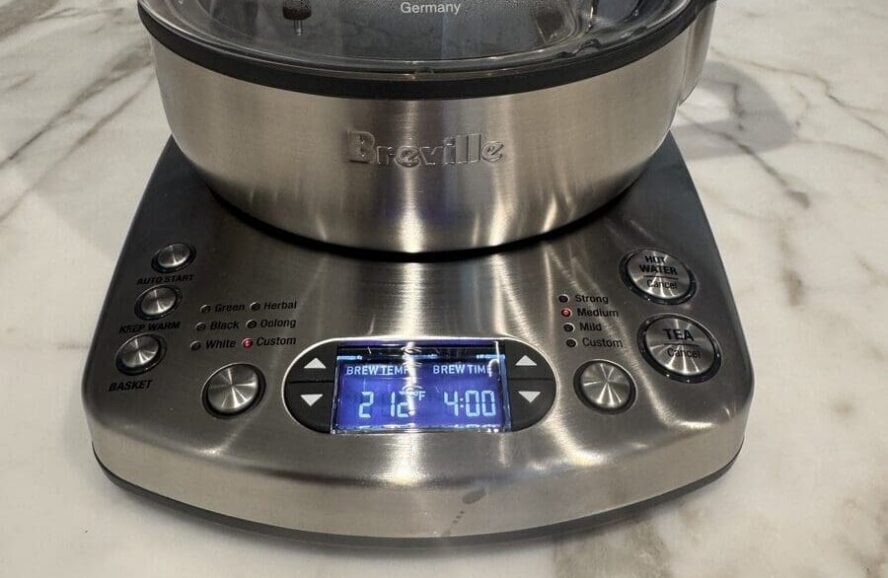
- Design & Materials: Built around a durable German-engineered glass pitcher paired with a stainless steel housing, this appliance integrates a motorized brewing basket directly into the heating column.
- Performance: Users load loose-leaf tea into the removable basket and select a preset program for green, white, black, herbal, or oolong varieties. The machine heats the water to the optimal temperature, lowers the basket automatically to steep the leaves for a precise duration, and then lifts the basket out of the water to halt extraction entirely. This completely eliminates the risk of over-steeping or bitter chemical breakdown.
- Expert Verdict: Though it occupies a larger countertop footprint and carries a premium price tag, the Breville transforms tea preparation into a seamless science. Features like Delay Start and adjustable brew strength make it an invaluable tool for morning efficiency.
4. Aarke Kettle: Best Overall Design
Balancing sophisticated Scandinavian aesthetics with practical functionality, the Aarke Kettle delivers a premium user experience from top to bottom.
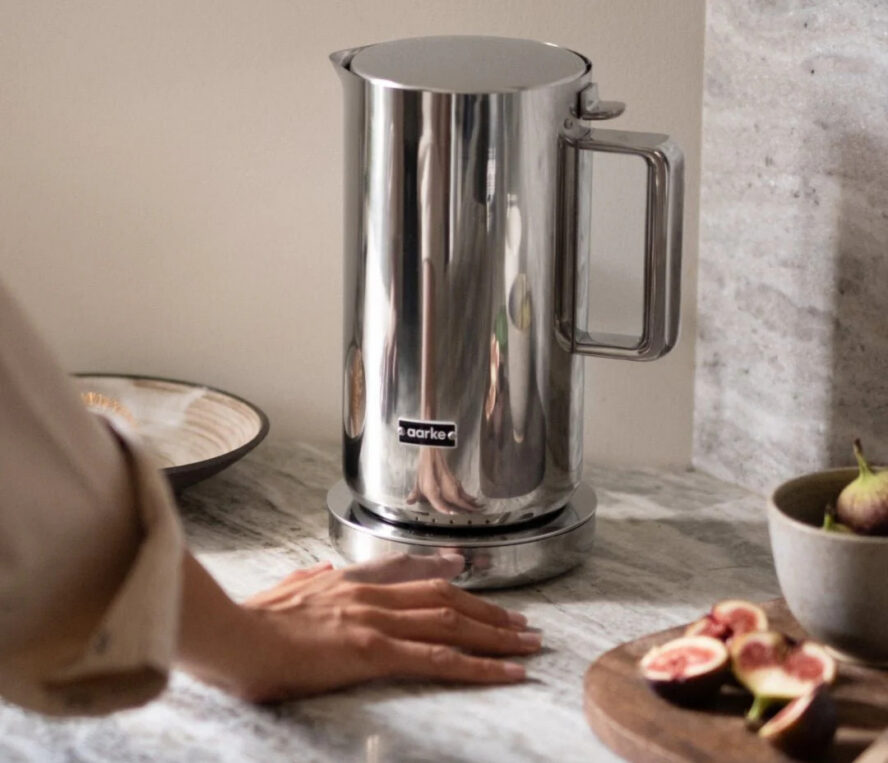
- Design & Materials: The double-wall stainless steel pitcher retains internal heat exceptionally well while keeping the exterior safe to touch. Available in finishes like matte black, stainless steel, and sand, it complements high-end kitchen interiors seamlessly.
- Performance: Operating as a streamlined hybrid between a basic boiler and a full precision unit, the Aarke features five targeted temperature presets (104°F, 170°F, 185°F, 200°F, and 212°F). Filled to its maximum 1.2-liter capacity, it achieves a full boil in approximately three minutes.
- Expert Verdict: Its compact footprint, quiet operation, and removable limescale filter make it a reliable, elegant daily driver for households that appreciate clean design paired with functional thermal choices.
Future Outlook: What Lies Ahead for Kitchen Thermal Appliances
As consumer awareness surrounding health, sustainability, and culinary precision continues to mature, the trajectory of tea kettle manufacturing is shifting toward even greater transparency and integration.
Industry analysts predict several key trends shaping the next generation of kettle design:
- Total Elimination of Polymers: Consumer demand for zero-plastic pathways will likely push manufacturers to eliminate silicone gaskets and plastic water-level gauges entirely, standardizing all-glass, ceramic, and medical-grade stainless steel assemblies.
- Smart Home Integration: Following the broader trend of Internet of Things (IoT) kitchen appliances, future electric kettles will feature advanced Wi-Fi and Bluetooth connectivity, allowing users to program custom temperature curves, schedule brewing cycles via smartphone applications, and monitor energy consumption in real time.
- Energy Efficiency and Rapid Induction: With energy costs fluctuating globally, electric base designs will increasingly focus on rapid thermal transfer technologies, reducing wattage consumption while shortening boil times.
Ultimately, whether you select the artisanal charm of a ceramic-coated stovetop model like the Caraway or the micro-engineered precision of the Breville Tea Maker, investing in a high-quality kettle pays immediate dividends in flavor, safety, and everyday culinary satisfaction.