Executive Overview
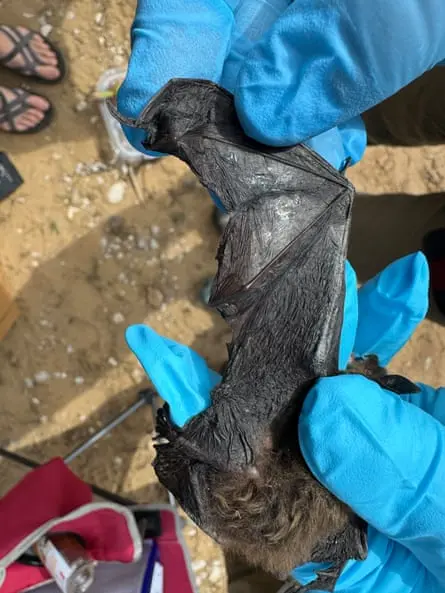
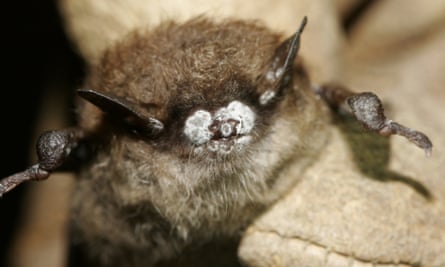
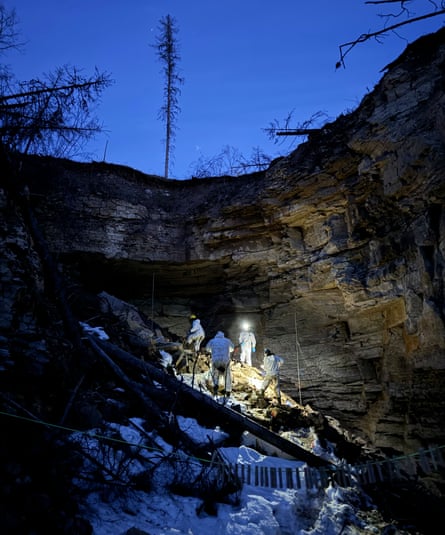
Deep within the subterranean limestone passages of the Canadian Northwest Territories, a silent, microscopic devastation has crossed a grim ecological frontier. In May, researchers crawling through a remote cave system near Fort Smith—situated a mere 450 miles south of the Arctic Circle—made a discovery that wildlife biologists have dreaded for two decades. They found a lifeless bat draped in a spindly, ghostly white fungus, alongside a living specimen whose forearms were already heavily colonized by the pathogen.
This discovery marks the northernmost documented detection of Pseudogymnoascus destructans (Pd), the deadly fungus responsible for white-nose syndrome (WNS). Over the past twenty years, this fungal scourge has swept inexorably westward and northward across North America. Originating in New York state in 2007—likely introduced inadvertently on the footwear of an international caver—the disease has devastated North American ecosystems, wiping out an estimated 6.7 million bats. Species such as the little brown myotis (Myotis lucifugus) and the northern long-eared myotis (Myotis septentrionalis) have experienced catastrophic population collapses of up to 90% to 99% in infected cave systems.
The arrival of WNS at the doorstep of the Arctic raises urgent, existential questions for northern biodiversity. Until now, scientists held out faint hope that sub-arctic extremes might act as a natural barrier against the pathogen. Instead, the disease’s rapid, unrelenting march northward has outpaced expectations, catching regional biologists mid-preparation as they scrambled to establish baseline population metrics.
Compounding this biological crisis is a secondary catastrophe: the devastating 2023 boreal wildfires that scorched the surrounding landscape into a wasteland of ash and charred timber. As bats wake from hibernation, they face a fragmented, resource-poor landscape, forcing them to navigate unprecedented ecological hurdles. With scientists racing against time to deploy experimental probiotic treatments and assess survival rates, the coming winter will determine whether some of Canada’s most resilient northern bat populations can withstand the ultimate trial.

Detailed Chronology: Twenty Years of Continental Spread
To understand the gravity of the Fort Smith discovery, one must trace the relentless progression of white-nose syndrome across the North American continent over the past two decades.
- 2006–2007: The crisis begins quietly in Howe Cave, near Albany, New York. Cavers notice unusual numbers of bats flying during daylight hours in the dead of winter, their muzzles covered in a powdery white substance. Subsequent scientific investigations identify the culprit as Pseudogymnoascus destructans, a psychrophilic (cold-loving) fungus uniquely adapted to thrive in the chilly, humid environments where bats hibernate.
- 2008–2014: The pathogen explodes across the northeastern United States and into eastern Canada. Mortality rates in infected hibernacula routinely exceed 90%. Iconic subterranean ecosystems are reduced from bustling colonies of thousands of mammals to quiet tombs strewn with skeletal remains.
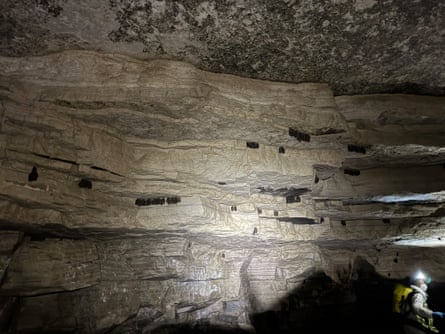
- 2010: A breakthrough occurs in Canada’s Northwest Territories. During an aerial survey, a wildlife technician spots a unique karst geological feature near Fort Smith—sinkholes and limestone fissures signaling an underground network of caves. Subsequent ground explorations confirm the location of an 11-chambered cave system serving as a massive winter hibernaculum for an estimated 3,000 bats. This discovery solves a long-standing ecological mystery regarding where northern species ride out the sub-zero winter.
- 2011–2016: Ecologist Jesika Reimer launches postgraduate research at the Fort Smith caves, studying the physiological adaptations that allow northern bats to survive in extreme latitudes. Meanwhile, WNS leaps across the Great Plains and the Mississippi River, establishing footholds in the American Midwest and southeastern Canada.
- 2023: A catastrophic wildfire season hits Canada’s Northwest Territories. Massive blazes sweep through the boreal forests surrounding Fort Smith, reducing the landscape to charred "matchsticks" and obliterating critical old-growth forest canopies used by bats for summer roosting and foraging.
- 2025: The fungus breaches Alberta’s Rocky Mountains, appearing in a cave system near Fort McKay—roughly 200 miles south of Fort Smith. Wildlife officials brace for a multi-year window to conduct baseline health surveys before the pathogen arrives in the territories.
- May 2026: Biologists Jesika Reimer and Joanna Wilson enter the Fort Smith caves to conduct scheduled monitoring. Instead of healthy baseline populations, they discover dead and living bats riddled with Pd. Laboratory tests confirm the presence of white-nose syndrome, officially establishing it in the northernmost-known hibernaculum on the continent.
Supporting Context & Metrics: The Science of Survival and Destruction
The mechanics of white-nose syndrome are as physiologically complex as they are lethal. Understanding why Pseudogymnoascus destructans is so devastating requires examining the delicate balance of mammalian hibernation.
How the Pathogen Operates
During normal hibernation, a bat’s body temperature plummets, its heart rate drops to mere beats per minute, and its metabolic rate slows to conserve precious fat reserves accumulated during the autumn foraging season. These fat stores are meticulously calculated to sustain the animal through months of deep sleep until spring insect hatches resume.
When Pseudogymnoascus destructans infects a hibernating bat, it targets delicate, hairless tissues—specifically the wing membranes, ears, and muzzle. The fungus grows microscopic root-like structures that invade living tissue, causing severe irritation and necrosis.
To combat the infection, the bat’s immune system triggers brief arousals from torpor to groom and warm its body. Each time a bat wakes up, it burns an astronomical amount of energy. Over a winter plagued by WNS, infected bats cycle through premature arousals repeatedly, exhausting their lipid reserves weeks before spring arrives. Driven by intense thirst caused by physiological degradation, they often wake entirely, fly out into freezing winter conditions in broad daylight, and ultimately succumb to starvation, dehydration, or wing tissue failure.
Species Vulnerability Breakdown
- Little Brown Myotis (Myotis lucifugus): Once one of the most common bats in North America, this species has experienced upwards of 90% mortality rates in infected cave systems. However, recent evolutionary tracking shows glimmering signs of hope: some surviving populations are beginning to demonstrate genetic adaptations, altering their metabolic rates to burn less fat and better tolerate the fungal burden.
- Northern Long-Eared Myotis (Myotis septentrionalis): Weighing a mere 6 to 9 grams, this small-bodied species lacks the substantial fat reserves of larger bats. With historical mortality rates reaching an alarming 99% in affected ranges, researchers fear local or functional extinction in the wake of the northern invasion.
- Big Brown Bats (Eptesicus fuscus): Generally larger and possessing greater mass and energetic buffers, these bats show higher resilience to the syndrome, though they still serve as carriers.
Environmental Modifiers: Cold Latitudes and Wildfire Fallout
Interestingly, researchers are cautiously exploring whether sub-arctic temperatures might alter the trajectory of the disease. While the fungus thrives optimally at around 10°C (50°F), some chambers of the Fort Smith caves drop below freezing during the deep northern winter. While Pd can persist in sub-zero conditions, its growth rate may be suppressed, potentially slowing the devastating tissue necrosis seen further south.
However, this potential climatic buffer is severely undermined by the ecological fallout of the 2023 wildfires. The complete destruction of forest cover around the caves forces bats to fly significantly further to locate scarce food sources, decaying trees for summer roosts, and mates. Furthermore, scientists theorize that the fires may have displaced northern bats southward, causing them to mingle with Pd-infected populations in Alberta before returning home to seed the northern caves.
Official Statements and Expert Insights
The confirmation of white-nose syndrome in the Northwest Territories has prompted candid, urgent assessments from the scientific community on the front lines of conservation.
"For 20 years, we’ve been tracking the spread of white-nose syndrome across the continent. We always knew it would eventually get here, but the speed of its arrival has completely caught us off guard."
— Joanna Wilson, Wildlife Biologist, Government of the Northwest Territories
Reflecting on the grim reality inside the subterranean chambers, ecologist Jesika Reimer described the clinical presentation of the infected animals:
"We found a lifeless bat on a limestone ledge, its body covered in a spindly white fungus. When we shone our headlamps to get a closer look, another bat hissed at us and crawled back into a crack. Its wings were as brittle as tissue paper—riddled with necrosis where living tissue was actively dying."
Regarding the ecological prognosis for the region’s smallest residents, Reimer warns:
"If it hits the northern long-eared myotis as hard as it has elsewhere in their range, we can expect them to completely disappear from the ecosystem."
On the management front, Wilson emphasizes the careful calculus researchers face when weighing intervention:
"We might see different outcomes in these northern caves. Regarding experimental probiotic treatments, we see it as a treatment option that has a very good chance of helping and very little chance of harm. But right now, we are left with more questions than answers about whether and how we should intervene."
Future Outlook: Mitigation, Probiotics, and the Road Ahead
As the long northern winter settles over the boreal forest, the scientific community is shifting from passive observation to active intervention strategies.
The Promise of Microbiome Probiotics
One of the most promising avenues of hope comes from the laboratory. Researchers at McMaster University in Ontario have isolated beneficial microbes native to the skin and wing microbiomes of healthy bats. These microbes possess natural anti-fungal properties capable of inhibiting the growth of Pseudogymnoascus destructans.
By cultivating these beneficial bacteria into an experimental "probiotic cocktail" and applying them to summer roosts, scientists have observed that the substance transfers naturally from bat to bat. Early field trials conducted in British Columbia and Washington state suggest that bats carrying higher concentrations of probiotic microbes suffer significantly lower fungal loads when exposed to Pd. Conservationists are now evaluating how—or if—such biological defenses can be safely scaled to protect vulnerable northern populations before the fungus claims entire colonies.
The Spring Reckoning
Ultimately, the fate of the Northwest Territories’ bat populations remains suspended in a delicate balance. Whether the extreme sub-arctic climate will grant these mammals an unexpected physiological reprieve, or whether the combined pressures of fungal necrosis and post-wildfire habitat loss will overwhelm them, will not be known until the snow thaws.
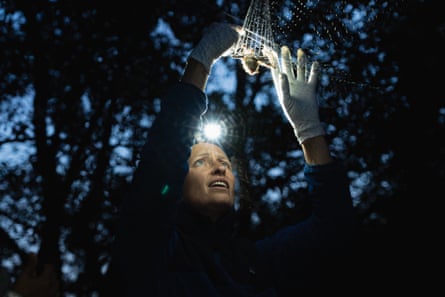
In May, Reimer and Wilson plan to return to the remote limestone caves near Fort Smith. Armed with mist nets, ultraviolet lights, and cautious optimism, they will descend once more into the dark to check the status of the hibernating survivors. Until then, the fragile inhabitants of the northernmost caves face a silent battle for survival at the edge of the world.