On a crisp Wednesday evening, millions across the United Kingdom turned their eyes toward the heavens to witness the most dramatic solar eclipse visible from British soil since August 1999. Beginning shortly after 18:00 BST, the two-hour celestial spectacle transformed evening twilight across Scotland, obscuring up to 95% of the Sun as the Moon crossed its path.
While parts of Spain and Portugal experienced the profound totality of a total solar eclipse, Scotland’s position within the lunar shadow created a deeply atmospheric deep-partial eclipse. For roughly 120 minutes, standard dusk was accelerated and altered. Temperatures dropped, coastal breezes turned biting, and an eerie, muted hush fell over crowded beaches, wind farms, and historic hilltops.
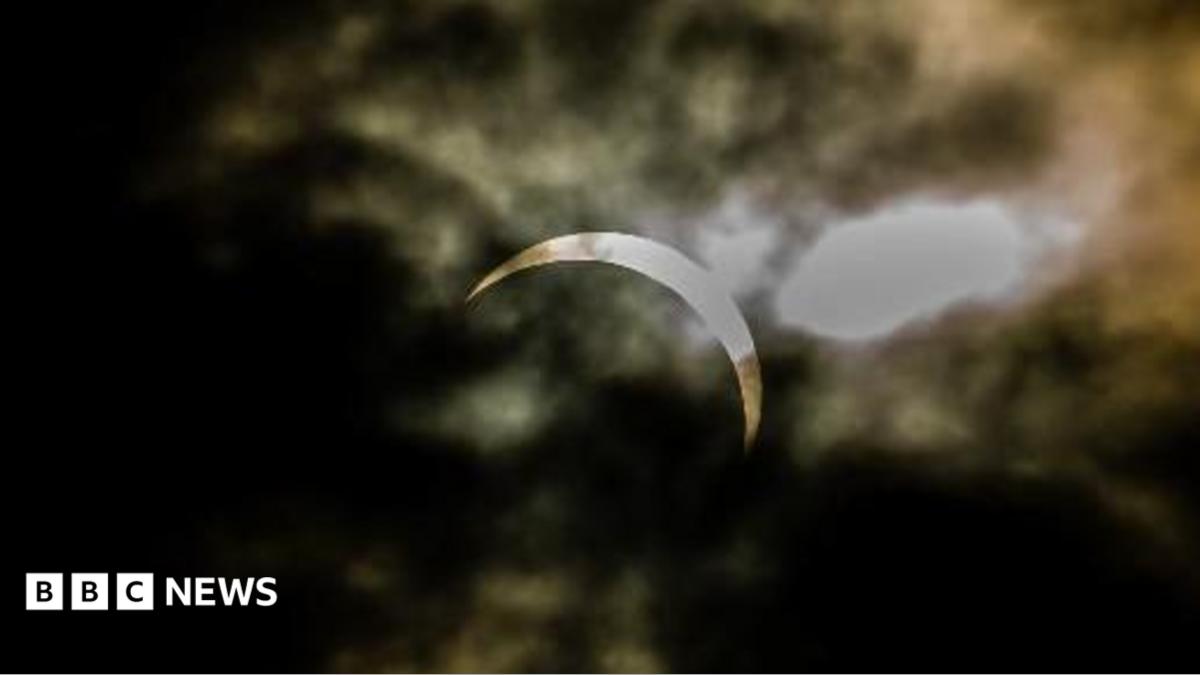
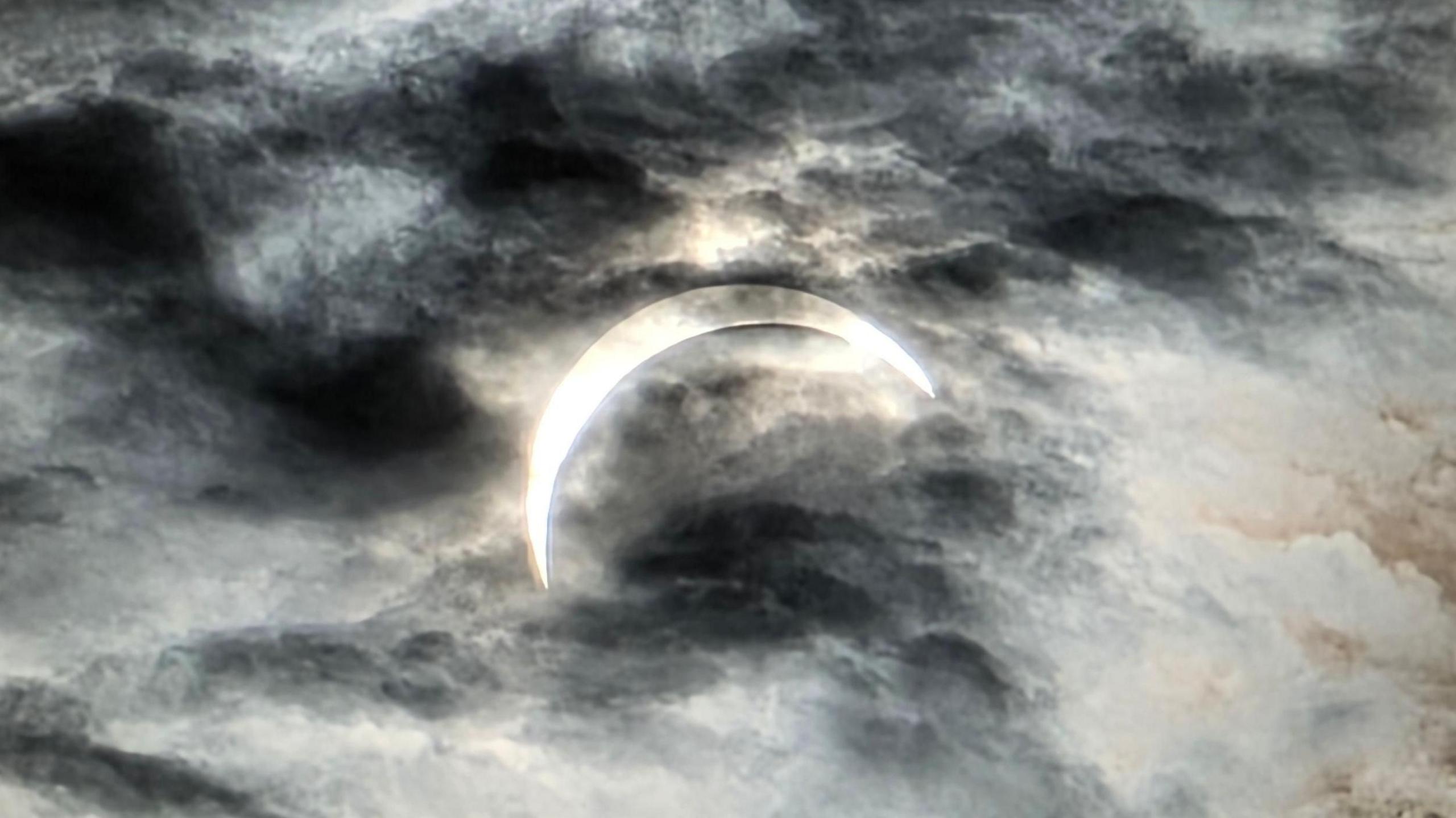
However, the path to astronomical wonder was not entirely unhindered. Heavy, persistent cloud cover threatened to ruin the experience for thousands of eager skygazers. Yet, nature delivered moments of theatrical redemption. Across regions from the windswept islands of Orkney to the urban vantage points of Edinburgh and Glasgow, timely breaks in the cloud cover offered breathtaking, ephemeral glimpses of a razor-thin solar crescent framing the dark silhouette of the Moon.
For many, the event transcended mere science, turning into a communal celebration of the cosmos. Parks, hillsides, and coastal promenades filled with record crowds—some of whom altered international travel plans simply to bear witness. As experts note that the next total solar eclipse will not grace UK skies until September 23, 2090, Wednesday evening’s event secured its place as a generational milestone in British amateur astronomy.
Detailed Chronology: A Two-Hour Cosmic Dance
The unfolding of Wednesday’s solar eclipse followed a precise, celestial choreography that captivated astronomers and casual observers alike.
Phase One: The Onset (18:00 – 18:45 BST)
The cosmic alignment commenced just moments after 18:00 BST. At this preliminary stage, the Moon began its subtle encroachment on the western edge of the solar disk. For early observers, however, the immediate impression was one of frustration. Heavy, low-slung cloud cover—characteristic of a volatile Scottish spring evening—blanketed much of the country, rendering the initial bite of the lunar shadow virtually invisible to naked-eye observers.
Despite the visual obscurity, subtle environmental shifts began to manifest. Meteorologists and observers on the ground reported an immediate, albeit gradual, dampening of ambient light levels.
Phase Two: The Deep Partial Peak (19:00 – 20:00 BST)
As the clock ticked toward 19:00 BST, the eclipse entered its most dramatic phase. Up to 95% of the Sun’s fiery surface was systematically consumed by the advancing lunar disk across Scottish latitudes.
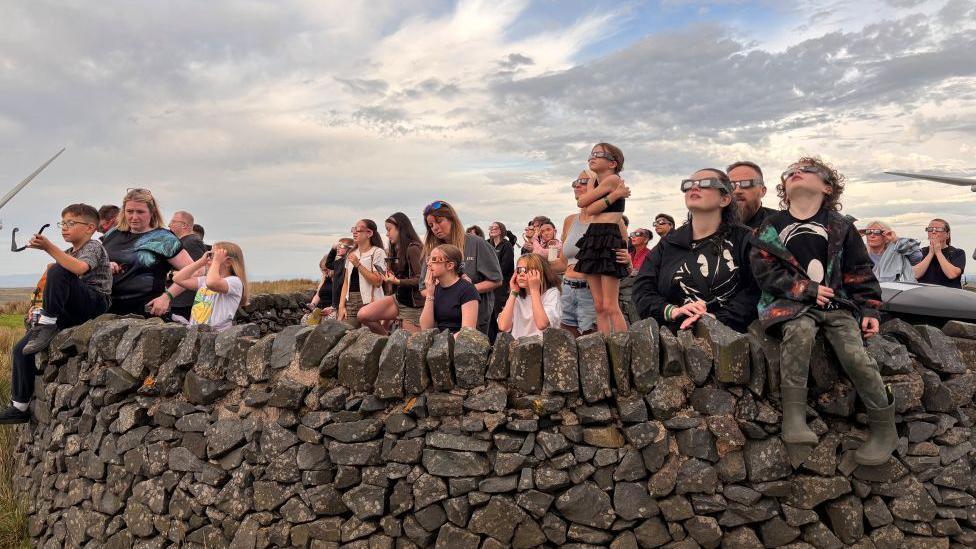
It was during this critical window that the weather patterns began to cooperate in select regions. At Whitelee Windfarm in East Renfrewshire, where roughly 60 people had gathered in anticipation, the dense cloud deck miraculously fractured around 19:00 BST. A brilliant, razor-thin sliver of the Sun broke through from behind the dark lunar body, prompting audible gasps and spontaneous applause from the shivering crowd.
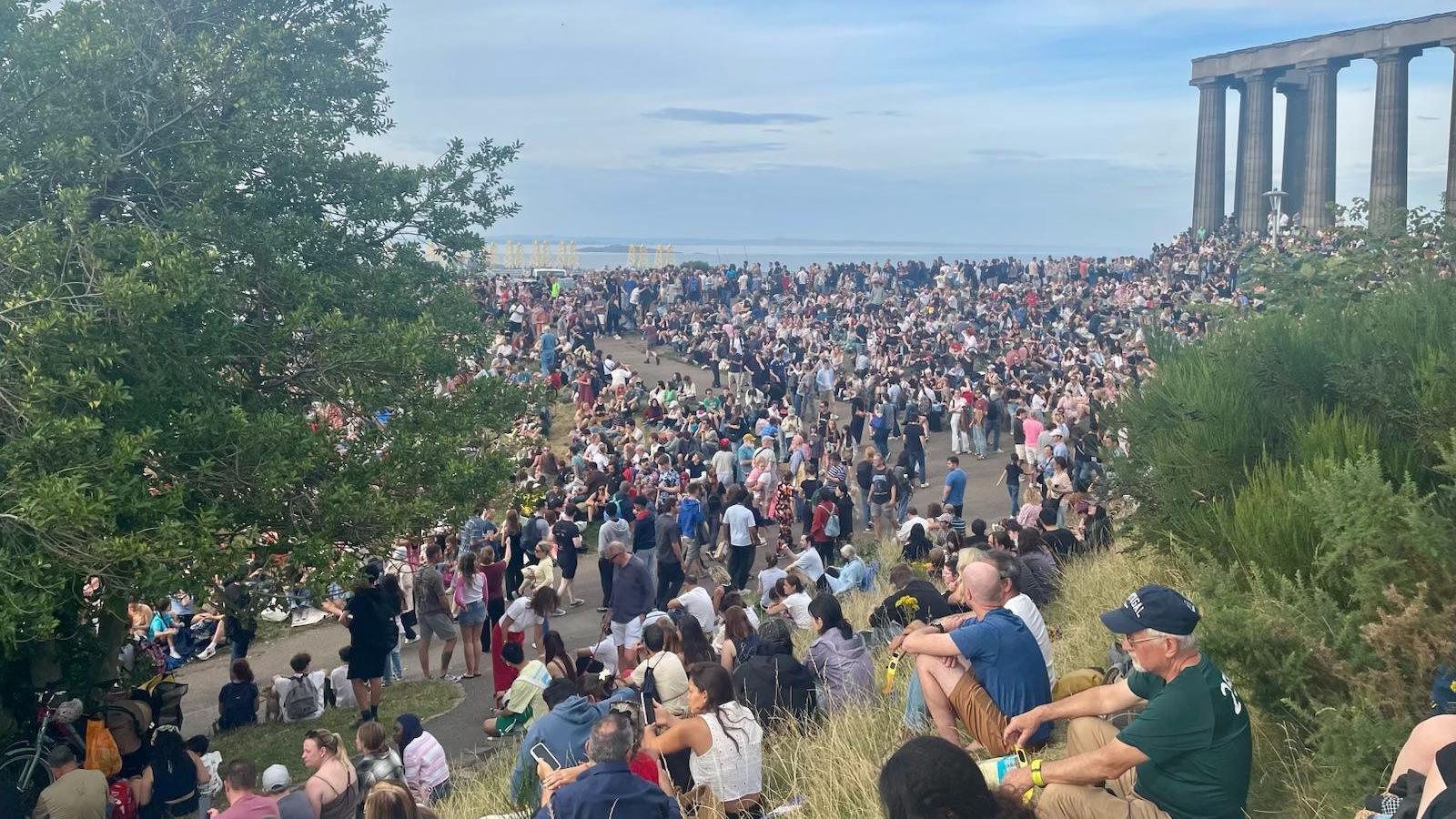
Similar dramatic breaks occurred along the east coast. On Edinburgh’s iconic Calton Hill, a massive gathering watched as a heavy cloudbank momentarily swallowed the sun whole, only to part dramatically just ahead of the maximum eclipse phase. The sudden revelation of the crescent sun sparked a rolling cheer through the hundreds of gathered spectators, transforming the hill into a festival of astronomical appreciation.
Phase Three: The Descent to Sunset (20:00 – 21:00 BST)
As the eclipse progressed past its peak, the Sun, now heavily occluded, began its final descent toward the western horizon. The dual phenomena of a setting sun and a progressing solar eclipse created a surreal, prolonged twilight. By approximately 21:00 BST, the Sun dipped below the horizon, bringing an official end to the celestial event while leaving observers talking of little else long into the night.
Supporting Context & Metrics: Weather, Geography, and Demographics
To truly understand the public reception of Wednesday’s eclipse, one must examine the meteorological and geographical variables that dictated who saw what.
+--------------------------------------------------------------------------+
|                        SOLAR ECLIPSE QUICK FACTS                         |
+--------------------------+-----------------------------------------------+
| Date of Event            | Wednesday Evening                             |
| Duration                 | ~2 Hours (18:00 – 21:00 BST)                  |
| Maximum Obscuration      | Up to 95% across Scotland                     |
| Previous UK Milestone    | August 1999 (Total Solar Eclipse)             |
| Next UK Total Eclipse    | September 23, 2090                            |
+--------------------------+-----------------------------------------------+
The Battle Between East and West
Meteorological forecasts ahead of the event had correctly identified that western coastal locations offered the most unobstructed geometric views of the horizon where the sunset eclipse would occur. Consequently, public hotspots like Ayr Beach and elevated rural plateaus like Whitelee Windfarm drew substantial crowds.
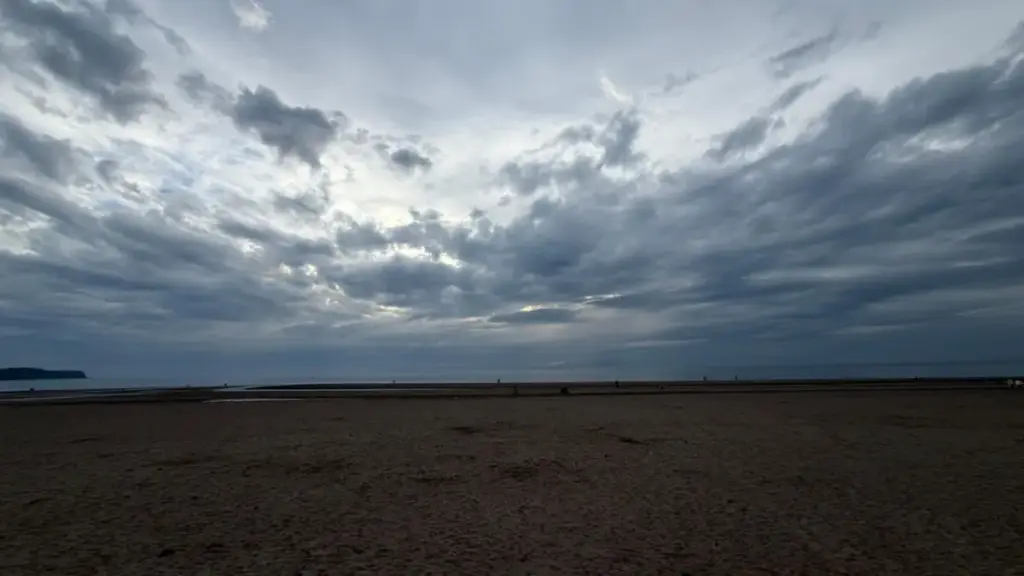
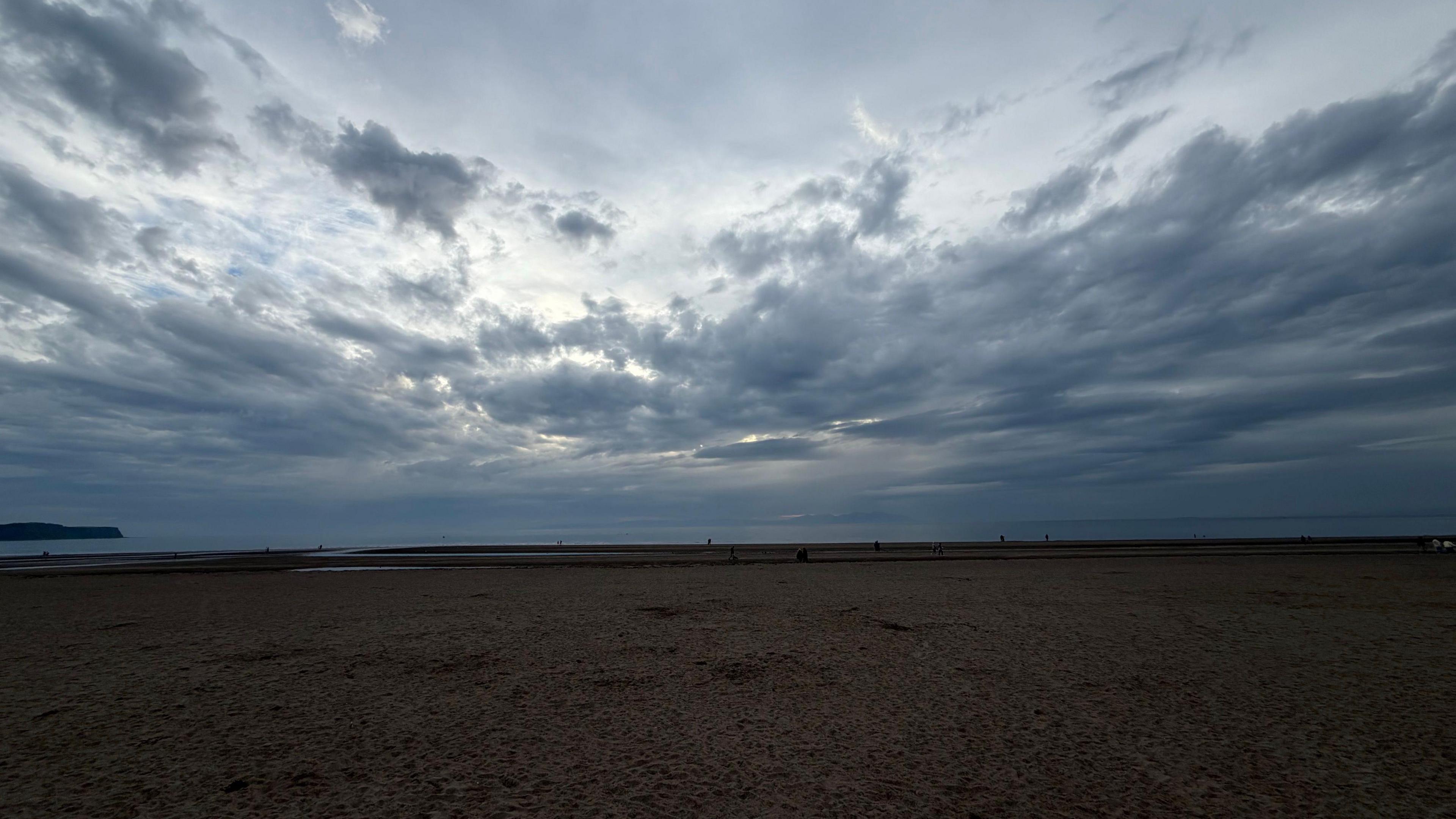
Ironically, while the west coast offered ideal geographic positioning, it bore the brunt of the coastal marine layer and cloud cover. At Ayr Beach, dozens of hopeful skygazers equipped with specialized eyewear walked away with a sense of meteorological disappointment. While they experienced the visceral atmospheric drops in temperature and light, the thick cloud cover largely protected its secrets, offering only fleeting, seconds-long glimpses of the cosmic machinery overhead.
Conversely, eastern locations—traditionally viewed as secondary options—benefited from favorable clearing trends. Edinburgh, Dundee, and various points across Aberdeenshire and the Highlands enjoyed much sharper visibility windows.
Micro-Climates and Regional Highlights
The Far North & Orkney: Benefiting from thinner cloud layers, observers in Orkney, Dornoch, and Stonehaven captured some of the sharpest, most striking photographic evidence of the partial eclipse, showcasing the glowing horns of the solar crescent piercing through high-altitude haze.
The Central Belt: Urban centers like Glasgow and Edinburgh experienced a polarized event. While Glasgow’s outskirts at Whitelee fought heavy overcast skies, Edinburgh’s Calton Hill became a focal point of triumph, where hundreds witnessed the urban skyline silhouetted against a darkened, bruised sky.
Official Statements and Public Reactions
The profound cultural and emotional impact of the eclipse was mirrored in the statements of scientific bodies and the animated reactions of everyday citizens who altered their lives to catch the view.
The Scientific Perspective
Neil Martin, president of the Astronomical Society of Edinburgh, encapsulated the sentiment of the scientific community while standing amidst the massive crowds on Calton Hill. Describing the vista unfolding across the historic capital, Martin remarked:
"It’s pretty incredible. You never get bored of this view—watching the scale of the solar system play out directly above human history is a humbling reminder of our place in the universe."
Eyewitness Accounts and Extreme Dedication
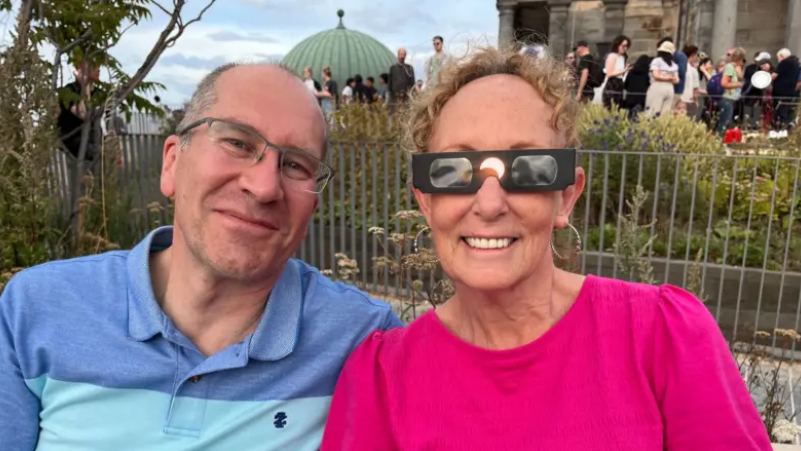
The allure of the eclipse drew people from far beyond Scotland’s borders, leading to extraordinary displays of travel choreography. Among the thousands on Calton Hill were American tourists Sandy and Nick Burgoyne. The couple had spent a week in Edinburgh enjoying local theatrical productions and were originally scheduled to board a flight back to the United States on Wednesday morning.
Recognizing the historical weight of the event, the couple made the executive decision to delay their flights home. Stationed above the Edinburgh skyline, they watched the moon bite into the sun. Afterward, they confirmed that the Scottish vista vastly outperformed the eclipse they had witnessed in New York in April 2024, declaring the delayed travel plans to be "well worth it."
Not all encounters were triumphant, however. At Ayr Beach, where the atmospheric gloom proved stubborn, the mood among the disappointed public was captured succinctly by one local beachgoer who lamented:
"The cloud just wasn’t on our side tonight, but feeling the air turn cold and the light drain out of the world was an experience in itself."
BBC correspondents embedded within the crowds reported similar sensory anomalies. On the beaches and hillsides alike, observers noted a sudden drop in ambient temperature, an eerie quieting of local wildlife as diurnal creatures prepared for a false night, and a hushed reverence that fell over large groups as the peak of the eclipse approached.
Future Outlook: The Long Wait Until 2090
As the dust settles on Wednesday evening’s celestial phenomenon, astronomers and space enthusiasts are already looking toward the horizon of the deep future.
While solar eclipses are regular occurrences in astronomical terms, significant partial or total alignments visible from the British Isles are remarkably rare. Over the next decade, the UK will experience minor partial solar eclipses of varying magnitudes, offering routine opportunities for school children and amateur astronomers equipped with proper safety filters.
However, the bar set by Wednesday’s 95% obscuration will not be easily cleared. Planetary alignments dictate that the next true total solar eclipse crossing British shores will not occur until September 23, 2090.
For the children who stood on Calton Hill, the beaches of Ayr, and the windswept expanses of Orkney wearing cardboard solar glasses alongside their parents and grandparents, Wednesday’s event served as an inspiring introduction to observational astronomy. It demonstrated that despite the unpredictability of Scottish weather, humanity retains an unbroken, ancient compulsion to look upward when the cosmos decides to put on a show.