Executive Overview
High in the mountains above Salt Lake City, Matthew LaPlante does not need a laboratory or remote telemetry to track the changing climate. On certain mornings, a glance out his front window reveals a landscape transformed overnight. Following a warm night where temperatures refuse to dip below freezing, the seasonal snowpack drops by inches, abruptly laying bare the trunks of the aspen trees he taps for syrup.
"It feels like a monster came and, just in the middle of the night, took a bite out of a snowpack," describes LaPlante, a journalist and climate scientist at Utah State University.
This visceral observation captures a dangerous and accelerating meteorological phenomenon that climatologists have formally categorized as "snow eaters." These unique, intensely disruptive heat waves are marked by unseasonably high temperatures during the spring and early summer months. Unlike typical thermal ridges or standard warm spells, snow eaters are defined by sustained, continuous warmth: temperatures remain stubbornly above freezing through both daylight hours and pitch-black nights for consecutive days, usually spanning a three-to-five-day window.
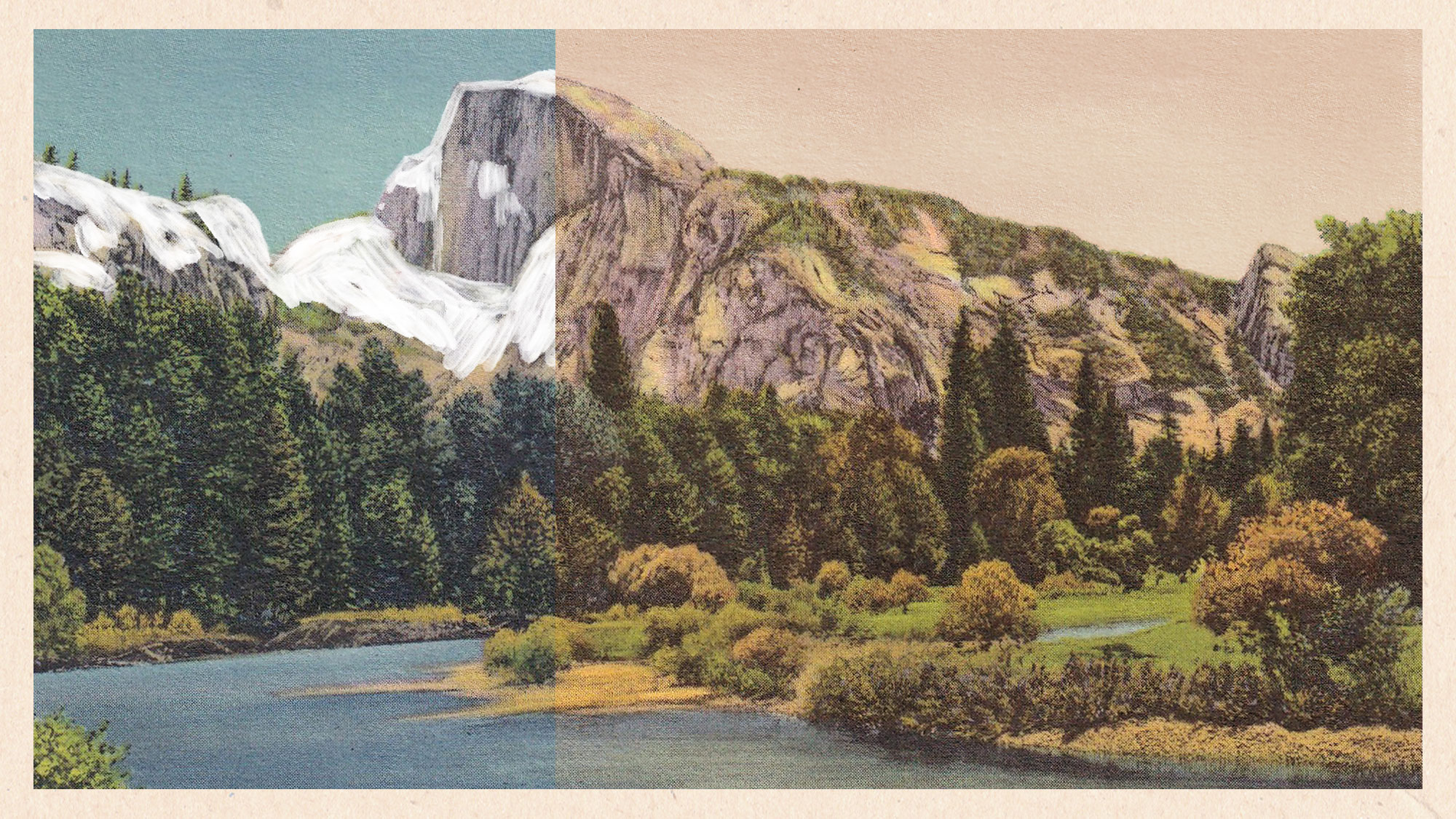
The consequences are profound. According to landmark research published in the journal Science Advances, these persistent thermal events can double the rate at which mountain snowpacks melt. For the Western United States—a region structurally dependent on high-altitude snow acting as a natural, slow-release reservoir—the rapid vaporization of winter snowpacks turns a vital water resource into an immediate flooding hazard, while priming parched ecosystems for catastrophic wildfires.
As global greenhouse gas emissions continue to alter regional atmospheric circulation, snow eaters are arriving earlier in the calendar year and expanding their geographic footprint. Historical data reveals that since the 1850s, the total land area subjected to snow-eater events has expanded by an average of roughly 40,000 square miles per century. Simultaneously, the season’s first snow eater is arriving roughly one month earlier per century, signaling a fundamental destabilization of the Western water cycle.
Detailed Chronology: The Evolution and Anatomy of a Snow Eater
While the formal scientific categorization of snow eaters is relatively recent, the terminology is rooted in Western folklore. By at least the 1880s, homesteaders, prospectors, and early meteorologists across the American West spoke colloquially of "snow-eating chinooks"—warm, dry mountain winds that descended from peaks and caused massive snowdrifts to vanish in a matter of hours.
However, the contemporary mechanics of snow eaters extend far beyond regional wind patterns. The phenomenon burst into mainstream headlines in March, when a staggering, anomalous early-season heat wave enveloped much of the Western U.S. This atmospheric siege rapidly evaporated historic snowpacks across the Colorado Rockies and California’s Sierra Nevada range, sparking acute anxieties over upcoming water deficits and parched summer watersheds.
To understand why snow eaters pack such a destructive hydrological punch, researchers analyzed decades of meteorological data to isolate the exact atmospheric triggers. Their findings pinpointed persistent, round-the-clock above-freezing conditions as the primary catalyst.
The Mechanics of Accelerated Melt
Normally, a diurnal freeze-thaw cycle protects the snowpack during early spring. Days may be warm, but crisp nighttime temperatures allow the snow crystals to refreeze, stabilizing the snowpack’s structural integrity and slowing the release of water.
When a snow-eater heat wave hits, this protective nighttime pause vanishes. Because temperatures do not drop below freezing overnight, the snowpack’s temperature hovers at the melting point continuously. This sustained thermal energy fundamentally alters the physical properties of the snow. As snow crystals warm up, they rapidly lose their crystalline structure and high albedo—their capacity to reflect incoming solar radiation.
Instead of reflecting sunlight back into the atmosphere, the aging, structurally degraded snowpack begins absorbing massive quantities of solar energy. This triggers what independent researchers describe as a feedback loop.
"It’s a little bit of a — no pun intended — a snowball effect," explains Noah Molotch, a professor of geography at the University of Colorado Boulder, who was not involved in the Science Advances study.
As the snow darkens and thaws, its reflectivity plummets further, accelerating the absorption of solar radiation and driving an exponential increase in melt rates. Water pours out of the mountains weeks or even months ahead of historical schedules, overwhelming downstream river channels and reservoir management systems.
Supporting Context & Metrics: A Regional Crisis Unfolds
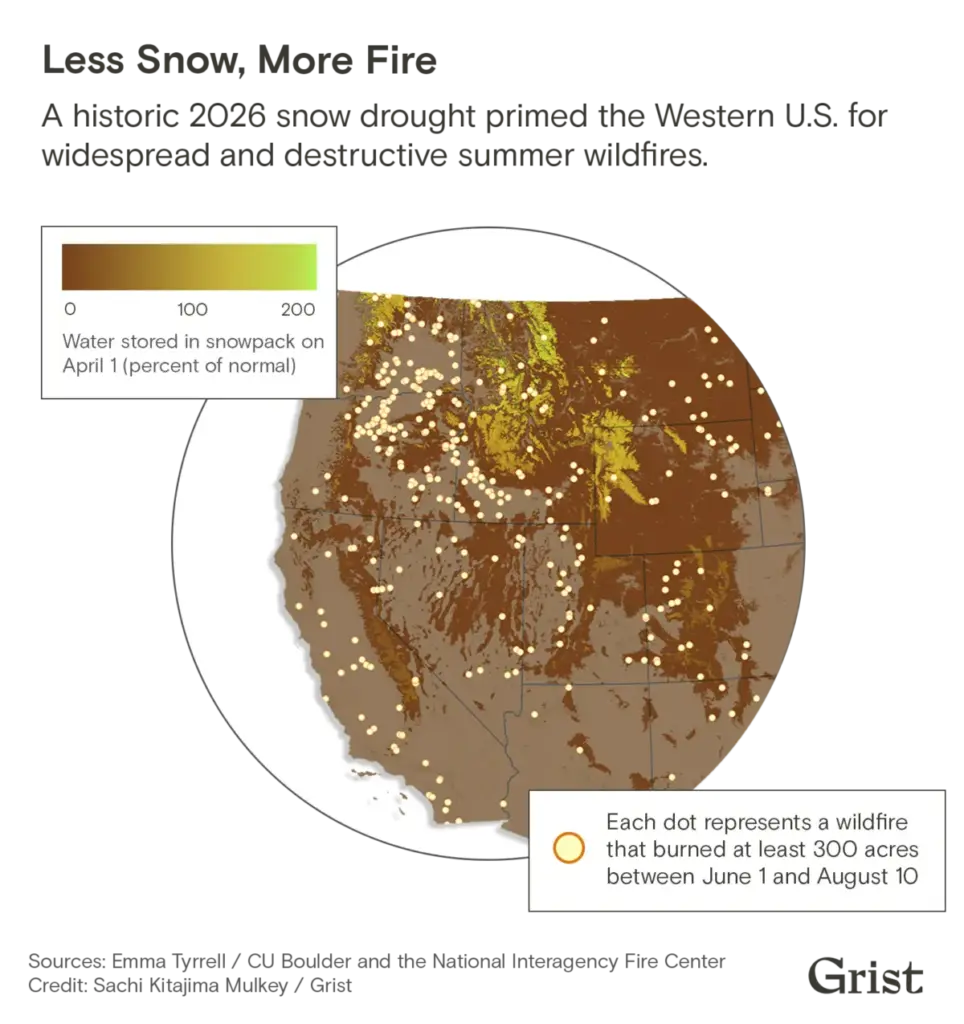
The spring leading up to the publication of this research saw record-low snowpack levels across large swaths of the Western United States. According to updates from the National Integrated Drought Information System (NIDIS), the crisis was characterized not merely by a lack of moisture, but by its sheer geographical ubiquity.
The winter presented a study in climatic contrasts:
- The Colorado Rockies experienced below-average winter precipitation overall, resulting in a classic snow drought.
- California’s Sierra Nevada, by contrast, received substantial winter precipitation, but due to elevated ambient temperatures, a vast percentage of it fell as heavy rain rather than high-altitude snow.
Despite these regional differences in precipitation type and volume, Molotch points out that "the one thing in common was above-average air temperatures."
This widespread thermal anomaly has had cascading ecological impacts, most notably the intensification of the Western wildfire season. From the mountains of Utah to Spokane, Washington—where hundreds of homes were tragically consumed by fast-moving flames—forests are paying a heavy price for early snow loss.
"Drought stress for mountain forests around the Western U.S. is heavily dictated by the snow that accumulates each winter and then melts through the spring and summer," Molotch notes. "There is a direct connection there in terms of the water availability and drought stress that can provide one of the important ingredients for increases in wildfire intensity and frequency."
When snow melts prematurely, soils dry out months earlier than normal. By the time peak summer temperatures arrive, mountain vegetation is already suffering from severe moisture deficits, turning dense pine and fir forests into tinderboxes.
Official Statements and Expert Perspectives
The scientific community is racing to adapt predictive models to account for the growing frequency of snow-eater events. For water resource managers, accurately forecasting these heat waves is a matter of economic and societal survival.
"Water that would otherwise be stored as snow comes out early, and then we have to deal with it as a hazard instead of a resource at our reservoirs and along the rivers and streams," explains Ben Hatchett, a co-author of the Science Advances study and a research scientist at Colorado State University’s Cooperative Institute for Research in the Atmosphere (CIRA).
In a Mediterranean or semi-arid climate like the American West, nature’s design relies on the slow, measured release of snowpack water throughout the dry summer months, feeding agricultural irrigation, municipal water supplies, and vital aquatic ecosystems. When a snow-eater heat wave forces that water out in a matter of days, reservoirs fill dangerously fast, forcing operators to release precious water downstream to prevent dam failures—leaving little to nothing in reserve for the scorching months of August and September.
Beyond water management and wildfire risks, snow-eaters pose direct safety hazards to backcountry recreationists, including skiers, mountaineers, and hikers. Hatchett notes that these intense thermal anomalies are increasingly linked to secondary hazards such as destructive avalanches, rapid glacial wastage, and accelerated permafrost degradation, though researchers are still quantifying the precise mechanics of these correlations.
Hatchett, who resides in the Sierra Nevada, points out that the changing climate is not only visible and measurable—it is audible.
"At night, it used to be quiet," he reflects. "And now it’s not quiet, because everything’s melting all the time."
Future Outlook: Living with the "Snow Eaters"
As researchers continue to map the historical trajectory and future projections of snow eaters, they emphasize that while the initial study focused strictly on the Western United States, the underlying meteorological conditions are inherently global. Snow-eater heat waves almost assuredly occur in other high-altitude and high-latitude regions, including the European Alps, the Himalayas, and the Andes, wherever snowpack meets warming atmospheric trends.
Mitigating the impacts of snow eaters will require a paradigm shift in civil engineering, hydrological forecasting, and emergency management. Traditional flood-control infrastructure, designed in the 19th and 20th centuries based on historical hydrological norms, is increasingly ill-equipped to handle the erratic, high-volume surges produced by multi-day, round-the-clock thermal melt events.
Ultimately, the catchy and evocative nomenclature adopted by scientists is designed to do more than simply label a weather pattern; it is meant to galvanize public awareness and policy action. As Matthew LaPlante watches the snowline retreat up the mountainside outside his window year after year, the reality of a rapidly warming planet is impossible to ignore. The "snow eaters" are no longer theoretical anomalies confined to academic journals—they are active architects of a new, thirstier, and more volatile Western landscape.