Executive Overview
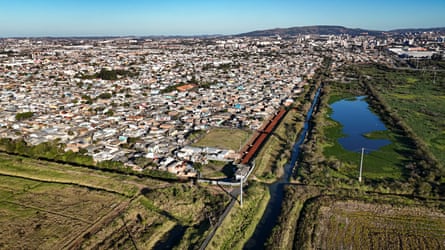
Two years after catastrophic flooding submerged parts of Porto Alegre, the state capital of Rio Grande do Sul in southern Brazil, the psychological and physical scars remain vividly etched into the urban landscape. In May 2024, an unprecedented deluge claimed 183 lives across the state and displaced more than 600,000 people. Working-class neighbourhoods like Sarandi and vulnerable informal settlements—including urban quilombos, historical territories founded by the descendants of escaped enslaved people—were swallowed by floodwaters that crested up to five metres above normal levels.
Today, these communities face a terrifying convergence of compounding crises. Meteorologists have confirmed the imminent return of El Niño, a naturally occurring climate phenomenon whose severity is supercharged by global heating. The latest weather patterns have already triggered heavy rains and swelling rivers across the region, putting over 200 municipalities on high alert, leaving 1,800 people homeless, and reigniting acute psychological trauma among residents who have barely begun to piece their lives back together.
Compounding this environmental threat is a profound crisis of governance and climate justice. Grassroots organizers, urban planners, and legal experts accuse local and state authorities of systemic neglect, pointing to incomplete flood defenses, a meager allocation of climate mitigation funds, and controversial relocation programs. Critics argue that post-disaster policies are morphing into mechanisms of gentrification and displacement—forcing vulnerable, low-income families out of their homes under the guise of safety while clearing prime land for future upscale development. As the region braces for the peak of El Niño, the people of Porto Alegre find themselves trapped on the frontline of a global climate emergency, asking a haunting question: when the water rises again, who will be protected, and who will be left behind?
Detailed Chronology: From the 2024 Catastrophe to the New El Niño Threat
The May 2024 Disaster
The tragedy that unfolded in May 2024 was not merely an act of nature, but the collision of extreme meteorological events with decades of institutional underinvestment. Persistent, torrential rains battered Rio Grande do Sul, swelling the Guaíba Lake and the region’s complex network of rivers beyond their containment capacities. In Porto Alegre, the city’s historic flood-protection system—comprising dikes, floodgates, and pumping stations—failed catastrophically.
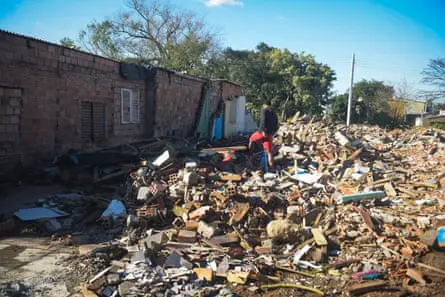
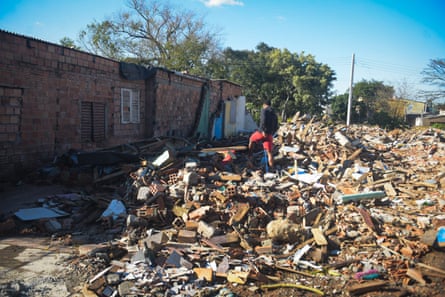
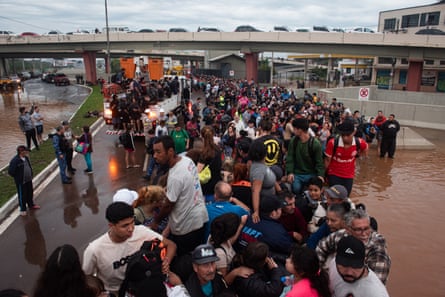
In the neighborhood of Sarandi, water levels surged up to five metres, turning streets into fast-flowing rivers and trapping residents on rooftops and elevated roadways. Pumping stations, critical for expelling excess water, were abruptly shut down out of fear of fatal electric shocks, rendering the city defenseless. Across the state, 183 people lost their lives, and over 600,000 were forced to abandon their homes. Entire communities were reduced to waterlogged ruins filled with floating debris, ruined furniture, and destroyed local businesses.

The Aftermath and Community Resilience
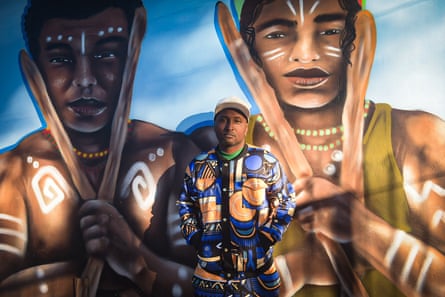
In the wake of the disaster, formal state intervention was slow and scattershot, forcing local communities to organize their own survival networks. Urban quilombos—specifically Quilombo dos Machado, one of 11 recognized territorial enclaves in Porto Alegre—transformed into hubs of solidarity. Led by community figures like Luís Rogério "Jamaika" Machado, the settlement became a lifeline for thousands of families in Sarandi, distributing emergency food parcels, clean clothing, and medical assistance when government aid failed to materialize.
Similarly, in island enclaves like Ilha Grande dos Marinheiros, religious leaders and grassroots organizers like Father Rudimar Dal Asta mobilized rescue missions, using small boats to pluck stranded neighbors from rooftops and organizing makeshift shelters. Yet, as the months passed, the initial wave of national sympathy receded, leaving residents to navigate the psychological trauma and financial ruin of lost livelihoods largely on their own.
The Return of El Niño and New Inundations
Last month, international weather agencies and the World Meteorological Organization (WMO) announced the imminent return of El Niño—a cyclical warming of sea-surface temperatures in the equatorial Pacific that dramatically alters global weather systems. For southern Brazil, El Niño invariably translates to severe, concentrated rainfall and catastrophic flooding.
The first storm systems generated by this emerging climate cycle arrived in Rio Grande do Sul last month, bringing high winds and unrelenting rain. River levels spiked rapidly, directly impacting at least 200 municipalities, displacing 1,800 people, and instantly shattering the fragile peace of a population still traumatized by the events of 2024. With climate experts warning that El Niño typically peaks between December and February, the arrival of these early storms signals that the region’s ordeal has only just begun.
Supporting Context & Metrics: The Anatomy of a Climate Injustice Crisis
The devastation in Porto Alegre cannot be understood purely through the lens of meteorology; it is a textbook case of environmental injustice. Researchers from the Metropolis Observatory research group at the National Institutes of Science and Technology (INCT) have documented a stark disparity: the communities bearing the brunt of the climate crisis are those least responsible for historical carbon emissions.
Socioeconomic Disparities
Data from the Brazilian Institute of Geography and Statistics (IBGE) reveals that approximately two-thirds of the people impacted by the floods in Rio Grande do Sul lived on a family income at or below 5,000 reais (approximately £730) per month.
In working-class districts and Black neighborhoods like Quilombo Kédi, the contrast between destruction and privilege is stark. While modest homes in these areas were reduced to rubble or slated for demolition, surrounding developments feature modern high-rise towers and recreational facilities such as golf courses.
Financial recovery has proven nearly impossible for the average resident. The federal government distributed a one-off "reconstruction aid" payment of 5,100 reais to roughly 430,000 affected families—a total expenditure of 2.2 billion reais. However, community leaders argue this sum is profoundly inadequate. Luís Rogério "Jamaika" Machado notes that in Quilombo dos Machado alone, nearly 7,000 families were impacted, and 4,500 remain entirely unrecovered due to systemic neglect. "What house can you rebuild with 5,000 reais?" he asks. "Rebuilding their lives becomes almost impossible."
Financial Neglect of Mitigation Infrastructure
A damning joint study by the Celso Furtado International Centre for Development Policy and the Climate and Society Institute revealed that the Rio Grande do Sul state government spent less than 0.5% of its climate budget on proactive disaster mitigation and adaptation projects prior to the 2024 floods.
This chronic underfunding has translated into ongoing vulnerability. A state court of auditors investigation concluded that a sustained lack of investment and severe administrative oversights severely compromised Porto Alegre’s flood-defense infrastructure. Auditors directly implicated current Mayor Sebastião Melo and former Mayor Nelson Marchezan Júnior for a "serious disregard for the duty of care." Consequently, the public prosecutors’ office filed a civil lawsuit against the city of Porto Alegre, seeking 50 million reais (£7.3 million) in damages to reimburse 19 flood-ravaged neighborhoods.
Official Statements and Institutional Responses
Local and State Government Positions
Faced with mounting public outrage and legal scrutiny, local and state officials maintain that significant strides have been made to harden Porto Alegre against future disasters.
Over the past two years, the municipal administration has worked to repair damaged floodgates, replace missing sewer covers, and rebuild a breached section of the Sarandi dyke. Porto Alegre Mayor Sebastião Melo defended the city’s progress, stating:
"We’ve finished many projects. Others are now under construction, and others have yet to be started. Porto Alegre is now a much more protected city."
Melo announced that comprehensive upgrades to the city’s pumping stations—notoriously deactivated during the 2024 crisis—are scheduled for completion.
At the state level, the government launched Prepara RS, an emergency coordination initiative designed to assist policymakers, organize volunteers, and disseminate public early-warning alerts. The program has transferred 32.3 million reais to 138 municipalities. In an official statement, the state government asserted:
"In recent years, the government has been making progress in a series of structural, operational and strategic improvements to prepare the state to face extreme events, including possible negative effects of El Niño."
Critique from Grassroots and Legal Experts
Despite official assurances, civil society organizations, grassroots movements, and legal experts argue that the government’s response remains superficial, disorganized, and structurally flawed.
Leonardo Bauer Maggi of the Movement of People Affected by Dams (MAB) highlights persistent gaps in civil defense planning:
"The flood protection systems are still incomplete. They installed emergency sirens, but we don’t know where to run if they sound. No shelters have been prepared."
Furthermore, legal scholars and urban planners contend that government-led relocation and housing schemes are operating as tools of gentrification rather than humanitarian aid. Programs such as Minha Casa, Minha Vida ("My Home, My Life") and the federal Compra Assistida ("Assisted Purchase") initiative—which provides up to 200,000 reais toward a new property—have drawn fierce criticism.
Professor Betânia Alfonsin, a law professor and researcher with the Metropolis Observatory, explains that the designation of "risk area" is frequently applied selectively:
"It’s a stamp of expulsion for the poor. Houses in flood-risk areas are demolished when people relocate, and the land is often refurbished for wealthier owners who can afford risk mitigation."
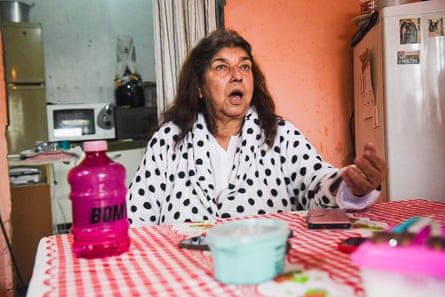
Residents who accept housing financing often find themselves saddled with unsustainable debt. Solange Rodrigues Correa, a resident of Ilha Grande dos Marinheiros who lost her home in 2024 and subsequently suffered a stroke due to chronic stress, aptly renames the flagship housing program:
"They push My Home, My Life as a solution, which we call ‘My Debt.’ You had a house—now you get a debt for life."
With over 50% of Compra Assistida beneficiaries ultimately purchasing homes in entirely different cities, critics argue the policy intentionally fragments tight-knit working-class communities, eroding social capital and cultural identity under the guise of climate adaptation.
Future Outlook: Living in the Shadow of the Next Deluge
As El Niño builds toward its projected seasonal peak, the psychological toll on Porto Alegre’s residents is palpable. Families living in vulnerable low-lying districts, informal settlements, and island communities describe living in a state of perpetual terror.
For pre-school teacher Suelen Telles, who returned to her flood-ravaged home in Sarandi, the psychological wounds have not healed:
"Our house was completely submerged. We lost everything. We’ve since returned to our house, and we’re terrified of losing everything again. Everyone on our street is scared."
Similarly, Solange Rodrigues Correa, now sheltering with her grandson, spends sleepless nights watching weather forecasts, asking the question that hangs over the entire region: "Once again, what will become of us?"
Without a fundamental shift toward genuine climate justice—one that prioritizes robust, equitable infrastructure investment, transparent emergency planning, and community-led adaptation rather than forced displacement—Porto Alegre risks sliding into a permanent cycle of disaster capitalism. The waters of El Niño are rising once more, testing not only the concrete dikes along the Guaíba Lake, but the moral fabric of a society struggling to protect its most vulnerable citizens against an escalating global emergency.