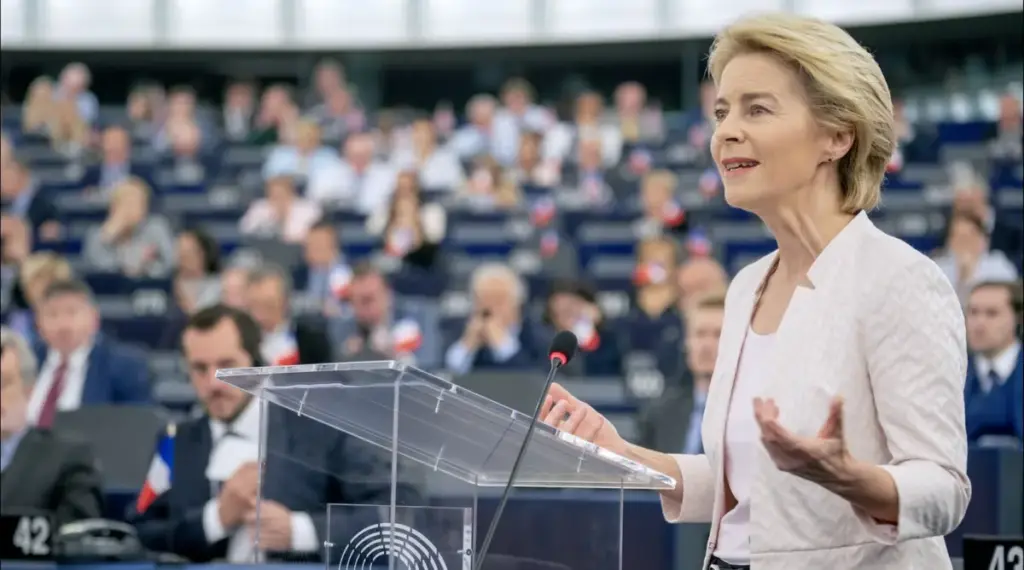
As Europe navigates a volatile geopolitical landscape and escalating climate realities, the decarbonization of the heavy-duty transport sector has moved from a long-term environmental aspiration to an urgent economic and security necessity. In a decisive joint move, the International Road Transport Union (IRU) and Transport & Environment (T&E)—two of Europe’s most influential voices in mobility and environmental advocacy—have formally petitioned European Commission President Ursula von der Leyen. Their objective is the immediate launch of a high-level strategic dialogue dedicated entirely to the electrification and greening of trucks, buses, and coaches.
This unified call comes at a pivotal juncture. Europe’s road transport backbone is buckling under the weight of surging diesel prices—exacerbated by ongoing geopolitical conflicts and energy instabilities involving regions such as Iran and Ukraine—and the compounding strains of climate-induced extreme weather events. Concurrently, the European Union is bracing for critical legislative reviews of cornerstone climate and infrastructure frameworks, notably the Alternative Fuels Infrastructure Regulation (AFIR) and the Heavy-Duty Vehicle (HDV) CO₂ Standards.
By demanding a transparent, inclusive platform that unites transport operators, vehicle manufacturers, energy providers, and policymakers, IRU and T&E hope to realign EU policy with the ground-level economic realities of the fleets that keep the continent moving. This report examines the driving forces behind this urgent appeal, the legislative crossroads facing Brussels, and what a strategic dialogue means for the future of European logistics.
Detailed Chronology: The Road to the Joint Appeal
To understand the weight of the current appeal to President von der Leyen, one must trace the compounding crises and regulatory milestones that have shaped Europe’s commercial transport sector over recent years.
1. The Legislative Baseline (2019–2023)
The EU’s path toward heavy-duty decarbonization formalized over several years, highlighted by the establishment of the European Green Deal. While passenger cars dominated early media coverage, heavy-duty vehicles (HDVs)—accounting for a disproportionate share of transport emissions—gradually entered the regulatory crosshairs. The adoption of the initial Heavy-Duty Vehicle CO₂ Standards set trajectory markers for fleet emission reductions. However, transport operators frequently voiced concerns that legislative targets outpaced the physical deployment of supporting infrastructure.
2. The Geopolitical and Energy Shocks (2022–2025)
The structural vulnerabilities of Europe’s transport sector were laid bare by successive geopolitical tremors. The conflict in Ukraine, followed by broader disruptions rippling from the Middle East and energy friction points involving Iran, exposed the continent’s profound reliance on imported fossil fuels. Diesel prices skyrocketed, crushing transport margins and transforming the transition from diesel to electric or alternative-fuel trucks from a purely ecological goal into an absolute economic imperative for survival. Simultaneously, climate change ceased to be an abstract future threat; extreme weather events—ranging from historic droughts drying up commercial waterways to severe storms eroding highway infrastructure—began directly disrupting supply chains, rendering transport operations costlier and more complex.
3. The Regulatory Review Horizon (2026 and Beyond)
Entering 2026, the European Union found itself staring down mandatory reviews of its two most critical transport decarbonization pillars:
The Alternative Fuels Infrastructure Regulation (AFIR): Charged with dictating the mandatory buildout of public truck-charging and hydrogen-refueling stations across the Trans-European Transport Network (TEN-T).
The Heavy-Duty Vehicle CO₂ Standards: Which govern the progressive tightening of fleet-wide emission reductions for newly registered trucks and buses.
Recognizing that these upcoming reviews could either cement Europe’s clean tech leadership or fracture the operational capabilities of millions of logistics businesses, IRU and T&E elected to bypass business-as-usual lobbying. Instead, they forged a united front, culminating in their recent joint letter to European Commission President Ursula von der Leyen to demand high-level intervention.
Supporting Context & Metrics: The Realities of the Transition
The urgency expressed by IRU and T&E is rooted in hard data, operational constraints, and infrastructural bottlenecks that threaten to stall Europe’s green ambitions if left unaddressed.
The Anatomy of the Diesel Crisis
Commercial transport relies overwhelmingly on heavy-duty diesel engines. When international crude markets fluctuate or supply lines tighten, fleet operators absorb the shock immediately. Because transport margins are notoriously thin—often hovering in the low single digits—sudden spikes in diesel prices cannot always be passed down the supply chain instantly. This creates a severe liquidity squeeze. Scaling up electric trucks powered by homegrown, renewable European electricity offers structural insulation against these external shocks, but only if the vehicles can be purchased, charged, and operated profitably.
Infrastructural Deficits: Grid, Charging, and Hydrogen
Transitioning long-haul freight from diesel to zero-emission alternatives is not merely a matter of swapping out vehicle fleets; it requires an unprecedented overhaul of Europe’s energy infrastructure. Key metrics highlighting the challenge include:
Megawatt-Charging Requirements: Unlike passenger cars that charge overnight at home, heavy commercial vehicles require high-capacity, ultra-fast megawatt chargers to comply with strict EU drivers’ hours and rest regulations.
Grid Modernization: Distribution system operators (DSOs) must upgrade local grid connections at logistics hubs, highway depots, and truck parking areas to handle the massive simultaneous draw of multiple heavy-duty electric vehicles.
Geographic Disparities: The rollout of AFIR-compliant charging stations remains unevenly distributed across member states, with Western and Northern Europe pulling ahead while Southern and Eastern corridors lag behind.
Financing and Total Cost of Ownership (TCO)
While the Total Cost of Ownership of electric trucks is projected to reach parity—or even favor electric models—due to lower operating and maintenance costs, the upfront capital expenditure (CapEx) remains a massive hurdle. Commercial trucks are expensive capital assets. Without targeted EU and national financial instruments, green loans, purchase subsidies, and risk-sharing guarantees, smaller transport firms—which make up the vast majority of Europe’s road transport SMEs—simply cannot afford to transition.
Official Statements: Perspectives from Industry Leaders
The collaborative nature of the IRU and T&E appeal underscores a growing consensus: the decarbonization of heavy transport cannot be achieved by top-down mandates alone, nor can it succeed without aggressive environmental accountability.
Raluca Marian, IRU EU Advocacy Director
Emphasizing the absolute necessity of centering the conversation on those who operate the vehicles day-in and day-out, Raluca Marian stated:
"The transition of heavy-duty transport needs renewed political momentum at the highest level. The EU has set a clear direction, but delivering it will require EU and national efforts to go hand in hand. A strategic dialogue led by President von der Leyen would send an important signal that the transition of trucks, buses and coaches remains an EU priority. It would bring together the key actors to identify what is still holding back deployment and where action is most urgently needed. Operators are the ones investing in and running these vehicles every day. Their operational and economic realities need to be at the heart of the decisions shaping the next phase of the transition."
Marian’s comments highlight a historical friction point in EU policymaking: well-intentioned regulatory targets set in Brussels occasionally collide with the messy, unpredictable realities of cross-border logistics, driver shortages, and variable fuel costs.
William Todts, T&E Executive Director
From the environmental advocacy perspective, William Todts framed the initiative through the lens of energy security and geopolitical independence:
"The diesel crisis is a wake up call for Europe. We must rapidly reduce our dependence on imported oil and the single best way to do that is by scaling up electric trucks run on clean, homegrown electricity. The EU is preparing action on charging and CO₂ standards. What we need to succeed is a transparent, inclusive process with all the key players around the table."
Todts’ remarks tie the green transition directly to European autonomy. By weaning commercial transport off imported fossil fuels, Europe not only cuts its greenhouse gas emissions but insulates its economy from foreign energy shocks.
Future Outlook: What Lies Ahead for European Logistics
The petition for a strategic dialogue directed at Commission President Ursula von der Leyen represents a critical fork in the road for European climate policy.
1. The Mechanics of a Strategic Dialogue
If accepted, a President-led strategic dialogue would establish a structured working group mirroring successful precedents seen in other industrial sectors. It would convene chief executives from truck manufacturing giants (such as Volvo, Daimler, Scania, and MAN), heads of major logistics and transport firms, energy utility leaders, grid operators, and civil society representatives. The goal would be to co-create actionable roadmaps that bridge the gap between ambitious 2030 and 2040 climate targets and the physical reality on European highways.
2. Informing the AFIR and CO₂ Standard Reviews
The timing of this push is strategically designed to feed directly into the upcoming legislative reviews. Lawmakers in the European Parliament and Council will need concrete data and industry buy-in to fine-tune the AFIR benchmarks and CO₂ reduction curves. Without a unified platform, policymakers risk passing legislation that either lacks environmental teeth or imposes impossible timelines on a fragile economic sector.
3. The Global Competitiveness Dimension
Beyond European borders, the race to manufacture and deploy zero-emission commercial vehicles is intensifying. China is aggressively scaling up electric and hydrogen truck manufacturing and deployment domestically while expanding its footprint globally. The United States, through federal investments and state-level mandates (such as those in California), is also accelerating its heavy-duty transition. For Europe, ensuring a smooth, supported domestic transition is vital not just for climate goals, but to preserve the global competitiveness of European automotive and logistics industries.
Conclusion
The joint initiative by the IRU and T&E is more than a policy request; it is a pragmatic distress signal and a roadmap rolled into one. By urging European Commission President Ursula von der Leyen to spearhead a strategic dialogue on heavy-duty vehicle decarbonization, these organizations are championing a collaborative approach that respects both ecological imperatives and economic survival.
As Europe faces down the twin dragons of high energy costs and accelerating climate disruption, the success of its heavy transport transition will dictate whether the continent can achieve true energy independence while meeting its net-zero commitments. All eyes now turn to Brussels to see if the political leadership will answer the call and bring all stakeholders to the table.