Executive Overview
For millions of people worldwide, the morning ritual is anchored by a single, grounding routine: brewing a fresh cup of coffee. Consumers invest heavily in ethically sourced organic beans, delicate ceramic mugs, and specialized water filtration systems, all in pursuit of a pure, clean, and health-conscious start to the day. Yet, a glaring vulnerability often sits right on the kitchen counter, quietly undermining these efforts. Hidden deep inside conventional coffee makers—woven through internal tubing, heating reservoirs, liquid containers, and spray nozzles—is a heavy reliance on synthetic plastics.
When hot water is repeatedly heated, cycled, and forced through plastic components under high temperatures, those materials inevitably degrade. This process can leach synthetic compounds, plasticizers, and microplastics directly into the morning brew. For households actively working to minimize environmental toxins and reduce everyday plastic consumption, the standard automated coffee maker represents a significant, overlooked exposure pathway.
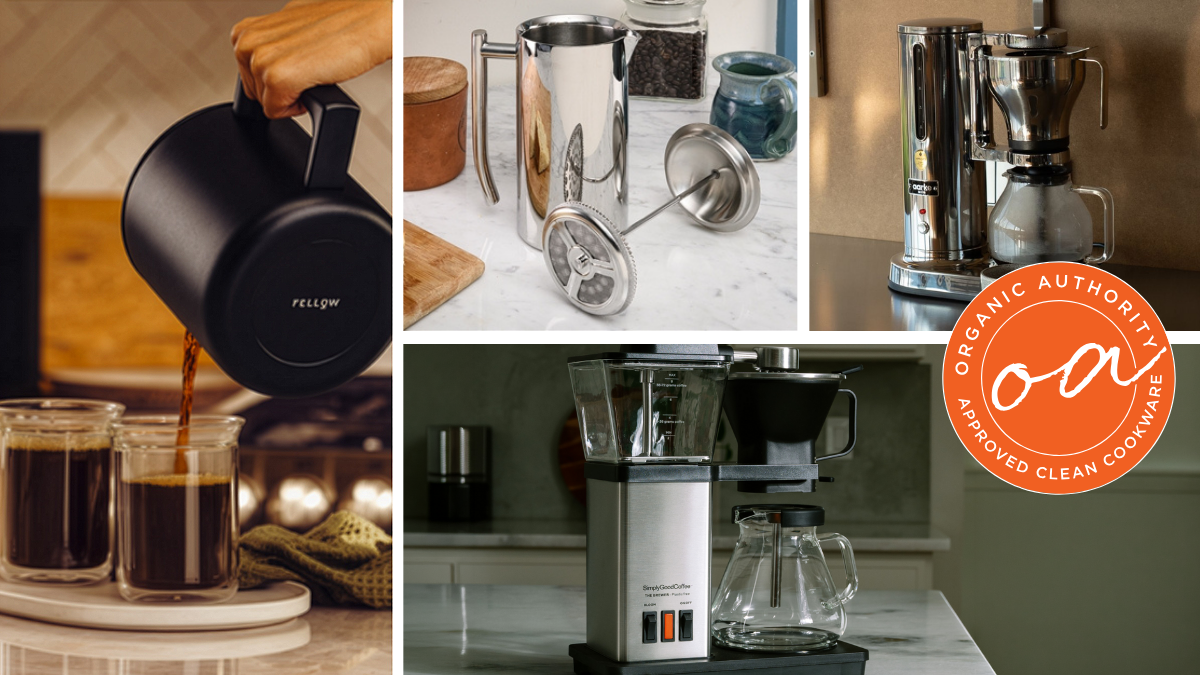
Fortunately, the kitchen appliance market is undergoing a quiet, health-conscious transformation. Driven by consumer demand for transparency and non-toxic home environments, manufacturers are rethinking how coffee is brewed. Today, buyers can choose between entirely plastic-free manual brewers—such as stainless steel French presses and glass pour-over systems—and innovative, low-plastic automated machines that marry modern convenience with material safety. This report investigates the hidden hazards of plastic in coffee brewing, evaluates the top-performing low-plastic and plastic-free coffee makers on the market, and provides a comprehensive guide to choosing an appliance that safeguards both your health and your daily cup.
Detailed Chronology: The Evolution of Kitchen Plastics and the Rise of Non-Toxic Brewing
To understand why modern coffee makers contain so much plastic, one must look at the historical evolution of consumer appliance manufacturing over the past century.
- The Mid-20th Century Shift to Plastics (1950s–1970s): Following the post-World War II manufacturing boom, polymers and synthetic plastics became the gold standard for consumer goods. Valued for their low cost, lightweight nature, malleability, and durability, plastics rapidly replaced heavy glass, cast iron, and stainless steel in kitchen appliances.
- The Rise of the Automated Drip Machine (1970s–1990s): The invention and mass commercialization of electric drip coffee makers transformed morning routines. To keep manufacturing costs low and profit margins high while managing internal water heating elements, manufacturers integrated plastic water reservoirs, plastic filter baskets, and silicone-plastic internal tubing.
- The Microplastic Awareness Movement (2010s–Present): As scientific research began uncovering the pervasive presence of microplastics and nanoplastics in human bloodstreams, organs, and food supplies, consumer scrutiny shifted toward everyday culinary tools. Studies highlighting how heat accelerates polymer degradation prompted health-conscious consumers to scrutinize cookware, blenders, cutting boards, and ultimately, coffee machines.
- The Modern Non-Toxic Appliance Renaissance (2020–Present): Responding to market demand, specialty brands began engineering high-end automated and manual coffee systems built exclusively from inert materials such as borosilicate glass, stainless steel, and aluminum. This era marks the first time consumers do not have to choose between total automation and material safety.
Supporting Context & Metrics: The Science of Heat, Leaching, and Microplastics
The concern over plastic coffee makers is not merely aesthetic; it is rooted in materials science and toxicology. When evaluating how everyday appliances interact with hot beverages, several scientific principles come into play.
Thermal Degradation and Polymer Breakdown
Plastics are composed of long chains of synthetic polymers held together by chemical bonds. While stable at room temperature, many standard plastics—including polypropylene and polycarbonate commonly used in kitchen appliances—undergo thermal stress when repeatedly exposed to boiling or near-boiling water (temperatures ranging from 195°F to 212°F).
Repeated thermal cycling causes these polymer chains to weaken and break down. This microscopic degradation releases microplastics (particles smaller than 5 millimeters) and nanoplastics (particles smaller than 1 micrometer) directly into the liquid passing through them. Furthermore, older or scratched plastic reservoirs can leach chemical additives, including bisphenols (BPA, BPS) and phthalates, which are known endocrine disruptors.
Comparative Material Integrity
To eliminate these risks, non-toxic kitchen design relies on three core inert materials:
- Borosilicate Glass: Highly resistant to thermal shock, borosilicate glass does not leach chemicals, absorb odors, or alter the taste profile of acidic beverages like coffee.
- Stainless Steel: Food-grade stainless steel (such as 304 or 316 grades) offers exceptional durability, corrosion resistance, and complete chemical inertness when exposed to hot water and coffee oils.
- Anodized Aluminum: Frequently used in heating elements or structural housing, high-grade metals provide rapid heat distribution without direct chemical leaching into the brewing path.
Comprehensive Evaluation: The Best Low-Plastic and Plastic-Free Coffee Makers
To help consumers navigate this evolving category, product testing experts have evaluated the leading market options based on material quality, brewing performance, durability, ease of use, capacity, and overall value.
1. Frieling Brushed Stainless Steel French Press
- Brewing Style: French Press
- Plastic Contact: Zero (100% Plastic-Free)
- Price: $89.95
Overview:
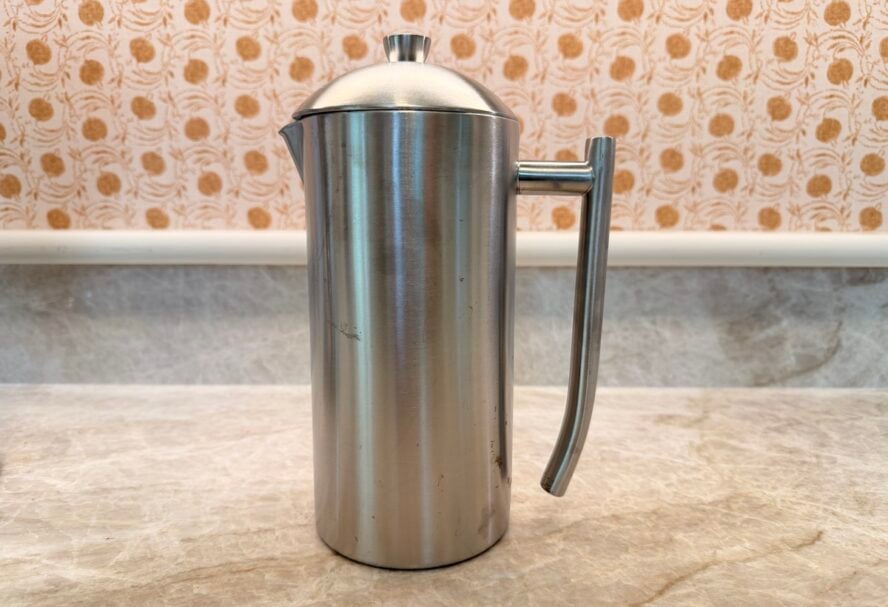
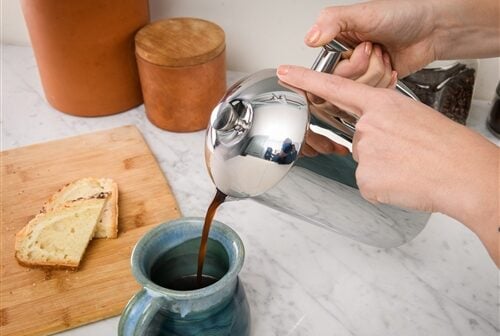
When it comes to uncompromised durability, minimalist design, and pure flavor extraction, the Frieling Brushed Stainless Steel French Press remains an industry gold standard. Constructed entirely from heavy-duty, double-walled stainless steel, this press eliminates every drop of plastic from the brewing equation.
Performance & Usability:
The double-wall insulation is exceptionally effective, keeping coffee piping hot for up to an hour without requiring an external heat source. For summer months, the carafe can be placed directly in the refrigerator overnight for cold-brew coffee. Because the entire unit is crafted from stainless steel, it imparts zero metallic taste and preserves the delicate flavor notes of specialty coffee beans. Furthermore, it is fully dishwasher-safe and virtually indestructible—outlasting glass French presses that are prone to shattering.
Pros:
- Absolute zero plastic contact with hot liquids.
- Exceptional thermal insulation and heat retention.
- Lifetime durability with zero fragile glass components.
- Dishwasher-safe and easy to clean.
Cons:
- Smaller maximum capacity compared to large automated drip machines.
- Heavier than traditional glass presses.
- Requires manual effort and monitoring of steep time.
2. SimplyGoodCoffee The Brewer
- Brewing Style: Automatic Pour-Over / Drip
- Plastic Contact: Zero (Plastic-Free Water Path and Carafe)
- Price: $479.99
Overview:
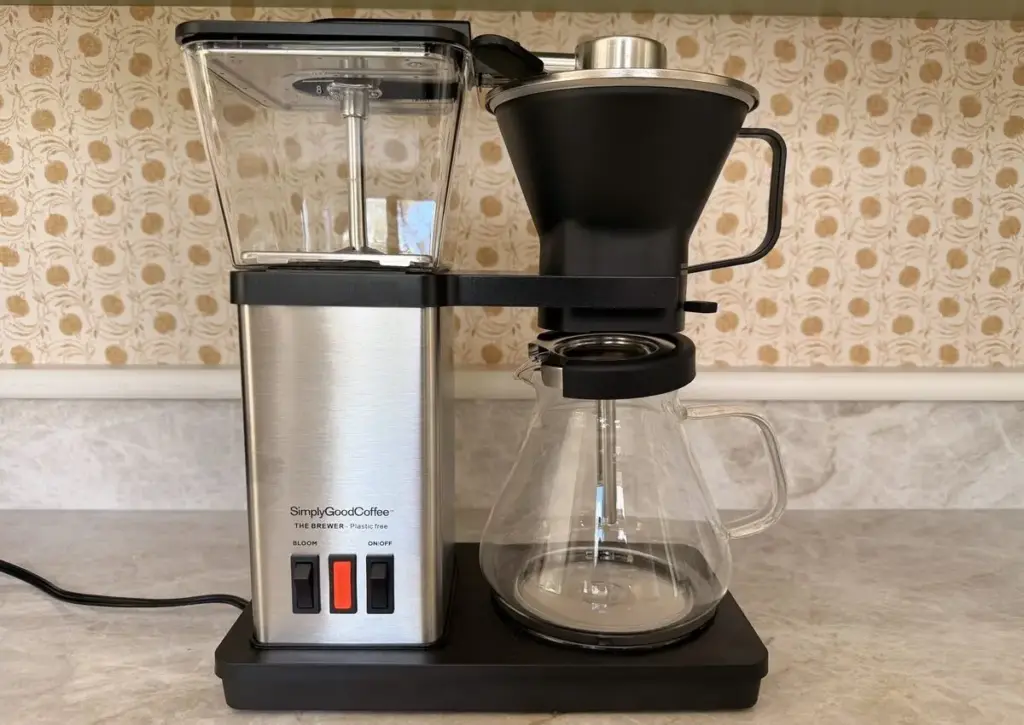
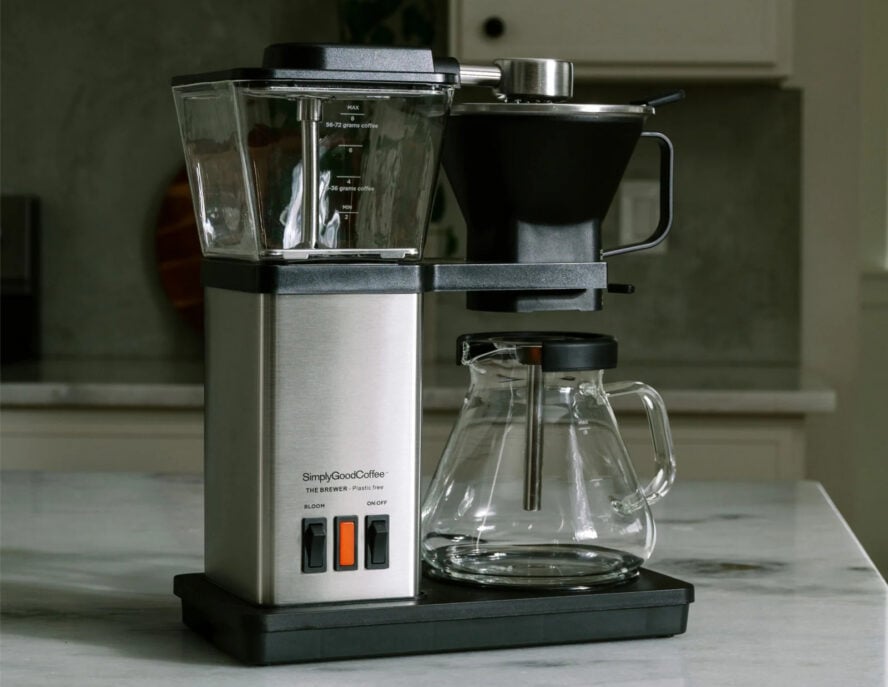
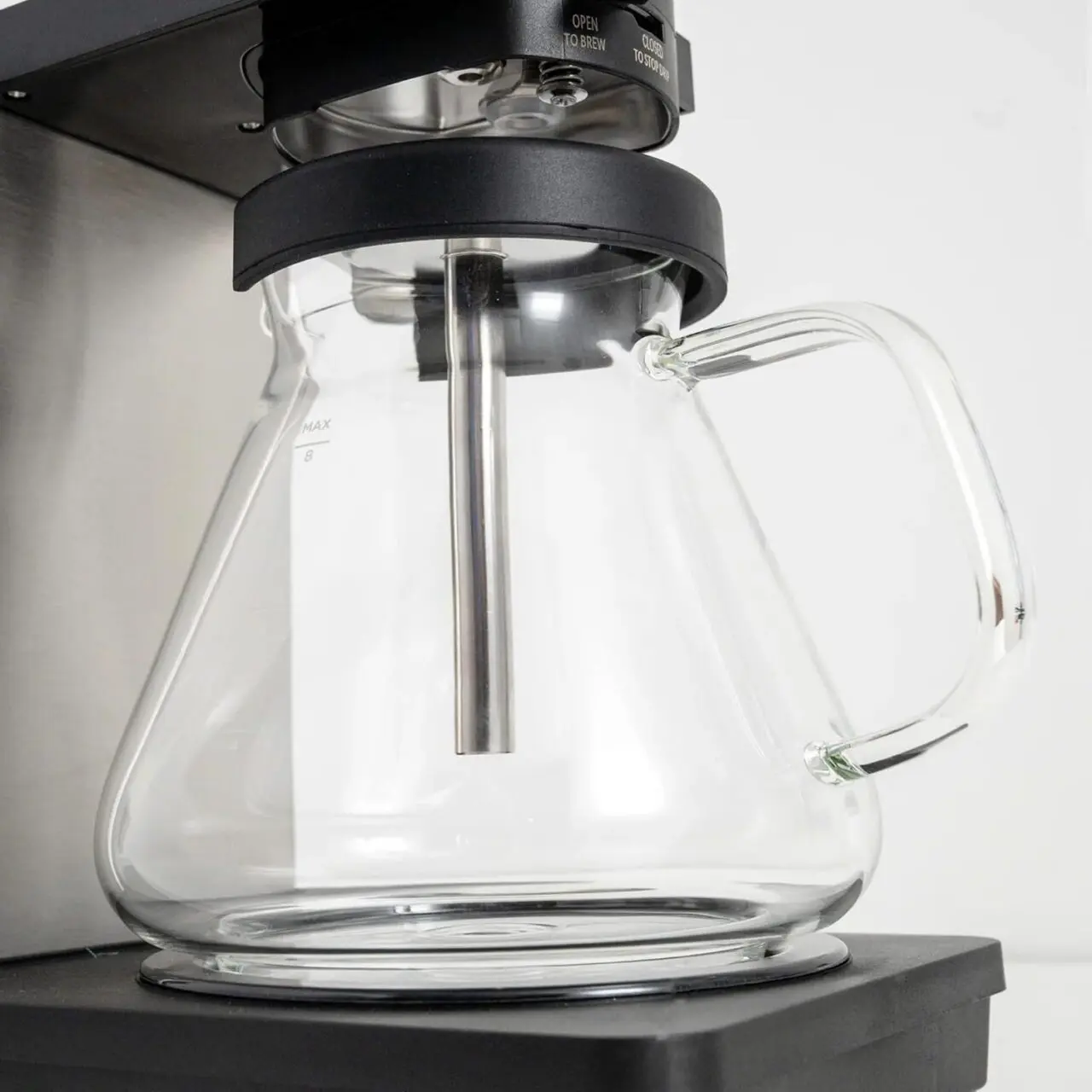
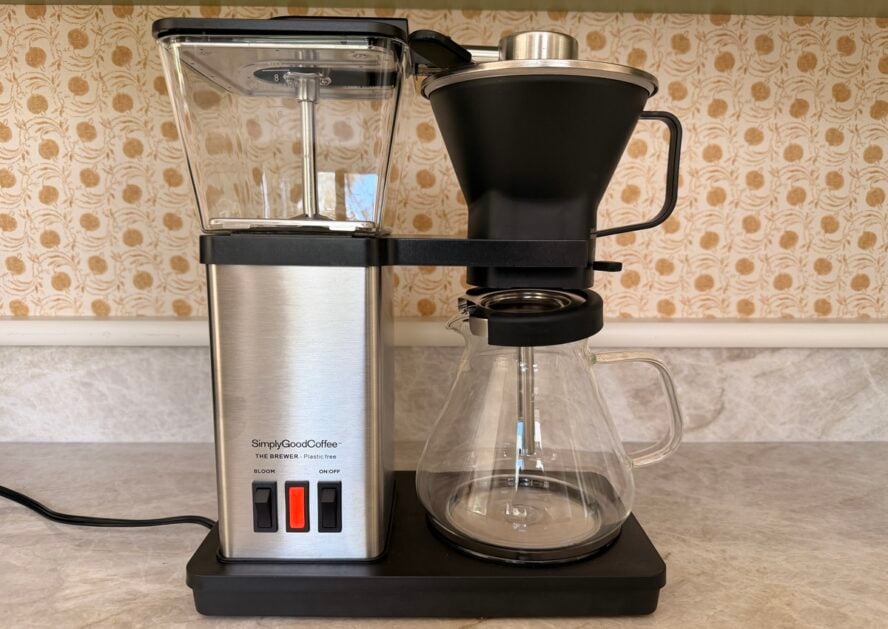
For consumers who refuse to sacrifice the convenience of an automated morning machine but demand absolute protection from microplastics, The Brewer by SimplyGoodCoffee is a groundbreaking engineering achievement. It automates the precise pour-over technique using a single-button operation, routing water exclusively through stainless steel and borosilicate glass components.
Performance & Usability:
Unlike conventional drip machines that route water through hidden plastic tubing, this appliance keeps hot water entirely away from synthetic polymers. It features an eight-cup capacity, a reusable metal mesh filter that eliminates the need for paper or plastic-lined disposable filters, and a precision heating system that maintains optimal extraction temperatures. The resulting cup is remarkably clean, bright, and completely free of synthetic aftertastes.
Pros:
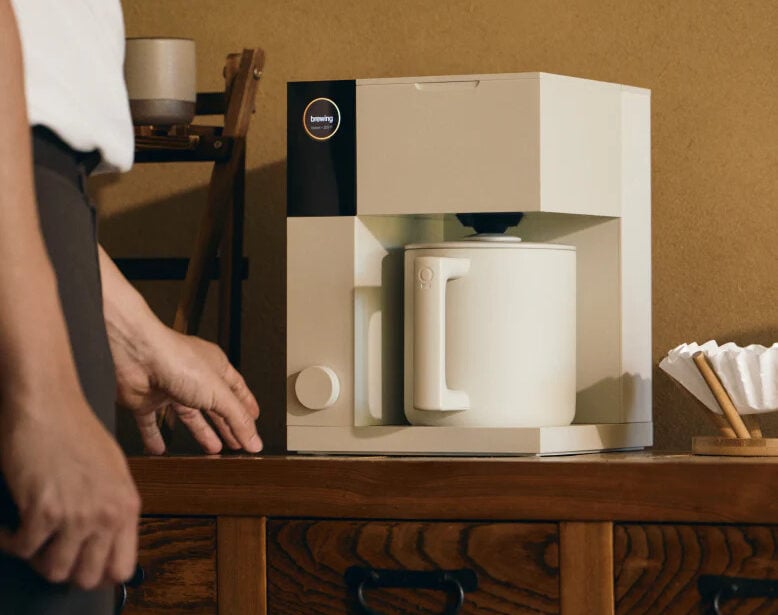
- The rare automated drip machine with a fully plastic-free water path.
- Utilizes a reusable metal filter to reduce paper and plastic waste.
- Simple, elegant one-button automated operation.
- All removable parts are dishwasher-safe.
Cons:
- Carries a substantial luxury price tag ($479.99).
- Larger countertop footprint than manual brewers.
- Offers fewer digital customization settings than traditional high-tech machines.
3. Fellow Aiden Precision Coffee Maker
- Brewing Style: Automatic Drip / Precision Pour-Over
- Plastic Contact: Minimal (BPA-Free Plastic Water Tank; Stainless Steel Carafe)
- Price: $399.95
Overview:
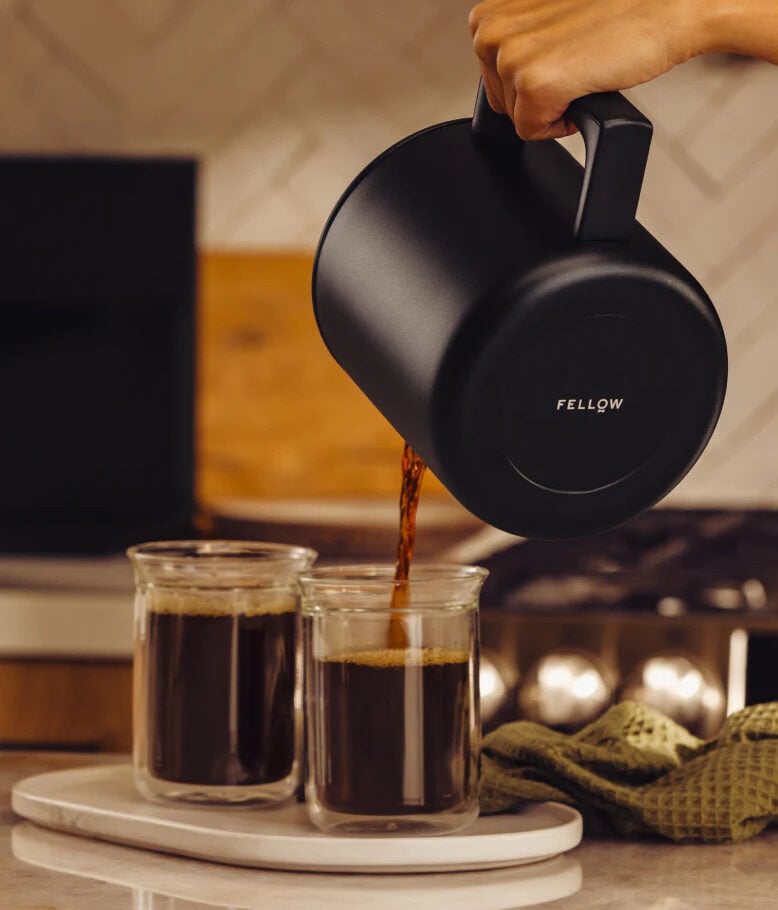
The Fellow Aiden Precision Coffee Maker bridges the gap between specialty specialty-cafe brewing and home automation. While it is not entirely plastic-free—featuring a BPA-free plastic water reservoir—it drastically minimizes plastic contact where it matters most, specifically housing the brewed coffee inside a double-walled stainless steel thermal carafe.
Performance & Usability:
Aiden is engineered for coffee aficionados. During extraction, coffee grounds are showered with pulsed bursts of hot water to encourage an even "bloom," unlocking complex flavor profiles without bitterness. Users can customize temperature, brew strength, and batch size via a stunning, high-definition digital interface or a companion smartphone app. It excels at both single-serve cups and full 10-cup carafes.
Pros:
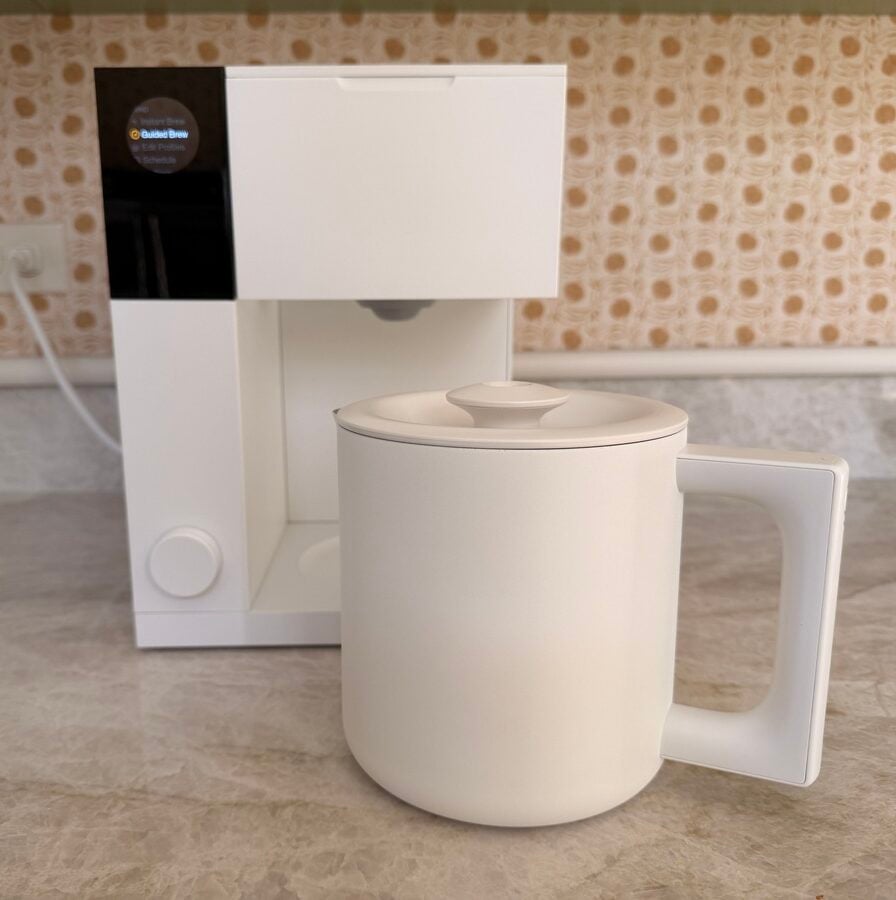
- Automates specialty pour-over brewing with incredible precision.
- Double-walled stainless steel thermal carafe keeps coffee hot for hours.
- Capable of both single-serve and multi-cup batch brewing.
- Intuitive digital display and app integration.
Cons:
- Contains a BPA-free plastic water tank (not 100% plastic-free).
- Premium investment tier pricing.
- Advanced tech features may overwhelm casual coffee drinkers.
4. Aarke Stainless Steel Coffee Maker
- Brewing Style: Automatic Drip (SCA-Certified)
- Plastic Contact: Minimal (Low-Plastic Engineering)
- Price: $400.00
Overview:
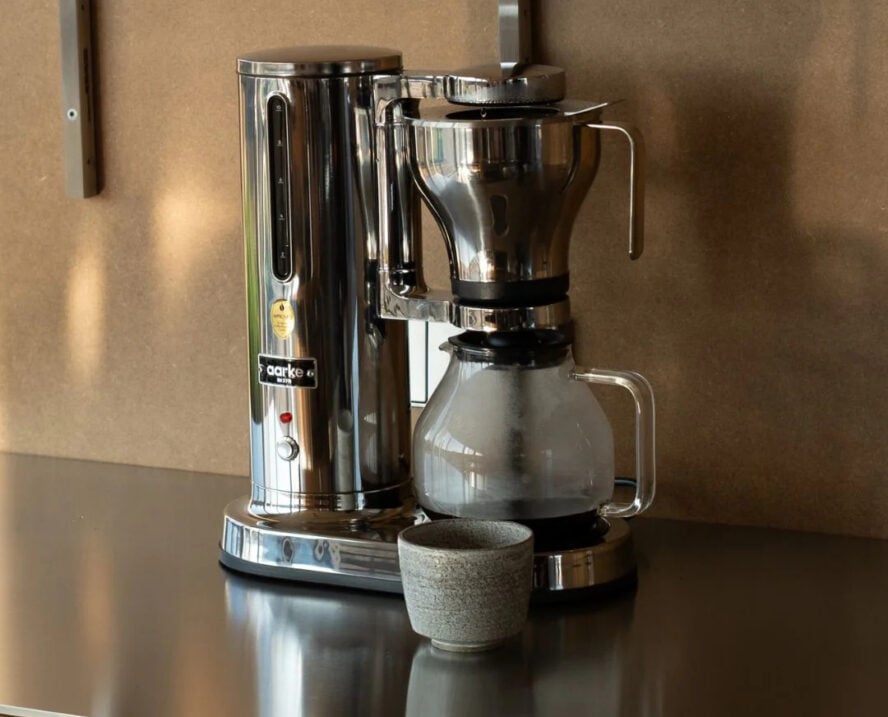
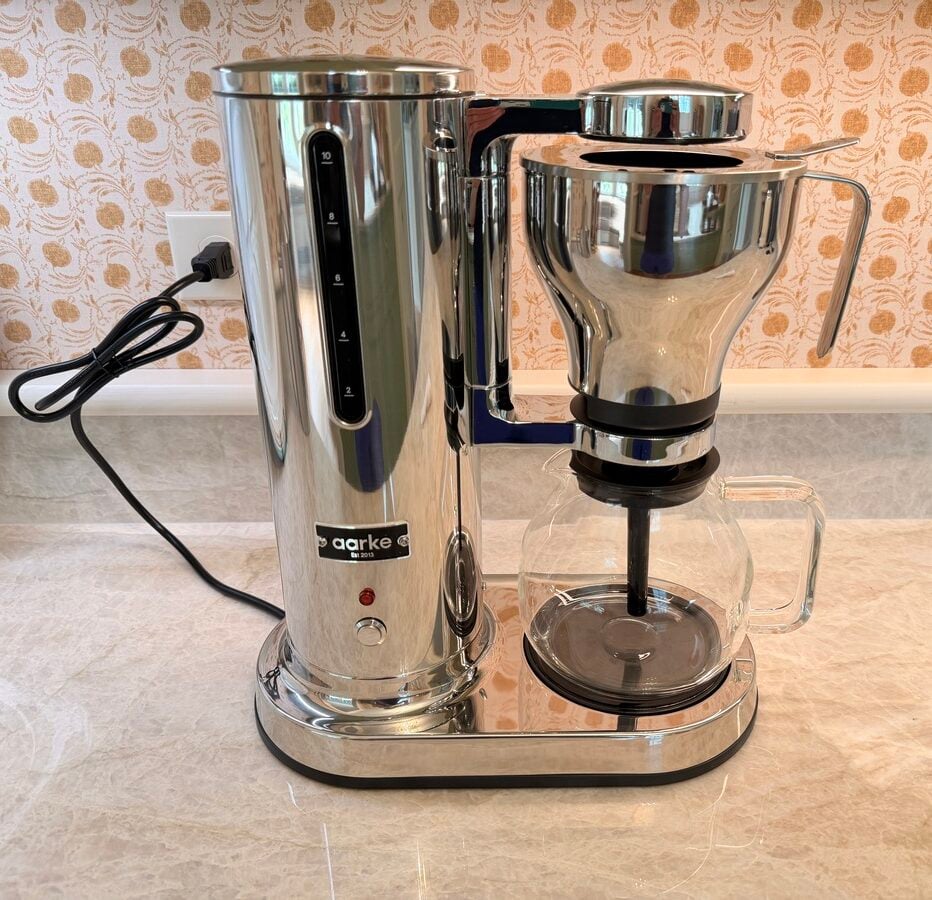
Renowned for sophisticated Scandinavian kitchen design, Aarke has entered the coffee space with a stunning, high-performance machine that elevates kitchen aesthetics while drastically reducing plastic exposure.
Performance & Usability:
The Aarke Coffee Maker maintains precise brewing temperatures between 197°F and 205°F, ensuring optimal extraction without scorching the beans. It features an innovative built-in blooming mode and a descaling cycle to maintain long-term performance. While it pairs standard with a borosilicate glass carafe and a smart warming plate, users can also purchase an optional insulated stainless-steel thermal jug to keep coffee hot without a heating element.
Pros:
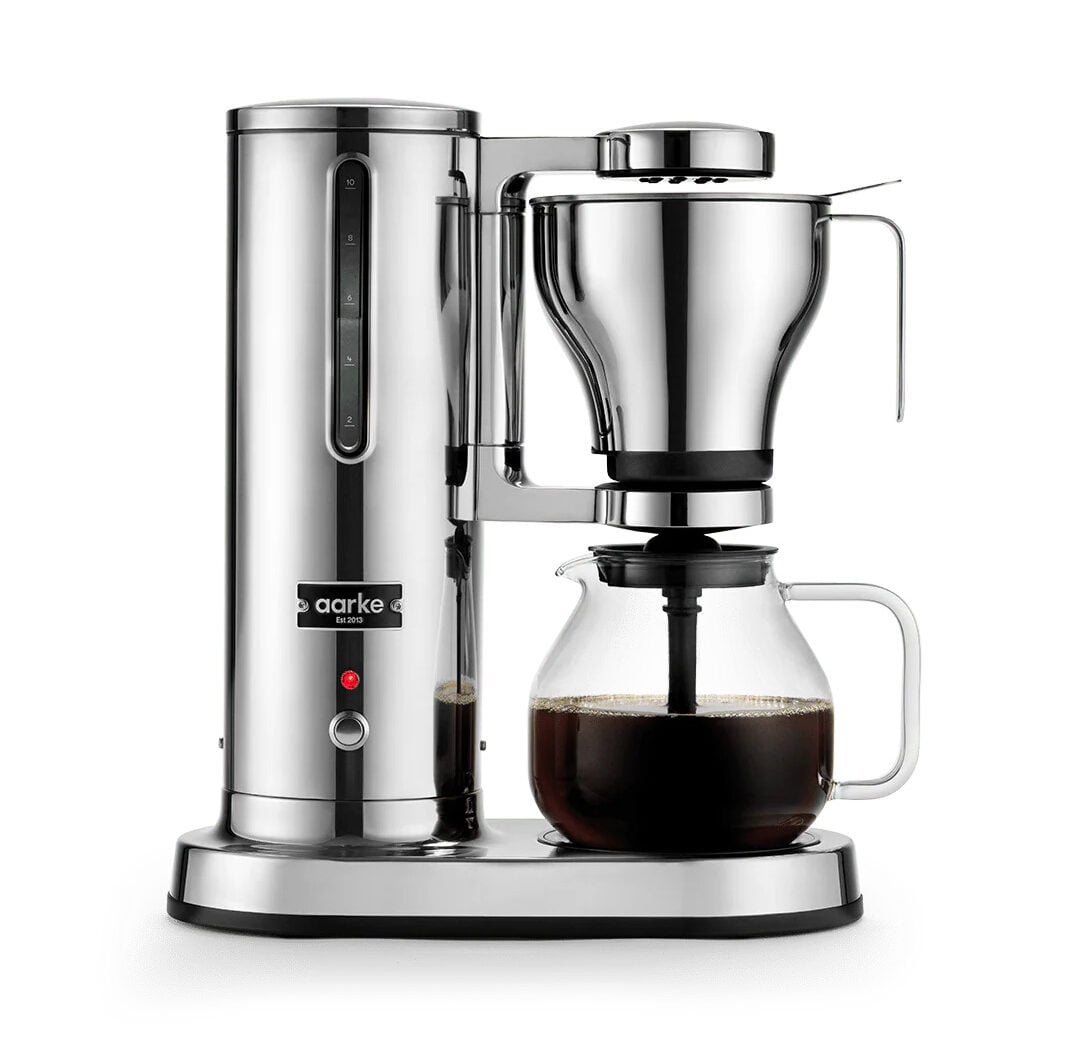
- SCA-certified temperature control and uniform water dispersion.
- Striking minimalist Scandinavian design.
- Flexible brewing capacity (ranging from 2 to 10 cups).
- Built-in descaling mode for effortless maintenance.
Cons:
- Not completely plastic-free.
- High-end luxury price point.
- Glass carafe requires a warming plate unless upgraded to the separate thermal jug.
Comparative Specifications Matrix
| Product Name | Brewing Style | Plastic Contact Level | Key Distinction | Price |
|---|---|---|---|---|
| Frieling Stainless Steel French Press | French Press | None (0%) | Lifetime durability & superior heat retention | $89.95 |
| SimplyGoodCoffee The Brewer | Automated Pour-Over | None (0%) | The premier automated plastic-free drip machine | $479.99 |
| Fellow Aiden Precision Coffee Maker | Automated Drip | Minimal (BPA-Free Reservoir) | Precision temperature control & app scheduling | $399.95 |
| Aarke Stainless Steel Coffee Maker | Automated Drip | Minimal | SCA-certified extraction & minimalist design | $400.00 |
Future Outlook: The Next Generation of Healthy Kitchen Appliances
As consumer awareness surrounding microplastics, endocrine disruptors, and chemical leaching continues to accelerate, the landscape of home appliance manufacturing is facing an irreversible shift. Regulatory bodies globally are tightening standards on food-contact materials, and pioneering brands are proving that modern convenience does not need to come at the expense of human health.
In the near future, industry analysts predict that "plastic-free water paths" will evolve from a niche specialty selling point into an expected baseline for premium kitchen appliances. Innovations in ceramic heating elements, medical-grade silicone seals, and all-metal internal fluid dynamics are already paving the way for fully automated, smart coffee makers that are 100% free of synthetic polymers.
For now, consumers have powerful choices. Whether opting for the timeless, indestructible reliability of a stainless steel French press or investing in cutting-edge automatic brewers like SimplyGoodCoffee, eliminating plastic from your morning routine is one of the most direct, impactful steps you can take toward a cleaner, healthier kitchen.