

Executive Overview
For generations, the semi-mountainous Gurage Zone in central Ethiopia has borne the raw scars of a changing climate and historical overexploitation. On a steep hillside in Ambele Kebele, 32-year-old farmer Niku Argane surveys his land, pointing out deep gullies carved by years of relentless flooding. Once yielding enough barley and potatoes to comfortably feed his wife and four children—with enough surplus left over to trade at the local market—his soil has been systematically stripped of its vitality. Erosion has worn away the arable topsoil, while intensifying droughts have turned the remaining earth into a brittle, unforgiving substrate.
"We have never stopped farming, but our production declined because of land degradation," Argane says, capturing the quiet desperation shared by millions of smallholders across the East African nation.
Argane’s plight is a microcosm of a national emergency. Over the past century, Ethiopia nearly eradicated its native forests as trees were systematically cleared for agriculture, grazing, and fuel. The resulting loss of tree cover and stabilizing root systems left the landscape exposed to the abrasive forces of wind and heavy seasonal rains, which washed away fertile topsoil and triggered a catastrophic decline in crop yields.
Today, this ecological vulnerability is being aggressively compounded by climate change. Ethiopia stands as one of the nations most susceptible to global heating, trapped in a vicious cycle: heavier, erratic downpours sluice away depleted soils and trigger deadly landslides, while more intense droughts, exacerbated by the absence of shade-providing canopies, rapidly bake and sterilize the earth.
The economic and human toll is staggering. Land degradation costs Ethiopia an estimated $4.3 billion annually through diminished harvests and lost agricultural income. With more than 100 million citizens dependent on the agricultural sector for their livelihoods, the implications reach far beyond environmental conservation. Climate shocks and localized crop failures have become primary drivers of acute hunger; in 2024 alone, an estimated 15.8 million Ethiopians—roughly 12 percent of the population—required emergency food assistance.
Yet, amid these compounding crises, Ethiopia has launched one of the most audacious environmental restoration campaigns in human history. Under the banner of the Green Legacy Initiative, tens of millions of citizens have mobilized over the last seven years to plant more than 47 billion tree seedlings. Aiming for a benchmark of 50 billion seedlings by 2030, this massive national undertaking seeks to rebuild native forests, integrate trees into actively farmed landscapes, sequester massive amounts of atmospheric carbon, and shield future generations from runaway climate disruption.
While conservation experts debate the survival rates of mass-planting initiatives and the mounting pressures of a shifting climate, the sheer scale of Ethiopia’s endeavor has turned the nation into a global laboratory for landscape restoration—and earned it the prestigious honor of hosting the upcoming United Nations climate conference.
Detailed Chronology: From Deforestation to Mass Restoration
The Century of Clearance (Early to Late 20th Century)
The roots of Ethiopia’s current ecological crisis stretch back deep into the twentieth century. At the dawn of the 1900s, dense, lush forests covered an estimated 35 to 40 percent of the country, with rich canopies spanning Ethiopia’s cool, fertile uplands. However, as population centers expanded and rural communities grew, these forests were steadily cleared to meet surging demands for agriculture, livestock pasture, fuel, and construction materials.
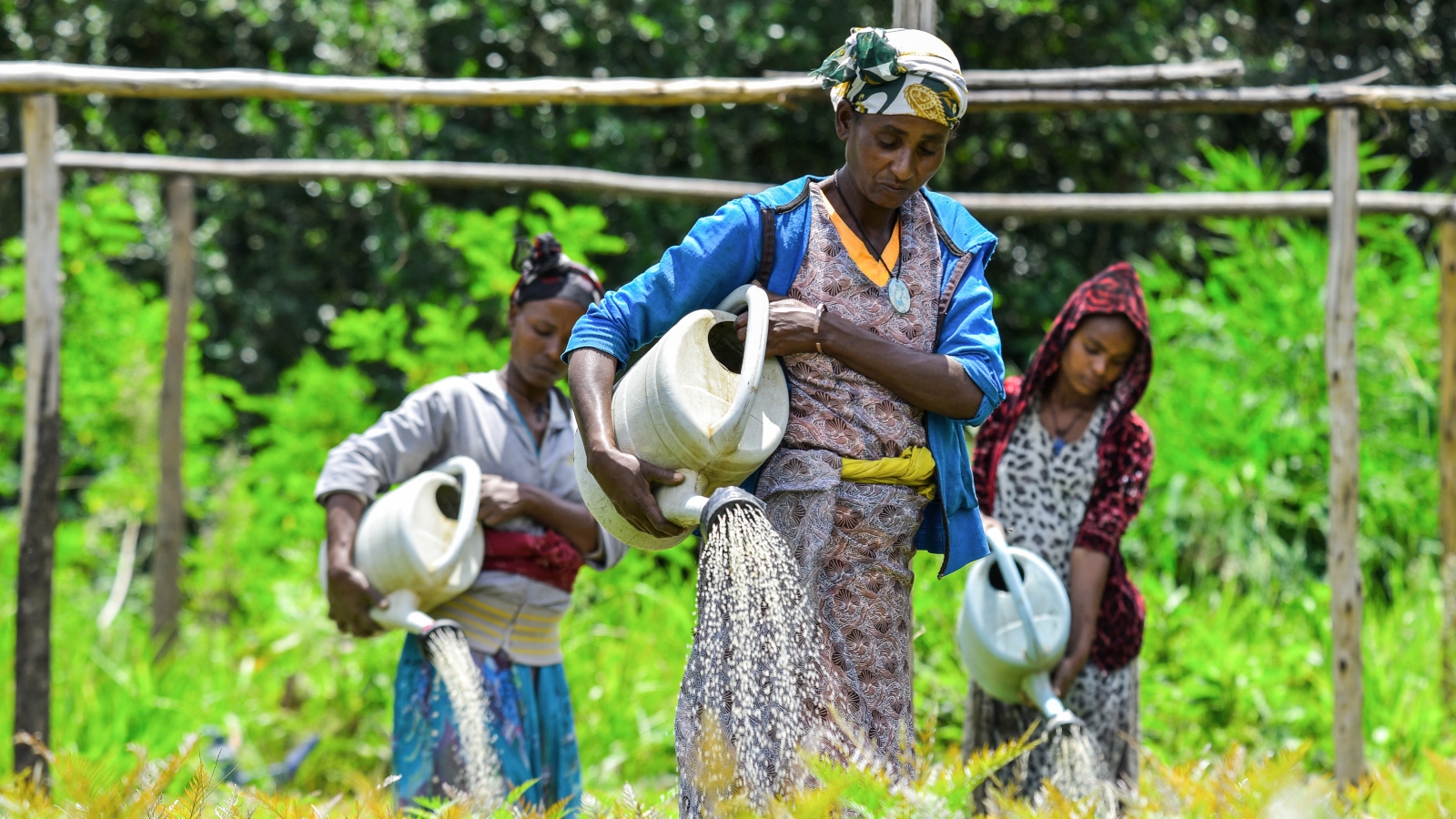
As the highlands were stripped of their natural vegetation, soil fertility plummeted. Cultivation was forced onto increasingly marginal, highly vulnerable land—most notably steep mountain slopes. Without protective root systems and vegetation cover, traditional tillage practices accelerated the erosion of fertile topsoil, washing millions of metric tons of earth into local rivers and vital downstream reservoirs. By 1989, national forest cover had plummeted to less than 3 percent, and the Ethiopian highlands were shedding an estimated 1 billion metric tons of topsoil every single year.
The Awakening and Early Conservation (1970s–2000s)
The catastrophic droughts and famines of the 1970s and 1980s served as a grim wake-up call, exposing the direct link between ecological collapse and human survival. In response, the Ethiopian government, working alongside international donor organizations, began injecting substantial capital into pioneering soil and water conservation projects.
These early interventions laid the groundwork for modern restoration: vulnerable, worn-out lands were fenced off from livestock grazing, widespread tree-planting drives were initiated, and communities were mobilized to build terraces and check dams—small, low barriers constructed from rocks and logs placed strategically across gullies to slow the destructive velocity of rushing rainwater. By the turn of the millennium, these localized restoration programs were steadily scaling up across multiple regional states.
The Green Legacy Revolution (2019–Present)
The movement was dramatically supercharged in 2019 when Prime Minister Abiy Ahmed’s administration transformed grassroots conservation into a unified, nationwide political campaign known as the Green Legacy Initiative. The scheme mobilized a cross-section of Ethiopian society—including farmers, public servants, schools, and religious institutions—by centralizing the production and free distribution of tree seedlings.
In 2024, the government institutionalized this momentum by establishing the Green Legacy and Landscape Restoration Special Fund. This unprecedented financial mechanism committed between 0.5 percent and 1 percent of the annual federal budget—roughly $73 million to $145 million—directly toward landscape restoration.
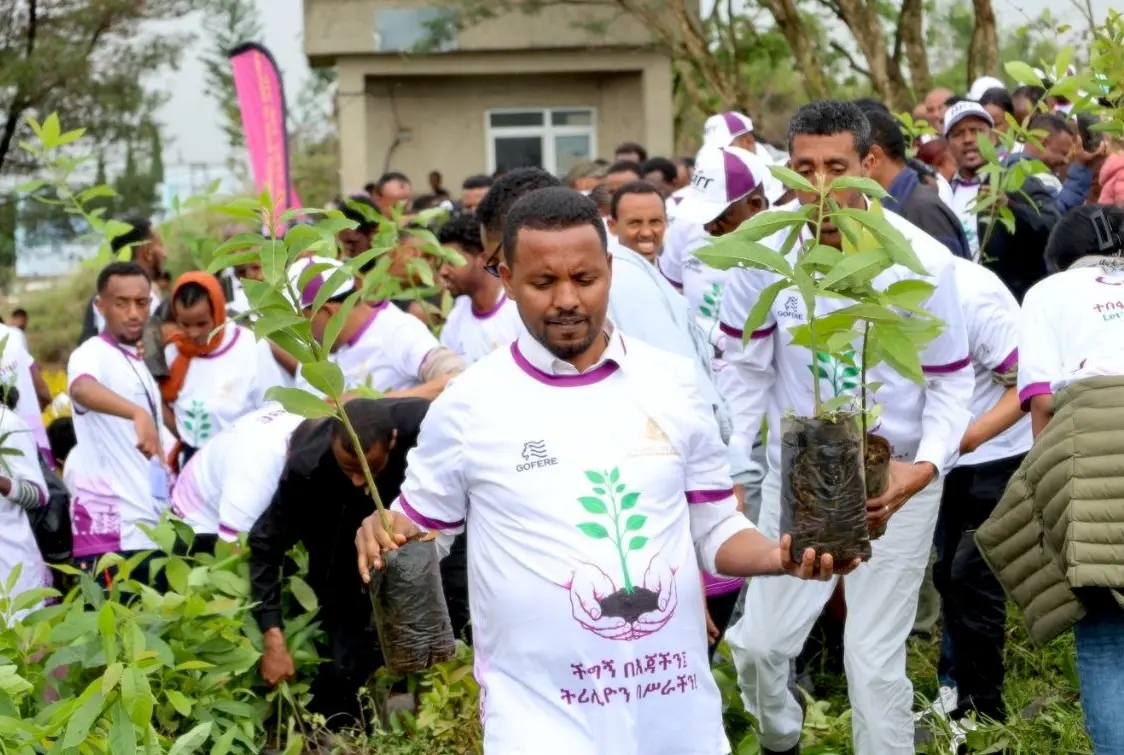
The apex of this mass mobilization was witnessed in August, when a staggering 26.6 million Ethiopians planted 800 million tree seedlings in a single, coordinated 24-hour window, shattering the previous year’s record of 714.7 million. Among the participants was Yeshihareg Teferi, who traveled at dawn from her home in Addis Ababa to the outskirts of Tulu Dimtu. Braving persistent rain, she knelt in the mud to dig planting holes—a ritual she has performed for five consecutive years. While she previously favored indigenous species like the African wild olive and African fern pine, this year she deliberately selected drought-resilient juniper.
"We have a responsibility to ensure future generations inherit a green and fertile environment, rather than barren land," Teferi declared.
Supporting Context & Metrics: Measuring the Impact
The sheer magnitude of Ethiopia’s ecological intervention invites both skepticism and awe. Reforestation projects globally possess a notorious reputation for failure, yet the sheer volume of Ethiopia’s campaign introduces a unique dynamic.
"Reforestation is one of the most difficult things you can imagine," notes Aad Kessler, a researcher at Wageningen University in the Netherlands. "It almost always fails, but this is so big that even if 30 percent of the trees survive, it’s still huge."
Environmental and Ecological Indicators
Data compiled by the Ethiopian government and international bodies suggest that the monumental effort is already yielding measurable dividends:
- Forest Cover Recovery: National forest cover rebounded from 17.2 percent in 2019 to 23.6 percent in 2023.
- Reduction in Deforestation: The annual rate of deforestation plummeted from more than 350 square miles to approximately 100 square miles between 2013 and 2023.
- Biodiversity Return: In Abijata-Shalla National Park within the highlands, comprehensive restoration—featuring terracing, contour bunds, and native grass reseeding—has dramatically increased groundwater infiltration. According to Kumera Wakjira, director-general of the Ethiopian Wildlife Conservation Authority, rising lake water levels have triggered the return of fish populations, which in turn drew back fish-eating birds such as cormorants and African darters. Concurrently, Grant’s gazelles and wild dogs are re-establishing themselves in territories where they were long absent.
Global Comparisons: The Loess Plateau Parallel
International environmental researchers have drawn parallels between Ethiopia’s strategy and China’s historic restoration of the Loess Plateau, one of the most severely eroded regions on Earth. Beginning in the late 1990s, China launched massive watershed rehabilitation initiatives, notably the "Grain for Green" program, which compensated farmers to halt cultivation on fragile slopes and reseed them with trees, shrubs, and grasses. By 2016, more than 11,500 square miles of rain-fed cropland had been successfully converted, boosting regional vegetative cover by 25 percent within a decade.
However, experts note critical distinctions between the two models. While China effectively paid farmers to pull out of farming marginal slopes, millions of Ethiopian smallholders remain entirely dependent on their plots for daily subsistence, forcing the country to weave trees directly into productive agricultural systems rather than abandoning them.
Official Statements and Expert Perspectives
Despite the impressive statistics, the Green Legacy Initiative has sparked intense debate within the international scientific and conservation communities regarding methodology, oversight, and long-term viability.
The Critique: Quantity Versus Quality
Eminent restoration ecologist Emiru Birhane Hizikias of Norway’s Nord University praises the rare political will demonstrated by Ethiopia’s leadership, noting it is a "blessing, politically speaking," to have a prime minister championing environmental restoration. However, he warns that the rapid scaling of the Green Legacy Initiative has outpaced the institutional systems required to ensure high survival rates on the ground.
Hizikias argues that the prevailing culture overemphasizes sheer planting numbers over long-term nurturing. "You can’t expect a baby to grow if you don’t care for it," he cautions, "but that’s how plantation in Ethiopia is being done."
Independent literature reinforces these concerns. A landmark 2022 study published in The Philosophical Transactions of the Royal Society B examined 176 reforestation projects across Asia and discovered that approximately half of all planted trees failed to reach the five-year survival mark.
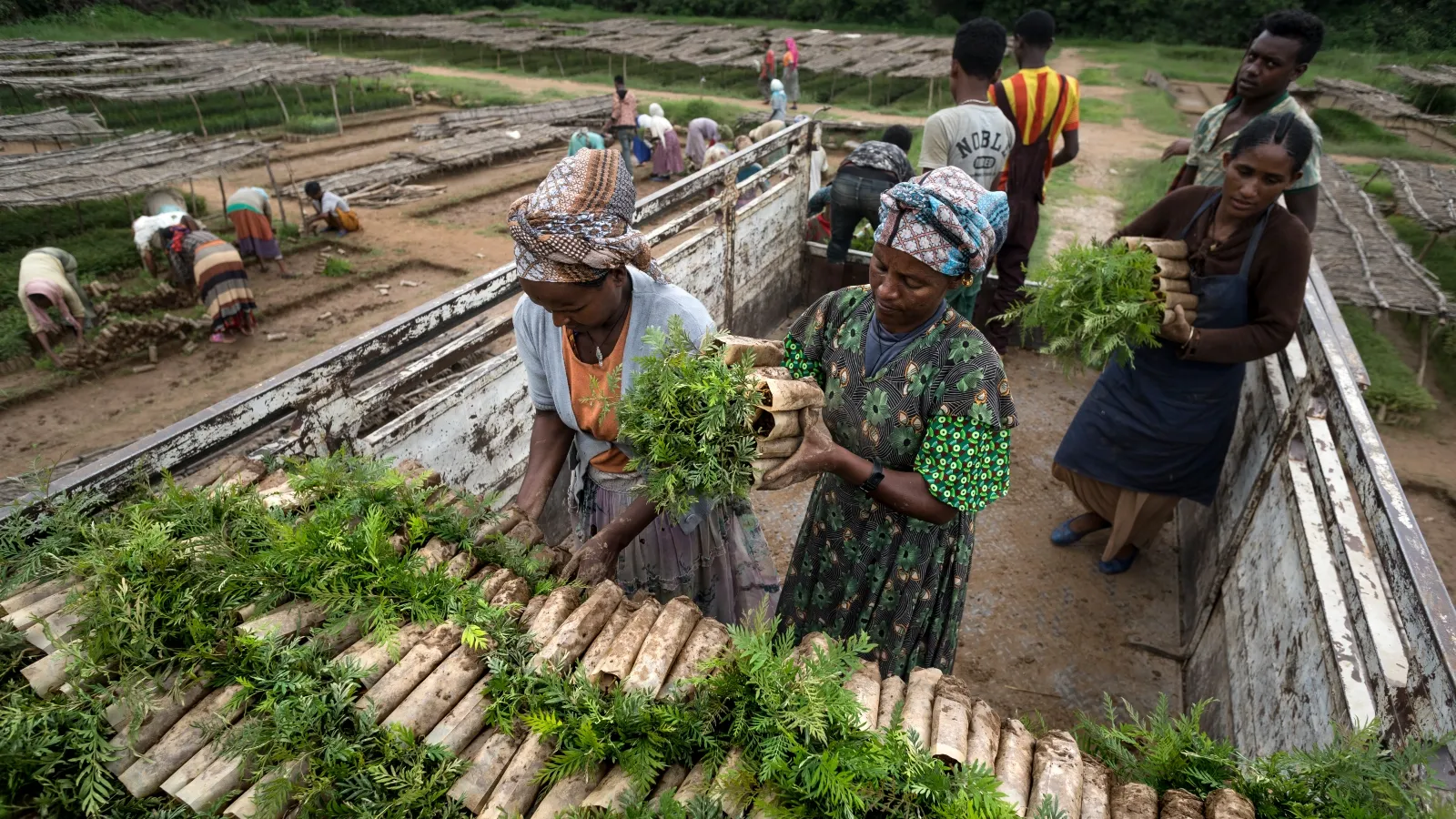
Endalkachew Wolde-Meskel, a soil scientist and senior researcher at the Center for International Forestry Research, emphasizes that planting trees is merely a single component of a much more complex biological puzzle. True ecological recovery, he stresses, requires the simultaneous regeneration of native grasses, the implementation of comprehensive soil and water conservation engineering, and sustained community-led management.
"The objective is not really ‘plant trees,’" Wolde-Meskel asserts. "It is to restore the functioning of the entire landscape."
The Defense: Institutional Guidance and Survival Studies
This critical characterization is strongly disputed by domestic practitioners and academic advisers to the government. Abreham Berta Aneseyee, an environmental scientist at Wolkite University and an advisor to Ethiopia’s Ministry of Agriculture, points out that the mass plantings are tightly coupled with hands-on technical support. Forestry and agricultural experts routinely travel from farm to farm, training smallholders on optimal planting depths, moisture-conservation techniques, and the construction of protective earth bunds, while educating communities on sustainable forest management to prevent premature harvesting.
Empirical evidence appears to back this localized support system. A 2026 study evaluating more than 44,500 seedlings planted in southern Ethiopia under the 2023 Green Legacy campaign revealed an impressive 80 percent survival rate. Survival metrics were markedly higher among older seedlings, those planted during peak wet seasons, and specimens whose planters had received explicit training in best plantation practices.
In regions like the Humbo and Boloso Sore districts in the southwestern Wolaita Zone, the Green Legacy framework has been successfully integrated with long-standing community-based watershed management. Here, residents routinely construct rock check dams to stabilize eroding gullies, dig half-moon micro-catchments to trap scarce rainwater, and intercrop trees with native grasses.
Future Outlook: Climate Pressures and Local Realities
As Ethiopia prepares to showcase its ambitious greening initiatives as the host of the upcoming U.N. climate conference, the nation faces an unprecedented race against time. The planet’s shifting climate is altering the environmental baselines that newly restored landscapes must survive.
In arid pastoral regions such as Afar and Somali, the Green Legacy Initiative has pivoted toward planting drought-tolerant species. Yet, climate scientists question whether even these hardy varieties can endure the extreme temperatures projected for the latter half of the century. The Intergovernmental Panel on Climate Change (IPCC) projects increasingly frequent and intense rainfall events across East Africa as global temperatures climb.
The destructive potential of these shifts was laid bare in July 2024, when torrential downpours in the southern highlands’ Geze Gofa district triggered massive twin landslides that claimed at least 257 lives. Conversely, intensifying El Niño cycles continue to wreak havoc on agricultural predictability. This past summer, the Famine Early Warning Systems Network linked El Niño phenomena to historically poor seasonal rains across parts of Ethiopia, subjecting regions to their driest June and July on record.
For veteran smallholders like 65-year-old Belayneh Mamo in the drought-prone Amhara region, these climatic aberrations directly undermine the mechanics of restoration. Relying traditionally on July rainfall to nourish staple crops like teff, sorghum, maize, and wheat, Mamo received government-distributed coffee, neem, and gesho seeds this year but was unable to plant until August due to delayed monsoon rains.
"In previous years, September was a period when crops were already developing and food such as bulgur and maize were becoming available for consumption," Mamo laments. "The delays affected the seedlings we plant, our crops, and the availability of animal feed."
Signs of Hope in the Gurage Zone
Despite these systemic climatic headwinds, localized transformations offer a powerful counter-narrative of resilience. Back on Niku Argane’s hillside farm in the Gurage Zone, the tangible fruits of half a decade of labor are clearly visible.
Since 2019, Argane has methodically integrated grasses, fodder plants, fenugreek, and fruit-bearing trees along the contours of his fields. These living barriers firmly anchor the vulnerable topsoil while supplying vital feed for his four cows, six goats, and three sheep. Through reduced erosion and improved water infiltration, his barley yield has nearly doubled, leaping from 1,800 pounds per acre to roughly 3,200 pounds.
"Restoring degraded land isn’t just about protecting the environment," Argane reflects, surveying his revitalized, greener acreage. "It’s also about making life better for my family and community."



