Executive Overview
An underground power line may not sound like the stuff of technological revolutions, but the newly completed Champlain Hudson Power Express (CHPE) represents a monumental leap forward for regional grid planning, interstate energy markets, and aggressive carbon-reduction mandates. Spanning 339 miles from the Canadian border to the heart of Queens, New York, this marvel of modern engineering is designed to supply up to 20% of New York City’s total electricity demand. Crucially, this power will be drawn almost entirely from the abundant, renewable hydropower reserves of Quebec.
Yet, the monumental $6 billion privately funded infrastructure project has hit significant turbulence right out of the gate. For much of July, the high-voltage artery has sat dormant due to a string of early operational failures. These outages have renewed a broader, urgent debate among energy experts, grid operators, and policymakers: Can cross-border energy corridors reliably shoulder the burden of clean-energy transitions when confronted with both mechanical startup challenges and the compounding pressures of climate change—specifically, multi-year droughts threatening northern water reservoirs?
This investigative report examines the origins, engineering triumphs, regulatory hurdles, and current operational trials of the CHPE transmission line. By analyzing its potential to reshape North America’s energy landscape alongside the tangible barriers it must overcome, we explore what the future holds for this vital link between Quebec’s reservoirs and New York City’s sprawling urban grid.
Detailed Chronology: From Concept to Construction and Early Outages
The journey of the CHPE—affectionately dubbed "Chippy" by those closest to the development—is a testament to long-term infrastructure planning. Conceptualized 15 years ago, the official permitting and regulatory review process formally kicked off in March 2010. The core vision was as bold as it was necessary: build a high-capacity, heavy-duty electrical bridge connecting the vast surplus of renewable generation in Quebec with the massive, power-hungry markets of southern New York.
The Construction Feat
Financed through a partnership between Transmission Developers—a subsidiary of the alternative asset management giant Blackstone—and Hydro-Québec, the province’s crown-owned manager of generation and transmission, construction officially commenced in late 2022. By early this year, the $6 billion project was complete.
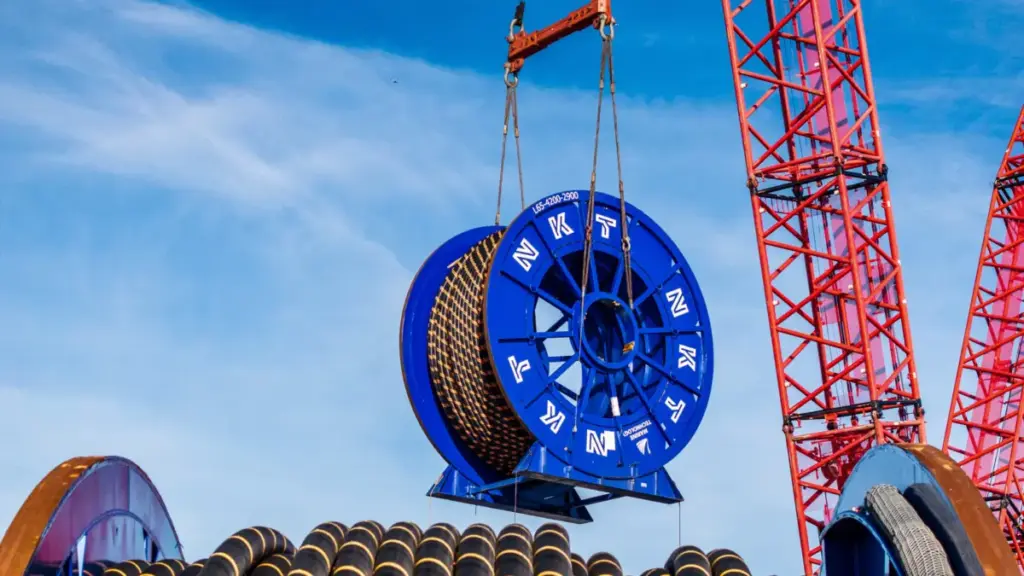
The physical architecture of the line is nothing short of breathtaking. The transmission corridor consists of a bundled pair of high-voltage direct-current (HVDC) power cables, each measuring approximately five inches across. To protect the line from weather hazards, aesthetic complaints, and urban congestion, developers buried the bundle either underground or underwater across the entirety of New York State.
A substantial portion of the southern route was laid directly along the floor of the Hudson River. This required specialized marine construction vessels capable of deploying high-pressure water jets deep into riverbed sediment to carve secure trenches, ensuring the cables would rest safely out of the path of commercial shipping and marine ecosystems.
Out of the Gate: Early Reliability Hurdles
Despite its state-of-the-art engineering, CHPE’s operational debut has been decidedly rocky. The line has suffered two major outages since going live.
- Outage One (July 1): The initial failure was traced to a sudden trip at a converter station located on the Canadian side of the international border.
- Outage Two (July 4): The second, more persistent outage struck on Independence Day and crippled the line through much of the month.
Industry experts, however, urge a degree of patience, noting that teething problems are practically a rite of passage for megaprojects of this scale. Normand Mousseau, a physics professor at the Université de Montréal, noted in interviews with the regional press that complex high-voltage infrastructure is rarely fully tested under true operational stress until it goes live.
Investigations by trade publication RTO Insider revealed that the root cause of the second outage was a damaged section of cable on the United States side of the border. Promptly responding to the crisis, the cable’s manufacturer deployed specialized technical teams to excavate, isolate, and extract the compromised segment.
Lynn St-Laurent, a spokesperson for Hydro-Québec, confirmed the swift remediation efforts. "The damaged portion of the cable has been removed and replaced," St-Laurent stated. "It is currently estimated that the remaining work, including necessary post-repair testing, will be completed by the weekend."
These growing pains are not isolated to New York. Similar maladies have plagued the New England Clean Energy Connect line. Opening in January, that 145-mile transmission corridor stretching from Quebec to Maine has also grappled with unexpected outages, delivering minimal net energy to the Northeast grid during its initial months.
Supporting Context & Metrics: Renewables, Interconnections, and Environmental Impact
To understand the strategic importance of the CHPE, one must examine the stark contrast in energy generation profiles between Quebec and New York State.

The Quebec Advantage and New York’s Fossil Fuel Dilemma
In Quebec, over 99% of electricity is generated from renewable sources. The province’s massive baseload is anchored by world-class hydroelectric facilities, while its wind energy capacity is expanding at a rapid clip.
New York, by contrast, possesses its own portfolio of nuclear, wind, and domestic hydro assets, but the state still relies heavily on fossil-fuel-fired power plants to satisfy peak demand, particularly during punishing summer heatwaves and bitter winter freezes. Bridging these two markets allows surplus renewable energy from the north to displace dirty, carbon-emitting fossil generation in the south.
The Economics and Mechanics of Grid Interconnection
Energy economists and grid planners have long championed large-scale interconnections as a premier vehicle for accelerating the global transition away from fossil fuels.
- Emissions Reductions: Numerous academic studies, including foundational research published in journals such as Nature Climate Change, demonstrate that robust interstate and international transmission lines significantly reduce greenhouse gas emissions by allowing zero-carbon power to flow freely across regional boundaries.
- Cost Optimization: According to research from Pacific Northwest National Laboratory (PNNL), expanding electricity transmission infrastructure lowers system-wide costs. By sharing generation resources across different time zones and weather patterns, grid operators can avoid the capital-intensive construction of redundant local power plants.
- Capacity Minimization: The sheer ability to import electricity precisely where and when it is needed helps cap the total amount of new local generation capacity utilities must build, saving ratepayers billions of dollars over the lifespan of the grid.
Official Statements and Risk Management
The timing of the CHPE outages could have spelled disaster for a fragile urban grid, but New York’s system operators dodged a bullet thanks to conservative planning principles.
The New York ISO Perspective
Kevin Lanahan, a spokesperson for the New York Independent System Operator (NYISO)—the non-profit organization responsible for managing the state’s bulk electricity grid—offered reassurance regarding the reliability of the system during recent summer heatwaves.
"Our planning studies did not assume CHPE would be available this summer, and that was one reason the grid performed reliably during the heat wave earlier this month," Lanahan said in an official statement. "A core principle of reliability planning is not relying on any single project."
This prudent approach underscores the reality of modern grid management. Utility planners build redundancy into their models, fully aware that first-of-a-kind transmission assets require extensive shakedown periods before they can be counted on for critical baseload power.
However, Lanahan and other energy officials emphasize that this protective buffer is temporary. The ultimate objective is for regional grid operators to safely integrate these massive transmission pathways into their day-to-day resource adequacy calculations. As the specialized equipment undergoes rigorous stress testing and utilities develop historical performance data, projects like the CHPE are expected to form the backbone of clean-energy mandates.
Future Outlook: Overcoming Climate-Induced Droughts and Long-Term Viability
While mechanical repairs will soon restore physical connectivity between Quebec and Queens, a looming environmental challenge threatens the long-term utility of cross-border hydro projects: climate change.
The Threat of Intensifying Droughts
Energy analysts and climate scientists are closely monitoring the hydrological health of Quebec’s vast water reservoirs. The region has experienced an intense, multi-year drought over the past three years. This prolonged dry spell has steadily drained the water reserves that Hydro-Québec relies upon to generate its massive hydroelectric surpluses.
The implications for New York are profound. Even if the 339-mile underground transmission line is fully repaired, optimized, and cleared for maximum capacity, it can only transmit as much energy as Quebec’s water supplies allow. If northern reservoirs remain depleted due to changing precipitation patterns and rising temperatures, the volume of green power available for export to the United States could experience seasonal or long-term bottlenecks.
Conclusion: A High-Stakes Bet on the Future
The Champlain Hudson Power Express is much more than a bundle of copper and aluminum buried beneath rivers and roadways; it is a bellwether for the energy transition in North America. It proves that ambitious, cross-border infrastructure can still be permitted, financed, and constructed in the 21st century.
Yet, its early struggles with cable damage and the sobering reality of northern climate change serve as a cautionary tale. As New York pushes toward its statutory decarbonization targets, projects like the CHPE will be indispensable. Navigating the delicate balance between engineering resilience, mechanical reliability, and climate adaptation will determine whether this $6 billion investment fulfills its promise of powering the Empire State with clean northern water for decades to come.