Executive Overview
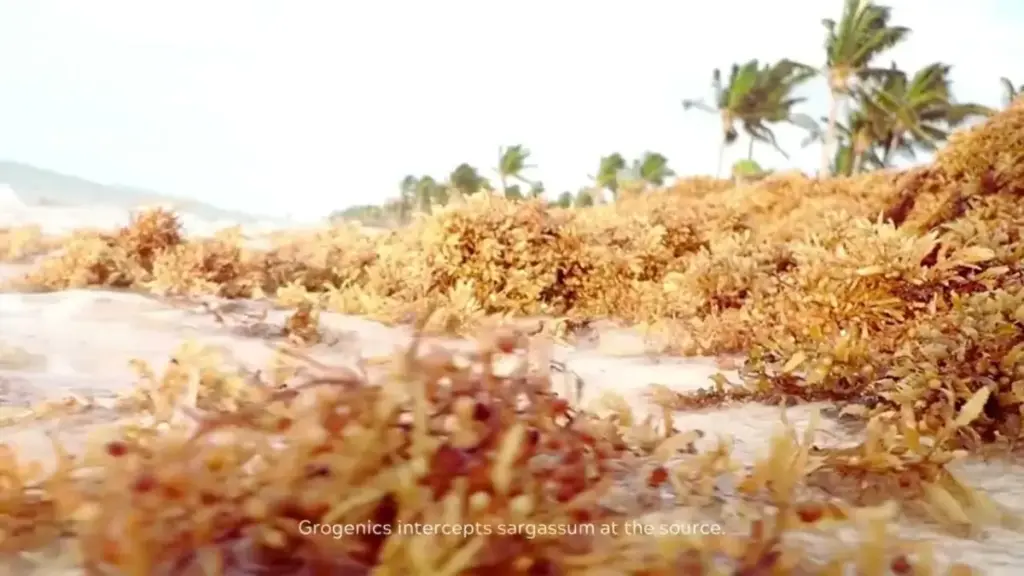
Along the sun-drenched shores of the Mexican Caribbean, a silent ecological and economic crisis washes ashore daily. Stretches of world-renowned coastline—from the pristine beaches of Tulum and Playa del Carmen to the hotel zone of Cancún—are increasingly under siege by gargantuan, unprecedented blooms of sargassum. This floating brown macroalgae, once a vital pelagic habitat for open-ocean marine life in the Sargasso Sea, has exploded into catastrophic proportions over the last decade. Propelled by shifting ocean currents, rising sea temperatures, and massive nutrient runoffs from agricultural lands and urban centers, these golden tides now choke coastlines by the millions of tons.
When this decaying biomass accumulates on beaches, it poses a multifaceted threat. As it rots under the tropical sun, it emits noxious hydrogen sulfide and methane—a potent greenhouse gas—suffocates nearshore marine life, leaches heavy metals and arsenic into the sand, and deals a devastating blow to the region’s multi-billion-dollar tourism industry. Local governments and resort operators have historically scrambled to deploy manual labor and heavy machinery to clear the beaches, only to dump the rotting seaweed into municipal landfills, where it continues to generate toxic leachate and greenhouse gases.
Enter the Sargassum Recovery for Clean Coasts project—a pioneering, regenerative initiative that reimagines this coastal nightmare as an extraordinary economic and environmental asset. Spearheaded as part of the Sustainable Travel International Climate Impact Portfolio and powered by innovative implementation partners like Grogenics, this project intercepts sargassum directly offshore and along the water’s edge before the decomposition process begins.
Through advanced biological processing, including rigorous detoxification via bioremediation, the harvested seaweed is systematically upcycled from a hazardous waste liability into a high-value, biochar-enriched agricultural input. This transformative process not only prevents millions of metric tons of methane from entering the atmosphere but also locks carbon permanently into the soil, restores degraded farmlands, supports local agrarian communities, and pioneers a resilient blueprint for the global "blue economy."
This in-depth investigative report explores the mechanics of the sargassum crisis, the chronological evolution of this groundbreaking recovery model, the hard metrics driving its success, and the visionary outlook for transforming tropical coastlines into models of circular sustainability.
Detailed Chronology: From Ecological Anomaly to Systematic Circular Action
To understand the genius of the Sargassum Recovery for Clean Coasts initiative, one must trace the timeline of how a natural oceanic phenomenon mutated into a continental-scale ecological emergency, and how science gradually caught up to turn the tide.
Phase I: The Rise of the Great Atlantic Sargassum Belt (2011–2018)
For centuries, sargassum lived a relatively unobtrusive existence in the eponymous Sargasso Sea of the North Atlantic, held in place by circulating ocean currents known as the North Atlantic Gyre. However, climatologists and marine biologists mark a dramatic turning point in 2011, when unprecedented quantities of sargassum began washing up across the Caribbean basin, West Africa, and the Gulf of Mexico.
Researchers soon identified a massive new accumulation zone dubbed the Great Atlantic Sargassum Belt (GASB), stretching from the coast of West Africa all the way to the Gulf of Mexico—spanning over 5,000 miles. Fueled by agricultural runoff rich in nitrogen and phosphorus, deforestation-driven Amazon River discharges, and warming ocean temperatures linked to global climate change, this floating emerald-brown highway began delivering relentless waves of biomass to the shores of Quintana Roo, Mexico. By 2018, the crisis reached a fever pitch, with thousands of linear miles of Caribbean beaches buried under mounds of seaweed up to two meters deep, prompting local authorities to declare a state of emergency.
Phase II: The Trap of Traditional Remediation (2018–2020)
During the height of the early influxes, mitigation strategies were reactive, desperate, and often ecologically destructive. Municipalities relied on heavy front-end loaders and tractors to scrape beaches. This heavy machinery accelerated beach erosion, crushed sea turtle nests, and scooped up thousands of tons of clean sand alongside the seaweed.
Worse still, the collected sargassum had nowhere to go. Dumped into unlined inland quarries or makeshift municipal landfills, the macroalgae quickly underwent anaerobic digestion. This process produced toxic leachate that threatened underground freshwater aquifers (cenotes) and released massive plumes of methane and carbon dioxide into the atmosphere. It became glaringly obvious that manual beach-cleaning was merely sweeping the problem under the rug.
Phase III: The Birth of the Circular Intervention (2021–Present)
Recognizing that traditional waste management was failing, environmental innovators pivoted toward a systems-thinking approach. The Sargassum Recovery for Clean Coasts project was conceived to disrupt the linear "collect and dump" model.
- Targeted Interception: Rather than waiting for the seaweed to rot on the shore, the project began organizing systematic collection networks closer to the shoreline and in nearshore waters, capturing the biomass while it was still fresh.
- The Bioremediation Breakthrough: Raw sargassum naturally absorbs heavy metals (such as arsenic, cadmium, and lead) from industrial pollution as it drifts across the ocean. Direct application of raw seaweed to agricultural fields is therefore dangerous, as these toxins can enter the food chain. The project integrated specialized bioremediation protocols—utilizing specific microbial consortia and organic stabilization techniques—to safely detoxify the macroalgae.
- Biochar Integration: To maximize carbon sequestration, the detoxified biomass is converted through pyrolysis or specialized composting into biochar-enriched compost. Biochar is a stable, highly porous form of charcoal that acts as a sponge for nutrients and water, creating an ideal habitat for beneficial soil microbes.
Through these chronological milestones, the initiative evolved from a localized cleanup effort into a globally recognized framework for marine-terrestrial carbon cycling.
Supporting Context & Metrics: The Science of the Blue Economy
The success of the Sargassum Recovery for Clean Coasts project rests on rigorous scientific foundations and measurable environmental, economic, and social metrics. To evaluate its true impact, we must examine the intersection of oceanography, soil science, and carbon accounting.
Chemical Composition and the Hazard of Raw Sargassum
Sargassum is chemically complex. Unlike terrestrial plants, brown macroalgae contain high concentrations of salts, iodine, and heavy metals. When left to decay in aerobic conditions, it emits foul-smelling hydrogen sulfide gas ($H_2S$), which corrodes electronics, causes respiratory distress in coastal populations, and drives tourists away. Under anaerobic conditions (such as deep piles in landfills), methanogenic bacteria thrive, releasing methane ($CH_4$), a greenhouse gas with a global warming potential up to 34 times greater than carbon dioxide over a 100-year timescale.
The Bioremediation and Composting Matrix
The project’s processing facilities utilize a carefully managed composting protocol. By blending the fresh, intercepted sargassum with carbon-rich agricultural residues (such as wood chips, bagasse, and crop stubble) and introducing targeted biological inoculants, the heavy metal bioavailability is drastically reduced, and salinity is balanced.
[Raw Sargassum Harvest]
         │
         ▼
[Targeted Interception (Pre-Decay)]
         │
         ▼
[Bioremediation & Detoxification Phase] (Neutralizing Heavy Metals & Salts)
         │
         ▼
[Pyrolysis / Composting Integration] ──► [Biochar Production]
         │
         ▼
[Biochar-Enriched Organic Compost] ──► [Soil Restoration & Carbon Sequestration]
Quantifying the Environmental Dividend
The metrics associated with this carbon offset project are compelling:
- Methane Avoidance: By diverting thousands of tons of sargassum from anaerobic municipal dump sites, the project prevents millions of cubic meters of methane from venting into the atmosphere.
- Permanent Carbon Sequestration: Through the creation of biochar, carbon that the macroalgae naturally sequestered from the ocean during its growth phase is locked into stable aromatic carbon rings. When applied to agricultural soils, this carbon remains sequestered for centuries, effectively acting as a permanent carbon sink.
- Soil Regeneration in Yucatan: Local farmers in the Yucatán Peninsula face degraded, nutrient-leached soils due to decades of intensive slash-and-burn or chemical-heavy agriculture. The biochar-enriched compost enhances soil water retention by up to 300%, reduces the need for synthetic nitrogen fertilizers, and revives depleted microbial soil food webs.
The Economic Engine: Supporting Farmers and Tourism
A true circular blue economy must deliver economic viability alongside ecological healing.
- For Tourism: Clean beaches restore the aesthetic and economic viability of Mexico’s coastal resorts, protecting hundreds of thousands of hospitality jobs.
- For Agriculture: By supplying local farmers with high-performance, cost-effective organic compost, the project cuts input costs, buffers crops against extreme weather events like droughts, and boosts crop yields by 15% to 40% depending on the crop variety.
Official Statements and Stakeholder Perspectives
The momentum behind the Sargassum Recovery for Clean Coasts project is amplified by the collaborative efforts of conservationists, community leaders, and corporate sustainability partners.
Sustainable Travel International
As a core initiative backed by Sustainable Travel International’s Climate Impact Portfolio, the project represents a paradigm shift in how carbon offsetting is conceptualized. Leadership at Sustainable Travel International notes:
"Carbon offsetting can no longer be limited to simply planting trees in remote forests. True climate resilience requires holistic, place-based interventions that heal the very ecosystems—both terrestrial and marine—that are on the front lines of global disruption. By supporting the Sargassum Recovery for Clean Coasts project, our program participants are directly financing a model that cleans tropical waters, protects vulnerable coastal communities, and builds enduring agricultural resilience."
Grogenics: Engineering Biological Solutions
Grogenics, the technical implementation partner providing field execution and video documentation for the initiative, emphasizes the urgency of scaling regenerative agriculture to meet the climate challenge:
"We are looking at a paradigm where waste does not exist in nature. Sargassum is simply a misplaced resource. By harnessing the power of bioremediation and biochar, we are turning an ecological scourge into a biological sponge. This project proves that we can pull carbon out of the air and sea, heal depleted soils, and empower local farmers—all in a single, elegant closed-loop cycle."
Local Agrarian and Community Voices
For the farmers of the Yucatán Peninsula, the transformation has been equally profound. Local agricultural cooperatives participating in the project report a noticeable reduction in irrigation costs and a renewed resilience in maize, citrus, and vegetable crops against increasingly erratic tropical rainfall patterns.
Future Outlook: Scaling the Blue Economy Blueprint
As global temperatures continue to climb and nutrient loading in the Atlantic shows few signs of abating, sargassum blooms are projected to remain a fixture of the Caribbean landscape for the foreseeable future. Consequently, the long-term outlook for the Sargassum Recovery for Clean Coasts project is focused on strategic scaling, technological refinement, and replication across neighboring affected regions.
Technological Upgrades and Automation
Future phases of the project aim to integrate smart-sensing drone networks and nearshore barrier booms equipped with low-impact conveyor systems. These advancements will optimize the timing and efficiency of sargassum harvesting, minimizing bycatch and reducing fuel consumption during collection. Furthermore, continuous R&D into industrial pyrolysis units will allow for higher-grade biochar production, opening up secondary revenue streams through carbon credit certification markets.
Policy Integration and Regional Expansion
Scaling this success requires robust policy frameworks. Environmental advocates are working alongside Mexican federal and state agencies to integrate circular sargassum management into official coastal zone management plans. By establishing standardized quality benchmarks for detoxified seaweed compost, authorities can streamline distribution networks across the entire Riviera Maya and potentially export the model to other hard-hit Caribbean nations, such as the Dominican Republic, Jamaica, and Barbados.
The Role of Conscious Travelers and Carbon Markets
The expansion of this initiative relies heavily on voluntary carbon markets and traveler philanthropy. Through programs like Sustainable Travel International’s Climate Impact Portfolio, travelers and corporations can offset their unavoidable footprints by directly funding these verified marine and terrestrial interventions. As consumers increasingly demand transparency and tangible local benefits from their offset investments, the Sargassum Recovery for Clean Coasts project stands out as a golden standard.
Conclusion
The invasion of sargassum along the coastlines of Mexico is a stark reminder of the unintended consequences of human disruption to global geochemical cycles. Yet, within this crisis lies an extraordinary opportunity for systemic transformation.
By refusing to view the seaweed merely as a waste management headache, the Sargassum Recovery for Clean Coasts project—supported by Sustainable Travel International and executed by partners like Grogenics—has demonstrated the immense power of circular thinking. Through targeted interception, safe bioremediation, and biochar-driven soil restoration, this initiative bridges the gap between marine conservation and terrestrial agriculture.
As this blueprint scales, it offers a beacon of hope for tropical coastlines worldwide. It proves that with scientific ingenuity, cross-sector collaboration, and a commitment to regenerative principles, humanity can turn the tide on ecological emergencies, locking carbon in the earth while letting local communities, tourism, and ecosystems thrive in harmony.