

Executive Overview
Speaking from an air-conditioned Soho hotel room during the height of a punishing summer heatwave, actor Benedict Cumberbatch admits he is dreading stepping outside. The irony is inescapable. Record-breaking temperatures have gripped the United Kingdom, fueled by a worsening global climate breakdown that has placed unprecedented stress on ecosystems, agricultural systems, and national water reserves. According to data co-authored by the Met Office, the searing heatwaves of early summer triggered an estimated 2,700 excess deaths across England and Wales alone.
Yet, for Cumberbatch, this meteorological crisis has arrived at a poignant, albeit bittersweet, moment. The Oscar-nominated actor is currently on a high-profile promotional tour for his new environmental documentary, How to Live on Earth.
"The irony is not lost on anyone," Cumberbatch reflects. "We’re living in the results of climate breakdown, so stepping outside is—literally—a call to action."
Launching on YouTube this month, How to Live on Earth aims to function as a pragmatic blueprint for how humanity can fundamentally alter its interaction with a besieged planet. Rather than retreating into despair, the documentary—directed by Jonnie Hughes and featuring Cumberbatch delivering striking monologues from the cavernous, echoing halls of London’s Natural History Museum—highlights a diverse coalition of scientists, Indigenous activists, and visionary chefs. Together, they are mapping out a viable future where civilization and nature can coexist without mutual destruction.
Detailed Chronology: Two Decades of Eco-Consciousness and On-Screen Compromises
Cumberbatch’s journey toward environmental advocacy is not a recent PR pivot; it represents a two-decade-long personal evolution. For years, the 50-year-old actor has attempted to tread more lightly on the earth, a commitment that led him to adopt a strict vegan lifestyle. However, living sustainably while navigating the demands of a high-profile Hollywood career has occasionally proven to be an uphill battle.
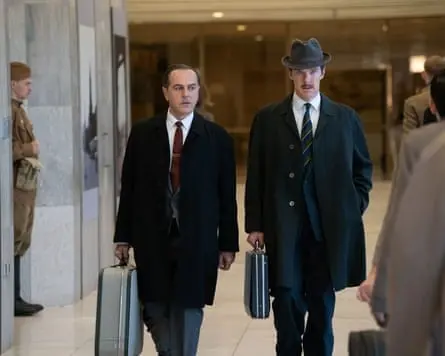
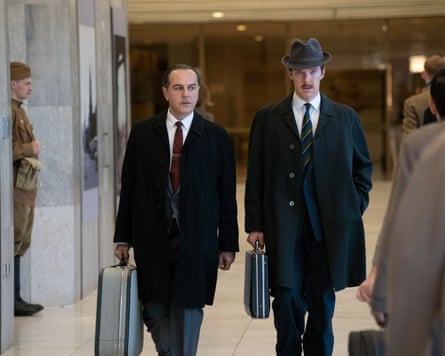
A prime example occurred during the physical preparation for The Courier, a true-story Cold War thriller in which Cumberbatch portrayed Greville Wynne, a British businessman-turned-spy who languished in a harsh Soviet prison. To accurately reflect Wynne’s deteriorating physical condition during captivity, medical advisors and directors demanded a radical diet.
"They said, ‘You can’t have any fibre in the last two weeks. You need to eat lean meat,’" Cumberbatch recalls. "And I was like, ‘I’m vegan!’"
The dietary shift took a severe toll on his body. Stripped of essential nutrients and fiber, his blood sugar plummeted, leading to acute fatigue and illness.
"People were saying, ‘You should think about eating a little bit of meat now, because your body doesn’t really work under these conditions—you’ve lost so much weight,’" he notes.

Although he swiftly returned to a plant-based diet once filming wrapped, the ordeal forced a pragmatic recalibration. Today, Cumberbatch has stepped away from strict veganism, instead opting to source his animal protein strictly through ethical channels—such as consuming wild British venison, a meat harvested to control the nation’s severe deer overpopulation.
This tension between personal ideals and professional realities extends to the broader film industry. Recognizing that large-scale productions are notorious carbon emitters, Cumberbatch has lent his weight to the Green Rider movement. This groundbreaking initiative encourages high-profile actors to make measurable cuts to pollution and emissions a non-negotiable contract condition before signing onto a project.
"What we’re trying to push towards is where it becomes contractual," he explains. "We’re working with Disney at the moment—their Avengers project in the UK. So yeah, it’s scaling up—and everyone I speak to about it in my community is on board."
When questioned about other luxury habits, such as the use of private jets, Cumberbatch is unequivocal: "No." However, he cautions against the trap of puritanical finger-pointing, arguing that systemic transformation requires broad societal participation rather than performative shaming.
"We just waste our energy if we’re naysaying and calling people hypocrites," he asserts. "The fashion industry is a bigger polluter than aviation, and the food industry massively. That’s all of us, that’s everyone."
Supporting Context & Metrics: The Crisis, the Costs, and the Digital Paradox
The release of How to Live on Earth arrives against a backdrop of escalating environmental metrics and intensifying social friction. The Met Office’s revelation of 2,700 excess deaths during the May and June heatwaves underscores that climate breakdown is no longer a distant theoretical threat—it is an immediate public health emergency within the UK.
Simultaneously, the political landscape surrounding environmental activism has grown increasingly volatile. Having attended Extinction Rebellion protests in London back in 2019, Cumberbatch expresses profound dismay over recent government crackdowns and draconian legal sentences handed down to peaceful demonstrators who blocked roads or targeted property to raise awareness.
"We should have the right in a democracy to peaceful action, even if it is direct action," he insists.
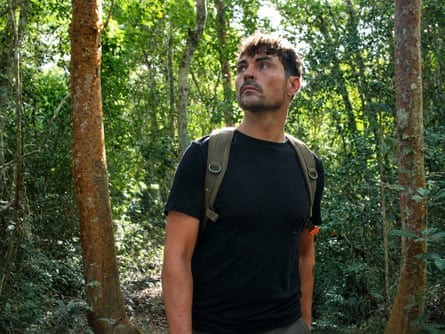
Yet, How to Live on Earth deliberately pivots away from relentless doom-scrolling, opting instead to showcase human ingenuity across the globe. Alongside high-profile figures like former White House chef Sam Kass—who now experiments with alternative proteins—the film introduces viewers to grassroots pioneers. Among them is Dan O’Neill, a conservation biologist specializing in big cats who spends months deep in remote rainforests.
For O’Neill, the documentary’s YouTube release represents a vital democratization of ecological science.
"I always work in remote places," O’Neill says. "A lot of the work we do just isn’t seen by wide audiences. People in Mongolia often have never seen a snow leopard, for example. I am so proud How to Live on Earth is going on YouTube—as people who live in these remote places can see it. It democratises our message for the entire world. Indigenous communities will see themselves represented."
The film also captures the psychological paradox of modern connectivity. In one revealing scene, O’Neill is filmed emerging from the deep seclusion of a rainforest into a waiting vehicle, immediately powering on his phone to catch up on weeks of missed communication. The initial dopamine rush instantly curdles into frustration as notifications overwhelm him, leaving him longing for the absolute quiet of the canopy.
"That happens every time," O’Neill laughs. "It is so weird that we are addicted to this little device. The ability to communicate with my family even from remote parts of the world is powerful. But the second you get your phone, you realise you don’t want it."
Cumberbatch shares this visceral exhaustion with digital saturation. "For about half a year," he confesses, "I haven’t been able to bring myself to look at the tally of unanswered WhatsApps and emails. It’s just thousands. I can’t deal with it." He speaks with visible disdain of "swiping left, clickbait, all the rest of it."
Official Statements & Core Philosophies: Redefining Value in the Natural World
A central intellectual challenge addressed in How to Live on Earth is economic. The documentary champions a provocative, blue-sky paradigm shift: framing living rainforests and wild ecosystems as intrinsically and financially more valuable than the extracted resources—such as gold or timber—hidden beneath them. To a skeptical public conditioned by capitalist orthodoxy, this might sound utopian. Cumberbatch, however, argues that the current economic framework is fundamentally flawed because it treats nature as a zero-cost externality.
"Nature that’s alive is actually far more valuable to us than dead nature," Cumberbatch argues. "So an elephant’s tusk is not worth as much as the elephant alive, in terms of what it brings to the savannah, to make the savannah work as an ecosystem. It’s how you create a new financial model whereby people can invest as shareholders in nature and that nature—which has done all this work for us for free—can actually be monetised to be protected, actually get paid."
Director Jonnie Hughes notes that finding participants who could convey this sophisticated optimism was critical to the film’s ethos.
"Some people just cast themselves because they’re incredible individuals who have done something amazing and they can get across all the emotion and the excitement we should all be feeling," Hughes explains, "because it’s too easy to feel gloomy when we see what’s going on."
Future Outlook: Finding Wildness at Home
While How to Live on Earth transports viewers to the Amazonian basin and the wilds of Alaska, its closing message brings the camera back to the local level: urging individuals to seek out, nurture, and protect nature within their own immediate urban environments.
For Cumberbatch, this philosophy translates into daily rituals near his home in Hampstead, North London. He is a self-described "wild-water nut" who swims regularly in the historic ponds on Hampstead Heath.
"I also walk on the heath. I have a dog and I cycle and take public transport when I go into town," he says.
Similarly, Dan O’Neill has discovered that urban conservation is entirely possible closer to his home in Walthamstow, East London. "We have Walthamstow wetlands, which are one of the most important in Europe. I have learned so much. I make sure I spend so much more time in nature in London now."
As the promotional tour wraps up and the documentary streams to millions globally, Cumberbatch hopes viewers retain a core emotional takeaway: the rediscovery of childlike awe.
"As a child, you have that sense of wonderment, which we do sadly lose," Cumberbatch reflects. "There’s a lot to knock it throughout our evolution as humans. So hold on to that—and realise how precious it all is."
Through a blend of rigorous systemic critique, contractual industry activism, and an unshakeable refusal to succumb to nihilism, Cumberbatch and his collaborators are betting that humanity’s last-minute pivot away from extractive capitalism might just save the future.



