Environmental destruction in the Amazon basin and Latin America’s broader coastal ecosystems no longer conforms to isolated, domestic infractions. Instead, modern ecological devastation is systematically engineered by transnational criminal syndicates that weaponize porous international borders, bureaucratic blind spots, and surging global commodity prices. High international valuations for gold, paired with tightening regulatory frameworks in countries like Brazil, have driven illicit operations to reinvent themselves, pushing syndicated smuggling networks into neighboring jurisdictions such as Venezuela to launder contraband before exporting it to overseas markets.
Unraveling these intricate supply chains requires a paradigm shift in how journalism is practiced. Traditional, localized reporting—often restricted by municipal boundaries or single-nation beats—is structurally inadequate for mapping crimes that traverse remote rivers, indigenous reserves, and sovereign frontiers. Recognizing this vulnerability, contemporary investigative desks are pioneering collaborative, cross-border frameworks.
At the vanguard of this movement is Daniela Quintero, investigations editor at Mongabay Latam. Operating out of Bogotá, Colombia, Quintero orchestrates multidisciplinary investigative projects that synthesize field reporting, official government records, satellite telemetry, peer-reviewed scientific literature, and complex legal documentation. Through initiatives like Mongabay’s Nature Crimes Fellowship, she is actively dismantling the traditional silos of Latin American journalism, training a new generation of reporters in Colombia, Ecuador, Peru, and beyond to follow ecological corruption wherever it leads.
Detailed Chronology: The Evolution of Transnational Eco-Investigations
The modern landscape of environmental investigative journalism in Latin America has been forged through a series of high-stakes reporting projects that laid bare the mechanisms of transnational resource extraction.
The Rise of Regional Gold Laundering
The genesis of recent cross-border tracking began with the commodity boom that spiked global gold values. As Brazilian authorities intensified enforcement and technological monitoring within their domestic Amazonian sectors, illicit miners and organized crime syndicates sought paths of least resistance.
A landmark Mongabay investigation published last year documented how criminal networks began siphoning illegally mined gold from the Brazilian Amazon directly into Venezuela. Once across the border, the precious metal was successfully laundered through regional networks, obfuscating its illicit origins before being funneled into international supply chains. Documenting this multi-step web required an unprecedented cross-border alliance, uniting journalists across three nations to track manifests, satellite imagery, and logistics networks that authorities had long ignored or struggled to monitor.
Building the Collaborative Model
For Quintero, whose foundational career was built in the rigorous investigative unit of El Espectador—Colombia’s oldest and one of its most prominent newspapers—this multi-country cooperation was not merely a reporting tactic; it was an existential necessity. Her early career featured immersive, boundary-pushing projects, such as spending 15 weeks in the Dominican Republic in 2019 to investigate the murky, multi-million-dollar illicit trade of glass eels (elvers).
In that project, Quintero exposed how surging global demand—exacerbated by the collapse of native eel populations across Asia and Europe—had redirected international syndicates toward the Caribbean and Latin America. Navigating unfamiliar territory without pre-established local sources, Quintero exposed how local fishermen harvested vulnerable juveniles by the millions at night, feeding a global shadow market that threatened aquatic biodiversity across hemispheres.
These cumulative experiences directly informed her transition to Mongabay Latam in early 2025. Tasked with spearheading complex pre-investigations, Quintero began systematically integrating spatial data analysis, remote sensing platforms, and international legal frameworks into daily newsroom operations. Her work culminated in award-winning reporting on Amazonian gold laundering, setting a new benchmark for how environmental crimes are interrogated, verified, and published across Latin America.
Supporting Context & Metrics: The Anatomy of Environmental Crime
To comprehend the scale of the challenge faced by Quintero and her colleagues, one must examine the staggering metrics and geopolitical realities governing natural resource extraction in Latin America.
The Geography of Exploitation
Environmental crimes in the region are rarely isolated acts of small-scale poaching or opportunistic logging; they are industrial-scale operations run by sophisticated syndicates. According to data compiled across environmental defense networks, the Amazon basin loses thousands of square kilometers of primary forest annually to unauthorized agriculture, illegal cattle ranching, and unmitigated mineral extraction.
The Gold-Mercury Nexus: Illegal gold mining not only strips topsoil and alters river morphology, but it also releases hundreds of metric tons of elemental mercury annually into aquatic ecosystems, devastating indigenous food webs and poisoning river communities along the Orinoco and Amazon basins.
The Transnational Supply Chain: Contraband resources are systematically comingled with legal commodities. Smuggled gold is funneled through cooperative fronts, shell companies, and complicit refineries, transforming dirty resources into pristine bullion backed by falsified paperwork.
Geographic Diversity: Colombia alone features an extraordinary mosaic of ecosystems—spanning Andean mountain ranges (cordilleras), Pacific and Caribbean oceans, dense mangrove forests, Orinoco savannas, the Amazonian rainforest, and the northern Guajira desert. This vast ecological wealth makes the country both a premier conservation frontier and a prime target for international smuggling rings.
The Methodological Arsenal
Modern environmental journalism requires moving far beyond the notebook and voice recorder. Under Quintero’s editorial direction, investigative teams deploy a specialized suite of tools:
[Satellite Telemetry / GIS Mapping]
       │
       ▼
[Official Government Databases & Public Registries]
       │
       ▼
[Scientific Literature & Ecological Assessments]
       │
       ▼
[Cross-Border Field Reporting & Local Source Verification]
       │
       ▼
[Holistic, Multi-Jurisdictional Investigation]
By cross-referencing radar imagery from deforestation alerts with commercial shipping registries, corporate ownership databases, and court indictments, journalists can reconstruct illicit supply chains with courtroom-grade precision.
Official Statements and Perspectives
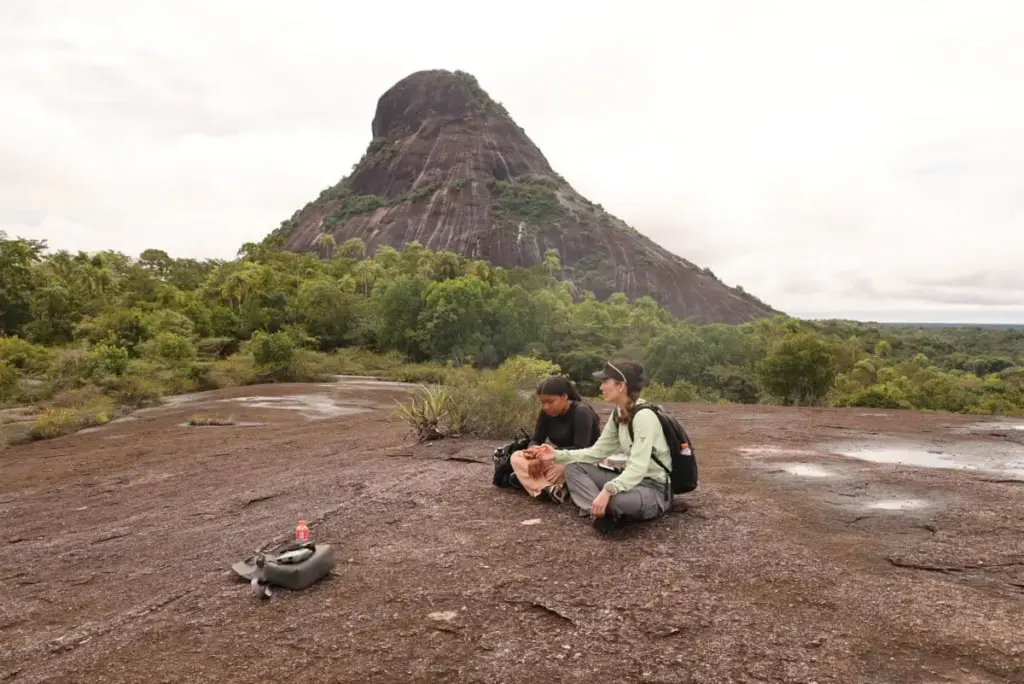
The philosophy driving this new era of journalism is rooted in deep institutional mentorship, rigorous methodology, and an unyielding commitment to local truth-telling. In an interview conducted during a reporting expedition in Colombia’s Guainía department—a transitional landscape where the Orinoco savannas meet the Amazon rainforest—Daniela Quintero articulated the core tenets of her profession.
Reflecting on her daily responsibilities at Mongabay Latam, Quintero explained:
"I’m mostly in charge of developing pre-investigations for big projects. Most of my time goes into investigating new topics that we want to cover, finding stories in different countries, and locating sources we can speak with. I identify lines of investigation, determine the different voices we need, and construct the structure for the future investigations we are developing."
Addressing the collaborative nature of the Nature Crimes Fellowship—a program mentoring five senior journalists from Peru, Ecuador, and Colombia—Quintero emphasized the importance of capacity building:
"It is the first time in Latin America that we are running this kind of project with senior journalists who want to develop their investigative skills. So, there has been a lot of training and providing them with tools to develop in-depth investigations about Latin America."
Quintero also highlighted the intersection of personal passion and professional purpose, particularly regarding her affinity for marine conservation and scientific diving:
"My brain is usually super noisy—always thinking and never stopping. But when I’m underwater, it completely relaxes me. Everything else shuts off, and all I hear are my bubbles when I’m breathing. It’s a kind of active meditation that helps me relax and enjoy the world in a different way."
Crucially, Quintero pushes back against the persistent international trope that reduces Colombia and its neighbors solely to narratives of violence, corruption, and ecological catastrophe:
"People usually only hear about the bad things in Colombia. But Colombia is an amazing country with incredible biodiversity and many people working to conserve ecosystems that are currently threatened. Even though conflict persists, nature crimes exist, and armed groups are gaining force in some territories, there are also many local initiatives confronting these issues and trying to preserve what we have."
Finally, addressing those entering the field, Quintero offered a pragmatic warning against false equivalencies:
"Especially in environmental reporting, people often mistake journalists for activists or conservationists. Reflecting the full complexity of these topics is one of the best ways to approach environmental journalism."
Future Outlook
As organized crime syndicates become increasingly digitized, financially sophisticated, and insulated by shell corporations, the future of environmental journalism will depend entirely on institutional resilience, technological literacy, and cross-border solidarity.
The investigative blueprint pioneered by Daniela Quintero and the Mongabay Latam team signals a decisive evolution. By training senior reporters across national borders, institutionalizing the use of remote sensing technologies, and refusing to view ecological devastation in isolation from broader socioeconomic realities, this generation of journalists is redefining accountability reporting in Latin America.
The challenges ahead remain immense. Armed groups, corrupt municipal actors, and international smuggling cartels continue to exert severe pressure on environmental defenders and reporters alike. Yet, as Quintero’s career demonstrates, rigorous methodology, unshakeable intellectual curiosity, and regional collaboration remain the most formidable defenses against environmental impunity. Environmental crimes do not stop at national borders—and through the work of cross-border investigative networks, the reporting tracking them will not stop either.
Cite this Article
Author: Rhett Ayers Butler (Adapted & Enriched)
Beyond Borders: Inside the Cross-Border Investigative Journalism Unmasking Latin America’s Environmental Crimes