By Diogo Borges Ferreira Published: September 16, 2026 ArchDaily Topic: The Lure of Escapism in Architecture and Alternative Worlds
Executive Overview
If you ask an architect to define the most pressing, intractable problem facing the built environment today, they will rarely point to the crumbling, unmaintained postwar housing block sitting just two streets away from their downtown studio. Instead, their gaze—and their portfolio—is far more likely to drift upward toward the hostile, unyielding pressure differentials of Mars, outward to the unpredictable tensile loads of open-ocean floating platforms, or deep into the unmapped expanses of a desert frontier.
At first glance, this persistent fixation on remote, virgin sites looks like the pinnacle of professional ambition. It is framed as an audacious leap into the unknown, a grand sci-fi-infused quest to conquer new dimensions of human settlement. But beneath the polished renderings, the high-concept branding, and the multi-million-dollar venture capital funding rounds, a more complex psychological and logistical reality is taking shape.
Unclaimed ground requires no painful negotiations with local stakeholders. It bears no heavy historical baggage, no bitter planning disputes, and no disgruntled tenants reminding the design team of every failed renovation from the past century. In short, designing for a blank slate is not inherently harder than retrofitting a fractured urban fabric; it is fundamentally easier.
By examining mega-projects like NEOM’s The Line, Marc Lore’s Telosa, and historic precedents like Superstudio’s Continuous Monument, this article investigates a provocative architectural truth: much of what contemporary architecture brands as "ambition" may actually be a sophisticated form of institutional avoidance. When the discipline continually flees the messy, contested realities of the ground we already occupy, it raises an urgent question about what—and whom—we are trying to leave behind.
Detailed Chronology: From Radical Critique to Corporate Tabula Rasa
To understand how contemporary architecture arrived at this widespread infatuation with remote isolation, we must trace the shifting ideological lineage of the tabula rasa—the blank slate.
1. The 1960s and 1970s: Radical Distance as Political Metaphor
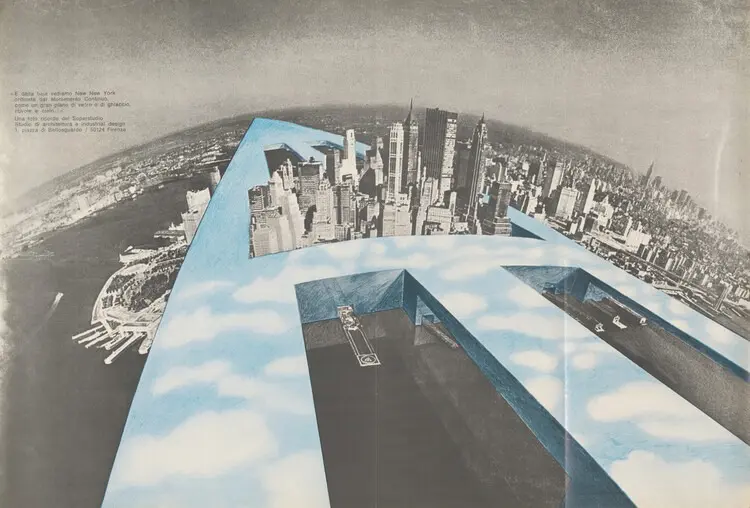
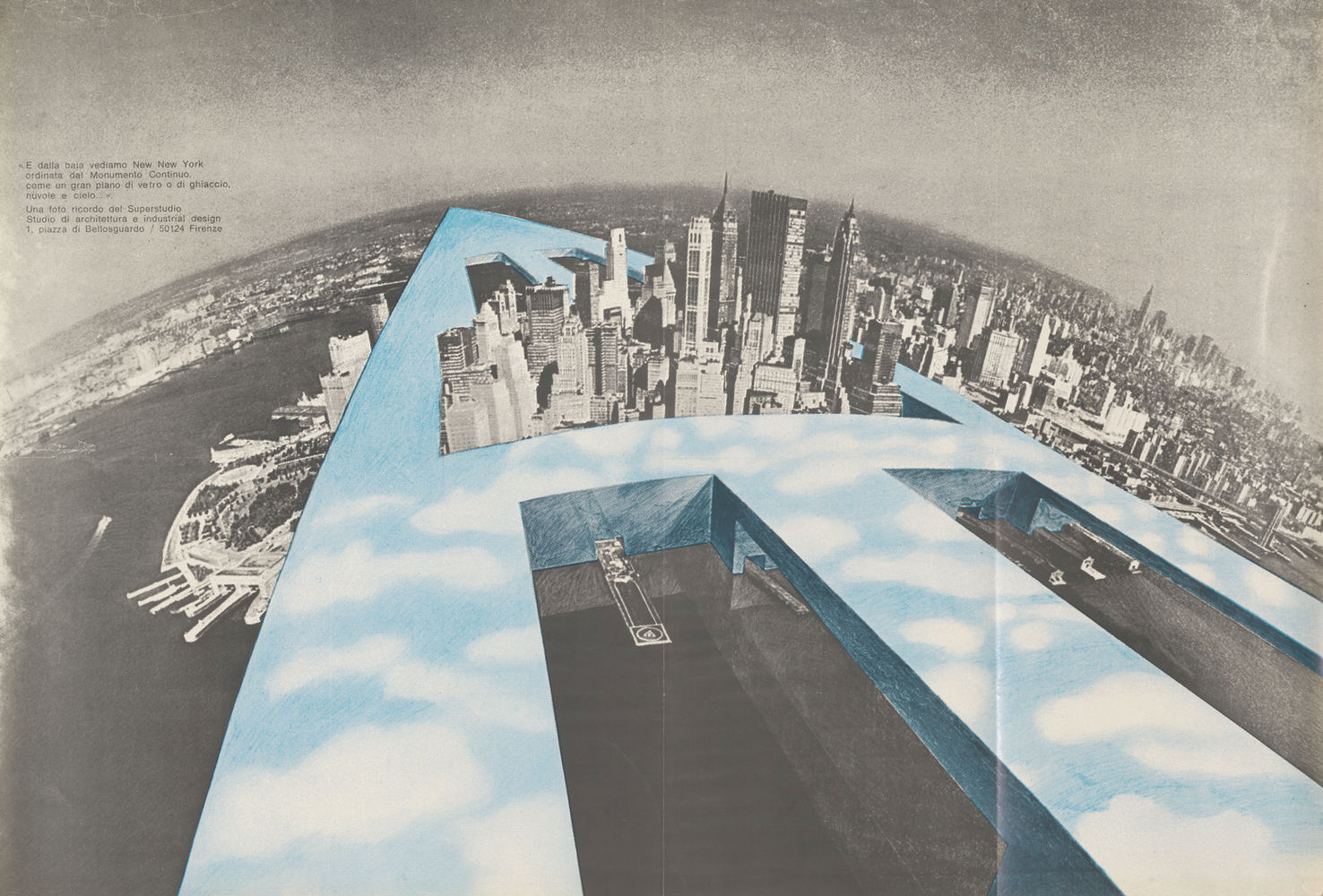
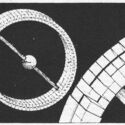
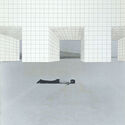
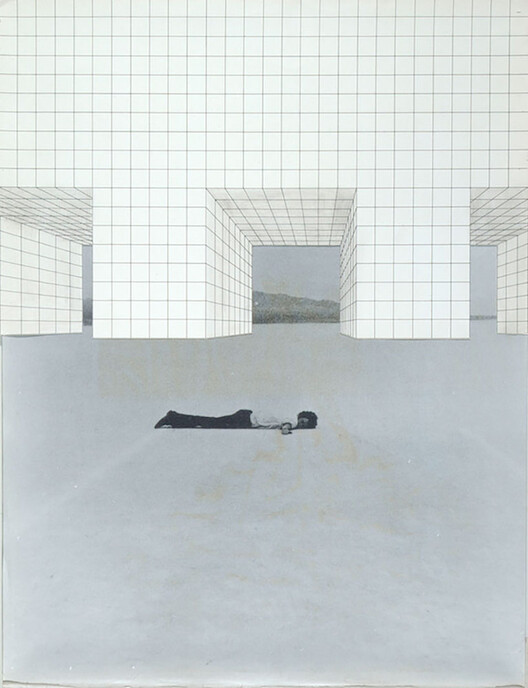
The desire to erase the existing city and draw from zero is not entirely new. During the radical design movements of the late 1960s and early 1970s, Italian avant-garde collectives like Superstudio produced iconic speculative works such as The Continuous Monument (1969) and The Fourth City, Spaceship City (1971).
Crucially, Superstudio never intended for these monumental grid structures to actually house human populations. They were not failed housing schemes; they were conceptual thought experiments. By projecting infinite, sterile grids across natural landscapes and urban centers alike, Superstudio used extreme abstraction as a weapon of critique. The "distance" they borrowed was deployed as an ironic mirror to challenge the rampant commercialization and bureaucratic stagnation of historic European cities like Florence. The project was explicitly addressed to the messy, crowded city it physically distanced itself from.
2. The Turn of the Millennium: The Rise of the Corporate Frontier
By the early 21st century, however, this radical critical distance underwent a mutation. The conceptual irony of the avant-garde was stripped away, replaced by genuine techno-utopian escapism. Architects stopped using remote spaces to critique existing cities and instead began using them to replace the city entirely.
The shift accelerated as private capital, sovereign wealth funds, and Silicon Valley billionaires discovered that total control over a project’s parameters required total geographic and legal isolation. The design brief expanded from shaping a building or a masterplan to engineering entirely new legal codes, property structures, and citizenship tiers—all safeguarded by geographic removal.
3. The 2020s: The Era of "Zero Gravity Urbanism" and Mega-Scale Isolation
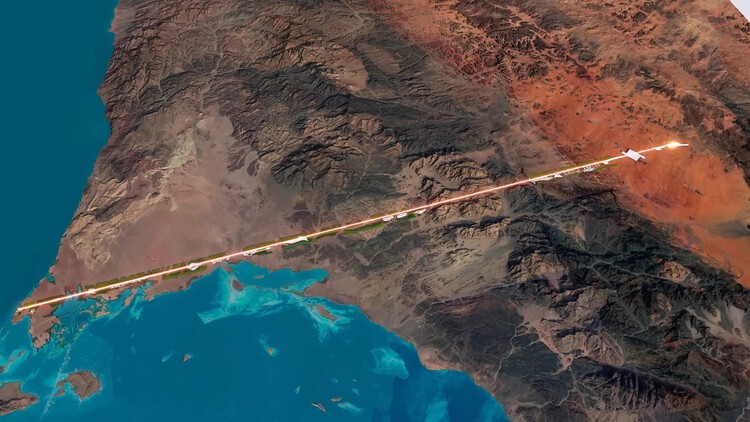
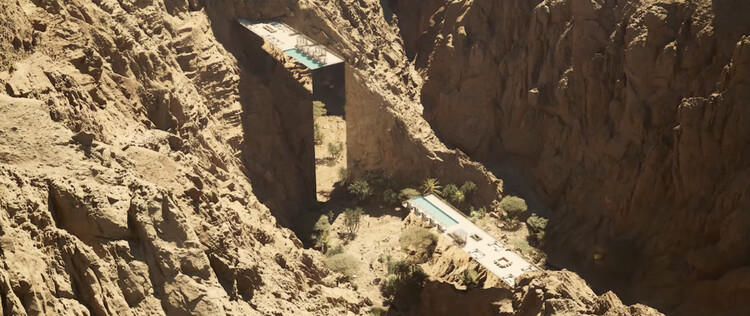
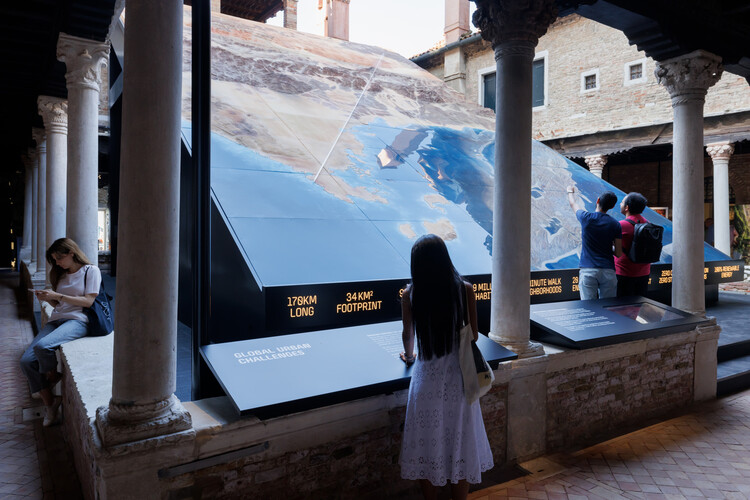
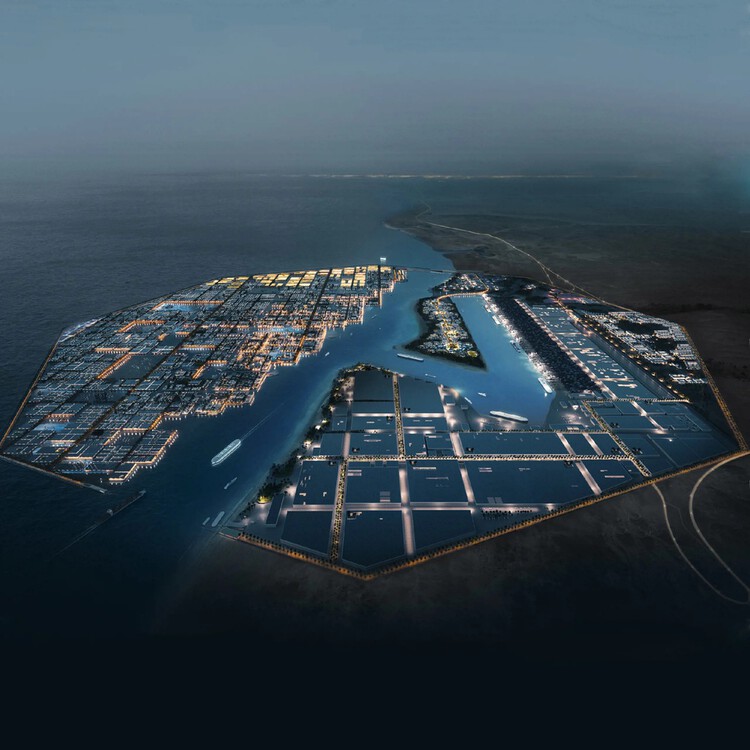
Today, this trend has materialized at an unprecedented, state-sponsored scale. Projects like Saudi Arabia’s NEOM—encompassing the 170-kilometer linear city The Line, the floating industrial port Oxagon, and luxury tourism nodes like Leyja—have enlisted some of the world’s most prestigious architectural practices (including Bjarke Ingels Group, Adjaye Associates, Coop Himmelb(l)au, and Studio Fuksas) under banners such as Zero Gravity Urbanism.
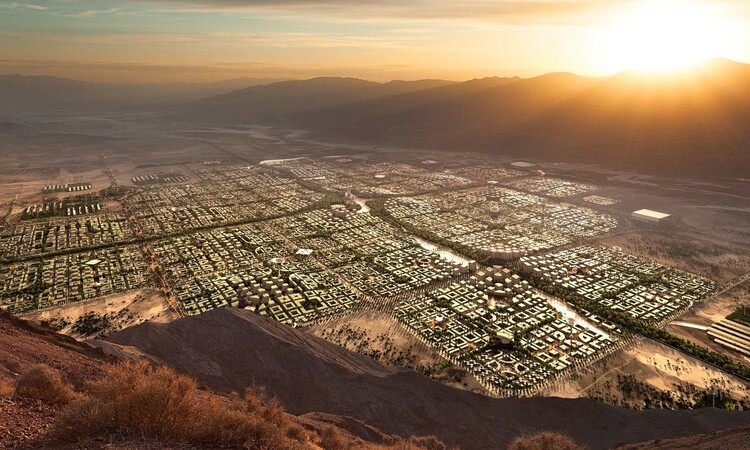
Concurrently, private ventures like Marc Lore’s Telosa have spent years searching the American West for an unowned tract of land large enough to test "Equitism"—a novel socio-economic property model where residents collectively own the land. Yet, years after their initial unveilings, many of these grand visions remain trapped in a perpetual cycle of promotional renderings, continually hunting for a geographic void vast enough to accommodate their sweeping ambitions.
Supporting Context & Metrics: The Friction of Reality vs. The Freedom of the Void
The divergence between designing for the real city and designing for the frontier is best measured by the friction of implementation.
The Battery Park City Flood Wall Dilemma
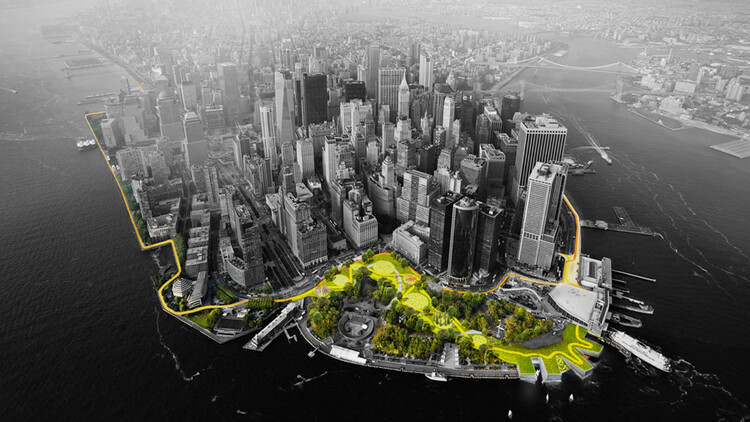
Consider the ongoing infrastructural efforts in Lower Manhattan. Following the devastation wrought by Hurricane Sandy, authorities designed a multi-billion-dollar resiliency project—including the famous Big U proposal—to protect vulnerable waterfront communities from future storm surges.
Yet, translating this public necessity into physical reality ran headfirst into the mosaic of urban property rights. A critical section of the flood barrier required minor easements from five private residential condominium buildings along the waterfront. After twelve grueling months of negotiation, two of the buildings refused to sign.
Rather than exercising eminent domain or forcing a consensus, the public agency was forced to alter its route entirely. The new alignment will cost significantly more taxpayer dollars, delay construction timelines, and leave local neighborhoods exposed to rising waters for a longer period—all to bypass two uncooperative property owners.
On Mars, or in the middle of the Red Sea, or across an unpopulated desert expanse, there are no neighboring condominium boards, no legacy easements, and no recalcitrant stakeholders to say no. The architect becomes the sole author.
The Erosion of Critical Vocabulary
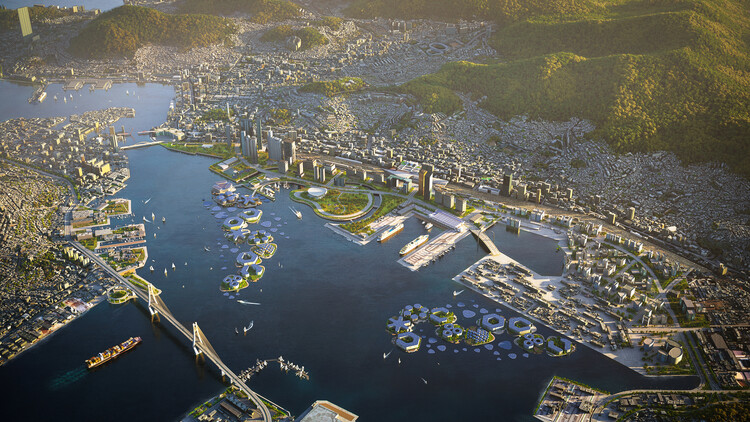
This frictionless environment has exacted a profound linguistic toll on the discipline. Masterplans for speculative remote enclaves—such as Telosa, Oceanix Busan, and Oxagon—rely heavily on a curated vocabulary of urgency: resilient, regenerative, adaptive, and sustainable.
These terms did not emerge in boardrooms; they were forged in the crucible of climate justice, grassroots community organizing, and post-disaster humanitarian response. They were developed to describe how marginalized communities could survive systemic shocks in places they could not afford to leave.
When these exact words are repurposed to market luxury floating platforms in the Red Sea or pristine desert eco-resorts, their semantic weight is hollowed out. Each time the vocabulary of crisis is co-opted to brand a corporate playground, it loses currency where it is actually needed. The vulnerable towns experiencing genuine climate displacement cannot commission multi-billion-dollar avant-garde interventions; they can only watch as the language of their survival is packed up and shipped off to the frontier.
Official Statements and Critical Perspectives
The tension between urban repair and frontier escapism has sparked fierce debate among architectural theorists, practitioners, and cultural critics.
"What the discipline is actually reaching for, on the open ocean or the empty quarter of a desert, is not the absence of a permitting process but the chance to be the only author… An unclaimed site defers none of its decisions to anyone already dead or already living there."
— Diogo Borges Ferreira, Architectural Researcher and Writer
Industry leaders who engage in these mega-scale commissions argue that pushing the envelope of engineering and urban typology is vital for discovering sustainable breakthroughs that can later trickle down to traditional cities. Proponents of projects like The Line and Telosa frame their work as necessary laboratories for testing radical ideas—such as zero-carbon transit, vertical layering, and collective land ownership—that are legally impossible to pilot within the sclerotic regulatory frameworks of legacy municipalities.
However, critical theorists counter that this defense ignores the systemic avoidance at play. When capital and design talent systematically bypass broken urban cores in favor of clean slates, they abandon the millions of people living in decaying infrastructure. As architectural historian and critic voices have frequently noted, outsourcing the future of human habitation to corporate-owned desert walls and autonomous marine platforms is an admission of defeat regarding our collective capacity to govern, repair, and democratize the cities we already have.
Future Outlook: The Way Back
Where does architecture go from here?
It would be naive to suggest that the profession will—or even should—abandon its fascination with extreme environments, speculative futures, and the desire for total authorship. The impulse to test the absolute limits of structural engineering, material science, and spatial organization is an irreducible part of what makes architecture an exploratory art.
The core challenge for the coming decades is not about stopping architects from looking toward the horizon, but about ensuring there is a clear way back.
The line separating true architectural ambition from escapist avoidance is not defined by the destination. It is defined by the intent of the journey. If looking toward Mars, floating oceanic platforms, or unpopulated desert strips serves as a radical testing ground to better understand, adapt, and heal the complex, messy cities we already occupy, then it remains a valid and vital pursuit.
If, however, these remote horizons are utilized merely as a permanent exit strategy—a convenient mechanism to flee from the responsibilities of a shared civic life, a democratic tax base, and a multi-generational public—then the discipline is no longer designing our collective future. It is simply drawing a very expensive map away from reality, leaving the hard work of the city to rust two streets from the office.