Executive Overview
In the modern corporate and environmental landscape, the concept of "incrementalism" has become a comforting yet perilous trap. Organizations frequently celebrate modest, two-percent gains while the systemic crises they are attempting to mitigate accelerate at exponential rates. Nowhere is this disconnect more dangerous than in the stewardship of the world’s oceans, where centuries of overfishing, habitat destruction, and climate degradation have pushed marine ecosystems to the absolute brink.
In the latest episode of the Ocean Collaborations podcast, Clare Brook, the Chief Executive Officer of the Blue Marine Foundation, articulates a profound disillusionment with traditional, slow-moving reform. Having spent nearly a quarter of a century pioneering sustainable finance and environmental, social, and governance (ESG) strategies long before they became ubiquitous corporate buzzwords, Brook reached a definitive breaking point in 2014. She realized that attempting to move the ecological dial "gradually" through polite investor engagement was not merely slow—it was a losing race against time.
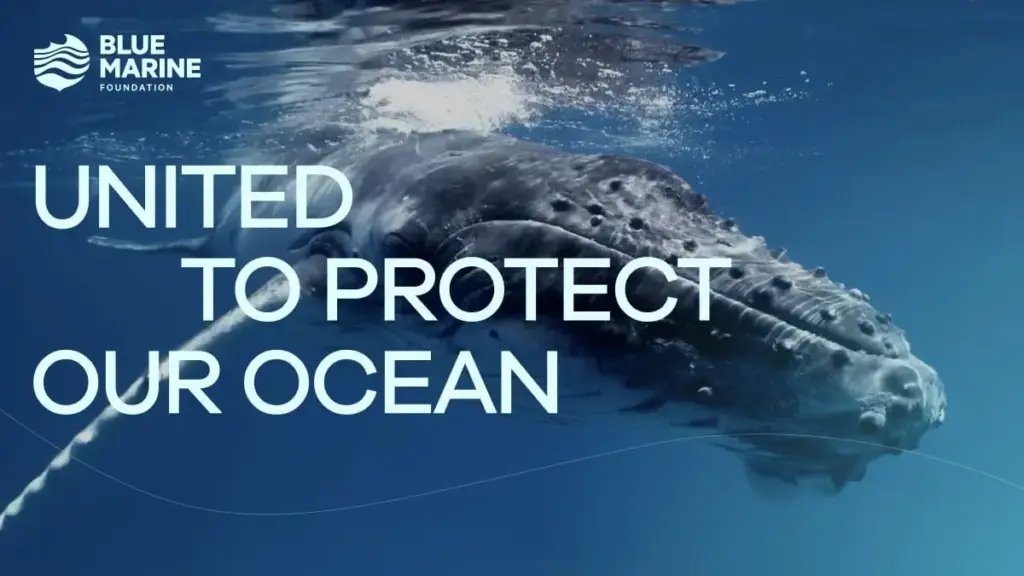
Rather than settling for minor policy tweaks or attempting to nudge the proverbial needle, Brook chose to fundamentally rewrite the instrument. Today, at the helm of the Blue Marine Foundation—widely recognized as one of Europe’s most dynamic and ambitious marine conservation organizations—she spearheads an aggressive, unyielding approach to protecting our blue planet. Her leadership philosophy rejects the complacency of corporate greenwashing in favor of transformational, systemic change. As Brook aptly summarizes: "We have to stay the course, fixed on the horizon and not be put off by the noise." This article explores her remarkable transition from sustainable finance pioneer to radical ocean protector, the operational philosophy of the Blue Marine Foundation, and what it truly takes to drive systemic reform in an era of ecological emergency.
Detailed Chronology: From Sustainable Finance to Marine Activism
To understand the urgency and unwavering determination that define Clare Brook’s leadership today, one must examine the trajectory that led her to the Blue Marine Foundation. Her career offers a fascinating window into the evolution of green finance, capturing both its early promise and its ultimate systemic limitations.
The Formative Decades: Pioneering ESG Before the Buzzwords
For 24 years, Brook immersed herself in the complex world of sustainable finance. Long before environmental, social, and governance criteria became standard vocabulary for institutional investors and corporate PR departments, Brook was actively working within the financial sector to bridge the gap between capital markets and environmental responsibility.
During the late 1990s and 2000s, sustainable finance was often dismissed by mainstream financiers as a niche, altruistic endeavor that sacrificed financial returns for ethical considerations. Brook labored to prove otherwise, demonstrating that long-term ecological risks fundamentally threatened financial portfolios. She engaged with corporate boards, pushed for transparency, and advocated for gradual policy shifts within major companies. She believed, as many corporate sustainability advocates do, that systemic change could be achieved from within—by gradually steering corporate behavior through dialogue, shareholder resolutions, and gentle persuasion.
The 2014 Breaking Point
By 2014, however, the global environmental landscape had shifted dramatically. The pace of climate change, ocean acidification, and industrial overfishing had accelerated far beyond the capacity of gradual corporate reforms to address them. Brook confronted an uncomfortable reality: while sustainable finance had successfully mainstreamed ESG vocabulary, it had failed to deliver the large-scale, real-world ecological preservation required to halt planetary collapse.
The traditional model of investor engagement relied on compromise, consensus-building, and timelines that spanned decades. Meanwhile, marine ecosystems were facing catastrophic collapse in real time. For Brook, this realization served as a professional and personal breaking point. She understood that continuing to work within the confines of conventional financial diplomacy would only result in managing the decline of the natural world, rather than reversing it.
Stepping Up to Radical Conservation
Leaving behind the traditional financial sector, Brook made a decisive leap into direct environmental action. When she took the helm at the Blue Marine Foundation, she brought with her a deep understanding of how global capital moves, how corporate power operates, and how environmental initiatives often fail due to a lack of strategic rigor and scale.
Under her leadership, the foundation shifted away from passive advocacy toward high-impact, measurable conservation projects. Brook transformed the organization into an agile, fearless operational force—one capable of establishing marine protected areas, restoring vital coastal habitats like seagrass and saltmarshes, and taking on powerful industrial fishing lobbies head-on. Her journey from financial insider to fierce ocean defender exemplifies the exact shift in mindset that modern environmentalism requires: a move away from comfortable incrementalism and toward uncompromising ecological preservation.
Supporting Context & Metrics: The State of Our Oceans and the Economics of Inaction
To appreciate the gravity of Clare Brook’s mission, one must examine the hard data governing the current state of global marine environments. The oceans cover over 70 percent of the Earth’s surface, produce more than half of the world’s oxygen, and absorb a quarter of all carbon dioxide emissions. Yet, they remain severely underfunded, acutely overexploited, and inadequately protected.
The Illusion of Incremental Progress in ESG
The "incremental trap" that Brook frequently critiques is supported by decades of corporate reporting data. According to recent sustainability analyses, while global corporations spend billions of dollars annually on ESG initiatives and voluntary sustainability commitments, global carbon emissions continue to rise, and biodiversity loss continues unabated.
In the financial sector, "engagement"—the practice of buying shares in unsustainable companies and attempting to change their behavior from the inside—has frequently proven to be an exercise in greenwashing. Studies tracking corporate environmental performance indicate that minority shareholder resolutions rarely compel heavy industries or industrial fishing conglomerates to fundamentally alter their destructive business models. When conservation is treated as a secondary metric subordinate to quarterly financial returns, the environment invariably loses.
The Scale of Marine Degradation
The statistics surrounding marine health underscore the urgent need for the transformational change championed by the Blue Marine Foundation:
- Overfishing: According to the United Nations Food and Agriculture Organization (FAO), more than a third of global fish stocks are currently fished at biologically unsustainable levels, up from just 10 percent in the 1970s.
- Habitat Destruction: Vital blue carbon ecosystems—such as mangroves, salt marshes, and seagrass meadows—are disappearing at rates up to four times faster than terrestrial forests, releasing centuries of stored carbon back into the atmosphere and ocean.
- Protection Gaps: While international bodies have set targets to protect 30 percent of the world’s oceans by 2030 (the "30×30" initiative), only a fraction of those designated marine protected areas (MPAs) are currently "fully" or "highly" protected from destructive industrial activities like bottom trawling.
Redefining Ocean Economics
Brook’s background in finance has uniquely positioned the Blue Marine Foundation to challenge the traditional economic paradigms that undervalue marine life. Rather than viewing conservation as a charitable cost center, the foundation actively demonstrates that restoring marine ecosystems yields massive economic dividends. Healthy fish stocks support sustainable coastal communities, vibrant ecotourism, and resilient shorelines that protect coastal infrastructure from extreme weather events. By reframing marine conservation through the lens of economic survival and natural capital preservation, Brook bridges the gap between financial realism and ecological necessity.
Official Statements and Insights from the Ocean Collaborations Podcast
In her appearance on the Ocean Collaborations podcast, released on August 18, 2026, Clare Brook offered profound insights into the psychology of leadership, the mechanics of systemic resistance, and the imperative of maintaining absolute clarity of vision in the face of immense adversity.
Resisting the Noise of Compromise
Reflecting on the challenges of leading a major marine conservation charity, Brook emphasized the constant pressure leaders face to water down their ambitions in the name of political or corporate pragmatism.
"We have to stay the course, fixed on the horizon and not be put off by the noise," Brook stated during the podcast discussion.
This philosophy of steadfastness serves as an antidote to the fatigue that often plagues environmental advocates. The "noise" refers to the endless bureaucratic delays, industry pushback, cynical compromise proposals, and superficial greenwashing campaigns designed to stall meaningful action. Brook argues that true leadership in conservation requires ignoring these distractions and keeping sights firmly set on the ultimate objective: the complete restoration and protection of marine biodiversity.
Transforming the Instrument
Expanding on her transition from sustainable finance to direct conservation, Brook dissected the limitations of working within broken systems. She explained that incrementalism is often maintained because it is comfortable for those in power; it allows corporations and governments to claim they are "taking action" while ensuring that business operations remain fundamentally undisturbed.
By contrast, transformational leadership—the kind practiced by the Blue Marine Foundation—involves identifying the leverage points where maximum ecological impact can be achieved. This means stepping outside traditional comfort zones, challenging entrenched legal frameworks, collaborating with local fishers, scientists, and governments to create enforceable marine reserves, and refusing to accept half-measures when whole ecosystems are at stake.
Future Outlook: The Road Ahead for Marine Conservation
As the global community approaches critical environmental milestones, the work pioneered by Clare Brook and the Blue Marine Foundation provides a vital blueprint for the future of conservation leadership.
Moving Beyond the 2030 Horizon
The coming years will test the sincerity of global commitments to ocean health. With the 2030 targets for biodiversity protection looming large, the primary challenge will no longer be merely designating marine protected areas on paper, but ensuring they are actively managed, monitored, and defended against illegal industrial intrusion.
Under Brook’s guidance, the Blue Marine Foundation continues to scale its operations, proving that targeted, high-ambition interventions can successfully restore depleted fish stocks and revive dead coastal zones. The foundation’s model demonstrates that local actions—when backed by uncompromising vision and rigorous scientific evidence—can trigger ripple effects that influence national policies and international treaties.
A Call to Action for Leaders Across Sectors
Brook’s journey offers a powerful lesson not just for environmentalists, but for leaders across all industries: whether in corporate boardrooms, government agencies, or non-governmental organizations, the era of celebrating marginal improvements is over. The magnitude of contemporary ecological and social crises demands that we abandon the comforting illusion of incrementalism and embrace transformational change.
As listeners tune into the Ocean Collaborations podcast to absorb Brook’s experiences, the overarching message remains clear. We can no longer afford to simply nudge the needle; we must rebuild the entire instrument. By staying the course, ignoring the noise of complacency, and fixing our eyes firmly on the horizon, a sustainable, thriving future for our oceans—and our planet—remains within our grasp.